
The written record
Read the transcript
Read along with the recording · About 36 min to read
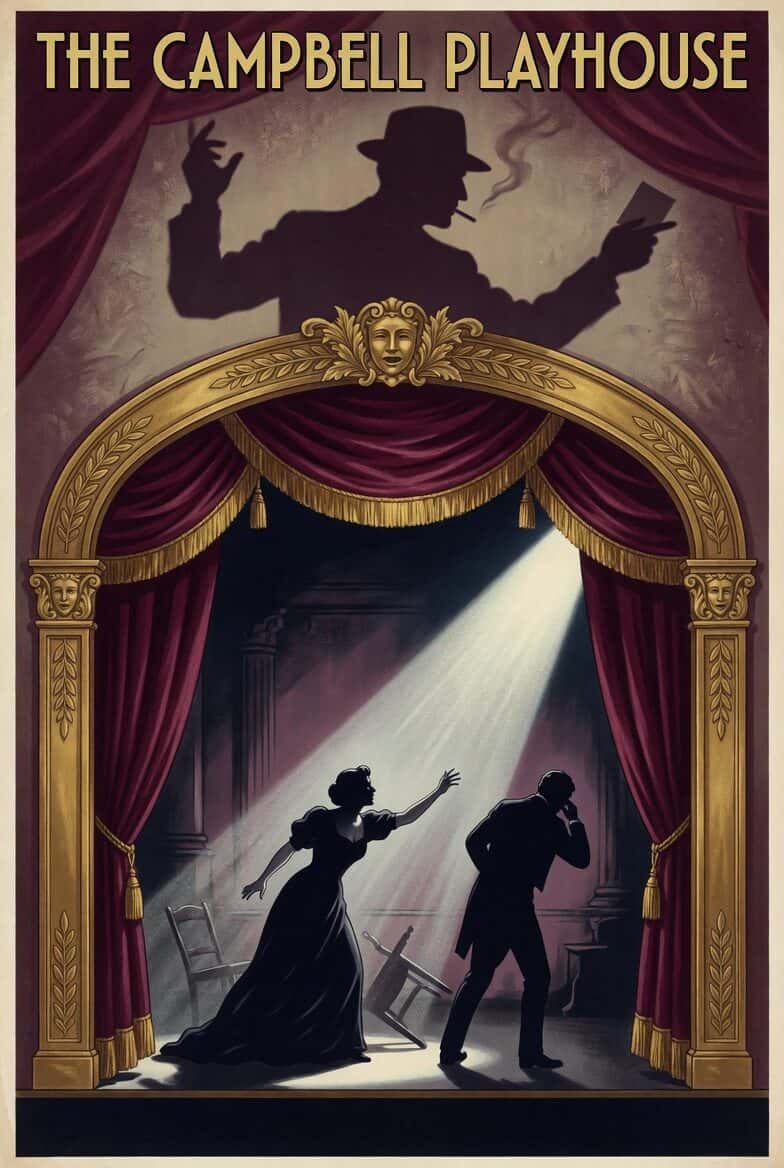
The makers of Campbell's Soup presents the Campbell Playhouse, Orson Welles producer. Good evening, ladies and gentlemen. This is Ernest Chappell. Tonight, the Campbell Playhouse has the signal honor of presenting for its first performance on the air one of the classics of the modern American theater. The winner of the Pulitzer Prize for the Best Play of 1938, Our Town by Thornton Wilder. There was much talk when it was first produced in the theater because it was performed without scenery or props. The lovable, garrulous stage manager filling in gaps and explaining things as he went along. Tonight, Orson Welles plays that part. And young John Craven is with us as George, the role he created in the original stage production.
Now, before we introduce you to Our Town, a word from our sponsors.
To nearly everyone, it seems to me, the words, chicken for dinner, have a thrilling sound. They bring thoughts of delightful eating, the kind we associate with holidays and special occasions. Think as far back as you can among your own family's favorite foods or those of your friends, of any family you've ever visited. Can you remember any dish more widely prized than chicken? But I think this widespread liking for chicken accounts to a large degree for the tremendous popularity of Campbell's Chicken Soup. And I can promise you that as sure as you like chicken, you'll like Campbell's Chicken Soup. It's chicken through and through, from its golden surface to the very bottom of your plate. Its broth glistens with chicken richness, its fluffy rice is filled with chicken flavor, and there are tempting tender pieces of chicken meat. During the last five years, people everywhere have discovered how downright good and homey Campbell's Chicken Soup is. If you haven't tried it, why don't you? Because I'm sure you'll pronounce it every bit as fine as the best chicken soup you've ever had. How about this weekend?
And now, Orson Welles in Our Town.
This play is called Our Town. It was written by Thornton Wilder. In it, you will hear Miss Patricia Newton, Miss Agnes Moorehead, Miss Effie Palmer, Mr. John Craven, Mr. Ray Collins, Mr. Everett Sloane, and many others. The town is Grover's Corners, New Hampshire. Minutes, latitude, 70 degrees, 37. First act shows a day in May 7th, 1901.
Show some streaks of light over in the east there. It's getting wonderful bright. Time to get up. That cottage over by the—in the Joe Crowell house where Joe Jr. is getting up, or where Shorty Hawkins is getting ready to flag the 5:45. And so, another day begun.
Main Street. That baby case, I'm coming downstairs to get back. Hibbs died in 1930. New hospital's named after him. First long time ago, in fact. Visited daughter of Becca, who married an insurance man in Canton. Back here, she's up in the cemetery there now. See, before she married Doc Gibbs, Joe Crowell Jr. delivered the papers. Morning, Joe. And here comes Howie Newsome delivering the milk.
Number six. Herrick Cleaners over with Miss Gorlosky. This town's getting bigger every year. Morning, Miss Gibbs. Morning, Howie. Bacon smells good. Everything all right, dear? Yes, I declare he's his kittens. They can be ready in a minute. Sit down, drink your coffee.
Children! Children! Time to get up, George. Rebecca? You didn't catch a couple hours of sleep this morning, can't you? Well, Miss Wentworth's coming at 11. I guess I know what it's about, too. Her stomach ain't what it ought to be. Oh, I told you, you won't get more than three hours of sleep. Thank goodness I don't know what's going to become of you. I do wish I could get you away someplace and take a rest. I think it'd do you good.
George! Rebecca! You'll be late for school. Howie! Emily! You'll be late for school.
It's Webb now, next door to the Gibbses, getting her family up for the day. You watch yourself, Booker. I'll come up and do it myself. I'll put away your books, Emily. You know the rules. Well, as I do. No books at table. As for me, I'd rather have my children healthy than bright.
I'm both, Mom. You know I am. I'm the brightest girl in school for my age. I have a wonderful memory.
Eat your breakfast. The Webbs have two children, little Wally and Emily. Emily's 14, and there's two over the way at the Gibbses, Rebecca and George. George is 16.
I'll come up and slap the both of you. That's what I'll do. We've got a factory in our town too. Hear it? Let's own it. Let's bring him a fortune. Speak to your father about it when he's rested.
Seems to me 25 cents a week's enough for a boy your age, George Gibbs. I declare I don't know how you spend it all.
Oh, Mom, I got a lot of things to buy.
Mm-hmm. Strawberry phosphates, that's what you spend it on. I don't see how Rebecca comes to have so much money. She has more than a dollar.
I've been saving it up gradual.
Well, dear, I think it's a good thing every now and then to spend some.
Mama? Mm-hmm? Do you know what I love most in the world? Do you? Money. Eat your breakfast.
Here's the first bus. But you don't have to run. George, pull up your pants beneath and don't fall, George. Well, hey, tell Miss Foster I send her my best congratulations.
Mama? Remember that? Am I pretty? You look real nice, Rebecca, and I'll pick up your feet. Goodbye, Mama. Goodbye.
Morning, Myrtle. How's it cold? Well, I told Charles I didn't know if I'd go to choir practice tonight. Wouldn't be any use. Well, just saying you come to choir practice, Myrtle, and try it. Well, if I don't feel no worse than I do now, I probably will. Well, I'm wrecked in the south. I thought I'd drink some of these beans. Let me help you. Beans have been good this year. I've decided to put up 40 quarts if it kills me. The children say they hate them, but I noticed they were able to get them down all winter.
Thanks, Mrs. Gibbs. Thanks, Mrs. Webb.
Folks, most every morning, Mrs. Gibbs goes over to Mrs. Webb's or Mrs. Webb's to visit. They'll just leave them there, and skip a few hours in the day at Grover's Corners.
Now, it's the middle of the afternoon. A thousand, six hundred and forty-two have had their dinner. All their dishes have been washed. A few buggies on Main Street, the horses dozing at the hitching post. Mr. Webb's cutting the lawn over there. A man in ten thinks it's a privilege to own a lawnmower.
No, sir, it's later than I thought. They haven't come home from school already, and here comes Emily Webb and George Gibbs.
You made a fine speech in class. Well, I was really ready to make a speech about the Monroe Doctrine, but at the last minute, Miss Clark had made me talk about the Louisiana Purchase instead. I worked an awful long time on both of them. Gee, it's funny, Emily. From my window over there, I can just see your head nights when you're over in your room doing your homework. Why, can you? You certainly do stick to it. I don't see how you can sit still that long. I guess you like school. Well, I feel it's something you have to go through. Yeah. I don't mind it, really. It passes the time. You're just naturally bright, Emily, I guess. I figure it's just the way a person's born. Yeah. But you see, I want to be a farmer. My Uncle Luke says whenever I'm ready, I can come over and work on his farm, and if I'm any good, oh, I can just gradually have it. You mean the house and everything? Yeah. Well, thanks. I'd better be getting out to the baseball field. Thanks for the talk, Emily. Good afternoon, Mrs. Webb. Good afternoon, George. So long, Emily. So long, George.
Emily, come and help me string these biddies for the winter.
George here's got himself had a real conversation, didn't he? Why, he's growing up. How old would George be? I don't know. See, he must be almost 16.
Mama, I made a speech in class today, and I was very good. Hmm, you must recite it to your father at supper. What was it about? The Louisiana Purchase. Just like silk off a spool. I'm going to make speeches all my life. Mama, will you answer me a question serious? Seriously, not seriously. Seriously. Will you? Why, of course I will. Mama, am I good-looking? Yes, of course you are. All my children have got good features. Shamed if they hadn't. Mama, that's not what I mean. What I mean is... Well, what I mean is... Am I pretty? I've already told you yes. Now, that's enough of that. You have a nice, young, pretty face. I never heard of such foolishness. Oh, Mama, you never tell us the truth about anything. I am telling you the truth. Mama, were you pretty? Yes, I was, if I do say it. I was the prettiest girl in town next to Mamie Cartwright. But, Mama, you've got to say something about me. Am I pretty enough to get... Well, to get people interested in me? Emily, you make me tired. Now, stop it. You're pretty enough for all normal purposes. Now, bring that bowl with you. Oh, Mama, you're no help at all.
We'll have to interrupt again here. Thank you, Mrs. Webb. Thank you, Emily. A lot of time's gone by. It's evening now. You can hear choir practice going on in the Congregational Church. All the children are at home doing their schoolwork.
Emily? Hello. Hello. I can't work at all. The moonlight's so terrible. Emily, did you get the third problem? Which? The third. Oh, yes, George. That's the easiest of them all. I don't see it. Can you give me a hint? I'll tell you one thing. The answer's in yards. In yards? How do you mean? In square yards. Oh, square yards. Yes, George. Don't you see? Yeah. In square yards of wallpaper. Oh, square yards of wallpaper. Thanks a lot, Emily. You're welcome. My, isn't the moonlight terrible? Choir practice going on. I think if you hold your breath, you can hear the train all the way to Contoocook. Hear it? How do you know? Well, I guess I'd better go back and try to work. Good night, Emily. And thanks. Good night, George. Good night, Martha. Good night, you two.
Here comes Mrs. Webb, Mrs. Gibbs. Some of their lady friends home from choir practice. I know we don't want to put it in the paper. My, it's late. Good night, Emma. It was a nice choir practice, wasn't it? Hey, I'd put that home with you. Hate the weather, for sure. My, I hate to go to bed on a night like this. I'd better hurry. Those girls are going to be sitting up for all hours. Good night, Emma. Good night, Michael. Good night, Susan. Good night, Julia. Good night.
Now, folks, some more things we've got to explore about this town. This time we're going about it in another way. We're going to look back. Cartwright interest had just begun building a new bank in Grover's Corners and had to go to Vermont for the marble, sorry to say. They've asked a friend of mine what they should put in the cornerstone for people a thousand years from now. He's the editor. He's kind of interested in this because some scientific fellows have found a way of painting that reading matter with a kind of glue a thousand, two thousand years. We can piece together out of the joking pole people a thousand years from now. Provinces north of New York at the end of the 20th century religion was the day of work come to a stop. Some female at last thing people seem to hand down first to renounce anything else. Oh, yes. Death. People were buried in the ground just as they are. Friends is the way we were in our...
Becca, there's only room for one at this window. You're always spoiling everything. Well, let me look just a minute. Well, use your own window. I did, but there's no moon there. George, do you know what I think? Do you? I think maybe the moon's getting nearer and nearer. No. There'll be a big explosion. Becky, you don't know anything. If the moon were getting nearer, the guys that sit up all night with telescopes would see it first. And they'd tell us about it. And it'd be in all the newspapers. George, is the moon shining on South America, Canada, and half the world? Well, probably is.
There it is. Now, the night Grover's Corners. A few doors on Main Street. Here comes Editor Webb after putting his newspaper to...
All right, Editor Webb. Evening, Bill. Try the moon. Let's go.
No, it's me, Papa. Why aren't you in bed?
I don't know. Can't seem to sleep yet, Papa. The moonlight's so wonderful. And the smell of Mrs. Gibbs' heliotrope. Mmm. Can you smell it?
Yeah. Have you any troubles on your mind, have you, Emily?
Troubles, Papa? No.
Well, enjoy yourself. We'll let your mother catch you. Night, Emily.
Good night, Papa.
I never told you about that letter Jane Crofut had gotten from her minister when she was... The minister of her church in the town she was in before she came here. He wrote Jane a letter. And on the envelope, the address was like this. It said, Jane Crofut, The Crofut Farm, Grover's Corners, Sutton County, New Hampshire, United States of America.
What's funny about that?
Well, but listen, it's not finished. The United States of America, continent of North America, Western Hemisphere, the Earth, the solar system, the universe, the mind of God. That's what it said on the envelope.
What do you know? And the postman brought it just the same.
What do you know?
That's the end of the first part of our broadcast, friends. Second part will begin in just a minute.
Welcome to the Campbell Playhouse presentation of Thornton Wilder's Pulitzer Prize play, Our Town, Carson Wells. This is the Columbia Broadcasting System.
This is Ernest Chappell, ladies and gentlemen, welcoming you back to the Campbell Playhouse. In a moment or two, we will resume our presentation of Thornton Wilder's Pulitzer Prize play, Our Town. While Orson Welles was taking us through the streets and byways of our town, I fell to thinking of everybody's hometown and the changes that have taken place there. Not only the physical changes and the new faces, but the changes in habits. For instance, not so many years ago, people discovered the joy and refreshment and health benefits of drinking tomato juice at breakfast. For that was certainly a change for the better in the eating habits in my town. Then there was a time when women felt that only homemade chicken soup was good enough for their families. Well, this too has changed, for people have discovered the same good chicken eating in Campbell's chicken soup as in the best of homemade soup without the fuss and bother of preparing it. It's evident that a great many families have found out how good Campbell's chicken soup really is because we're called upon to make more and more of it. Have you had it lately?
Now we resume our Campbell Playhouse presentation of Thornton Wilder's Pulitzer Prize play, Our Town, starring Orson Welles with John Craven.
Our folks, three years have gone by. The sun's come up over a thousand times. Summers and winters have cracked the mountains a little bit more and the rains have brought down some of the dirt. Some babies that weren't even born before have begun talking regular sentences already. The number of people who thought they were right young and spry have noticed that they can't bound up a flight of stairs like they used to without their heart fluttering a little. The older folks are sitting at the head of the table and some people I know are having their meat cut up for them. It can happen in a thousand days.
Nature's been pushing and contriving in other ways, too. A number of young people fell in love and got married. The mountains got to pay a few fractions of an inch. Millions of gallons of water went by the mill. The world gets married. Know what I mean? Hardly any exceptions. Most everybody in the world climbs into their graves married.
Later, it's 1904. Most of our young people often get married as soon as they pass their last examinations in solid geometry and Cicero. Like they suddenly feel themselves fit to be married. Here comes Howie Newsom to live in the milk. There's Mrs. Gibbs and Mrs. Webb come down to breakfast over an ordinary day. I don't have to point out to the women in my audience that both these ladies cook three meals a day for 40 years or vacation. Two children apiece. Never a nervous breakdown. Selves hard used, either.
Well, Ma, the day's come. You're losing one of your chicks.
Thank you. Don't you say another word. I feel like crying every minute. Sit down, drink your coffee.
Hey. Groom's up. Saving himself. Whispering and singing like he's glad to leave it. Hmm. Every now and then he says, I do, to the mirror. But it don't sound convincing to me.
What? Why, Julia Hersey. French toast. Hmm. Sent Todd to make, and I had to do something. I remember my wedding morning, Julia.
Now, don't stop that, Frank Gibbs. I tell you, you can't do this. I was the scaredest young fella in the state of New Hampshire. I thought I'd made a mistake, for sure. Hmm. And when I see you coming down that aisle, I thought you was the prettiest girl I'd ever seen. But the only trouble was, I'd never seen you before. I was in the Congregational Church, marrying a total stranger. How do you think I felt?
Good morning, everybody. Only four more hours to live.
Where are you going?
Just across the grass to see my girl.
Now, George, you take him. I'm going to let you out.
Good morning, Mr. Webb.
Well, George, how are you?
I'm fine. Mr. Webb, do you believe in superstitions?
Well, what superstition, George?
You know about a bride and groom not being supposed to see each other on a wedding morning?
Well, you see, on a wedding morning, the girl's head's ought to be full of clothes and things like that. Don't you think that's probably it?
Yes. I never thought of that. The girl's ought to be a mite nervous on a wedding day. I wish a fella could get married without all that marching up and down.
Well, the man that ever lived felt that way about it, George. Hasn't done much good. The women have built up weddings, my boy. From now on, they have it pretty much their life. All those good women standing shoulder to shoulder. Making sure that they're not tied in a mighty public way.
You believe in it, don't you, Mr. Webb?
Oh, yes. Oh, don't you misunderstand me, my boy. Marriage is a wonderful thing. Wonderful thing. Don't forget that, George.
No, sir. Mr. Webb, how old were you when you got married?
Well, you see, I'd been to college. I'd taken a little time to get settled. But Mrs. Webb, she wasn't much older than what Emily is. Oh, age hasn't much to do with it, George. Not to say there aren't other things. George, I was thinking the other night of some advice my father gave me when I got married. Charles said, Charles started out early showing who's boss, he said. Best thing to do is to give an order, even if it don't make any sense, just so she'll learn to obey. And he said, if anything about your wife irritates you, her conversation or anything, just get up and leave the house. That'll make it clear to her, he said. And oh, yes, he said, never, never let your wife know how much money you have. Never.
Mr. Webb, I don't think...
So I took the opposite of my father's advice and I've been happy ever since. But that'll be a lesson to you, George. Never to ask advice on personal matters.
George, you gonna raise chickens on your farm?
What?
You gonna raise chickens on your farm?
Well, Uncle Luke hasn't gone in much at chicken raising.
Brooke came into my office the other day, George, on the phyla system of raising chickens. I want you to read it.
Charles, are you talking about that old incubator again? I thought you two'd be talking about things worthwhile. Good morning, George. Well, murder, if you want to give the boy some good advice, I'll go upstairs and leave you alone with him.
Now, George, I'm sorry, but I've got to send you away so that Emily can come down and get some breakfast. He told me to tell you that he sends her a love that he doesn't want to lay eyes on you. Goodbye, George.
Well, I guess you don't know about that other superstition.
What do you mean, Charles?
It's the caveman. The groom should never be left alone with his father-in-law on the day of the wedding or near it. Now, don't forget that.
Now, I have to interrupt again here. You see, we want to know how all this began, how big things like that begin. You know how it is. You're 21 or 22, you make some decisions, then you're 70. You've been a lawyer for 50 years and that white-haired lady at your side has eaten over 50,000 meals with you. Things begin. George and Emily are going to show you now the conversation they had when they first knew that. Before they do it, I want you to try and remember what it was like when you were young. Very hard to do. A person sleepwalking in the street you were in. Didn't quite hear everything that was said to you.
George has just been elected and that means he'll be president of the senior class all next year and Emily's just all right, George. Tell her your book's home for you, Emily.
Thank you. I'm awful glad you were elected too, Emily.
Thank you.
Emily, why are you mad at me?
I'm not mad at you.
You're treating me so funny.
Well, I might as well say it right out, George. I don't like the whole change that's come over you in the last year. Sorry if that hurts your feelings, but I just gotta tell the truth and shame the devil.
Awfully sorry, Emily. What do you mean?
Well, up to a year ago, I used to like you a lot and I used to watch you as you did everything because we'd been friends so long and then you started spending all your time playing baseball and you never even spoke to anybody anymore. Not even to your own family you didn't. And, George, it's a fact. You got awful conceited and stuck up and all the girls say so. They may not say so to your face, but that's what they say about you behind your back. Hurts me to hear them say it, but I gotta agree with them a little and I'm sorry if it hurts your feelings, but I can't be sorry I said it.
I'm glad you said it. I never thought that such a thing was happening to me. I guess it's hard for a fellow not to have some faults creep into his character.
I always expect a man to be perfect and I think he should be.
Well, I don't think it's possible to be perfect, Emily.
Well, my father is. As far as I can see, your father is. There's no reason on earth why you shouldn't be, too.
Emily, I feel it's the other way around, that men aren't naturally good, but girls are. Like you and your mother and my mother.
Well, you might as well know right now that I'm not. That I'm not perfect. Not as easy for a girl to be perfect as a man because, well, because we girls are more nervous.
Now, I'm sorry I said all that about you. I don't know what made me say it.
Oh, I guess if it's the truth you ought to say it. You stick to it, Emily.
I don't know if it's the truth or not and I suddenly feel it isn't important at all.
Emily, would you like an ice cream soda or something before you go home?
Well, thank you. I would.
Hello, George. Hello, Emily.
Hello, Emily.
Well, what do you have?
Why, Emily Webb, what have you been crying about?
Oh, she's got an awful scare, Mr. Morgan. She almost got run over by that hardware store wagon. Everybody always says that Tom Huckins drives like a crazy man.
Well, here, take a drink of water, Emily. Hey, you look all shook up. There. Now, what do you have?
I'll have a strawberry phosphate, thank you, Mr. Morgan.
No, no, Emily. Have an ice cream soda with me. Two strawberry ice cream sodas, Mr. Morgan.
Yes, sir. I'll tell you. You know, you've got to look both ways before you cross Main Street these days. It gets worse every year. I'm digging 25 horses and go over the corners this minute that I'm talking to you. They can split who was in here yesterday. And now, they're bringing in these automobiles. Best thing to do is just stay home again. Why, I can remember the time when a dog could lie all day in the middle of Main Street and nothing would come along to disturb him. Oh, yes, Miss Ellis. I'll be with you in a minute. Now, here are your sodas.
Well, enjoy them.
They're so expensive.
Oh, no, don't think of that. We're celebrating. First, we're celebrating our election. And then, do you know what else I'm celebrating?
No.
Uh-huh.
I'm celebrating because I've got a friend who tells me everything that ought to be told me.
George, please don't think of that. I don't know why I said it. It's not true.
No, you stick to it, Emily. I'm glad you spoke to me the way you did. But you'll see, I'm going to change so quick that... I'm going to change. And, Emily, I want to ask you a favor.
What?
Well, if I go away to State Agriculture College next year, will you write me a letter once in a while?
I certainly will. I certainly will, George. It certainly seems like being away three years, you get out of things.
Yeah. You know, Emily, whenever I meet a farmer, I ask him if he thinks it's important to go away to agriculture school to be a good farmer.
Why, George.
Yeah. And some of them say that it's even a waste of time. My uncle Luke's getting old. He's about ready for me to start in taking over his farm tomorrow if I could.
My.
And like you say, being gone all that time, meeting other people in other places, anything like that can happen. I don't want to go away. I guess new people aren't any better than old ones. I'll bet you they almost never are. Emily, I feel that you're as good a friend as I've got. And I don't need to go to other towns to meet other people. Emily, I'm going to make up my mind right now. I won't go. I'll tell Pa about it tonight.
Why, George, I don't see why you have to decide right now. It's a whole year away.
Emily, I'm glad you spoke to me about that. That fault in my character. What you said was right. But there was one thing wrong in it. That was where you said that I wasn't noticing people. And you, for instance. Listen, Emily, you say you were watching me when I did everything. I was doing the same thing about you all the time. Sure. I always thought about you as one of the chief people I thought about. And I always made sure you were sitting in the bleachers and who you were with. And we've always had lots of talking and joking and everything. And they meant a lot to me. Of course, they weren't as good as the talk we're having now. Lately, I've been noticing that you've been acting kind of funny to me. And for three days, I've been trying to walk home with you. But something's always gotten in the way. Yesterday, I was standing over by the wall waiting for you. You walked home with Miss Cochran.
George, life's awful funny. How could I know that?
Well, I thought that... Listen, Emily, I'm going to tell you why I'm not going to go away to agriculture college. I think that once you've found a person you're very fond of, well, that is, who's fond of you, too. At least enough to be interested in your character. Well, I think that that's just as important as college is. Even more so. That's what I think.
Well, I think it's awfully important, too.
Emily.
Yes, George?
Emily, if I do improve and make a big change, would you be... Well, that is, would you be...
I am now. I always have been.
Oh, I guess this is an important talk we've been having.
Yes.
Now, before we go on to the wedding, there are still some more things we ought to know. I want to know some more about how the parents took it, but what I want to know most of all is... I married you. You know what one of my terrors was in getting married?
Oh, sure. Go on with you.
I was afraid that we weren't going to have material for conversation more than would last us just a few weeks.
Yeah, I was afraid we'd run out, eat our meals in silence. In fact, you and I have been conversing for 20 years now without any noticeable barren spells.
Well, good weather, bad weather, ain't very choice, but we always manage to find something to say. What do you think? What do you think, Julia? Shall we tell the boy that he can go ahead and get married?
Oh, there you go, putting the responsibility on me.
Well, I'll go up. I'll go up and say a word to him right now before he goes to bed, huh? You're sure, Julia? You got nothing more to add?
Well, I don't know what to say. Seems like it's too much to ask for a big outdoor boy like that to go and get shut up in the classroom for three years. Once he's on the farm, he might just as well have companions and he's found a fine girl like Emily. People are meant to live two by two in this world.
Oh, yes, Frank, go up and tell him it's all right.
Yeah, yeah, I'll call him. George? Oh, George?
Yes, Pop?
Can you come down a minute? Your mother and me want to speak to you.
Yeah, sure. Oh, Lord, what a fool I am. I'm trembling all over. Nothing to tremble about.
Now we're ready to go on with the wedding. A lot of thoughts that go on during the wedding. Can't get them all into one wedding. Actually, into a wedding at Grover's Corners in short. This wedding, I play the minister. Gives me the right to say a few more things about it. Now the play gets pretty serious. See, some churches say that marriage, marriage is a sacrament. I don't know what that means, but, you know, like Mrs. Gibbs said, just people were made to live two by two. Now this is a good wedding, but people are so put together that even at a good wedding there's a lot of confusion way down deep in people's minds, and we thought that that ought to be in our play, too.
Why on earth I should be crying? Suppose there's nothing to cry about. Come over and have breakfast this morning. There was Emily eating her breakfast that she's done for 17 years. And now she's going off to eat it in someone else's house. I suppose that's it. There they come. She went back at school. I don't want to get married.
George, what's the matter?
Ah, I don't want to grow old. Why is everybody pushing me so? Ah, George, you wanted it. Why do I have to get married at all? Listen, Ma, for the last time, I ask you...
George, if anyone should hear me, now I'm ashamed of you. What's the matter?
I've been dreaming. Why, where's Emily? Gracie, she gave me such a turn. Cheer up, Ma. What are you looking so funny for? Cheer up. I'm getting married. Let me catch my breath a minute.
No, Ma. You stay Thursday nights. Emily and I are coming over to dinner every Thursday night. You'll see. What are you crying for?
Oh, we've got to get married for this. I've never felt so alone in my whole life. And George over there looking so... I hate him. I wish I were dead. Papa, Papa. Don't get upset. Papa, I don't want to get married.
Emily, everything's all right. Why can't I stay for a while just as I am? Let's go away.
Oh, no, Emily. Now, stop and think. Don't you remember that you used to say all the time you used to say that I was your girl? We must fill out the places we can go to. Let's go away. I'll work for you. I can keep house.
You mustn't think of such things. You're just nervous, Emily. Now, now, you're marrying the best young fellow in the world, George.
Oh, but Papa.
George? George.
Yes, Mr. Webb?
You're giving away my daughter, George. You think you can care for her?
Mr. Webb, I want to... I want to try.
Emily, I'm going to do my best. I love you, Emily. I need you.
Well, if you love me, help me. All I want is someone to love me.
I will, Emily. If I'm ever sick or in trouble, that's what I mean.
Emily, I'll try. I'll try. But I mean forever. Do you hear? Forever?
George, take this woman, Emily, to be your wedded wife. To live together after God's ordinance, in the holiest state of matrimony with our love, comfort her, honor, and keep her in sickness and in health and for... sickness. Forsaking all others, keep thee only unto her so long as... I do.
No, no, wait, I think that... You, Emily, take this man, George, in the state of matrimony with our love, comfort him, honor him, keep him in sickness and in health and forsaking all others, keep thee only unto him so long as you both shall live. Answer, Emily.
I do.
Married 200 couples in my day. You should get it wrong. Do I believe in it? I don't know. Marries in millions of them. Go-cart, Sunday afternoon drives in the Ford. The first room at his house, the second rheumatism, the grandchildren, the second rheumatism, the bed, reading the will. Once in a thousand times, it's interesting. Well, let's have Mendelssohn's wedding march.
You see, who's such a nightmare? I'm sure he'll be just as wonderful as me. Oh, please, the important thing is to be happy.
This time, nine years have gone by, friends. Summer 1913. Gradual changes in Grover's Corners. Horses are getting rarer and farmers coming into town in Fords. Everybody locks their house doors now at night. Ain't been any burglars in town yet, but everybody's heard about them. I saw on the hill danger. Hills. Soames, who enjoyed the new-made grave. Here comes a good lift town to go out west. Good afternoon. Let me see. Do I know you?
I'm Sam Craig.
Gracious sakes alive, of all people. Well, I should have known you'd be back for the funeral.
Well, you've been away a long time, Sam.
Yeah, I've been away over 12 years. Business out in Buffalo now, Joe. But I was in the east when I got news of my cousin's death, so I thought I'd kind of combine things a little and come and see the old home.
Well, you look well.
Yes, I can't complain.
Well, it's a sad journey for us today, Samuel.
Yep.
Yes, I always say I hate to supervise when a young person is taken.
All right, there's old Farmer McCarthy. I didn't know he was gone. Used to do chores for him after school. He had lumbago.
Yes, we brought Farmer McCarthy here a number of years ago now. All right, this is my Aunt Julia. Yes. Doc Gibbs lost his wife two or three years ago, just about this time. But there's another bad blow for him, too.
What did she die of?
Who?
Why, my cousin, Emily.
Oh, didn't you know? Had some trouble bringing a baby into the world. Let's see, today's Friday. It was almost a week ago now.
Did the baby live?
No. It was her second, though. His little boy, about four years old.
Now, I'm going to tell you some things you know already, and you know them as well as I do, but you don't take them out and look at them for something as eternal as this, and it ain't names, it ain't Earth, it ain't even the stars. Those in their human beings, 5,000 years, and yet you'd be surprised how way down deep that's every human being. You know as well as I do that they stay interested in us living people very long. They had the pleasures they had and the things they suffered in the way. Yeah. Went on, and aren't they waiting for the eternal part of them to come out clear? When I say maybe it'll hurt your feelings, that's the way it is. Mother and daughter, husband and wife. Enemy and money and miser, all those things kind of around here. And today, Mrs. Smith. Number of my days, I may certify how long I have lived. All of it made my days worse than long. My age is nothing to take away. And barely every man who needs a little of that. Who is it to you? My daughter-in-law. Without it, she'd die often. In childbirth. Childbirth. I've forgotten.
Now, dear, for the kids that bring work, doesn't it? And at dawn. Oh, and they'd be gone clear 14 years ago. Come down, dress for the kitchen fire, if you like, but hurry.
Oh, good morning, Mr. Newsome.
Morning. Oh, it's cold. Can't blow by my barn, Miss Webb. Be careful. Keep yourself wrapped up.
Oh, Charles, coffee's ready when you want it. Oh, and Charles, don't forget, it's Emily's birthday. You remember to get her something?
Yes, I've got something here. Where's my girl?
Well, don't interrupt, now, Charles. You can see her at breakfast. She's grown enough as it is. Hey, children, it's 7 o'clock. Now, I don't want to call you again.
I can't bear it. So young and beautiful. Why do they ever have to get old? I'm here. Say happy birthday to my little girl, and many, many happy returns. There's some surprises waiting for you on the kitchen table. That and the blue paper is from your Aunt Carrie. I reckon you can guess who brought the postcard, Alba. Found it on the doorstep when I brought in the milk. George Gibbs. Must have come over in the cold pretty early. Right nice of him. Now, through that bacon's glow, it'll help keep you warm on a cold day.
That and the yellow paper is something I found in the attic among your grandmother's things. You're old enough to wear it now, and I thought you'd like it. Your father has a surprise for you, too.
Don't know what business to have. Here he comes.
My cat. Dawkins down at the depot has just watched the Albany train go by. At the livery stable, somebody's setting up late and talking. It's clear enough. The stars haven't settled the matter yet, but they seem to think there are no living beings up there. The train's so bad that every 16 hours everybody lies down and gets a rest.
The Campbell Playhouse presentation of Our Town by Thornton Wilder. I'm Orson Welles with John Craven.
In just a moment, Mr. Welles will return to the microphone, but first a word on behalf of our sponsors.
Earlier this evening, I promised you you'd find Campbell's chicken soup every bit as good as the finest soup you've ever tasted. I'll go further than that. I believe you'll find it even better. And I say this for two reasons. First, because thousands and thousands have welcomed Campbell's chicken soup with downright enthusiasm and are now serving it regularly. Second, because I've seen how Campbell's chicken soup is made. Campbell's use all the good meat of plump, government inspected chicken. Long and slowly they simmer the broth till it attains a glistening golden color, till every drop is rich with chicken flavor. Light, fluffy rice is added, and to complete your enjoyment, tender pieces of chicken meat. Sure, you'll be delighted with Campbell's chicken this weekend.
And now, if you please, Mr. Welles, will you tell us about next week's story?
Well, ladies and gentlemen, next week, what transpires is an entertainment called The Beautiful Miss Ida Lupino. The makers of Campbell's soups join Orson Welles in inviting you to be with us at the Campbell Playhouse again next Friday evening when lovely Ida Lupino of the screen joins him in a fabulous stage hit of the 1920s, The Bad Man, a story of love and laughter in old Mexico with Orson Welles himself as Pancho Lopez. Meanwhile, if you have enjoyed tonight's Campbell Playhouse presentation, won't you tell your grocer so tomorrow when you order Campbell's chicken soup?
This is Ernest Chappell saying thank you and good night.
This is the Columbia Broadcasting System.