
The written record
Read the transcript
Read along with the recording · About 44 min to read
In the garage of Dr. Frank Conrad, on November 2nd, 1920, the first scheduled pre-advertised radio program in the United States went on the air. Station KDKA was broadcasting returns of the presidential race on the evening of Election Day. From a humble beginning in a Pittsburgh garage, to the sumptuous studios of the national radio networks in New York, Chicago, and Hollywood, these are the years we refer to as the golden age of radio.
The Manhattan merry-go-round that brings you the bright side of life, that whirls you in music to all the big night spots of New York town, to hear the top songs of the week sung so clearly you can understand every word and sing with your eyes. Mel Kemp, on the air for Griffin. It's time to shine, shine your shoes anyway. Tony Home Permanent presents... This is Nora Drake.
Tonight, the golden age of radio is brought to you by WTIC and by Pasha's Rugs and Imports in Hartford, where you'll find one of the largest selections of Persian rugs in Connecticut.
This is Dick Bertel, and with me is the man with 2,000 hours of old-time radio programs on tape, Ed Corcoran.
Well, Ed, our guest tonight is no stranger to anyone who has a television set and watches television commercials. And I guess we all do that. Our guest is Jan Miner, Madge the manicurist. Jan, it's so good to have you with us tonight. And I'm sure that people know you on that commercial. How long have you been doing the spot now?
Our fifth year.
Really? And when it started, did you have any idea that Madge was going to become a household word?
Oh, heavens no. In fact, I think the character evolved from the situation of going in and doing the audition with about 500 other girls. And I looked around the room and saw all these darling little 17-year-old beauties, and I thought, they're kidding. They're not going to hire anybody at my age to go on and do a television commercial. So that attitude came through in the characterization. And that's generally how I start. They're like, oh, come on. This kind of quality belongs to Madge.
Something I found out that I find very, very interesting is that you do this in any number of languages.
Yes.
Now... How do you manage to...
Well, we have, for instance, there are actresses in New York who come from different countries, and the Ted Bates agency calls and gets someone who knows the language. Ruth York, whom I worked with on soaps, in fact, she was on Laura Lawton and all those things with me, speaks Italian and French and also German. So that she says, how would you say this as Madge? And I do it as Madge. I'd say, oh, now look at your hands, you know. So then she tells me how it's said in the foreign language, where the emphasis is. The emphasis would be of the throwaway of the joke and so forth. And so I was saying to somebody, I'd get off a plane and say, never mind the weather or the beautiful mountains or what a lovely country, but what the heck is the matter with your hands? Why don't you use Palmolive liquid?
Well, of course, I'm sure that many people don't realize that they listened to your voice for many years when radio was the entertainment medium. You were so many of the top characters in the soap opera field, especially. And Ed, I suppose you can tell us better than anyone because you are the collector.
It's a museum. I never saw anything like it. Yes, Jan has been on about everything. I guess you've been on a lot of the nighttime shows and about all the soaps, I believe. At one time or another, you either played a principal part or else you came in and maybe did a short stretch with any of the major soaps that were done on radio. So you've covered all of them, really.
Jan, we take a special pride in you because you were with WTIC for a number of years before going to New York. You were doing a woman's show.
Yes, I don't remember what we called it, a woman's day. I can't quite remember the title of the show, but, well, it was on every day at WTIC with George Boe as the announcer.
Now, had you any acting experience?
Well, I'd been in Boston for five or six years before that and had gotten my equity card working with E.E. Clive and Alan B. Holmes at the Copley Theater.
Well, when did you decide that you were going to be a part of what you were listening to on the network line, as it were?
Well, actually, I don't know if I thought about radio per se. I thought about acting.
Oh.
And that was, of course, when I was about seven or eight and played the sun in a school play and came up like, you know, like a dewdrop and did a little dancing and somebody said, oh, look, you know. And I didn't realize I was chosen to be the sun because I was the fattest girl and I thought it was because I, you know, was very sun-dressed. I was very sun-shiny. So I played in that school and considered myself very sun-shiny.
Was there much difficulty in breaking into the field, as it were, because, Ed, there were really a small cluster of actors and actresses who participated in most of the major shows?
All these shows were auditioned. They just didn't give the parts out. And the people were so good that they could get the same parts over and over again. You know, a small group where they had the inside, because nobody could beat them. They could audition.
How did you manage to break into that?
Well, WTIC was responsible, really, because Gertrude Warner and George Petrie and Ed Begley were all here and they went to New York and Tom McRae was here and he went to New York so that when I arrived, all the WTIC people had started and were working in New York and introduced me to different people and got me at least into some of the auditions. So each one of them, really, had something to do to help me get going in New York and to tell me what to do. You know, it's not... You just don't know where to go or what to do unless someone tells you.
We're going to hear from one of your great characterizations right after this.
The exquisite beauty of the Orient has been an admired quality throughout the world for hundreds of years. And the unique beauty of the East is shown in the delicate handicraft of its beautiful rugs. Persian rugs, for example, are usually superb works of art. Each one has a distinct pattern. Some have inscriptions or portraits woven into them. Not only are they handsome additions to any room, they are wise investments as well. Persian Orientals are made of the finest virgin wool, magnificently dyed to rich natural colors. And it takes, on the average, one year to weave a single rug. The materials, time, and skill required to produce such unique rugs explains this high value. And Orientals increase in value as they age. For more information about Persian rugs, call Pasha's Rugs and Imports in Hartford at 233-8188 or stop in at Pasha's, 495 Farmington Avenue, across from Cinerama. Pasha's Rugs and Imports, where you'll find one of the largest selections of Persian rugs in Connecticut.
Jan Miner, let's talk about Laura Lawton. Now, this was one of the top soap operas. I must say, I must confess, and I think you'll agree.
Very early in the morning. I know that. It was like 10 o'clock in the morning. I didn't follow the adventures of Laura Lawton, but perhaps...
It wasn't easy. We did everything. What was the character like? What was the situation?
She was a marvelous, wonderful, beautiful, lovely lady. She's what all of us would like to be as women. You know, understanding, sympathetic, able to go through crises of all kinds.
And what were the crises like?
Well, I remember one day, Laura was visiting a friend who was dying of a dread disease in the hospital. And after talking with her for a while, as best she could, where, as a matter of fact, Mary Jane Higbee played the friend who was sick. And she's just going, all the time in the deathbed. And I looked down and said, oh, Elizabeth Manning, what a beautiful, complete replica of Queen Hatshepsut's pin she was wearing. It was a giveaway that we were giving away. And people would write in and get it. But always it would happen in some tragic moment so that you could hardly say the words, you know. And I got caught on the Hatshepsut's. And I said, Queen Hatshepsut's. And Ray Johnson broke up laughing. Mary Jane was dying laughing. Everybody was laughing on that microphone.
It must have been tragic to the listeners who were really involved with this situation.
Yes, I can imagine. Having us all going, and Rosa Rio's organ playing big music to keep us from.
Well, let's listen to Laura Lawton right now. Here's an adventure.
The Babbo present Laura Lawton, the story of what it means to be the wife of one of the richest, most attractive men in all America. The story of the conflict between love and riches in a world so many dream of, but where so few dreams come true. And now, today's chapter of Laura Lawton.
Look, look, just coming in the door. It's Peter. Oh, it's Philip who's posing as my husband. Oh, may he mustn't see us. He's going to see me. Laura, I've had quite enough of you. I've had quite enough of this nonsense. I'm going to let Peter know here and now that I'm in Hollywood.
Laura and Peter's friend and secretary, May Case, are in the lobby of a Hollywood hotel. And May's words fill Laura's mind with sudden panic.
That man isn't Peter. He's Peter's cousin, Philip Cole. And I mustn't let May go to him. I've got to stop her. Because if he finds out that she's in Hollywood, Peter's life may be in danger. I've got to keep her from going over to him.
I'm going over to him now, Laura. I'm tired of this wild idea of yours. I know that he's an imposter. I'll be back in a moment.
Oh, May, wait. May!
I couldn't stop her. Why didn't I hold her back? Now she'll ruin everything. Everything. Oh!
Oh, I beg your pardon.
Sorry, it was all my fault. I'm afraid I didn't look where I was going.
Are you hurt?
Hurt? No. No, of course I'm not.
Well, what's the matter? Why do you keep staring at me?
I? Was I staring? I didn't realize it. I just... Excuse me, please. Excuse me.
Yes, of course. Funny. We meet a lot of strange people in this world, but that woman... I wonder. I wonder.
Oh, Laura, did you see what happened?
Oh, May. You've ruined everything. Why didn't you wait? Why didn't you listen to me when I tried to stop you?
Laura, I can't believe it. I simply can't believe it.
Come over here where we can't be seen. I didn't see what happened, May. I was almost afraid to look. But what you've just done, can you realize what it means? Peter's lying.
Laura, listen to me. I didn't ruin anything. You went over there. You called him Peter.
No, I didn't. I'm trying to tell you. I crossed the lobby, and I deliberately bumped into him.
Well, go on.
He looked right at me, Laura. I apologized. He said it was his fault. But he looked right at me, and there wasn't a sign of recognition.
May, now do you believe me? Now do you think I'm insane?
No, Laura, I don't. If that man had been Peter, he would have known me. But this man never saw me in his life before.
Meanwhile, in another part of the lobby, Philip is greeting Elaine Marshall, his attractive young accomplice.
Phil, what are you staring at?
That woman crossing the lobby.
Where?
Walking toward the elevators. The middle-aged one with the gray hair. Look at her, Elaine. Over there.
Oh, yeah. What about her?
Funny thing happened a while ago. She bumped into me when I was walking across the lobby.
Well, what's so strange about that? She just didn't look where she was going.
Maybe. Maybe not.
What are you talking about?
She stared at me in such an odd way. Elaine, I want you to find out about that woman. Find out who she is and where she comes from.
Find out that May Case is Peter's secretary and thus upset the urgent plans of Laura Lawton.
I recognize May Case. That was Ethel Wilson. And every single morning for about three years, I'd have to say, good morning, May Case, Peter Carver's secretary. And I used to get so... We'd try to find different ways of saying good morning, May Case.
I mean, it isn't as if I didn't know her. I'd been talking to her every morning on the show for six. I'd say, I always had to identify who she was to the audience because that was a Hummert. And they ran the show. And it was their idea. You always said, Good morning, Ned Weaver, my husband. You know. It was very clearly established. You said each person was a specific character. Or, hello, Elizabeth Manning, the nurse. It's not easy to say that now. You mentioned air features and the names, I'm sure, must be familiar to radio listeners. This program was written by Frank and Anne Hummert. That's right. And they had a special format that made it a successful growing concern. And the identification was one of it. So when you tuned in, you always knew who the character was and what they were doing.
Well, of course, as far as Frank and Anne Hummert were concerned, they were top... Oh, yeah. They ran a tight ship. They certainly did. And they had very specific ideas and did a grand job. I mean, they really had... I think they had five or six a day. They had Stella. They had Stella Dallas, Widow Brown, Laura Lawton, Amanda of Honeymoon Hill, Helen Trent, Lorenzo Jones, David Harum. They were all Hummert shows.
Yeah. How did they manage to produce so many shows?
Well, they had a group of directors and a group of producers and a group of writers. I mean, they had a tremendous organization. And then, of course, they had coordinators and Frances von Bernhardi was head of casting and she had assistants. And it was like... It was like working for MGM.
You were telling a fascinating story, Jan, about a misplaced sound effects cue. And we've never talked about sound effects on this series. Of course, that was a vital part of radio. There was nothing visual about it. That was the only thing that you could do to suggest action.
Those men were brilliant. You know, they really did some fantastic work. But this particular day on Boston Blackie, the sound man, his elbow hit one of the recordings when he was doing the recording. He was doing something else on one side of the turntable. His elbow hit and then suddenly there was this tremendous automobile crash as Dick Colmar and I, Blackie and Mary, were riding along in their car talking about, well, we'll go and see so-and-so and just casual conversation. It was this terrible accident. And Dick kept talking casually along and I kind of kicked him and I started to cry and then we both went... And we were carrying on like, oh, oh, Blackie, oh. And he'd say, what's the matter, Mary? What's the matter, Mary? And the organ was coming in. We had about two or three minutes of reaction to this terrible sound effect because you couldn't avoid it. It's like falling into the orchestra pit and not expecting the orchestra people or anyone in the house to know you.
Did he finally catch on?
Oh, yes. Yes, he did. And we did a whole series of ad libs and the announcer had to say, tune in next week and see what's happened to Mary and Boston Blackie. It was a terrible mistake and we didn't have tape and recordings. You know, it was a live show. You just had to work your way out of it. Had to find a way to do it.
We were talking about that technique has really been lost today because you work with tape. You work with motion picture film.
I don't think it really is so terrible that it's lost. It was hysterical for some people but it was kind of an unnecessary moment in the heart condition of every actor. Like Sarah Burton said, of course we'll get our old age pension. We're not going to live that long. You make a mistake like that.
We're going to move out of the soap opera area right now. We're going to turn to a major evening radio program, Ed.
Oh, and a major turning in my life, that particular.
You're talking about Radio City Playhouse. We have a recording of this, fortunately, but could you tell us a little about the show, how it started and how you liked it?
Well, Harry W. Junkin came down from Canada and he was hired by NBC, by Tom McRae, who used to be here at WTIC. And he had, he had some marvelously original scripts and he was a director as well and we had a 50-piece orchestra and it was the most exciting show to do in radio. We really got a tremendous kick out of it. He was very specific about what he wanted and he wouldn't let us just die with a little sob or a little groan of breath. He would have you running all over 8-H in New York with screams and he'd say, I want two and a half minutes of screaming as you fall off that cliff. And you screamed for two and a half minutes, red in the face and running.
I've got to ask a few questions about Radio City Playhouse because I'm not familiar with the program. It was an anthology series and it starred, let's say, Jan and John Larkin and then you'd have occasional other people come in but mostly it was a two-star type of a vehicle with supporting roles but never any other major role being portrayed.
Well, Mr. McRae, who was here at WTIC, went to New York during the war and then joined the WTIC. He joined NBC and when he hired this man from Canada, he called and said, Jan, there's a series coming up that is fantastic. You get in there and audition. So I went in and auditioned and there were a great many girls auditioning, of course, but at the same time, there were a lot of them that didn't audition. They didn't know about it. So it was through having him as my boss here at Hartford that I had the opportunity to go and even audition for the program.
Would you like to hear an excerpt from that program?
Right.
Right after this message. When you purchase an expensive item, you want to be sure you get what you pay for, whether it be a home, a car, whatever. Well, if you're planning on buying a new rug for your home, one of the safest investments you can make is an exquisite Persian rug from Pasha's Rugs and Imports in Hartford. You see, Persian rugs are top quality. Each rug is carefully hand-knotted of 100% virgin wool, which assures you of lasting endurance. Each one is made of a certain quality, and is superbly woven in a distinctive pattern and will enhance any room in your home. And Persian Orientals increase in value as they age. The Hartford area has its own experts on Persian rugs, the Pasha family from Iran. Now, they know the country, and they import directly. As a result, Pasha's Rugs and Imports can sell Persian Orientals 15% to 20% lower than usual prices. And Pasha's has an unusual selection of rugs in many sizes. Why not call Pasha's soon at 233-8188 or stop in at Pasha's Rugs and Imports, 495 Farmington Avenue in Hartford, across from Cinerama.
The National Broadcasting Company presents Radio City Playhouse, Attraction 27. Ladies and gentlemen, here is your director, Harry W. Junkin.
Thank you, Bob Warren. Friends, it is always a pleasure, even an honor, to welcome Jan Miner and John Larkin to Radio City Playhouse. It is a pleasure because they are fine people and an honor because they are very talented artists indeed. To our regular listeners, Jan Miner needs no introduction. To our new listeners, may we say that she is one of the busiest, most talented, most charming, and most sought-after actresses in New York. She is heard regularly over NBC and Laura Lawton, Road of Life, and The Eternal Light, to name only a few. Also with us this evening, Mr. Stephan Schnabel, whom we welcome to the Playhouse most heartily. Here, then, are two favorite performers, Jan Miner and John Larkin, with Stephan Schnabel in One from Three Leaves Two, Attraction 27 on Radio City Playhouse.
It is September in the Swiss Alps. A party of 12 has set out to climb the Matterhorn, one of the most exciting and romantic mountains in the world. There are 12 in the party, but our story concerns... only the leading three people in the winding, straggling line. By 4 o'clock of the first day out, the group had arrived at the hut shelter which overlooks the sea of glaciers around Mount Rosa. At 5, the next morning, they were again on the climb. The air is clear, but the wind chips needle points of ice from the mountainside and hurls them against the upward struggling faces. 13,000 feet and still up, up, up, up, slowly, painfully, gaspingly, for the air has thinned. Suddenly, one of the party stumbles and grabs at a large rock which loosens from its bed. The rock rolls and the climber screams. Suddenly, there is consternation. The third man from the front of the line steps against the wall of the mountain and twists his rope three times around a jutting crag of stone, hangs on, and prays. But the rolling rock becomes two, the two become four, and the four become a thousand. The dread call is heard, and the call is heard. The rolling rock becomes two, the two become four, and the four become a thousand. The dread call is heard, and the four become a thousand. The dread call is heard, and the four become a thousand. The air was deafening. The avalanche gained in momentum. Millions of tons of rock and ice and snow flowed like a gigantic wave of water, down, down, down, down, down, down, down, until, at last, there was silence. Except for the wind.
Less than 30 feet above the three survivors is the last hut shelter before the summit. In silent, shaking terror, the three finally reach the hut and stumble in. The first is a woman, Stella Wainwright.
I can't stand it. I can't stand it.
The second is Dr. John Greville.
Oh, stop it, for goodness sakes. Crying won't get us anywhere.
The third is the guide, a young man known simply as Rudolph.
You please stop crying.
I can't. All of them, gone. Swept away like...
Please don't. I think I'm going to be sick.
No, you're not. Here. Here. Here. Take a swig of this. Now, that's better. Please try to control yourself.
Here, Rudolph, you want a drink?
Thanks, Dr. Greville.
Dad, I'm sick. I'm so cold.
Sit down. That's it. Now try to hang on to yourself.
Are you all right, Rudolph?
Yes, Dr. Greville. I'm all right. I'm so sorry. For heaven's sakes, control yourself. Just let me alone for a minute.
All right. Well, Rudolph, what do we do first?
First, Dr. Greville, Dr. Greville, we make a fire.
That's not all there is to my life story. At 38, I feel like an old man. I, uh, wish I could stop thinking about... Please. The Hendricksons and Mrs. Beaubien, all of them just... Well, there was no use crying, Mrs. Wainwright.
Please, please, I...
Doctor, you're used to seeing people die. I've never seen anyone die. What's Rudolph doing?
He said he would try to find a way down. He's been gone almost half an hour.
He'll be back.
Well, I don't relish being left up here alone.
Rudolph will be back.
It's getting cold again. Can't you do something with that stove?
Well, I think we should conserve the wood.
Why?
Well, I... Don't you think we'll get back down?
Of course we'll get back down.
Then why are you saving the wood?
I think it's only sensible to be careful.
You're afraid, aren't you? You're just as afraid as I am, but you don't dare show it.
We'll get back down.
How long will the wood last?
Well, how long will it last? You don't think we'll get back down, do you? We're gonna have to stay here, aren't we? We're gonna have to stay here and wait for someone to come after us. Maybe for days, aren't we?
Please, Mrs. Wainwright, for goodness sakes, control yourself and stop thinking about the mountain, about getting down. Now, tell me about yourself. I've told you my life story. Let's have yours.
All right. I was a thing called a New York debutante. Highly decorative, but very useless type of female. It dances well, plays bridge well, rides, shoots, skis, climbs mountains, and finally marries somebody from Wall Street.
Is that what you did?
Yes.
And then what?
Then I couldn't take the ordinary responsibilities of marriage, and I divorced him.
I see.
Don't you approve?
Am I supposed to?
Not necessarily. Go on.
Considered one of the ten best-dressed women in the world. I have quite a lot of money and very good teeth.
I weigh 120 pounds. I almost got a B.A., but didn't quite make it. I almost had a baby and didn't quite make that either. I joined the WACs because I thought it was the thing to do and was discharged as emotionally unstable. I was rather ashamed of that because if Rudolph just went out to reconnoiter, why is me back? Now go on with your story.
Alice, no story, Dr. Greville. I've never given anything of myself to anything. I'm selfish and I'm spoiled and...
Am I embarrassed? Just a little. Why? Because I want to like you. And the way you talk makes it very difficult. Well, that's certainly an honest comment.
Oh, Rudolph, we'd almost given you up. Dr. Greville, we are in a very dangerous position.
I think we realize that, Rudolph.
Well, perhaps not how dangerous, Dr. Greville. I don't quite understand. If you will look straight down, Mrs. Wainwright, the hut is perched on the edge of a 6,000-foot drop. I am of the opinion it is not safe to stay here.
You mean we're liable to...
Liable to topple over? At least jar with this lodger's...
Well, then, why don't we start down?
That's just it. It is a very difficult descent. Very difficult.
Come on, Rudolph, what are you trying to say?
It is a very difficult situation. Being coy about it won't help.
It is a question of the rope.
Rope?
Yes, there is not enough for three.
What do you mean?
I mean that there is not enough rope for three people to get down.
We'll have to get along without rope. Have you ever climbed a mountain before, Mrs. Wainwright?
Once in Banff in Canada, but I...
There is not enough rope for three people.
It's ridiculous. I don't see why if there's enough rope for one... Wait a minute, Mrs. Wainwright. Just what do you mean, Rudolph?
I mean that only two of us can make the descent.
Well, you're the experienced one. You know this mountain backwards. You...
Mrs. Wainwright, without me, you and Dr. Greville would not progress 30 feet beyond the point where the steps will stop. None. No, Mrs. Wainwright. It's better for one to stay behind than for you and Dr. Greville both to die.
I don't believe it. I just don't believe it. We managed to get up, and surely we can manage it.
Rudolph, are you sure about this?
Yes, Dr. Greville, I'm sure. I will be glad to give you and Mrs. Wainwright the rope, but you're inexperienced climbers. I will not let my worst enemy attempt this descent without me. There is nothing left to the overhang. It's as smooth as glass. The avalanche has removed every foothold. The only way we can get down is for one of you to be tied to me. I'm sorry. There is no other way.
Well, then one of us can stay here.
Yes, Mrs. Wainwright. One of us can stay. Stay here.
That voice is that of Stefan Schnabel.
Mm-hmm. Wonderful actor.
Yes. And we didn't get to the scream. I was waiting for the scream all the way through this because I remember it as being a very difficult thing to do, you know, because Mr. Junkin wanted it for such a long period of time. Mr. Junkin also didn't want it done in a conventional way, as I recall. No, he didn't want the engineer to do the fading of the scream. He wanted the actress to run at a distance as if she were coming off a cliff, and he had me running all around the studio, back of the orchestra, 50 men all trying to play their music and spin. This is live. And I came, you know, just staggering back after this tremendous dash around the studio and practically collapsed at the microphones. It was quite a hysterical ending. Let's listen to that ending right now. Oh, you have it.
Goodbye, John.
Goodbye, Stella.
Stella! Stella, what are you... She undid the rope! She undid the rope!
Well, that's Radio City Playhouse with Jan Miner, and we'll get back to our guest in the golden age of radio in just a moment. I want to remind you that you're listening to WTIC in Hartford, the golden age of radio, with Ed Corcoran, the man with 2,000 hours of old-time radio memories on tape. I'm Dick Bertell, and our guest is lovely Jan Miner.
Who says all you need is your help to be an actress. Jan, it's such fun talking with you because you were in so many events, so many of the top radio shows. And, Ed, do you think we should go back to the soap opera field?
Yes, I think since Jan did so much in that field, we ought to really continue, and we have another excellent one where she was starred. That would be Juliet Hilltop House. You remember that one?
Yes, we had an award every year for nine solid years. And I was thrilled to pieces because I felt that at least the listeners had a chance to choose. They chose the... They sent their votes into TV Mirror, Radio Mirror, that magazine, and it was run by the magazine. It was pretty thrilling. I have some gold medals with it that says Best Dramatic Actress and all this. I'm wearing them now on a belt.
What was the situation with regard to Julie of Hilltop House?
Well, she was head of an orphanage. And she was the first, I think the most identifiable quality of Julie was the fact that she had a sense of humor. You see, one of the things that the leading ladies on soaps did not have, was a sense of humor. Everything was taken very seriously.
Would you like to hear the character again?
Yeah, I would like to hear what it sounded like.
All right.
CBS Radio presents one of its most heartwarming stories, transcribed. The story of a woman who devotes her life to the care of other women's children. Hilltop House. Julie of Hilltop House.
Hello, Julie. Who is it?
Look out the window.
Hello, David. I'm glad to see you. How are you feeling?
And, and Felicia?
Well, she's much better, thank you. As a matter of fact, I took her to school.
Oh, she started back? Well, I think it'll be very good for her. Um, are you coming in?
I came to deliver a note to you.
A note? All right, I'll meet you halfway at the door.
All the trees and flowering bushes?
Mm-hmm, yes. The Hilltop grounds are so lovely.
Well, now, who's writing me a note?
I do not know. Biff gave it to me. He got it from Neil, who got it from Mary Ann. He's the most respectful of all this elaborate delivery service.
Oh, it's absolutely foolproof, said Biff. If I hadn't passed by so opportunely, then the laundry man was slated to deliver it.
Wouldn't you want to see what's so important?
Certainly.
And Terry? Oh, no. What's the matter? Something wrong?
He's gone. Run away?
Oh, I was afraid of this. Dear Miss Julie, I've waited long enough for you to help me. I trust Ralph Valenti more than you. And I'm going with him of my own free will. Don't worry about me. I'll be all right. Goodbye, Terry.
Well, uh, who is Ralph Valenti?
A chauffeur who used to work for the Clayton family.
Oh, uh, they're the people Terry lived with.
Mm-hmm. He claims that she's related to them. And that she's been cheated out of a large sum of money, and... Oh, well, he's told her all sorts of things, and she believes every word of it.
David, now what am I going to do?
Well, where's he taking her?
To Claytonville.
Mm. He thinks he'll get the family to accept Terry. He talks about having proof, but I haven't seen anything outside of a few snapshots of the girl's mother with a man in uniform. Mr. Val-Valenti claims that he's one of the Clayton boys.
Mm. Well, are you too busy to make a trip there?
Oh, I think I've got to go now. I-I really don't know enough about Mr. Valenti to trust Terry with him.
Persians are known for their excellent workmanship in rugs. And Pasha's Rugs and Imports, 495 Farmington Avenue in Hartford, is known for its excellent choice of superb Persian and other Oriental rugs. The people at Pasha's are all Persians themselves. They know the country and import their beautiful rugs directly. As a result, they can sell Persian Orientals 15 to 20 percent lower than usual prices. Pasha's has new and used Persian rugs in a wide variety of colors, sizes, and prices. And each rug is handmade of 100 percent virgin wool, magnificently dyed to rich, natural colors. Pasha's is sure to have a rug to please you. Let them advise you on which type of rug would be best for your home. Pasha's will even bring the rug of your choice to your home so that you can see its true beauty. No obligation, of course. If you have any questions about Persian rugs, call Pasha's at 233-8188. Or visit Pasha's Rugs and Imports at 495 Farmington Avenue, right here in Hartford, across from Cinerama. Master charge, general electric credit account, and Pasha's account welcome.
And now let's return to our story of Hilltop House.
Julie, I've been on the phone at the clinic. How soon will you be ready to start?
In about 15 minutes, David. I want to talk with Phil.
Oh, I wonder who's that. Maybe Mr. Valenti changed his mind, David.
Oh, it looks like Phil Crawford's car.
Phil? Oh, good. Well, I'll go along now then. If you change your mind about Claytonville, call me at the clinic.
Phil! Hello, darling. I didn't know you were coming over now.
Well, I'll take you out to lunch. What made Baxter take off in such a hurry?
Oh, he stopped by to give me a note from one of the Hilltoppers. And he had to go back to the clinic.
Oh. Phil, can I take a rain check on lunch? I have a problem with Terry that's become very serious now. She's run away. And I've got to go after her.
Well, what's wrong with getting the state troopers? They'll do a better job.
Well, I did. I did advise them. But I know where she's gone. And it's better if I handle this personally, I think.
Oh, shh. No.
Well, let's eat first. Then you can go after Terry. Where is she?
She's gone to Claytonville, where she used to live.
Hmm. Julie. Just a minute, Phil. I've got to make a call.
I'd appreciate it if you'd take your mind off the runaway kid for half a minute. You and I have some plans to make.
I know, but this is an emergency, dear. I just can't...
You've got your mind to chase after. Okay, but you can take an hour out and have lunch with me and meet somebody who's come in from Chicago to meet you.
Oh, who?
His name is John Bethune. He's a first-rate architect, and he wants to consult you before he draws up the plans for our house.
I didn't know you were having the architect come to Glendale.
Oh, it's convenient. He's, uh, he's anxious to get started on the plans before you and I leave on our honeymoon. He'll have the sketches ready before we leave, if you talk to him today.
Gracious, now you have all this organized. I don't like to disappoint you, dear, but I do feel... I need to check.
I figured you'd be available. And when you're my wife, I expect to have lunch with you every day on five minutes' notice.
Oh. Oh, well, so you're threatening me. Oh. Don't tell me how much I love you.
All right, darling. I'll come to lunch to meet your nice architect. I just hope Terry's all right.
Be sure and listen tomorrow for another absorbing episode of Hilltop House, written by Addie Richden and Lynn Stone. Julie is played by Jan Miner. Listen to Hilltop House tomorrow and every day, Monday through Friday.
But you did make Julie a truly human character, didn't you?
I tried to, and I think it was the beginning of having the soap opera ladies as real as we could possibly have them.
We have another show that we're going to do. And this is quite interesting, because you didn't know that we had this recording, Boston Blackie.
Oh, yes, with Dick Colmar. And the coincidence is that last evening, you had dinner with the producer.
Jean Harrison, the director.
The director. That's right, that's right. Well, suppose we listen to Boston Blackie.
Boston Brewing Company, brewers of R&H beer, the beer with a bowel of quality in every glass, presents Boston Blackie, starring Richard Colmar.
Well, Blackie, it's about time.
Oh, I'm sorry, Mary. I left the apartment without my wallet and had to go back for it. Have you ordered?
No, I was afraid I'd have to wash dishes if it didn't show up. All I have with me is 15 cents.
But you have your smile. That should pay for the most expensive breakfast in town.
I tried it once. No, I did. Washing dishes.
Well, let's see what's good for breakfast on such a cheerful morning.
Who's cheerful?
I am. Just because I promised to meet you for breakfast.
Oh, Blackie, you're sweet.
Well, if you must know, Mary, this is why I'm cheerful.
What's that?
What does it look like?
A very lavender envelope.
With a very lavender odor about it, too.
All right, all right, who is she?
The return address on the envelope says Ann Martin.
Old flame of yours?
Not even an old ember. She's the wife of one of Shorty's old gangster pals, Harry Martin.
Well, forgive my woman's curiosity, but why is she writing lavender letters to you?
I don't know. I haven't opened it yet.
Mind if I do?
I'll mind if you don't.
I will not.
You're going to read that aloud.
I'd better read it in a whisper.
What does she say?
Oh, dear Boston Blackie.
Like that much?
Well, what does she want besides you?
Well, let's see. Something important, Mary. Just $50,000.
This is the show, incidentally. We were talking about it earlier, Jan, in which the automobile crashed about five minutes before it was supposed to.
That's right. Left us all sitting in the car. You know, we had so much fun talking about breakups. This would be broken up. One of the situations that got us started on this topic was the fact that you had to move around the microphone. I had a script in my hand, and Ned Weaver was on the other side. And Ray was partway between the two of us because whoever was out of his way when it was time for him to speak, he'd get to that side of the mic because they were directional mics, I guess you'd call them.
Well, both sides work. But he'd have to move over because we worked in front of that microphone with arms flinging. And many times your arm would fling and the script would go flying all over the studio, and you'd have to run to the other side to read off the other person's script. Well, Ned evidently had dropped a page. And he said, oh, my heavens. It didn't, you know, to himself. This doesn't follow. This is the wrong page. So he started to come over to my side of the microphone. And being very bright and alert, I went back to his side of the microphone because I thought he wanted me to move out of the way so Ray could get in. So by the time we got this ring around the rosary with the microphone, me going from one side to the other and Ray, Ray started in the middle. And he started to laugh. And Ned picked it up. And I started to laugh. And it was the most hysterical time on Laura Lawton. They had a sense of humor that morning, I can tell you.
When we talked to Jan about having her come on the show, I asked her what was the best thing you ever did on radio or the thing you most remember. And she said, well, there was a play that was written for me. And we did it any number of times. And it was one that I think I really ran the full gamut of emotions. And it was called Long Distance. And maybe with that, you might tell us how it started and how many times you played it, Jan.
Let's see. The first time I played it was July 3, 1947. And it was so beautiful. And it was so popular through the country with telegrams and phone calls. I've never seen anything like it. That we repeated it in August of that year. And then I did it twice the following year. And then a year and a half later, I did it two more times. And so every two or three years, we repeated that on NBC. And then we did it on the Cameo Theater when they first had television. And it was the first split screen where they showed the operators on one side and me on the other. I think everybody was more interested in the split screen than they were in the show. They were more interested in the split screen than they were in what I was doing because it was the very first split screen in the country. But they did do that show at that time. Then Miriam Hopkins did it on the Lux television series. And that was live.
There's another famous radio show where a phone was involved too, wasn't there?
Oh, Agnes Moorehead's, of course. Yes. Sorry, Wrong Number.
And this was a similar kind of. What is the situation?
Well, it's a woman getting her husband off from being electrocuted.
With that?
Yeah.
Let's play Long Distance.
Is this the Oakland operator?
Yes, madam.
Operator, you may not be able to do this. A man's life is just hanging by... Operator, can you get me the railway station at Dunsmuir, California, the railway depot?
I can connect you with the Dunsmuir operator, madam. Just a moment, please.
Dunsmuir.
Oakland calling, operator. I have an urgent call here from New York City. Can you connect me with the railway station?
Yes, operator. The number is 395.
Can you connect me, operator?
Yes, operator. Just a minute.
Will you just talk to anyone there?
Yes. Yes. Anyone. Anyone. Oh, God. If you've ever helped anyone... Help me now. We've only got three minutes left. Oh, God.
Hey, Paul.
Hello, sir. New York calling. Go ahead, please.
Hello. Hello. Who's this? Is there a train in there now? The West Coast Limited?
No. No. No. The West Coast Limited? What? Who is this? Listen. Whoever you are, listen. This is a terribly urgent call. I've got to locate a man who's on... Did the West Coast Limited just come in there to Portland?
The West Coast Limited is here now, madam. Just came in.
Leave... Listen. There's a Judge McClain. Have you got that? McClain?
McClain? Judge McClain.
Yeah. He's on that train. I mean, he's in the station somewhere. He was meeting a friend of his who lives in Dunsmuir. Listen. If you... If you can get Judge McClain to the phone, I'll give you $1,000.
What was that, lady? What's that about? $1,000?
Oh, listen to me, McClain. Have you got that? Judge McClain. Well, tell him... Tell him... Say that... I'll let... Tell him his wife's been killed. But get him!
Okay, lady. Okay. I'll try. Judge McClain. Urgent call for Judge McClain. Judge McClain. Judge McClain.
Oh, Harry. What's he doing? Oh, Leon. Killed you. They've done it. They've done it. They've done it. They've done it. They've done it. They've done it. They've done it. They've done it. They've done it. Oh, God. Make them wait just a little longer, please. Oh, let them do it. Five minutes more, God. Make their clocks slow. God, anything...
Hello. Hello. Hello.
Judge McClain.
Yes? This is Judge McClain.
This is my wife. Judge McClain. There's nothing wrong with your wife. This is Mrs. Leon Jacks. Judge, I found the letter. You know, the letter. The one we couldn't find at the trial. It proves Leon and Hilliard were in Montreal that night. You know?
You found the letter? You mean...
Yes, listen, Judge. Leon denied right now. No. No. No. No. No. And now it may even be too late. You know what this letter means. The whole prosecution rested on the fact that we couldn't produce it. Well, I found it tonight. Quite by accident. Do you understand? It proves Leon is innocent. Do you understand?
Yes. Yes. Of course, I understand. What time was the execution?
Now? 11 o'clock. They're doing it right now. Get off the phone. I'll call the prison at once. Get off the phone!
Too late. They've done it. Wait. I killed him. I should have found it before. Oh, Leon. Leon, I should have found it before. Oh, Leon. Leon. No. Oh, you don't need to tell me. I know you killed him. You killed the only man I...
Hello.
That part is a perfectly wonderful, it's a wonderful vehicle, and it was really done so well by the directors and the sound department and everything. You know, in our business, they always say luck. It was a very lucky turning point in my career. Because of it, I never really had to go and find a job again in all of radio. You know, it made an impression, and I was always called to act in something. And now that's luck. I mean, there's no other way. I mean, if I hadn't been at WTIC, if Tom McRae hadn't been here as my boss, and then gone to New York, you know, really, the circumstances... The circumstances are so extraordinary.
Did all of this training help you in your stage work?
Well, you know, it's interesting. Now, Amelia, Iago's wife in Othello, that we're doing at Stratford in Connecticut, has all the things in her characterization, psychologically and emotionally, of all of the parts of kinds of people that I have played through the years, even to the very emotional ending when she finds out that Iago is responsible for all of this. All of this murder and all of this chaos. So that all the training through the years in different areas has been... It all comes out in this one role now.
I might say that our listeners have the opportunity to see Jan Miner on stage at the Shakespeare Festival Theatre in Stratford, and starting September 14th, for two weeks, when the show is taken into New York, New York audiences will have the chance to see her live, in person, at the ANTA Theater.
Kind of alive.
Yeah.
Come on. And of course, they can... They can always watch it with Madge and the manicures at home on TV.
Jan Miner, I want to thank you very much for sharing this hour with us here on the Golden Age of Radio.
Thank you. I enjoyed it tremendously, and it's fun to hear some of those old records. You have a marvelous collection, Ed.
Well, I'm glad you enjoyed them. I wish we could do a lot more. And Mr. Millman wrote me a letter about a museum they're starting in California.
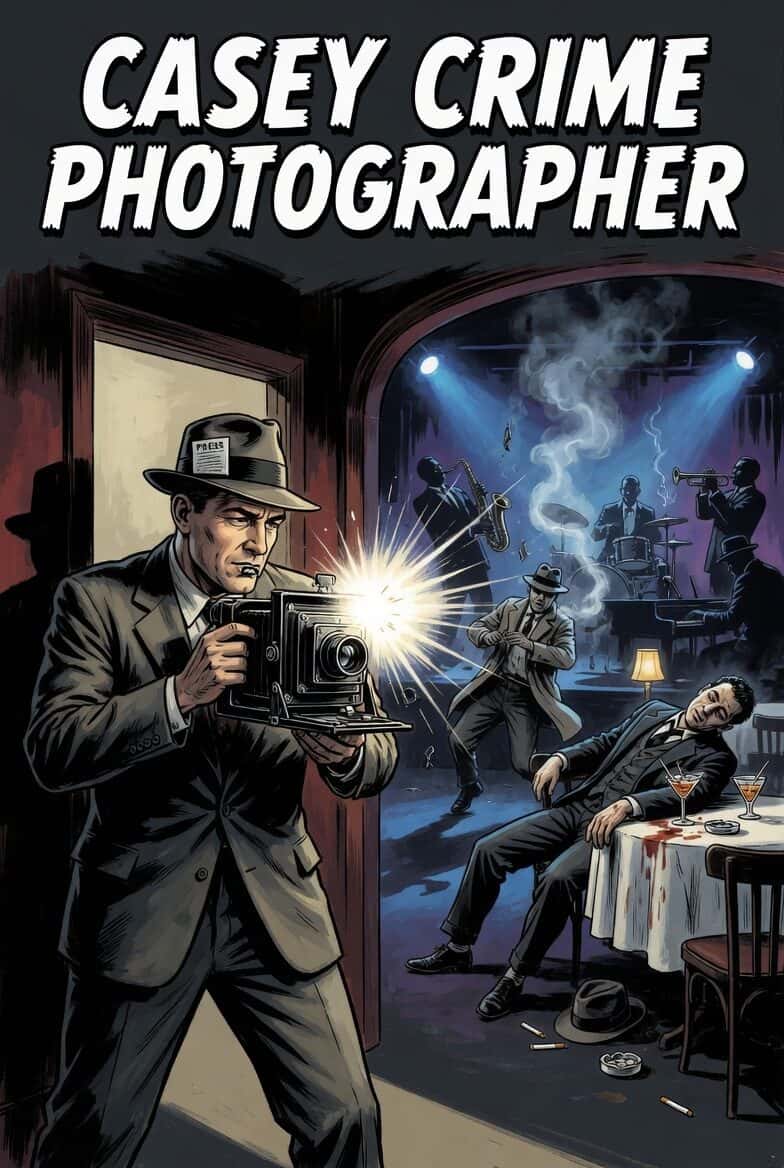
Yes, that's Hollywood Museums. As a matter of fact, our thanks to Joseph Millman of Merrick, Long Island, and to Barry Brooks of Winthrop, Massachusetts, for supplying some of the material for tonight's show. Incidentally... Next month, and we're on once a month, Jan, our guest is going to be John Gibson. Johnny Gibson, Casey Crime Photographer, and Ethelbert. That's right. In the Blue Note Cafe. And I'm sure we'll have some very fond memories to recall with John Gibson.
Marvelous.
The Golden Age of Radio has been brought to you by WTIC and by Pasha's Rugs and Imports in Hartford, where you'll find one of the largest selections of Persian rugs in Connecticut. The program was produced by Brian Hartnett. Recording engineer was Bob Cherego. This is Dick Bertel.
Camel Cigarettes presents Benny Goodman's Swing School. The Tuesday evening rally of everybody everywhere who gets a lift from the new pulsating music of youth, swing.
The Lux Radio Theater brings you Rita Hayworth and Charles Coburn in This Love of Ours.
Ladies and gentlemen, your producer...
The makers of Instant Chase and Soundtrack.
Chase and Sanborn Coffee presents the Charlie McCarthy Show.