
The written record
Read the transcript
Read along with the recording · About 40 min to read
In the garage of Dr. Frank Conrad on November 2nd, 1920, the first scheduled pre-advertised radio program in the United States went on the air. Station KDKA was broadcasting returns of the presidential race on the evening of Election Day. From a humble beginning in a Pittsburgh garage to the sumptuous studios of the national radio networks in New York, Chicago, and Hollywood, these are the years we refer to as the golden age of radio.
Around the fringe of the bright side of life, that whirls you in music to all the big night spots of New York town, to hear the top songs of the week sung so clearly you can understand every word and sing with your time. Al Kemp, on the air for Griffin. It's time to shine, shine. Tony, Home Permanent, presents... This is Nora Drake.
The Golden Age of Radio is brought to you by Burrett Mutual Savings Bank, New Britain, Connecticut. Safety, service, and growth have been the hallmarks of Burrett's progress, all built on the premise of good customer service.
This is Dick Bertell, and with me is the man with 2,000 hours of old-time radio memories on tape, Ed Corcoran.
Well, Ed, our guest tonight has appeared in just about every entertainment medium there is. He was a star in radio and television. On television, on the stage, and in motion pictures.
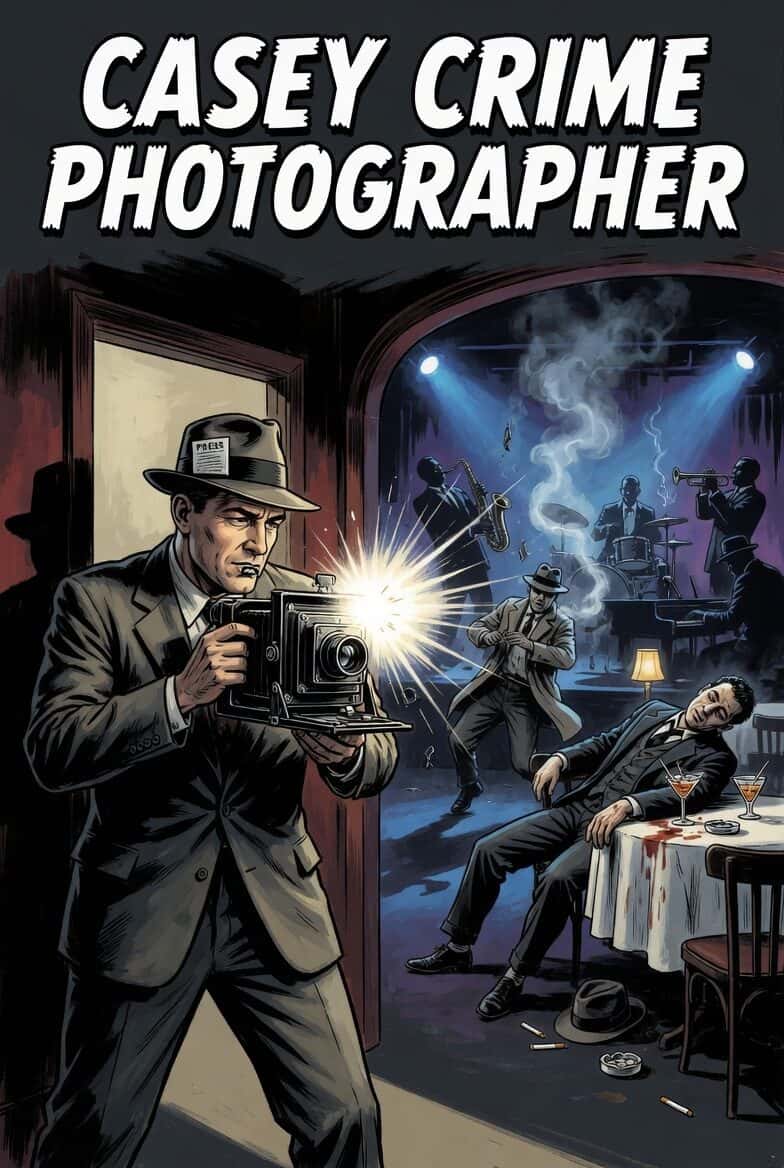
Yes, Dick, and some of the roles this gentleman played was Ethelbert in Casey, Crime Photographer. He was Connie in Terry and the Pirates. Red Pennington in the very famous kid show, Don Winslow of the Navy. I might add that this gentleman, probably the most well-liked man in all radio. And I think perhaps one of the most familiar voices in all of radio. And, of course, if our radio audience had the opportunity to see our... They'd recognize him immediately, having seen him on such shows as Sgt. Bilko and The Defenders and Edge of Night and many, many commercials. Without further ado, let's introduce our guest tonight, John Gibson.
John, it's a pleasure to have you with us on The Golden Age.
Well, thank you. I think I'm happy to be here, but I'm a little nervous. You know, this is something that really amazes me. When we have the opportunity to interview people with experience such as yours, and we found this... We found this in one of our recent shows with Peg Lynch. She is frightened of a microphone, and you feel the same way.
Absolutely. I don't think I'm second to anybody in volume of shows as an actor, as a freelance actor. I do believe that I have done somewhere over 10,000 radio shows, or appearances, if you want to call them, or whatever. And I am still very nervous.
Because usually people assume that radio was comparatively easy, as I do, standing in a well-lighted studio with a nice script in front of you, and all you have to do is read the lines.
Right. But you can say some awfully strange things by mistake, and your tongue can get twisted. As you know, there have been some classics.
I begin to get the picture. John, you really began with motion pictures. The Silent Days of Motion Pictures. The Silent Days of Motion Pictures. The Silent Days of Motion Pictures. The Silent Days of Motion Pictures.
Back on the coast in 1925, if I might throw in that date.
That's right. 1925, in the silence, and they were wonderful. It was a wonderful, wonderful era. I'm afraid the whole thing is gone now. Even the talkies and all, as far as Hollywood goes, it isn't what it was then. It was so wonderful because you could do things wrong, and they could edit it out. It was written no sound, you know, and it was sort of a human kind of a thing. You could eat afterward, you know.
That's right. That's right. You know, you played perhaps one of the most familiar characters to children of all ages that has ever appeared on the motion picture screen, and people don't realize this. And to really tell the story and put it into perspective, we have to go back to 1932. What was the name of that program and the character you created on radio?
That was Globe Headlines, and the character was Sleepy Dolan. Hardly anyone now living will ever remember that. But Sleepy was a newspaper photographer, and he was a funny character, and it started me in radio. As a result, for example, Disney used me in Snow White and the Seven Dwarfs.
You were Sleepy.
That's right.
Not only were you the voice of Sleepy, most people don't realize this. Until a few minutes ago, I didn't realize this. You were the actor.
Well, in my credits, I always say created the role of Sleepy, because people always think of the voice only in an animated cartoon. But I believe Snow White was the first, and as far as I know, the only ambitious effort where they photographed the actors with a movie camera. We worked in our street clothes with props. And then they drew the cartoon frame by frame from the film we had made. And they duplicated such tiny things as a bat of an eye, so that everything that showed in the cartoon had actually been performed.
No wonder. It's... So masterful even today, some, what, 33 years later.
That's right.
Well, John, we'll get back to your career, and we'll hear an excerpt from one of the many shows in which you appeared right after this.
Choosing where you will bank is for some people a matter of taste or convenience, for others, a matter of economics. Banking at Burrett Mutual Savings Bank might satisfy all of these preferences for you. Over the years, since 1889 to be exact, Burrett has always tried to be friendly and cooperative in its relationship with people. Our officers and tellers are particularly selected for these qualities. From a business standpoint, Burrett is large, strong, and successful. It is a mutual type of institution organized and operated for you, the customer. Offices are maintained at two locations in New Britain, at Corbin's Corner in West Hartford, and another will be open this fall on Town Line Roadways, in the West End, and at the West End, at the West End, in the West End. The most important thing is that you are always welcome at Burrett, either as a depositor or a borrower. As the only bank in New England with Mutual in its name, we have to live up to the reputation of being the People's Bank. Burrett Mutual Savings Bank, member FDIC.
Well, Ed, before we talk more to John Gibson about his career, let's hear John Gibson, the actor.
Yes, Dick, I've selected a wide variety of roles, that John played in, because he's a man of many voices and many characterizations. And the first one, he plays a Brooklyn cab driver in a very familiar show, Nick Carter, the Master Detective.
Another case for Nick Carter, Master Detective. Yes, it's another case for that most famous of all manhunters, the detective whose ability at solving crime is unequaled in the case of Detective Fiction. Nick Carter, Master Detective. Tonight's curious adventure... The corpse. And the cab. Or Nick Carter and the mystery of the murder in the park.
Taxi! Taxi!
Mr. Ramsey, you are very kind indeed to take such an interest in this problem.
Well, dear fellow, I consider it my civic duty.
Taxi! Ah, here's a cab now.
Yes. Okay, gents, make it snappy, we're blocking traffic.
All right, you get in first. My party, you know, my party. Thank you.
Where to, gents?
I guess the quickest way to get there is through the park.
Yes, drive through the park. I'll tell you where to turn.
Okay.
I believe it is on West 54th Street. And there's a flag out there. Excuse me, driver.
Yeah?
Do you mind if I shut this glass partition between us?
Go right ahead, boss. You're paying the fare. Here, let me do it for you.
Ah, well, that's better. Nice winter evening. Stars twinkling. I think I ought to pick us up for the grim business ahead.
Ah, lucky thing I ran into you.
Eh, lucky thing. Just my little way of keeping air out of the windpipe. There you are, my dear fellow. Eh, mighty lucky thing I ran into you tonight. You gotta help me, Nick, you gotta. They'll slap me and stir.
Now take it easy, Shorty, take it easy. And tell me again exactly what happened.
Like I said, two guys hail my cab. One of them says to drive to the park. He'll tell me where to turn out. And when you get out of the park?
The one guy opens the partition again and says to pull up. He's getting out. He tells me to drive the other guy to the precinct police station. And, Nick, if I hadn't looked around when I came to the intersection and seen what I seen, I'd have driven right up to the bullhouse with a dead body in my cab. Me, Shorty Bentano.
You don't remember what the man looked like, Shorty.
In the dark? I ain't got cat's eyes, Nick.
Gee, what's that?
You are, John. And just Patsy buzzing me in the talkback. Oh. Mr. Winchell, my stomach and my backbone are now a-toothsome. When do we eat?
You'll have to order yourself a sandwich, Patsy. We've got work to do.
Mm-hmm. And, Patsy, get me a police headquarters. Lieutenant Riley.
How can, Nick? You're gonna turn me in, Nick? I thought you'd help me.
I am going to help you, Shorty. But the sooner the police know about the murdered man outside in your cab, the better it is for you.
You're crazy, Nick. I done time. I ain't got a chance. If the cops find that stiff in my buggy, it's curtains. I'm getting out of here.
Shorty, sit down there.
Nick, they'll give me the hot seat for something I never done.
No, they won't, Shorty. Not while my name's Nick Carter.
Well, Shorty, you had quite a record of that, didn't you?
John, do you remember your first network broadcast at all?
It was the first coast-to-coast broadcast I ever did, and it was with the Marx Brothers.
Mm-hmm. From Hollywood. The RCA Studios. They broadcast from there. I think it was NBC.
Now, did you do a lot of network roles from the coast, or did you move to New York?
No, I did many network shows until 1939, and then I moved to New York, yes.
Why did you move to New York? It would seem to me that Hollywood would be the center for actors.
We had great respect for New York actors. The theory was that if you could make a go in New York, you could make it anywhere in the world. That this was the absolute top. And I was very impressed with the town. Unfortunately, I don't feel quite the same way today. But I was very impressed. And so it was an idea of moving to the big city. I was a bachelor then, and I was, you know, it didn't matter much where I was. And so I decided to try New York.
Well, we're going to hear one of your best roles. As a matter of fact, Ed, you're the historian here. How long did John Gibson play Ethelbert in Casey, Crime Photographer?
Oh, I guess about 11 years.
Is that right, John?
I say nine. Stotz Cotsworth, who played Casey 99% of the time, was, I think he said 10 or 11.
10 or 11. Either one could be right. Set the scene. This particular show is the one I think that you're most remembered for, because it was that length of time. You played the role of Ethelbert, the bartender. And we'll hear a little piano music in the background.
That's right. Herbert Chitteson, wasn't it? The blue note pianist?
Herman Chitteson first, and then Teddy Wilson later.
Well, quite an improvement. The Anchor Hawking Glass Corporation brings you Crime Photographer.
Ethelbert, what on earth's going on over there?
Oh, that's Grace. I can't get her away from that piano.
Tell her to let Herman play.
Oh, Grace, that's enough. Thanks. Besides, this is the famous noise abatement.
Well, it may be famous, Casey, but it's not as famous as my favorite line. Anchor Hawking is the most famous name in glass.
Good evening, ladies and gentlemen. This is Tony Marvin. Every week at this time, the Anchor Hawking Glass Corporation of Lancaster, Ohio, and its more than 10,000 employees, bring you another adventure of Casey, Crime Photographer. Ace cameraman who covers the crime news of a great city. Written by Alonzo Dean Cole. Our adventure for tonight, King of the Apes. Mid-afternoon, the Blue Note Cafe. Leaning comfortably on the bar are Casey and Ann Williams. And behind the bar, it's Chief Custodian Ethelbert.
You and Miss Williams are going to the circus tonight, huh, Casey?
Yeah, we gotta go, pal. It's an assignment.
Every year, Ethelbert, he's found an excuse to go to the circus.
You think I like to go to the circus, honey?
Well, if you don't... You better reserve yourself a chair in the old man's home.
She's right, Casey. Any guy who can't enjoy the circus is slipping and fast.
I love the clowns and the elephants. I still like the brass bands and the peanuts and popcorn.
I go for the lady bareback riders and the lady acrobats and the lady...
That's enough.
Well, I just wanted to establish that I'm not slipping, Annie. I'm simply matured, that's all.
Hmm. What kind of assignment you two got at the... The big show.
Principally, we're covering the feature act, King of the Apes.
They say that's swell. According to pictures on the billboards, that fella, the king, keeps 20 or 30 giant gorillas under his complete control.
Now, circus posters sometimes exaggerate a little bit, Ethelbert. The 20 or 30 giant gorillas are really six orangutans. And their trainer isn't the king. His name is King, Charles King.
Oh. But an orangutan is a pretty... A pretty big monkey, isn't it?
Big enough. A full-grown male can break a couple of Joe Louis's in two.
Then I guess six orangutans are plenty for a guy to go into a cage alone with.
I'd say so.
Well, we'd better get over to the circus, Annie. It's nearly time for our date.
Uh-huh, yeah. I thought you said you were going to the circus tonight.
We're interviewing Mr. King after the matinee performance. We're seeing the show tonight.
Oh. Well, so long, pal.
So long, Ethelbert. Have a good time. And, uh, don't let him lock you up in the monkey cage.
Nuts to you, pal. And so long.
So long, Casey. And nuts to you.
Well, John, it's a great role. And it's great to hear Ethelbert again. We'll be back in a moment.
Susie, hand me the phone book, will you, please?
What are you looking for, Kathy?
Uh, banks. Savings banks. Let's see. Here's one in the yellow pages. Burrett Mutual Savings Bank. Main Street, New Britain. Slater Road, New Britain. Corbin's Corner, West Hartford. Comfort... Compounds dividends monthly. Pays day of deposit to day of withdrawal interest. Certificates of deposit at 6% for two years and 5 3⁄4% for one year.
You want to start a savings bank account, Kathy?
Yes, and definitely at Burrett.
Why Burrett?
Because it's a mutual bank, Susie. It's working for us. You own part of it if you're a depositor, and its profits go to you.
Say, can I start an account there with you, Kathy? Gosh, I'd love to have a bank working for me.
John Gibson is our guest tonight, and we are reviewing that golden age of radio and certainly a golden career during that age. John, let's talk about some of the early successes that you had when you came to New York. Were you able to move right in? You certainly had a reputation behind you.
Yes, that's true. Yes, it was wonderful in New York because I did go to work right away, and I worked very hard and very long and did, you know, almost broke records for volume of work.
You did so many shows that at times, I guess you were really literally traveling from one studio to another.
We used to, it wasn't uncommon, let's put it this way, to do 10 shows in one day or one 24-hour period. That was because you pre-recorded five episodes of a series, usually 15-minute episodes. You would record like most of the day to make all of the recordings for the next week, and then in the evening you might record five again of another series. So 10 shows in a day was no great record. Many people did it. My record, I think, was seven separate shows on three or four different networks in one day, and it included everything from Crime Photographer to a show with... Dean Martin and Jerry Lewis, to a thing about Babe Ruth, to narrating something for the Community Chest Program, plus a couple of episodes of daytime soap opera type things.
Now, what about rehearsals? How did you get a chance to rehearse, for example, if you were traveling from one show to another?
Well, the rules were, the union rules were, that you had to hire a stand-in if you couldn't be there. So you hired another actor, and you paid him to be there and to play your role. And sometimes you had two or three actors stationed around town playing roles for you. And so I had to get out and run like mad across town and run into the studio and grab the microphone and my script and go on the air. It was frightening.
Also, John, you're somewhat of a comedian. Maybe we haven't mentioned that yet, but we have an excerpt here, Dick, of the Milton Berle Show, where John gets a few laughs from the audience. And I suppose it must have been delightful to get out of some of these heavier roles, John, and just let yourself go in front of a live audience, was it?
It was, because there is nothing to me like comedy. But I was confined to heavy dramas, usually. You wouldn't think so from what you heard, did you? But I did do a lot of heavy dramas. And I had a sort of side career that was... It was very profitable and very successful in its way of doing comedy on radio along with the dramatic shows. And let's listen to Milton Berle and this excerpt in just a moment.
Ladies and gentlemen, this announcement is for the special attention of the Wethersfield and Rocky Hill residents. Burrett Mutual Savings Bank will open a new branch in your area this fall. A bright new office, staffed by people from Rocky Hill and Wethersfield, will open in the Charles Schnore shopping center on Town Line Road in Rocky Hill. This center is just south of the Clam Box restaurant at the border of your two towns. Caldor's has already opened there. Watch for announcements of this opening. Remember, Burrett Mutual Savings Bank, the bank that has mutual in its name and where you, the depositor, own the bank. It's coming to your area and soon.
And now, for our musical guest of honor, he is none other than that great Metropolitan Opera star whose powerful, thundering bass voice has rocked opera houses all over the world. The one and only Mario Featherfield.
Ladies and gentlemen, Mr. Featherfield.
Thank you, Mr. Berle. My heart brims over for this glorious opportunity. Thanks to many opera lovers who have seen me sing out front and rushed out and grabbed me backstage.
Mr. Featherfield, I understand that when you sing at the Met, you receive more flowers than any other singer.
That's true. There's only one thing wrong.
What?
All the flowers say, rest in peace.
Mr. Featherfield, how did you get your start in opera?
I was assistant to Lawrence Tibbett. He couldn't get along without me.
He couldn't?
No. Remember when Tibbett used to sing, "Giorni poveri vecchi miei."
You were with him?
Who do you think tickled him?
Mr. Featherfield, hearing you talk, isn't your voice a little weird? You were a little bit weak for opera?
Oh, I was holding back.
You were, hey? You were holding back. In Tristan and Isolde at one place, I yelled for Isolde.
Uh, Mario Featherfield, we've heard so much about your wife. Has your wife ever appeared with you?
Oh, yes. Last week we were both in the big bull fight scene in Carmen. I was the bull fighter.
I see. And your wife?
Mm-hmm. The bull.
The bull. What a bull fight that must have been. Ooh, ha! What a fight. What a fight. The bull came charging low, and the fight was all over.
Well, what happened?
It was the first time in the history of Carmen that the bull fighter won on a foul.
Thank you very much, Mr. Featherfield. Thank you very much.
And our thanks to Milton Berle and, of course, to John Gibson for that delightful excerpt. I want to remind our listeners that they are listening to The Golden Age of Radio from WTIC in Hartford, Connecticut. I'm Dick Bertell. With me is the co-host of this program, the man with more than 2,000 hours of old-time radio memories filed away in his attic and in his cellar and on tape in the garage at Corcoran. And our special guest tonight is John Gibson, one of the great names in radio and in television today.
As a matter of fact, John, if I might just pause to talk about your current career. You're very active in TV, especially commercial work.
That's right. Practically nothing but commercials right now.
And there is a word called residuals, I understand.
Yes, there's something like that. I vaguely remember getting checks.
You know, I do want to get to our next excerpt, and certainly we want to talk about this era of radio. And that, of course, is the children's serials. You appeared as Red Pennington in Don Winslow of the Navy.
Right.
I listened to you faithfully every night. Never thought I'd have the opportunity to meet you. And I listened to you as Connie in Terry and the Pirates. Were those shows fun to do? Were they as much fun to do as they were to listen to?
Yes. There, if there ever was a relaxed moment, free of tensions and nerves, it was the series that you went on and on with for maybe two, three, four, five. Terry and the Pirates, I played Connie six years, I believe. And I think two or three years of Don Winslow. And you got so pretty well established and relaxed in those things, yes. And they were fun. They were wonderful fun.
Well, of course, it was great escapism for everybody in those days, as television is today. And we're going to hear from Terry and the Pirates and Connie.
Terry and the Pirates! The American Broadcasting Company brings you Terry and the Pirates. You know, it's a strange thing about young Terry Lee and his pals. They can get into more trouble, into more exciting spots and battle their way out and have more fun doing it than anybody ever knew. Yes, and they use their heads too as well as their fists. And you'll find them laughing as they fight on this great, thrilling summertime action show. And so, across the world to ancient China and the start of a new adventure, Escape in August.
Terry Lee, together with Pat Ryan and their friends, went to the Chinese mountains to recover an amazing radio invention stolen from them by the dreaded Dragon Lady. And now, after days of difficulty, Pat and Terry have the little radio device with them. Ah, but all is not so certain for these two daring Americans are hiding under a pile of hay in a Chinese wagon. They're trying to escape to Chungking to get away from the Dragon Lady. But now the wagon is halted on the road. And as Terry moves a bit of the hay that covers him, he can see back down the mountain road.
There's a car coming, Pat.
Huh?
It must be coming from Wutung.
Coming from... Hey, Terry, what do you suppose this is?
It's the car from the Dragon Lady's place. I might have figured that much. Well, fellow, they're not gonna drag us back to Wutung without a fight. You still have that gun you took from...
Yeah, yeah, I got it. And you keep that radio transmitter close to you.
Hey, what about Connie?
Well, what can he do?
Yeah, that's so. He's up front. He doesn't know we're under all this hay back here or anything. Better let him stay up there on the driver's seat. After all, nobody's after Connie. The DL told him he could go.
Uh-oh. Here comes trouble, fellow.
Yeah, plenty trouble.
Guess who's in that car.
I don't have to guess. It's Mr. Keel.
Yeah, and somebody else.
Come here. We will be for making talking with you.
I won't.
It's Ding Dong, the giant wrestler.
Yeah, he's driving the car for Keel.
You here. You boy on wagon seat. Come here.
Perhaps we you are speaking to Connie?
You said it, friend. You said it.
Uh, is something Topsy Turtle I am expecting?
Yes, plenty wrong, fellow. Hey, when Connie and Ding Dong get to talking together, nobody will understand anything.
Shh. Maybe we can hear what they say.
Right.
You are lost. Perhaps we going north-south when road is otherwise?
What has happened to your friends, my friend?
So sorry, Honorable Dingy. By the bones of my ancestors, I...
I am not interested in the bones of your ancestor. I'm very much interested in the bones of your friends.
That sounds like fun, but this was all taken very seriously, John.
Oh, yes. Very seriously. I think that we were discussing as that was being played, children would be able to see through a character that was trying to put it on. Put it on, heavy, yes. Well, if you sold to children, you had to sell hard. They had to believe you, yes. And they are, I think, very clever. I think they would detect any insincerity. Of all humans, I think children would be hard to fool in anything of a dramatic nature.
Well, of course, John played opposite a number of other characters in the film. John, you played opposite a number of Hollywood actors, Ed, in his radio career.
Yes, we were talking before we were on the air about Clark Gable, who, you know, you talk about Hollywood, you have to talk about Clark Gable, and you did a lot of radio shows with him, and you did a couple of pictures with him.
That's right.
I wonder whether you could just give us a little, you know, your impression of Clark Gable as a man in the highest possible terms.
I think he was very much a man's man and very much a gentleman and one of nature's noblemen, as they say, but I think he was a very fine person. The thing that people seem to be shocked when I say it is that, in my opinion, he was a shy man. You don't associate that with the characters he played, but I think that he was very shy unless he knew somebody very well. He was retiring and shy. This is I firmly believe. This is my slant on him. I worked with him many times in many different broadcasts. Oddly enough, people don't think of Gable in connection with radio, but he did many appearances on radio.
Yes, I've got quite a few of them. I have one with Red Dust he did and I have him on the Lux Radio Theater and quite a few others.
We're going to turn to one of the things that I'm proud to have to share with you today. I'm going to be talking about the the the the the the the operated for its depositors. There are no stockholders in the bank. Established in 1889, the bank has served generations of depositors and borrowers in central Connecticut, and is today a large, strong, and successful institution. When you save at Burrett, you commemorate the glorious past, you profit from the successful present, and share in the promise of an eventful future. Burrett Mutual Savings Bank, a proud mutual savings bank, two offices in New Britain, one in West Hartford, and another to open this fall for the Wethersfield-Rocky Hill area.
Well, the program I was referring to, Ed, was the Columbia Workshop series.
Yes, that was one of radio's great series, written, I guess, by Norman Corwin, I believe, wrote a lot of them. And we have one tonight called Man Without a Shadow, in which John is one of the featured players. And I think it's a great show. I think it's a great show. Also, Lorene Tuttle, a little unusual, the way she's, the roles she played. John, you tell us a little about that?
Yes, I believe there were something like 14 female roles in this half-hour dramatization, and Lorene played all of them, which was not an economy move on the part of the network. It was simply to illustrate her great versatility. And she played all the women, and it was a...
Well, why don't we listen to it now, and hear at least some of the voices, and also your own, in the Columbia Workshop.
Today's Columbia Workshop presentation captures completely the flavor of old world theater. Werner Michel has written this play in a style that characterized the original Peter Schlemiel legend. It has a bitter chocolate Central European flavor. It even has an old-fashioned, completely explanatory title. The Man Without a Shadow. Alexander Semmler, in composing the music, has done his job in the same conscious manner, using the orchestra with a kind of gaunt good humor. Now let's play it as it might have been played in happier days, at Salzburg, or in the Vienna, broadly with old-fashioned inflections, and with... We're on the air, Mr. Bander.
As if I didn't know. Music, maestro.
Good morning, Mrs. Schneider. Do you have mail for me?
Let me see, mademoiselle. Here's one for your father, and this is for Anna, and... Oh, I'm sorry. That is all for today. Maybe tomorrow.
Good morning, mademoiselle. Maybe tomorrow. Why doesn't he write? He doesn't love me. I would give anything for a loving word, don't you? I'd sell my soul today.
The devil. So you want to sell me your soul. Very well, mademoiselle. Let's talk the matter over.
Now, now, take this medicine barrel. This will help you.
Go away. You will never leave me for my pains, you crack. Before I take any medicine that you have concocted, I would rather sell my soul to the devil.
Why does everybody in this town want to sell me his soul? I don't doubt, Baron, that you have a very... aristocratic one. Perhaps you would go in for another swap? Let's discuss the matter.
Why didn't you go to the market to sell the eggs?
That is the money. I couldn't sell them, wife.
You could sell them. Why not?
I dropped them.
Oh, what am I punished with a creature like you? If I could get rid of you, I would sell my soul to the devil.
Now, look, madame. I don't know. I don't know. I don't know. I don't know. I don't know. I don't know. I don't know. I don't know. I have all this sympathy in the world for you, but I won't buy any more souls. My cold storage is crammed with them, and it's a bad season for souls anyway. I'm sure you have many other things which I might like to acquire. Let's talk it over.
Such was the situation in the town of A, we cannot divulge its full name, of course, for very obvious reasons, when Peter Schlemiel arrived. He had heard that strange things had happened to him, and he had been in a very bad mood. He had heard that strange things were going on there, and that many people got rich overnight for quite unknown and strange reasons. Peter Schlemiel had set out from home to become rich without too much trouble, and so the town of A seemed to be just the right place for him. It was a fine, sunny morning in the year 1829 when Peter stepped from a proud sailing ship. Now he was standing in the midst of the hurly-burly of the town's busy port.
Excuse me. My name is Peter Schlemiel. Could you...
Don't you say I'm busy!
Pardon my interrupting. My name is...
What do you want, stranger?
My name is Peter Schlemiel. What of it? Move on, lad. I don't need anyone.
But, pardon me, young man. I've been watching you. You seem to seek some information. Can I be of service?
Oh, I'd be very obliged. Just tell me what you wish.
My name is Monsieur X.
Monsieur X? A peculiar name.
I am sometimes referred to as the unknown quantity. Plain Peter Schlemiel. Schlemiel with an S-C-H. And I'm in search of a modest inn.
Hmm, come with me. I'll be happy to show you to one. How do you like our city?
I've made up my mind to like it in spite of these silly tales they tell us.
I know, I know. Pay no attention to them. It's just foreign propaganda.
I guess you are right. The devil wouldn't like it here. The sun shines too brightly.
Very bright, indeed.
The role of Peter Schlemiel... Schlemiel, as done for us by John Gibson.
John, Peter Schlemiel was supposed to be a German, wasn't he?
That's right. Which made it rather a problem for me because I didn't have a German dialect in my collection. And the closest I could get was I have a Danish stepfather who still has a Danish accent. And what I had was a kind of a polite Danish, I hope, accent.
Well, you did very well. We're going to talk about the anthology series in just a moment.
There is something solid and true about things that have survived the years. Music, drama, art, as personified by tonight's presentation, are manifestations of this. Another is a tried and true institution such as the Barrett Mutual Savings Bank, which since 1889 has existed through good times and bad, war and peace, yet continues to grow. And prosper with the years. Safety, service and growth have been the hallmarks of Barrett's progress. All built on the premise of good customer service. You can save at Barrett with confidence, with pride. Why not start your account today? Offices at Corbin's Corner, West Hartford, 267 Main Street, New Britain, Slater Road, New Britain. Deposits insured to $20,000 by Federal Deposit Insurance Corporation.
Well, anthology refers to the type of show that was different every week, like your Lux Radio Theatre and your Theatre Guild on the airs. And I think you mentioned that some of the finest roles you played were in series of this nature. Is that right?
That's right.
Do you recall in the U.S. Steel some of the better plays or better moments you had on the air in that particular series?
The play Tommy, for example. And Eugene O'Neill. Our Wilderness or Stranger Things?
Our Wilderness, of course. I'm stupid. Yes. Some of those were such wonderful plays and we had wonderful casts. We worked with wonderful people. And we had such a thrill playing these in a big theatre with an audience.
Yeah, it was really a lavish production. You have a full orchestra, you have a live audience and you'd have all top names playing. It was always three or four leading roles. Either Broadway or Hollywood actors.
How long would you rehearse for a show like that?
Well, as I recall, we would take several days. I remember the original Lux Radio Theatre, before acting became unionized, took a whole week to prepare an hour broadcast. And I think it was somewhat similar with the U.S. Steel Hour. I would imagine.
Yeah, they were very well done.
Well, we're going to move up to the 1950s for our final excerpt tonight. And this was really the beginning of the end for radio as we knew it, John. Did you recognize that early?
Oh, yes. Yes. For example, I remember going out to Chicago to record a show with Jimmy Durante and Don Ameche when they happened to be in Chicago. And, you know, close enough so that I could go out by train and spend the night and then come back the next night.
Mm-hmm.
Coming through Pennsylvania at this time, I noticed these houses all with the television antennas. Everywhere you looked. And I suddenly realized, I better get out of radio. Because here it is, even out here like Johnstown and places like that, the houses way down the valley had tall antennas and the ones up high had short ones. But they were everywhere. And all of a sudden, radio was slackening up. And whether you liked television or not, you had to get into it if you wanted to keep on working. And, of course, you got into it really in the early stages. I think it was 1945.
Now, you are a pioneer. Because you are celebrating your 25th anniversary with a medium which we all still consider to be young, brand new almost. We put Crime Photographer on at CBS when I don't think more than 20 people saw it. But we worked as hard as if it had been for an audience of 100 million. And it was a half-hour telecast done very legitimately. And it was in 1945. And that was my first. One of the executives at CBS called me back a few days later. And he said, we've decided we'd like to do a series of this on television. And I said, well, good. Let me know when it's on. I'd like to watch it. And that was my attitude. I hated it.
We're going to play an excerpt from one of the great shows of the 50s in which you appeared, John. Perhaps one of the funniest programs of the magnificent Montague. Wouldn't you agree, John?
Oh, yes. I think it was quite a classic. Probably not as well known as some, but one of the great radio shows.
Now, who starred in that one, Ed?
Well, it was Monty Woolley.
That's right. Well, now, in this particular excerpt, what role does John play?
Well, he plays a part of a producer, I believe, or a director. And, again, this shows John is really a great comedian as well as a great actor because he gets a lot of belly laughs in this particular excerpt.
Now back to the magnificent Montague. He is just finishing his Uncle Goodheart broadcast. Listen.
And so, Ronald, here you are again, visiting Uncle Goodheart in his little cottage on the sunny side of the lane with the police.
Hot on your trail. Now you want Uncle Goodheart to hide a car in his garage. Ronald, where is your memory? You have seven of them in there already. I understand, Ronald, everybody likes an automobile. But you, Ronald, you like everybody's automobile. Now, Ronald, you ask too much of old Uncle Goodheart. He wants me to make a decision for you. Should you join the automobile? Well, this is a question you must ask your own heart, Ronald. But no matter what you decide, Ronald, remember as you ride out on the highway with the sound of sirens behind you, always keep your head high into the sun and light.
And so ends another episode of Uncle Goodheart. Until he meets you again in his little cottage on the sunny side of the lane, here is Uncle Goodheart with his thought for today. Dear housewives, I was going to read a spring poem to you sent in by Mrs. Ophelia Zet of Mineola, Long Island. It's called Fertilizer, the workhorse of the gods. But housewives, as you know, before we can plant our little gardens, we must get rid of the weeds. There is a weed in our city by the name of Big Ed McClune. Mr. McClune! He out! He and his gambling empire must be pulled out by the roots!
Mr. Montague, please!
Bad! With Big Ed McClune! The opinions expressed by Uncle Goodheart are entirely his own and do not reflect the attitude toward Mr. McClune of anybody around here! Honest!
Let me at that mackerel! Down with my clothes! There you cut it half! Where's Springer, the producer? Oh, there you are, Springer! Mr. Montague, have you gone? Now wait, Springer! Saying things like that about Big Ed McClune on the air! What is that, a new wife committing suicide? Now, Springer, stop carrying on!
Well, carry on! You'll be carried on!
Why did you have to... Ah, here's our director, Mr. Zinzer! Well, Zinzer, what did you think of the broadcast?
Oh, it was a rip-snorting Lollapalooza!
Thank you, Zinzer! Thank you! Well, buenas noches, Mr. Montague!
Buenas noches? Well, Zinzer, you're not in Mexico!
I will be in a few hours.
Zinzer, you've got to stay here and face it! Shame on you, Zinzer! Hadn't you any spunk?
Spunk? Schmunk? I'm getting out while they're getting stuck!
That's the kind of man you are, Mr. Zinzer! You turn and run the minute it looks as if there's going to be a fight!
Mr. Montague, I've built my whole career around being a coward! If this isn't getting off anywhere, I'd better phone the sponsor!
I just did.
That's what I was gonna say!
I'm sorry, Zinzer. I'm sorry. I'm sorry. I'm sorry. I'm sorry. I'm sorry. I'm sorry. I'm sorry. I'm sorry. I'm sorry. I'm sorry. I'm sorry. I'm sorry. I'm sorry. I'm sorry. I'm sorry. I'm sorry. I'm sorry. If this isn't getting us anywhere, I'd better phone the sponsor. I just did. What'd he say?
Buenas noches.
What was that?
Yes, you're going to leave me holding the bag.
You're not going to be left holding the bag, Mr. Montague. You're going to be in it.
What's the matter with you two? Haven't you any good red American blood in you?
Sure we have. We just don't like it to get splashed around.
Mr. Montague, come into my office. You'll have to write a request.
A request? Never. Friggin' if you think I will take back what I said about that monster.
Johnson's up. What is it?
They want us in the executive office.
Goodbye, radio. Here's where I go back to selling hot chestnuts.
That was delightful. And our thanks, incidentally, to Jay Hickerson of North Haven, Connecticut, for providing that for us. John, do you remember that role?
Yes, that I do remember. Very well. This is your line. It was a classic, I think. Due to Nat Hiken, incidentally, who created it.
Did he actually write some of the scripts, too?
Oh, yes. He did. Yes. It is a cut above the humor of that era, no question about it. He was a genius.
Kathy, where are you going so fast?
To the bank, Richard. I've got to put this money away before I spend it.
Where do you bank, Kathy?
Where everybody banks, silly, at Burrett Mutual Savings Bank.
At what mutual savings bank?
Burrett Mutual Savings Bank. I use their convenient Corbin's Corner office in West Hartford. But they also have two offices in New Britain.
Oh. Why the Burrett, Kathy?
It's one bank where I can get 6% for two-year certificates and 5.75% for one-year certificates. My money really earns there.
How about their 90-day accounts, Kathy?
They have them, Richard, at 5.25% compounded monthly.
Why do they have Mutual in their name?
Because they're owned by their depositors, Richard. And the profits go to them in the form of dividends. Burrett is the only bank around here with Mutual in their name.
Well, take care, Kathy. I've got to get back to work.
Where do you work, Richard?
At Burrett Mutual Savings Bank.
What do you do?
I take public opinion polls.
How wonderful, Richard. Would you ask me some questions sometime?
John, looking back over that part of your career, and it's only really a part because you're still active very much so today in television, what are your thoughts about the golden age of radio?
Well, the funny part of radio is you often performed many colorful roles in many colorful scripts, but in a plain drab studio. So there's nothing visual to remember. It's all mental. It's all in your memory only. And whereas if you had worked in a motion picture, you might have been out on a set out in the, you know, out in the desert or somewhere, and you would remember it because of that. But year after year as you worked in radio, it was so wonderful. All you did was wear a decent suit and, and carry a pencil with you. And you came in and, and marked your script and went to work. And then you went home and people didn't know you, which was rather pleasant. You could go anywhere and you weren't recognized. And, and it, for if you're shy at all, and I think maybe I'm a little bit, it's kind of nice.
Well, John, I want to thank you so much for being our guest tonight here on the golden age of radio. John Gibson, well-known radio actor today known, I'm sure by, by all of you in a television and in motion pictures. And of course, my thanks to our cohost, Ed Corcoran for providing us with just a few minutes of his more than 2000 hours of old time memories on tape. Ed, we have a great show lined up for next month.
Yes. Uh, one of the really big stars besides John Gibson, Rudy Vallee. And we're going to not only trace the career of Rudy Vallee, but in so doing, we're going to, develop the whole story of radio from the very beginnings.
This has been the golden age of radio brought to you by Barrett mutual savings bank, new Britain, Connecticut safety service and growth have been the hallmarks of Barrett's progress. All built on the premise of good customer service. The golden age of radio is produced by Brian Hartnett. The engineer is Bob Sherego. This is Dick Bertel. Good night.
Camel cigarettes present Benny Goodman, swing school, the Tuesday evening rally of everybody everywhere who gets a lift from the new pulsating music of youth. Wait, the Lux Radio Theatre brings you Rita Hayworth and Charles Boyer in this love of ours. Ladies and gentlemen, your producer, Mr. Makers of instant chase and Sanborn coffee presents the Charlie McCarthy show.