
The written record
Read the transcript
Read along with the recording · About 20 min to read
<!-- kimi_cleaned -->
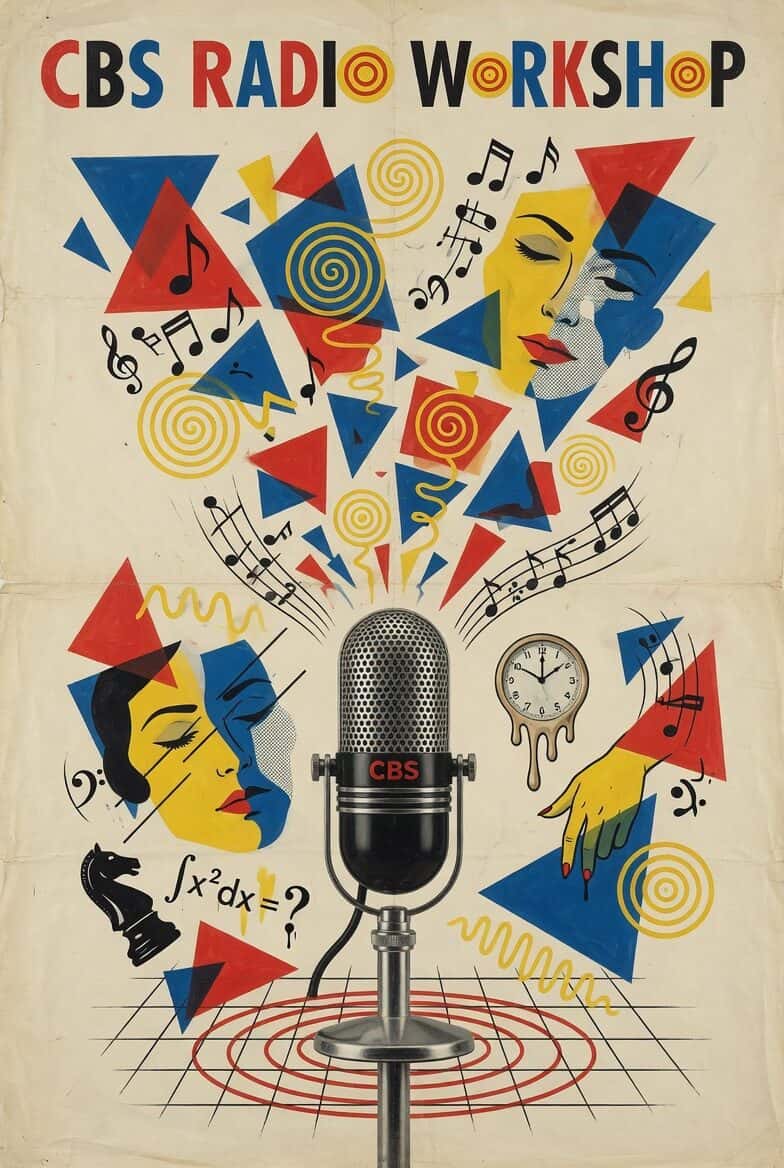
CBS Radio, a division of the Columbia Broadcasting System, and its 217 affiliated stations, present the CBS Radio Workshop, radio's distinguished series dedicated to man's imagination, the theater of the mind. Tonight, from Hollywood, Season of Disbelief and Hail and Farewell, adapted and directed by Anthony Ellis, two unusual and provocative character studies by one of America's most original authors, Ray Bradbury. Ladies and gentlemen, Mr. Bradbury.
It has always seemed to me that life, to all of us, is an endless coil of rope playing through our hands every moment of every hour of the day. The long line of the rope goes back to the time we were born and extends on out ahead to the time of our death. I realize the eternal now, the flickering moments when each of us must play the rope as best we can, without burning our fingers, snarling the coils, or breaking the line. This is a study of one woman and her rope. Season of Disbelief.
It was a saver. She saved tickets, old theater programs, bits of lace, scarves, railroad transfers, and such things. All the tags and tokens of her experience, she said.
I have a stack of records. Here's Caruso. It was in 1921 in New York. I was 40. John was still alive. Here's June Moon. 1929, I think right after John died.
That was the huge regret of her life, in a way. The one thing she had most enjoyed touching and listening to and looking at, she hadn't saved. John was far out in the meadow country, dated and boxed and hidden under grasses, and nothing remained of him but his high silk hat, his cane, and his good suit in the closet. But what she could keep, she had kept. Pink flower dresses crushed among mothballs and vast black trunks, and cut glass dishes from her childhood. Her past lived with her.
Then, the thing with the children. It happened in the middle of the summer. Mrs. Bentley, coming out to water the ivy on her front porch, saw the two cool-colored sprawling girls lying on her green lawn, enjoying the immense prickling of the grass. At the very moment she was smiling down on them with her yellow mask face, around the corner, like an elfin band, came an ice cream wagon. The two girls sat up, turning their heads like sunflowers after the sun.
Little girls! Would you like some?
The wagon stopped. There was an exchange of money for pieces of the original ice age. These she gave to the girls, who thanked her with snow in their mouths, their eyes darting from her buttoned-up shoes to her white hair.
Don't you want a bite?
No, no, child. I'm old enough and cold enough. The hottest day won't thaw me. Come up on the porch and sit in the shade. But mind you, don't drip.
I'm Alice. She's Jane.
How nice. I'm Mrs. Bentley.
They call me Helen.
I didn't know old ladies had first names.
Well, you never hear them used. Oh, my dear, when you're as old as I, they won't call you Jane, either. Old age is dreadfully formal.
How old are you?
I remember the dinosaur.
No, but how old?
Seventy-five.
That's old.
I don't feel any different now than when I was yours. Our age.
Our age?
Yes, once I was a pretty little girl, just like you, Jane.
What's the matter?
Nothing.
Oh, you don't have to go so soon, I hope.
Well...
Is something the matter?
What?
Mother says it isn't nice to fib.
Of course it isn't. And not to listen to fibs. Who was fibbing to you, Alice?
You were. About what? About your age. About being a little...
A little girl? But I was. Many years ago, a little girl like you.
Come on, Jane.
But how ridiculous. It's perfectly obvious. Everyone was young once.
You're joking with us. You weren't really ten ever, were you, Mrs. Bentley?
You run on home. Get away from here. I won't have you laughing. And your name's not really Helen.
Of course it's Helen.
Goodbye. Thanks for the ice cream.
Once I played hopscotch. You hear me? I did. The idea. No one ever doubted I was a girl before. What a silly, horrible thing to do. I don't mind being old. Not really. But I do resent having my childhood taken away from me.
After supper, she gathered together certain items in a perfumed kerchief. Then she went to her front porch and stood there stiffly for half an hour. As suddenly as night birds, the two girls flew by. And Mrs. Bentley's voice brought them to a fluttering rest.
Girl! Girls! Come up on the porch.
Yes, Mrs. Bentley.
I've got some treasures to show you. Sit down, both of you. Now, here. I wore this when I was nine. It's a comb.
Let's see. It's pretty. And here's the tiny ring I wore when I was eight. It doesn't fit my finger now.
Why, it just fits me. The comb fits my head. And here. Here, a picture.
Who's this little girl?
It's... It's me.
It doesn't look like you. Anybody could get a picture like this somewhere.
But it's the truth.
Any more pictures, Mrs. Bentley? Of you later? You got a picture of you at 15? And one at 20? One at 40? 50?
Oh, nonsense. I don't have to show you anything.
And we don't have to believe you.
But this picture proves I was young.
That's some other little girl like us. You borrowed it.
I was married. Where's Mr. Bentley?
He's been gone a long time. If he were here, he'd tell you how young and pretty I was when I was 22. But he's not here, and he can't tell.
I have a marriage certificate.
You could have borrowed it. The only way I'll believe you were ever young is if you have someone say they saw you when you were 10.
Thousands of people saw me, but they're dead, you little fool. Dead or ill or gone away in other towns. I don't know a soul here. Just moved here a few years ago, so no one saw me young.
Well?
There you are. Nobody saw her.
Listen. You must take these things on faith. Someday you'll be as old as I. People will say the same.
Oh, no. They'll say those vultures were never hummingbirds. Those owls were never orioles. Those, those parrots were never bluebirds.
One day you will be like me.
No, I won't. Or me.
You wait and see. You, child. Your mother. Haven't you noticed over the years the change?
No. She's always the same.
I guess we'd better go home. Thanks for the comb. It's fine. And thanks for the ring. It just fits.
And go. No, come back. Those, they're mine. No, you...
She lay awake for many hours into that night, among her trunks and trinkets. A night wind blew in the room. The white curtain fluttered against a dark cane, which had leaned against that wall near the other brick of black for many years. The cane trembled and fell. Its gold, the pharaoh glittered in the moonlight. It was her husband's opera cane. It seemed as if he were pointing it at her, as he often had, using his soft, sad, reasonable voice.
Those children are right. They stole nothing from you, my dear. These things don't belong to you here, you, now. They belong to her, their other you, so long ago.
And then, as though an ancient phonograph record had been set hissing under a steel needle, she remembered a conversation she had once with Mr. Bentley. Mr. Bentley, so prim, a pink carnation in his whisk-broomed lapel.
My dear, you never will understand time, will you? Don't you see, no matter how hard you try to be what you once were, you can only be what you are here and now. Time plays tricks. When you're nine, you think you've always been nine years old, and will always be. When you're 30, it seems you've always been balanced there on that bright rim of middle life. And then, when you become 70, you are always and forever 70. You are in the present. You are trapped in a young now or an old now. But there is no other now to be seen. Ticket stubs are trickery. Saving things is a magic trick with mirrors. You're saving cocoons, corsets in a way you can never fit again. Why save them? You can't really prove you were ever young.
Pictures. Pictures, John.
No, they lie. You're not the picture.
Affidavit.
No, you're not the dates or the ink or the paper. You're not these trunks of junk and tricks. You're only here, now, the present you.
Yes. I see. I see. In the morning, in the morning, I'll do something final about this and settle down to being only me and nobody else from any other year. That's what I'll do.
The morning was bright and green, and there at her door, like moths bumping softly on the screen, were the two girls.
Got any more things to give us, Mrs. Bentley? More of the little girls' things?
She led them down the hall to the library.
Take this. The dress in which she had played the mandarin's daughter at 15. And this. And this. A kaleidoscope, a magnifying glass. Pick out anything you want. Books, skates, dolls, everything. They're yours.
Ours?
Only yours. And will you help me with a little work? I'm building a big fire in my backyard. I'm emptying the trunks, throwing out this trash for the trash man. It doesn't belong to me. Nothing ever belongs to anybody.
We'll help you, Mrs. Bentley. It'll be fun.
And now, on summer afternoons, you can see the two little girls like wrens on a wire on Mrs. Bentley's front porch. They sit in their cool dresses, not stirring, waiting for her. And when the silvery chimes of the ice cream man are heard, the front door opens, Mrs. Bentley floats out with her hand deep in the throat of her silver-mouthed purse, and for half an hour, you can see them there on the porch, the two girls and the old lady, putting coldness into warmness, eating chocolate icicles, laughing. At last, they are good friends.
How old are you, Mrs. Bentley?
Seventy-five.
How old were you 50 years ago?
Seventy-five.
You were never young, were you?
And never wore ribbons or dresses like these?
No, Jane, never.
Have you got a first name?
My name is Mrs. Bentley.
And you've always lived in this one house?
Always.
And never were pretty?
Never.
Never in a million trillion years?
Never in a million trillion years.
Presenting now, the second of our duo, and Mr. Ray Bradbury.
The rope of life hisses through our fingers. We reach out to him, and he says, We reach, it's gone. The beauty of any particular flower, song, poem, or person lies often in the fact that roses must fade, songs die with the breath, poems burn in the fire, golden lads and girls all must, as chimney sweepers, come to dust. But what if beauty could be made to last? Would it still be beautiful or monstrous? Here's the study of a person who seized the traveling rope of life, a moment of beauty, and felt it freeze in his hands. Hail and Farewell.
He was going away. There was nothing else to do. The time was up, the clock had run out, and he was going very far away indeed. His suitcase was packed, shoes shined, hair brushed, it expressly washed behind his ears, and it remained only for him to go down the stairs, out the front door, and up the street to the small town station, where the train would be. He would make a stop for him alone. Then Fox Hill, Illinois, would be left far off in his past. And he would go on, perhaps to Iowa, perhaps to Kansas, perhaps even to California.
Yes. All right. I'll be down.
In the mirror on his dresser, he saw a face made of June dandelions and July apples and warm summer morning milk. There, as always, was his look of the angel and the innocent, which might never in the years of his life change. He picked up his valise, looked once more around his room, and went downstairs.
Here I am.
You can't really be leaving us, Willie. People are beginning to talk.
I've been here three years now, but when people begin to talk, I know it's time to put on my shoes and buy a railroad ticket.
It's all so strange. I just don't understand. It's so sudden. We'll miss you, Willie. We'll miss you very much.
I'll write you every Christmas. It's, uh, it's been a great, uh, pleasure and satisfaction. It's a shame it had to stop. A shame that you had to tell us about yourself. An awful shame we can't stay on.
You're the nicest folks I ever had.
Oh, Willie. Willie.
It's not easy to go. You get used to things. You want to stay. But it doesn't work. I tried to stay on once after people began to suspect. How horrible, people said. All these years playing with our innocent children, they said.
And us not guessing. Awful. And I finally had to leave town one night. It's not easy. You know darn well how much I love both of you. Thanks for three swell years.
Well... Willie, where will you go?
I don't know. I just start traveling. When I see a town that looks nice and green, I settle in.
Will you ever come back?
Oh, in about 20 years, maybe. It should begin to show on my face. When it does, I'm going to make a grand tour of all the mothers and fathers I've had.
Oh, Willie. We can't complain, Anna. Better to have had a son 36 months than none whatever.
Well, I guess it's time. Goodbye.
Willie kissed Anna quickly, touched Steve's hand, seized his luggage, and was gone up the street in the green noon light under the trees, not looking back. A small boy, a boy, a boy, a boy, a boy, 12 years old, with a birth certificate in his valise to show that he had been born 43 years ago.
The boys were playing on the Green Park Diamond when he came by. He stood a little while among the oak tree shadows watching them hurl the white snowy baseball into the warm summer air. The boys' voices yelled and the ball lit on the path near Willie.
Oh, I'm going to visit a cousin of mine for a few days.
Oh? You guys just throwing the ball around, huh?
Yeah.
You taking the train alone, Willie?
Yeah. Boy, that's neat. Hey, uh, how about a couple of throws? I got a little time.
Sure, I guess so.
Willie dropped his bag and ran back. The white baseball was already up in the sun and plunging down to him and away again to their white figures, up in the sun again, rushing, life coming and going in a pattern. He thought of the last three years now spent to the penny and the five years before that and so on down the line. The baseball flying here, there. Mr. and Mrs. Robert Hanlon, Creek Bend, Wisconsin, 1932, the first couple, the first year. Henry and Alice Bolts, Lymeville, Iowa, 1935. The Smiths, the Eatons, the Robinsons, 1939, 1945. Husband and wife, husband and wife. No children, no children, no children. A knock on this door, a knock on that.
Pardon me, my name is William. I wonder if I could...
A sandwich? Come in. Come in and sit down. Where are you from, son?
The sandwich, a tall glass of cold milk, the smiling, the nodding, the comfortable, leisurely talk.
Son, you look like you've been traveling. You run off from somewhere?
No.
Are you an orphan? We always wanted kids. Never worked out. Never knew why. One of those things.
Well, getting late, son. Don't you think you better hit for home?
I got no home.
A boy like you, not dry behind the ears. Your mother will get worried.
I got no home and no folks anywhere in the world. I wonder, I wonder, could I sleep here tonight?
Well, now, son, I don't just know. We never considered taking in the...
Oh, we've got chicken for supper tonight. Enough for extras. Enough for company.
The voices and the faces and the people and always the same first conversations. The years turning, flying away. The voice of Emily Robinson in her rocking chair in summer night darkness. The last night he stayed with her. The night she discovered his secret. Her voice saying, I look at all the little children's faces going by and I sometimes think, what a shame. What a shame that all these flowers, all these flowers have to be cut. All these bright fires have to be put out. What a shame all these have to get tall and unsightly and wrinkle and turn gray or get bald and finally all bone and wheeze be dead and buried off away. When I hear them laugh, I can't believe they'll ever go the road I'm going. They're so eager for everything. I... I guess that's what I miss most in older folks. The eagerness gone nine times out of ten. The freshness gone. So much of the drive and life down the drain. I like to watch school let out each day. It's... It's like someone threw a bunch of flowers out of the school front doors. How does it feel, Willie? How does it feel to be young forever? Are you happy? Are you alive? Are you as fine as you seem?
I... I worked with what I had. After my folks died, after I found I couldn't get man's work anywhere, I... I tried carnivals, but they only laughed. Son, they said, you're not a midget. And even if you are, you look like a boy. We want midgets with midgets' faces. Sorry, son. What was I? A boy? I looked like a boy, sounded like a boy. So I might as well go on being a boy. Why? What could I do? What job was there for me? And then one day, I saw this man in a restaurant looking at another man's pictures of his kids. Sure wish I had kids, he said. Sure wish I had kids. And that instant, sitting there, I knew what my job would be for all the rest of my life. There was work for me. Making lonely people happy. Keeping myself busy. Playing forever. I knew I had to play forever. Deliver a few papers, run a few errands, mow a few lawns. All I had to do was to be a mother's son and a father's pride.
But, Willie, didn't you ever get lonely? Didn't you want things that grown-ups wanted?
I fought that out alone. I'm a boy, I told myself. I'll have to live in a boy's world. Read boys' books. Play boys' games. Cut myself off from everything else. And I played it that way. Oh, it wasn't easy. There were times. But it's nice being a child for over 40 years. It's a living, as they say. And when you make other people happy, then you're almost happy, too. And anyway, in a few years now, I'll be in my second childhood. All the fevers will be out of me and all the unfulfilled things. And most of the dreams. Then I can relax.
He threw the baseball one last time and broke the reverie. And he was picking up his suitcase. The two boys stood beside him. They were embarrassed at his shaking hands with him.
Willie, it means if you're going to China or something.
Oh, that's right. It isn't. So long, Willie. See you next week.
Yeah. So long, Sam. So long, Jamie.
And he was walking off with his suitcase again, looking at the trees, going away from the boys and the street where he had lived. And as he turned the corner, a train whistle screamed and he began to run.
In the early morning, with the iron smell of the train around him and a full night of traveling shaking his bones and his body, he awoke and looked out on a small town just arising from sleep. Porter moved by, a shadow in the shadows.
Sir, what town's this?
Valleyville.
How many people?
Ten thousand.
Why, this your stop? He looks green. He looks nice and quiet. Son, you know where you're going?
Here.
I hope you know what you're doing, boy.
Yes, sir. I know what I'm doing.
He was down the dark aisle, luggage lifted after him by the porter and out into the smoking, steaming cold beginning to lighten morning. He stood looking at the porter and the black metal train against the few remaining stars.
Boy, good luck to you, boy.
He watched the black train. He didn't move all the time it was going. He stood quietly. A small boy, 12 years old again. On the worn wooden platform and only after three entire minutes until the train was completely gone away and out of sight did he turn at last to face the empty streets below. Then as the sun was rising, he began to walk very fast so as to keep warm down into the new town.
Tonight, the CBS Radio Workshop has presented two studies by Ray Bradbury, adapted and directed by Anthony Ellis. The first, Season of Disbelief, with Virginia Gregg and John Dehner, Dawn Bender, Marion Richmond, and Herb Butterfield. The second, Hail and Farewell, with Richard Beals, Stacy Harris, Vivi Janis, Lawrence Dobkin, Paula Winslowe, Roy Glenn, Billy Chapin, and Peggy Webber. We wish to thank Mr. Bradbury for being our special guest. Original music for tonight's program was composed and conducted by Jerry Goldsmith. The CBS Radio Workshop is produced by William Froug. This is Hugh Douglas inviting you to join us again next week when we present the eminent Shakespearean teacher, Dr. Frank C. Baxter, professor of English at the University of Southern California, and... Mr. William Shakespeare, noted author, who will be our special guests, presented on the CBS Radio Workshop. On Sunday, over most of these same stations, the New York Philharmonic Symphony will be heard in another exciting concert conducted by Dimitri Mitropoulos. This weekend, the noted Polish pianist, Witold Małcużyński, will be heard as soloist. Stay tuned for five minutes of CBS News to be followed on most of these stations by The Jack Carson Show. America listens most to the CBS Radio Network.