
The written record
Read the transcript
Read along with the recording · About 21 min to read
<!-- kimi_cleaned -->
It was the maddest, gladdest, damnedest existence ever enjoyed by mortal youth. A newspaper reporter in those days had a grand and gaudy time of it, and no call to envy any man. And yet I have marveled that the human race did not revolt against the imposture, dig up the carcass of Gutenberg, and heave it to the buzzards and hyenas in some convenient zoo.
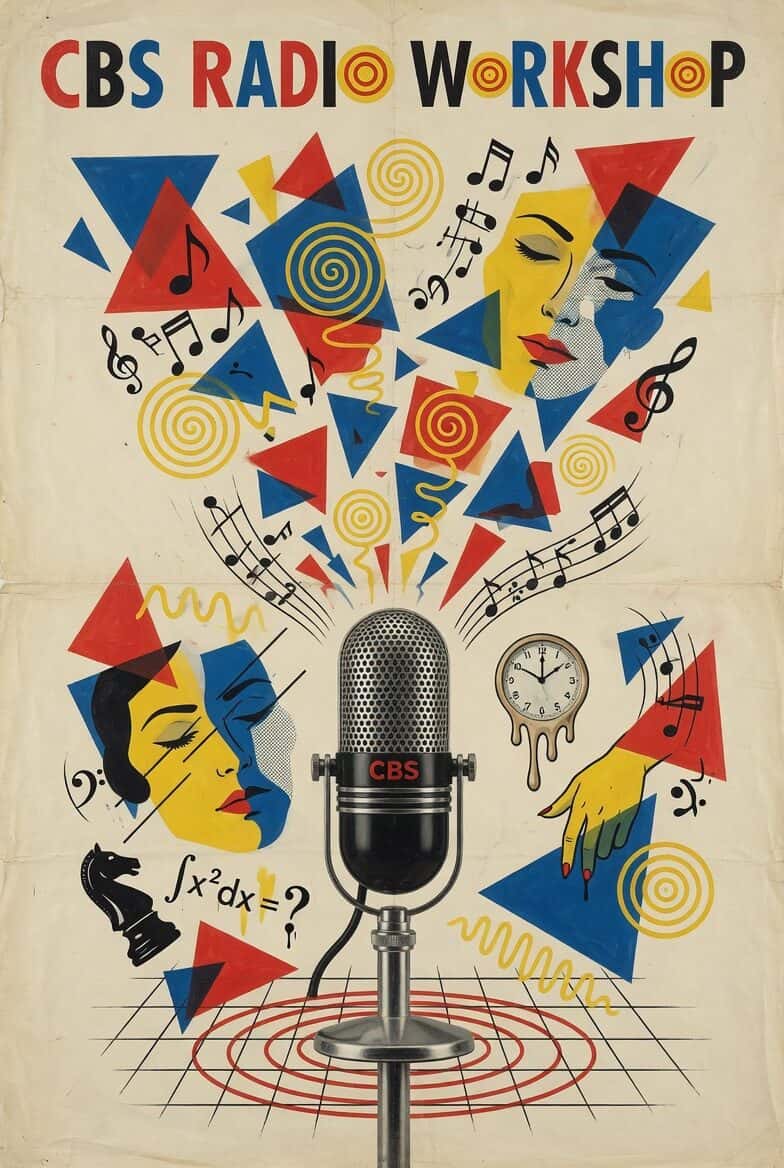
The CBS Radio Workshop, dedicated to man's imagination. The theater of the mind. Tonight, Bring on the Angels, an affectionate revival drawn from his own book Newspaper Days of the early life and times of Henry L. Mencken.
The man in the bed has had a stroke. A being full of gusto and sour joy, he's paralyzed. A master's master of words, he'll never speak sense again. He's 68. His eyes are open, but there's no fire there. They see instead, inward. What the sudden grab of thrombosis has left of his brain now gropes in the swirling mist of reversing time, seeks, finds, remembers.
I remember my father died on Friday, January 13th, 1899, and was buried on the ensuing Sunday. On the Monday evening immediately following, I presented myself in the city room of the old Baltimore Morning Herald, and applied to Max Ways, the city editor, for a job.
Uh, Mr. Ways, sir?
I was 18 years, four months, and four days old. Wore my hair longish and parted in the middle, had on a high stiff collar and an ascot cravat, and weighed something on the minus side of 120 pounds.
Sir?
What's your problem, Sonny?
Uh, I, I'd, uh, like a job. A reporter's job.
Got any experience?
Uh, no. No, sir.
Been to school?
Baltimore Polytechnic Institute, but I've done some writing. Poetry.
Well, yeah, yes, yes, sir.
What makes you think you want to be a newspaper man?
Well, I think it'd be inter, uh, exciting.
Huh. You working?
Yes, sir, for my Uncle Henry at Mencken and Brother the Cigar Factory.
What's your name?
Mencken, sir. Henry Lewis Mencken.
Well, I'll tell you, Henry Lewis, we don't have any opening right now, but you drop in now and then in the evening, say between 7:30 and 7:45, something might turn up.
Hey, boy.
The next night, precisely at 7:31, I was back. Max waved me away without parley. The third night, he simply shook his head. The fourth, fifth, sixth. Well, to make an end, this went on for four weeks, night in and night out, until Thursday, February 23rd, 1899. I found Max reading copy. For a few minutes, he did not see me. Then his eyes lifted and he said, casually, Go out to Govanstown and see if anything's happening there.
Yeah. He's got a Govanstown correspondent, but he hasn't been heard from for six days.
What'd you get, Henry?
Well, there were only two lights burning in town, so I didn't...
The news, the news.
The Imperial Order of Red Men have postponed their oyster supper to March the 6th.
Stop the press. Anything else?
Yes, sir. A horse was stolen.
Give me a stick.
Sir?
A stick is one paragraph. Pen and paper over there.
I was up with the milkman the next morning to search the paper, and there it was. A horse, a buggy, and several sets of harness, valued in all at about $200, $250 were stolen last night from the stable of Howard Quinney in near Kingsville. The county police are at work on the case, but so far no trace of either thieves or booty has been found.
He didn't change a single word. I was hooked. I was in print. I was a reporter. I was hired.
Sonny, I'm gonna give you a start. I'm gonna put you on the payroll at $7 a week. If you make good, you get a raise.
Oh, that's wonderful, Mr. Ways.
$12.08.
And the name is Max.
Yes, sir.
It wasn't long before I had a typewriter, a spittoon of my own, and a beat. Ah, those were the days. The happy days. The days that chased each other like little kittens chasing their tails. The very first week, I landed in court on the witness stand. The reformers had blithered up a crusade against the bawdy dance halls, and I became an unwilling witness against two cops who were trying to get me out of jail. I was the only one who had been aware of what was going on.
Answer the question. Did you see the defendants there?
Well, uh, I spoke to many officers of the law that night. I may have seen...
The poor flat feet were guilty, for I talked with them there many times. But I managed to sophisticate my testimony with so many ifs and buts that it went for nothing, and they were acquitted. That was my first and last experience as an agent of moral endeavor. I made up my mind at once that my true and natural allegiance was to the devil's party. And it has been my firm belief ever since that all persons who devote themselves to forcing virtue on their fellow men deserve nothing better than kicks in the pants. Hence Mencken's Law. To wit... Whenever A annoys or injures B on the pretense of saving or improving X, A is a scoundrel.
I learned my trade from veterans who had seen Lincoln clear. Sometimes, for instance, it would be a matter of legging it to the iron works of Locust Point. But DeBecker was more experienced than I and had a beard to prove it.
Come with me, Mencken.
Where are we going?
Never mind. Come with me.
Two beers, doc. Again.
Henry, why should we walk our legs off trying to find out the name of a stevedore kicked overboard by a mule?
Yeah, but my city...
The fact, my boy, that another poor man has given his life to engorge the interests is not news. It happens every ten minutes.
Well, a kick by a mule...
That is the story. Men are not kicked overboard by mules every day. That is the story, not the name. Therefore, I move you, my esteemed contemporary, that the name of the deceased be Ignaz Karpinski... Karpinski... That the name of his widow be Marie... Right. That his age was 36, that he lived at 1777 Fort Avenue, and that he leaves 11 minor children.
Charlie!
And so the sad facts were reported in all three Baltimore papers the next day, along with various lively details that occurred to DeBecker with successive beers. This labor-saving device was in use the whole time I covered South Baltimore, and I never... I never heard any complaint against it. Every one of the three city editors, comparing his paper to the other two, was surprised and pleased to discover that his reporter always got names and addresses right. But we never stooped to faking. Well, hardly ever.
Henry, my boy, that was a fine story on the judge and the wife beater. Did he actually... Where's that coffee?
I quote, The crime you're accused of committing, Thunder Judge Grannan, is a foul... and desperate one. And the laws of all civilized nations prohibit it under heavy penalties. I could send you to prison for life, I could order you to the whipping post, or I could sentence you to be hanged. But inasmuch as this is your first offense, I will be lenient. You will be taken to the House of Correction, and there confined for 20 years. In addition, you are fined $10,000.
Henry, did Gene Grannan actually say that before he suspended sentence on the poor boob?
Well, not exactly. In the bar next door to court, he said he wished...
All right, Henry. Nice story. Nice color. Writing. That's the thing, my boy. From now on, $16 a week. But never forget, my boy, that the newspaper business builds its profits on the life, blood, and ambition of youth.
By this time, I had begun to reflect upon my trade. It worked me too hard. More than once, I produced 5,000 words of copy between noon and midnight. Not in a single story... Why? But perhaps 12 or 15. Every one of them requiring some legging. But there were compensations. Max put it best, I think, one night at the Stevedores Club.
Who touches the hair of John Grayhead dies like a dog. Henry, my boy, you're a good writer. Too good for this trade. Someday you'll get out.
Well, I'd like to do a novel or a play.
That's right, that's right. But where else, my boy? Where else can you see the show from a reserved seat in the first row, huh?
You mean...
You mean life.
I mean humanity.
Two beers?
A light for me, dark for my nephew here.
Humanity, Henry. The rest of the boobs have to wait in line and shove for places. But we, we get in with a side door. Here's to the fourth estate, long may it slave. In liquor we trust, gonna risk way foolish. Don't egg it, boy. Y'all, let's play hard.
The Stevedores Club. Max proposed me for membership. I shall be grateful as long as my vital juices flow and tongue shall wag. I learned to drink a potion called handset whiskey. The linotype was throwed on it. Now, don't tell the other boys the secret, you see. You mix wood alcohol, snuff, tobacco sauce, and coffin varnish. It's the varnish gives it the body.
The Stevedores Club. A professional society it was. I met at Frank Junker's saloon opposite City Hall. Max explained the rules to me.
You know, I don't know. Guests are allowed to remain only if they treat the house. Guests are not to include musicians unless they bring actors to whom guest privileges can be accorded by majority vote.
Uh, how about that fellow over there? What's he?
Him? Oh, he's a street cleaner. They're allowed in on Saturday nights if proof of bath is furnished.
He seems to know you. He's coming over.
Never saw him before in my life.
Now, another privilege here. Reporters get special rates on double crabs, five cents apiece.
Hey, Max.
Now, the 25-cent business man's lunch is good here, but...
Max, Max, Max.
All right, all right. Henry, meet my assistant, esteemed colleague Mr. Walters, city editor of the opposition paper, whose dastard name shall never pass my lips in the company of Callow Youth.
Hmm. Listen, Max, that story about the two congressmen who got into a debate in Miss Nellie's music room.
Oh, yes, yes. I've been wondering about that one.
It's accurate, Max. One of them dented the other's skull with a spittoon.
Yeah, that's the way we got it.
Max, are we going to print that? Now, Miss Nellie's got a nice reputation. Do we want to run her music hall down?
Oh, I wouldn't want to do that, Chuck. Miss Nellie's an awfully good news source.
Of course she is. Now, if it's all right, I thought we might put the accident up in Mount Vernon Place. The most respectable neighborhood in town.
Fine, all right, I'll go along with you.
Now, about this spittoon.
Well, let's say one was opening an umbrella and the other turned suddenly.
Oh, we can do better than that.
Say they got kicked by a runaway hack.
Excuse me.
What is it, my boy?
Why not make it sound reasonable? Say they slipped on the icy pavement.
On the icy pavement?
That's all right with me.
Fine by me, Chuck. Ice it is, Mount Vernon Place. Set them up all around, Frank.
Thus, the cooperation of the press to protect the city and to protect a respected establishment, Miss Nellie's Music Hall. Scoops, beats, oh, there were plenty. But when the city editors agreed on the facts, that is how they appeared. Nor ever did one break his word. There is honor among thieves, editors, and sometimes even editorial writers, giants of the embellished fact, the expanded truth.
Mike Jones, our telegraph editor, claimed to have been a church organist once.
Well, there was the baby in the bank vault. What was the baby doing there, Jonesy?
Why, uh, Henry, the mother, being wealthy, had just forgotten about it in her eagerness to get the coupons over to the teller's window. So they sent for me. I set up my organ in front of the vault.
Where did you get an organ, Jonesy?
Borrowed it from a nearby sailor's vessel.
Now, I fooled around until I found a note that would vibrate steel and shook the time lock to pieces.
Whatever happened to the baby?
Grew up to be a congressman, I believe. Should have left him there.
Boy!
Jonesy had one failing. He took to hand-set whiskey on the job and began scouring the world for ancestors. Whenever the AP would announce the death of some eminent man, he'd stagger into the city room with a flimsy, sobbing, impudently.
What's the matter, Jonesy?
Terrible thing, Max. Terrible.
What is it, Jonesy? Let's have it, man.
Bismarck is dead.
Well, what of it?
What do you care about him?
You don't understand, boss. He... he was my father.
When, in the course of one day's international wire, Jonesy had claimed for his parents a Confederate general, a Boston suffragette, a Montenegrin, a Marshal, a Lieutenant Hung Chang... That was November 7th, 1901. Max had to let him go. We were amazed when word drifted in that he was actually working as an organist in a Presbyterian church in a poor suburb, claiming to be a son of both John Calvin and John Knox.
Giants and sinners, all of us. What we did, we did with great gobs of gusto. It was a time of thoroughness, anyway. I was sent to the Patapsco to cover a suicide one day. The unfortunate had been a bar owner. The cop couldn't even spell his last name. Kuno. Old Kuno. The boob made a deal with the artist for free meals and beers that they do him a mural on his wall.
What happened?
Well, it roamed a self-destroyal, Henry. At the end of a month, they give him eight square feet of beautiful bims and peek-a-boo shemezes. But it ran him 120 meals and 500-some beers.
We got him! We got him! We got him! Let's go, Henry, and take your hat off.
Now, the way we make it out, he climbed up on the rail, tied a rope to it, looped around his neck, swallowed a dose of arsenic, shot himself through the head, then fell or jumped into the river.
You always want to say it like that, my boy. Fell or jumped. Respect the family's feelings.
We worked sometimes and hard. Rewrite men were unheard of. Every reporter came back to the office and wrote his story himself. But the Herald City Room was the most modern in Baltimore. It had two telephones. Occasionally, somebody would get the right number.
Harold Mencken.
Henry, this is Miss Nellie.
Yes, Miss Nellie. How are all the girls?
Fine, fine, but you'd better get down here. The most extraordinary thing has occurred.
Miss Nellie, I will take a hack immediately.
Miss Nellie had appreciated my part in moving the Cuspidorian congressman out of her precinct, so she'd be called me on this one. Her story was succinct. Peebles, the hack driver, brought her. He says she gets out of the train, climbs into his cab, and says, take me to an establishment for fallen women. So he took her here.
Did he say why?
Because she was so young and innocent, he didn't know what to make of her. So with that, she tells me she comes from somewheres near a burg called Red Lion, P.A.
What's her name?
Emmeline Barren-Blicker. Father's one of them old rubes with whiskers. Very strict people.
Yes, sir. Now, Emmeline had a beau in York, P.A., name of Elmer. Whenever Elmer could get away from his work as train butcher on the Northern Central, he'd come out to the farm and they'd do a little hugging and kissing. Well, one day, old whiskers caught him at it and hollered Emmeline out of the house. Now, Emmeline was a great one for reading books, so while she packed a carpet bag, she remembered what girls in books done when they lost their honest name. They rush off to the nearest city and take up a life of shame, and their name is rubbed out of the family Bible.
Well, what, why didn't she go to Philadelphia?
Henry, nobody in their right mind goes to Philadelphia.
Eh, what do you want me to do, Miss Nellie? Print the story and ask Papa's forgiveness?
Oh, no. This ain't for printing. I just want you to give the little girl some advising. I got her under lock and key upstairs. Now, would you, Henry? You're a writer. You can do it.
Presently, Miss Nellie fetched in Emmeline. She was no Lillian Russell, but she was far from unappetizing in a country sausage, smear case kind of way. Miss Nellie set her at her ease and soon she was retelling her story to a strange young man with a celluloid collar. Then, out of my worldly wisdom, I spoke.
My dear Miss Barenblicker, you have been grossly misinformed. I don't know what these works of fiction are that you have read, but they are wrong. The world no longer burns men for heresy nor women for witchcraft. And, uh, it has ceased to condemn girls to lives of shame and death in the gutter for trivial dereliction such as those you acknowledge. The only thing that is frowned upon nowadays is getting caught.
What do you think Emmy should do, Mr. Mencken?
I advise you to go home, make some plausible excuse to your pa for lighting out, and resume your faithful ministrations to his cows. Now, you see, honey, Mr. Mencken says go home.
Yes, and at the proper opportunity, take your beau to the pastor and join him in indissoluble love. It is the one safe, respectable, and hygienic course. The primrose path, my dear, is not for you. It is beset with thorns, heartburn, and corset stays.
All the ladies of the resident faculty wept copious tears, took up a collection to which I added a dollar, the coachman another, and Miss Nellie ordered a box lunch for the triumphantly repentant return of the pastor. Emma promised to send Miss Nellie a picture postcard of Red Lion showing the new hall of the Knights of Pythias, but it never arrived.
Yes, we were sinners in the days of giants. Giants. Giants everywhere. Huge drinkers, vast eaters, cheerful sinners, honest geniuses. Men, women, and fools, they were all bigger those days. And the story's two bigger and better. I shall never forget my best.
At midnight on Saturday, February 6th, 1904, by which time I was city editor, I put the Herald to bed, then joined the exercises of the Steve Dawes Club until 3:30. Catching a Nighthawk trolley by 4 o'clock, I was snoring on my celibate couch in Hollins. But at 11 a.m., I was in a hurry.
How dare you disturb the peaceful Sabbath?
Well, Mr. Mencken, there's a fire down in Hopkins Place.
Let it burn.
Well, sir, it looks like a ding whistler.
Well, then let the ding thing whistle. This is my day off.
Well, Mr. Mencken, sir, the fire department's talking of sending to Washington for apparatus.
Why didn't you say so in the first place? Send a hack up while I dress.
I hoisted my still malty bones from my couch and ten minutes later I was on my way to the office. That was at about 11:30 a.m. on Sunday, February 7th. It was not until 4 a.m. of Wednesday, February 10th, that my pants and shoes or even my collar came off again. But what I had walked into was the great Baltimore fire of 1904, which burned a square mile out of the heart of the town and went howling and spluttering on for ten days. I can remember the eight-column streamer head I wrote when three days later, burned out, we finally printed in Philadelphia. The heart of Baltimore wrecked by greatest fire in the city's history. We had a story I'm here to tell you. Was there ever one that was fatter, juicier, more exhilarating to the journalists on the actual ground?
Apparatus from Washington, Philadelphia, Pittsburgh, New York, every block in Midtown on fire. I need men. Cliff, Cliff, get on the phone, check the bars and the poorhouses. Find me a man. Find me printers and reporters. If you need 20 pages, take them. If you need 50, take 50. They're going to money to the next block. All right, everybody out, everybody.
Where are we going, boss?
Out of here. We'll operate out of the Sloan Hotel. Everybody out.
I went into it a boy. When I came out of it at last, I was settled and indeed almost a middle-aged man, spavined by responsibility. When it was all over, I returned to the ruins of the Herald. It was easy to find the place where my desk had been. The desk itself was a heap of white dust. My clippings were gone, my poems, rejected short stories, spare collars, and trolley passes. Even my collection of pieces of hangman's ropes I had always intended to present it sooner or later to the Smithsonian. I did find my old copy hook, twisted as if it had died in agony. I took it with me. I was a man. I was 24 years old.
Two years later, in 1906, by then managing editor, I was to read to my staff a notice from the publisher. Notice. Tomorrow, the property of the Herald Publishing Company will pass into new hands and there will be no further publication of the Sunday Herald, the Evening Herald, or the Weekly Herald.
In my desk, I had a volume of stories by a new writer named Joseph Conrad. The man could write. His people were sailors, not newspaper men, but they spoke for me.
Remember my youth and the feeling that we'll never come back. The feeling that I could last forever. Outlast the sea, the earth, and all men. Youth. All youth. The silly, charming, beautiful youth.
The man on the bed has had a stroke. But he shifts his eyes. They fall on a twisted, agonized, old-time copy hook nearby on his desk. The eyes find fire somewhere, perhaps purloined from the past. He, a writer who is to be paralyzed, who is never to speak since again afterward, opens his mouth and speaks.
Yes, Mr. Mencken, what is it?
Bring on the angels.
The angels, we'll treat him kindly. Why?
Simply for this alone of all his writings. If, after I depart this veil, you ever remember me and have thought to please my ghost, forgive some sinner and wink at a homely girl.
Henry L. Mencken, 12 September, 1880, 29 January, 1956. Newspaper Man.
The CBS Radio Workshop has presented Bring on the Angels from the notes of Henry L. Mencken as dramatized by Alan Sloan and produced and directed by Paul Roberts. The music was composed by Ben Ludlow and conducted by Alfredo Antonini. Louis Van Rooten was heard as the elder Mencken, Mason Adams as the younger Mencken, Ed Prentiss as Max Ways. Others in the cast included Ethel Owen, Daniel Ocko, Jackson Beck, Walter Kinsella, John Gibson, and Ian Martin. The show is brought to you by John Gibson, Joe Helgeson, and Ian Martin. This is Bob Hite inviting you to join us again next week for the CBS Radio Workshop. And remember, America listens most to the CBS Radio Network.