
The written record
Read the transcript
Read along with the recording · About 12 min to read
<!-- kimi_cleaned -->
I got a right to live, ain't I? You got a right to kill me?
If you're planning what I think you're planning.
What am I planning?
You're planning to rebel. You're planning to destroy Charleston. You're planning to kill your master.
What master? I ain't got no master. I got a job. I work for wages. I work for Colonel Potter. He pays me. He feeds me. He houses me. He don't own me.
You admit you were in the barn with the others?
I was in the barn. I was sleeping in the barn. I got a right to sleep, ain't I? I work hard. I get tired. I sleep where I want.
And Denmark Vesey? Was he sleeping too?
Denmark Vesey? Who's he?
You know who he is. The free Negro. The one who bought his freedom. The one who reads books. The one who talks to slaves about freedom.
I don't know no free Negros. I don't know no Denmark Vesey. I know slaves and I know masters. And I know which is which.
You're lying.
Maybe I am. Maybe I ain't. But you got to prove I'm lying. You got to prove I was planning to rebel. You got to prove I was planning to kill you. You got to prove a lot of things, Colonel Potter.
I don't have to prove anything. I can hang you now.
You can hang me. But you can't hang the truth. You can't hang freedom. You can't hang what Denmark Vesey taught us.
And what did he teach you?
He taught us that a man ain't a horse. He taught us that a man ain't a plow. He taught us that a man got a soul. He taught us that a man got a right to be free.
Take him away.
They say Roller walked to the gallows with his head high. They say he walked as though he was the only free man in Charleston. They say he walked as though the world watched him.
They say Denmark watched from the loft, his face set like stone. They say he knew the hour had passed, that the giant had not awakened, that the little men still rode the giant's back. They say he knew that Judas had done his work, that the houseboy Jason had sold the secret for a promise of freedom that would never come.
They say Denmark stayed in Charleston. They say he could have run, could have taken a ship to Haiti, could have disappeared into the swamps. But they say he stayed because he had promised Annie the cherry seller that they would be free together, that they would marry, that they would live as man and wife in a city where no man owned another.
They say they found him in the marketplace, buying cherries from Annie's basket, his papers of freedom in his pocket, his head unbowed.
Denmark Vesey?
Yes.
You are under arrest.
For what?
For conspiracy. For rebellion. For plotting to destroy the city of Charleston.
Who says I plotted?
Your friends. Your followers. The ones who wish to save themselves by condemning you.
And if I deny it?
Your denial will not save you. Your denial will not save them. Nothing will save you now.
Then I will not deny it. I planned to free the slaves of Charleston. I planned to end the sin of slavery. I planned to make this city a place where a man could walk free, where a man could marry the woman he loved, where a man could look his brother in the eye and see an equal.
You admit your guilt?
I admit my purpose. I do not call it guilt.
They say they tried him in the same courthouse where slaves were sold. They say the judges were slaveholders, the jury were slaveholders, the witnesses were slaves who had been tortured to speak. They say Denmark stood before them, his papers of freedom worthless now, his body condemned to hang.
They say he walked as though he was the only free man in the courtroom. They say he walked as though the world watched him. They say he walked as though the future would remember.
They say Annie was there, her cherries spilled on the courthouse steps, her basket empty, her hands wrung with grief. They say she called to him, her voice breaking, "Denmark, Denmark, what will become of me?"
They say he turned to her, his face gentle, his voice steady. "Annie, my sweet cherry girl. They can hang my body, but they cannot hang my soul. They can kill me, but they cannot kill the dream. There will come a day, Annie. There will come a day when the giant awakens. There will come a day when the chains break and the ropes snap and the little men hop off like fleas. There will come a day when you walk free in Charleston, when you sell your cherries to free men, when you marry whom you choose and live as God intended. Wait for that day, Annie. Wait and work and believe."
They say he kissed her then, there on the courthouse steps, while the guards looked on in horror, while the judges called for order, while the crowd of slaves and free men watched in silence.
They say he climbed the gallows on a summer morning, the air thick with heat and the smell of the sea. They say he looked out over the city, over the spires and the market, over the harbor where slave ships still came and went. They say he smiled, as though he saw something they could not see, as though he saw the future unfolding like a scroll.
They say his last words were for the slaves who watched, for the free men who had failed him, for the city that would remember him.
"I die for freedom. I die for justice. I die for the giant who will awaken. Remember me. Remember this day. Remember that a man can be killed but an idea cannot die. The idea lives. The giant sleeps, but he will wake. The chains hold, but they will break. Wait for the morning, my brothers. Wait for the morning."
They say the rope snapped tight and the body swung and the crowd breathed out as one. They say Annie fainted on the courthouse steps, her cherries crushed beneath her, her basket broken.
They say they buried him in an unmarked grave, that they forbade his name to be spoken, that they burned the records of his trial, that they tried to erase him from memory as they had tried to erase him from life.
But they failed.
They still remember Denmark Vesey down in South Carolina. They still talk about him. They say he walked as though he was the only free man in the courtroom. They say he walked as though the world watched him. They say he walked as though the future would remember.
And it does.
Cherries, sweet cherries, cherries ripe, ripe, ripe, I cry, so sweet, so full, come and buy.
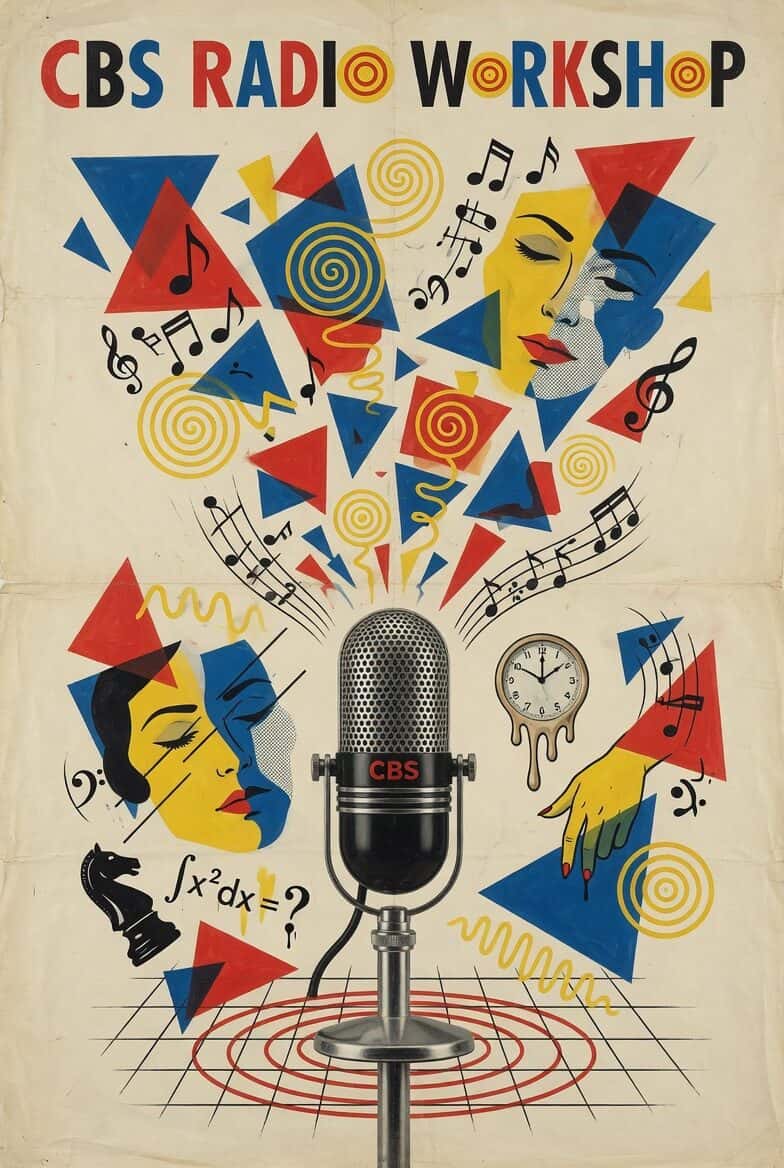
This is the CBS Radio Workshop. Tonight we have presented "Sweet Cherries in Charleston," a story of Denmark Vesey, who lived and died in Charleston in the year 1822. The author, Richard Durham. The director, William N. Robson. The star, Roy Glenn, with music by Jerry Goldsmith. This is Bill Leonard speaking.
The CBS Radio Workshop has come to you from Hollywood. This is the Columbia Broadcasting System.
Yes, dead. Jason told me about the plot. Before you die, you'll give me the name of every leader and recruit in your rebellion.
What are you talking about, master?
Jason?
Yes, master?
Jason, tell Roller what you overheard.
I heard him say he'd get men to burn the plantations. Some slaves would escape to Canada and others would go about the land free and the unfree. That's the way he put it.
Well, Roller?
I feel sorry for poor Jason.
Feel sorry for yourself? And I feel sorry for you, master, for believing him. You know Jason's run off twice.
What's that got to do with you?
I won't argue with him. Don't deny he's telling the truth.
I don't deny I'm the best slave you got. I've worked harder and earned more for you than Jason, haven't I?
You've done that?
I'm the best treated slave in Charleston. I've never complained or asked for anything. Have I?
No, you haven't.
Then, wouldn't it seem I like my slavery, that I love my master? It seems a sane, logical man would. If you kill me, who'll handle your crops as well as I do? Who'll earn money for you the way I do? You'll never give me trouble. It don't seem natural you'd start now.
No, master, it don't.
Jason?
Yes, master?
I'm gonna teach you a lesson for trying to stir up trouble.
But, master...
Guard, take him to the yard! Thirty lashes!
I didn't do it.
And, Roller?
Yes, master.
Roller, you'd better be telling the truth, or there'll come a day.
Yes, master. There is coming a day.
They say the Colonel Lord is gone and left the barn. And Denmark, Peter and Gullah came together and pushed ahead the day of deliverance. We can't wait no longer. They'll call up the militia for sure now. We've gotta beat them to the arsenal. We move tonight.
If the militia gets there first, shall we turn back?
This road leads only one way. To liberty or death.
It's clear now, but the militia will be coming soon. You warn us when you see them.
I'll warn you. I'll stand in their way selling cherries. When I call blood red, they're coming up the hill.
They may take your life for this.
My life is your life, Denmark. Now let me sell my cherries. We'll see what we can buy over at the arsenal.
Peter, you ready?
The Lord is risen.
The Lord is risen.
The Lord is risen.
The Lord is risen.
That's spoken. Gullah?
Twist your neck, tap your knee. When the moon goes down, we'll be free.
All right. Let's move.
When the moon comes down to bloom, oh, when the moon comes down to bloom...
They say a red moon hung low over Charleston. They say Denmark led, Peter sang, and the slaves fell in behind the moving men. They say Denmark led. They say on plantations and farms and cabins and houses a hundred miles around, men waited to hear the arsenal crack. But they say the militia got there first and charged through the marketplace before Denmark got to the gates of the arsenal. They say you could hear the cherry woman cry when her eyes caught sight of the soldiers.
Blood red cherry, blood red cherry...
They say the shots tore her down like a vine off a tree. Red cherries jumped into the gutter. Red blood shot from the wounded and the dying. Red cherries rolled under the feet of the fighting, the straining, the reaching to be free. They say the reaching fell short. They say the militia took the arsenal. They say they took a hundred dead slaves to their grave and a hundred leaders to jail. They took Denmark Vesey to the rack, and at last to court.
Denmark Vesey!
Yes, Your Honor.
Before I pass sentence, do you have anything to say to explain your crimes?
I have a word, Your Honor.
Speak and be brief.
You speak of my crimes, Your Honor. Yet I feel no guilt. On the contrary, I felt to be idle while other men yearned to be free was wrong. So I was not idle. Others talk, I act, and I act again.
Order! Is that all you can say to explain your treachery?
Your Honor, what you call my treachery began when I read the Declaration of Independence, when I read what Benjamin Franklin, Thomas Paine, Lafayette, and Jefferson said and did, and their words warm my blood. They said, each of us belongs to the United States. They said, each of us belongs to each other. Even you to me and I to you. Therefore, is there a man born of woman who is not my brother? Is there a woman born of suffering who is not my sister? Is there a price for such humanity? When I was a slave, I discovered my price and I paid it. If today my life is the price I must pay, I shall pay. For somewhere there's another life and another day. And I know that there's another life such a day when justice becomes a giant. When to be human becomes a habit. Such a day our children shall see. As bright as the cherries they sell in the market. As bright as the cherries of the woman I love.
They say the clerk stopped writing and put away the record. The court called for the highest price. The hangman's hand tightened then relaxed on the rope. Denmark Vesey and the masters went home to bed. But they say Gullah Jack in his cell cast a spell and no master slept well. For they say the giant was awake and the giant never slept again till all the slaves were free. That's what they say about Denmark Vesey.
From Hollywood the CBS Radio Workshop has presented Sweet Cherries in Charleston with Richard Durham, with Roy Glenn playing Denmark Vesey. Ted DeCorsia was the narrator and the music was composed and conducted by Amerigo Moreno. Included in the cast were Abby Lewis, Staats Cotsworth, Eddie Marr, Paul Frees, Corney Anderson, Parley Baer and Harry Bartell.
This is the CBS Radio Network.