
The written record
Read the transcript
Read along with the recording · About 16 min to read
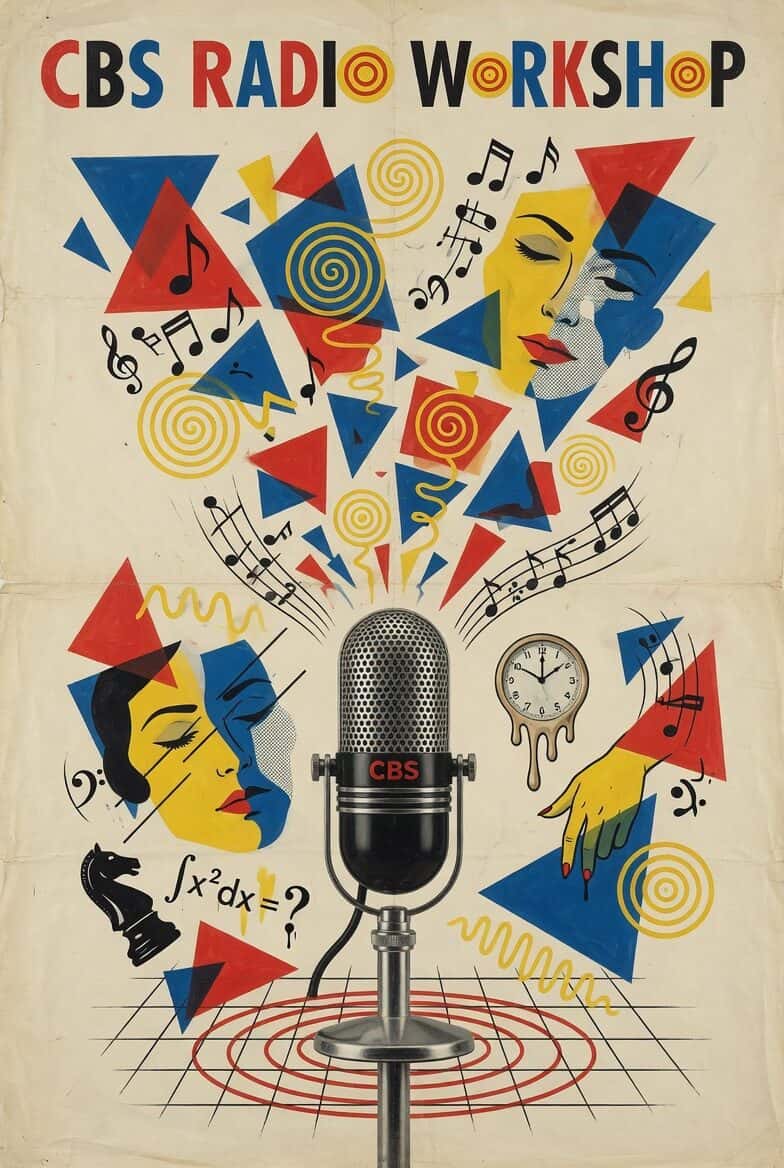
This is Maxwell Anderson, and I, together with Brooks Atkinson and Thornton Wilder, have just served as one of the judges on a verse playwriting contest conducted by the Academy of American Poets in association with CBS, which has resulted in money awards for the winners and a radio performance for the winner of the first prize. Poets need material rewards. In an age when poetry is encouraged by monetary success, There has always been more poetry written than in an age when the cash returns for verse were few and meager. And the more verse written, the better the top grade is likely to be. Our own years have not been too kind to poets. They win few prizes, gain little recognition among us. Let us then be grateful to the Academy of American Poets and to CBS for honoring this noblest and most ancient of the arts. The CBS Radio Workshop. Dedicated to man's imagination.
The Theater of the Mind. Today, Carlotta's Serapi, by a newly discovered young poet, Miss Rose Orenti, with a special score composed and conducted by Lawrence Rosenthal. And, to set the scene, Mr. Maxwell Anderson. The time is this summer. The scene is a Mexican marketplace. Carlotta is looking at a pottery display, but out of the corner of her eye, she is watching the old weaver at the next stall. She wanders over to his stand, pretending to be unconcerned. Actually, she is excited about a serapi in his collection. She touches it casually, but her fingers tremble. Sir, it happens that this wretched rag has caught my eye. Just now entering the square, I thought, is this really a serapi or passing for one? But with all its faults, I can see it on my bedroom floor. In fact, it's somewhat striking.
I imagine time will give it a grayish cast that's more to my liking. But until then, and you understand it may not do at all, what do you sell it for? Like a child or tourist, do you know a jewel from glass? One hundred pesos. You're the typical merchant. Mercenary crass. You call this a selection? What have you got, four, five serapis? Well, if all you can do is shrug, I see I've turned off in the wrong direction. It only happens, does it, that this caught your eye? It happens that I've seen you pass this stall at least a dozen times today. What are you prepared to pay? Old man, you've got your gall. Twenty-five and not a peso more, that's final and that's all. Perhaps you'd like it free, since it's only to step on, you say, to crush beneath your heel.
But is beauty mauled without remorse? No. Ravishment takes its own revenge. Of course, this may be what you want. All sorts of bargains go on, including the ones you make with yourself. That's not wrangle. I've heard your craftsmanship is great, and I will concede the point. Make it 28. Quite a concession. I've had my fill of customers who bargain for a dream and then don't pay. Save what you like and leave it here. If you don't take it, some tourist will. By and by, one will enter this square and feast his eyes on this sarape. Then, when you turn around, it will be gone. Oh, you'll cry, you'll cry. Yes, the keen-eyed visitors descend like flies on Mexican ground.
And they're very quick with their cameras. But I wonder if they see what they snap. Or a saba with its crown of snow will make a touching photograph. Already I cry, old man. I wear myself out with grief. Each time our mountain dies, pressed airlessly in an album leaf. You do not cry for the mountain, no. Yes, yes, I will say it. I saw your visitor in you beside yourself with delight when he caught your image and reduced you to black and white. He called you Carlotta. Is that right? That's my name. But how do you know? How is it that you never sleep? On all this square, siesta strikes the timid. And while they nod, you sit among your wares and watch like...
You are unfair. I must watch to weave. I weave what I see. Old man? No, of course it couldn't be. Anything can be. Old man, have you woven me? You're accidental, purely fictitious. How was I to know it would agitate you and enchant you so that a noise in me would echo in Carlotta? Let me be, make it 90 pesos and depart. The way to my purse is not through my heart. Because you have no heart? Oh, then it's yours at 86. It's part of the process to compromise, to settle for less than purity and perfect happiness. 86? No, 84. To bring us greater wisdom than we had before. Not a peso more than 33 if all I buy is prophecy. The future is a mystery.
Still my loom says, what you have been has made you what you are and all you must be. And the pattern of your trinity weaves like a thread through time, shuttling busily. Your face is hard and your voice is shrill, but within you melt like lava as a volcano crumbles in flame. Spill 80 pesos in my lap and let me forget your name. 80 pesos worth of philosophy? We're your shawler. Full-length portrait. I could see the high demand you make of me. But it's only an episode. There's more. Have you seen? Do you know? Is it here? In the blue and the green. All here. Oh, they're lovely. I don't dare touch. Look at this. We should close this bargain, child. I haven't seen one in Mexico I like so much. The guide never mentioned these. Could be a good reason.
This old fellow looks rough. He doesn't aim to please. Well, he hasn't the face I'd like to kiss, but he sure can weep. Don't expect to get this for a song. I hope you're wrong, but I won't bet. You'd better do the talking. My Spanish is a mess. Sir, how much? This one, how much? Oh, no. Uh, 400 pesos. 400? How can you ask such a price? Sir. Four hundred's too much. Two hundred. Will you go away, you disgrace, the acme of Mexico's art? He doesn't change his face. Now what do we say? I wish I knew. Keep bargaining, that's all we can do. I haven't the heart. Then let's go. Isn't that what he said? And come back. That might work. You think we should? Sure. It might do him good. Why did you do that? You could live for weeks on two hundred and even an artist has to eat. As I thought, you're too quick with the tear.
It's my function to weep. But you know this. And at least you do not mock as he did sometimes. Tell me, old friend, is that also here? In the yellow, in this infinitesimal dot? It is here. It is also here. Tasco also? Also Tasco. How did you know? Or shouldn't I ask? Nothing escapes my sight. When you returned, you came to pray. You lit the taper, but it did not burn as brightly as your sorrow. And that's the grey, is it not? Near the fringe, this little sliver. Yes, the grey. I wondered, black or white? So I made it grey. I was glad you came back. Is Casco still what it was, as they say? By law, it cannot change.
But Tosco's of the eye and changes with the heart. Ah, Mexico's Olympus. I remember how treacherous pathways wind down from what is Paco's now to the silver mines. Are they still there? Oh, they are. My friend called it Atmosphere. He named it the Candid Muse and saw it everywhere. I'm afraid I shall never see Tosco again. Two hundred would buy all that. As for three, too fine a price, a legacy. Daughter, acquire your dream and I will relinquish mine. Sixty-three. Forty. You gamble perversely to lose. It tempts me to make the sale. Perhaps if I thought you, if you got what you thought you wanted, you would recoil. The shock might change you. But of course, if you didn't see it yourself, I'd only fail.
You have to choose, not I. You know that a hundred is not too much, not even enough for this fabric of my soul and yours. Call my bluff. Sir? Sir, we have circled the square, and I must confess, not here nor elsewhere in Mexico can anything compare with the beauty and finesse of your handicraft. We seem commercial to you, but what, after all, is a tourist to do but buy a memory or two? For 300 pesos, we expect an eternal passport, re-entry to a perfect square, this stall, when in fact we buy nothing at all and can never come back. You move me. I was not prepared for such a speech. How is it you speak so well? I studied long ago, and I'm crude about it. I wish I could say what I feel. Sir, it isn't a spiel, but from my heart.
I don't care for this procedure, which they say is the custom here. And the fact is, I haven't the talent or time. What are you saying, dear? It sounds sublime. I'm trying the truth. Sir, 300. And my wife, if she may, would like a photo of your daughter here. She's not my daughter, thank God. Though I think you're my son. It doesn't matter to me, but she has an aversion to photographs, I understand. I will say this because you're so sincere, that she also wants this Sarape. However, she overplays her hand. You may not believe it, but she bids too high. And as we were saying... Then it's not for sale. The Sarape must be sold. Frankly, I don't know how, nor even why. But it pains me not to get my price. After all, there are love and labor in it, and the skeins of wool alone run high.
So the price hasn't changed. It's still what I quoted, or I lose my integrity. I would advise that you circle the square again and think it over. I will, too. Yes, that's my advice. We're both too big for compromise. Four hundred, that's a wicked slice. Well, I'll take a walk and talk it over with my wife. All the same, he reminds me... It's not the same. For shame that you always add one and one and get nothing. For once, resolve your balance and buy for a meager sum, and there is something you must pay, a little happiness. We cannot argue all day in the bus leave soon. It's bitter enough for me to vend on this mart. I can't take on your cares or weave your pattern forever.
Restore me to my own identity. For an artist, you have a practical mind. In fact, you're American at heart. If this is a jest, and it certainly is unkind, then you will surely fail the final test. You test me. I teach you, for which forgive me. Had I myself the flair, some other fool would be the weaver, and I an American millionaire. One loser detects another soon enough. End your pursuit of sadness. and your hate can be revealed to you before it is too late. Yes, I hate even myself. But you know, since I started to talk to you, it seems to go, to dissipate, and leaves a bottomless pit, a vacuum, because nothing replaces it. And it should, I think, be replaced by love. But I do not love anymore, and I'm sure somehow I have never loved, and I never will. There's something still. I wonder.
I am young, as you say, but it's been one blunder after another. Not he, the American, nor anyone. No, Weaver, I have never loved. Not he, the dark-eyed one who vended orchids and bouquets on Sochimilco's boats and banks. I languished for him, but I never loved. Nor my Valencian swain who plucked his husky sad guitar and sang old tunes of far-off Spain. I longed for him, but never loved. And the matador, brave and afraid, dazzled me with epaulets and crimson cloak. When first he smote a bull, Popocatepetl smoked. Yet thinking how the stain of the beast's blood soiled the sand, my heart was wrenched with pain and I withdrew my hand. He was my life. I did not love. Not more nor less than they. The American past within the shadow of a myth in whose darkness love dissolved away. I can no longer shield my eyes from light. The daylight comes and in this merciless sun I see how I have never loved, not he, The last, nor anyone. I'm a hopeless case. To know it is to claim redemption. From now on, when your heart cries, follow. Do not pursue the anguish that calls out to you. Unlearn and learn until the patterns flow together and you weave your own, Sarape. But it is not easy, I think. No, not as the wink of an eye. It depends.
You must want to try as I still do. I was not always a master weaver. Even yet threads get tangled in the loom, and I lament the poverty of my inspiration and sulk like a prophet of doom. It's hard to believe. Because for the most part, I learned that I cannot grieve. I must always wrestle with temptation, but my grief fares badly in the light of day. Weeping reproachfully outside my house, he mourns the bat-filled attic where he can no longer stay. Upbraids me for ingratitude. Reminds me constantly how he partook of my largesse in solitude. Pity your exiled friend, grief sobs. And almost I decide as I soften to his tear-stained cheeks to call him back inside. Oh, pity.
Not because grief cries, how well I know this fawning look precedes his spate of lies, but that my house is lonely. Now he speaks, aware of this more softly and persuasively, of all that we have shared. He argues life is static without the gold of misery. My heart is wrenched. And even as I gasp in prelude to fresh pain, his eloquence and tenderness become the sibilant hiss of a poisonous and fatal asp. He rushes to the door, and I throw my last weak strength against the panel at the knob. The weak walls tremble while I sob until with all the power that is left to me I shout, Pity! Yes! But not because you are my friend, but because you know no better than to be my enemy. True?
The house is still. I peep through the keyhole watching now how he falters down the road. I groan to think how he can find some other place to live. While I, I am alone. Now what do we say we start again? Forty-five. Will you take it? I don't think I can. It's not a bad offer and good enough for a lesser man. But you can do better. Fifty might make it. Ah, here's my boy. Have you decided to grant yourself your wish? Things are moving fast. This chance will be the last for all of us. Haggling is for the timid, sir, the language of the weak. It is not a tongue I care to learn or speak. Fair is fair, and the craftsman's hand is written all over there. The bus is waiting. Hurry. Don't worry, dear. Sir, you're a master. I take the time to say this and repeat it, though we have to leave.
No one can weave the way you weave. I want you to know I know it. It's a pity I can't say it better and at greater length. But if I did, I'd never get back to Mexico City. I'm distressed and I'm sure I show it. But if I could bring this back with me, I'd be your eternal debtor. Then what are we waiting for? I'll pay what you ask for. 400 pesos if necessary more. It's already agreed. I'll pay 50. Do I hear what I think I hear? Or do my ears deceive me? Did she say fifty hundred? She said fifty. That's five thousand pesos, honey. I'm afraid it's perfectly clear. But she's only a girl, a baby. Does she have that kind of money? I don't get it. Maybe they're poking fun. We have to forget it. Let's run. It isn't true.
Joy comes sorrowfully to you. I might have guessed. I don't deserve it. Oh, you fooled them all right, but 50 pesos won't take you to Taxco again. Carlotta, you've brought Taxco to me. Oh, not really. Here, I'll pay you before you change your mind. It's true I'm rarely kind, but what I do, I do. Thank you. It's not for the floor. I promise that was a ruse. Of course. I'll put it to tasteful use. It's a treasure. Then I have no remorse. Just don't misuse your pleasure and take the quirks of fate with a grain of salt. You'll leave the blinding sunlight of this square, but it will follow you forever. And when you dig through ancient shadows, you'll find that light is always there. Smile! You'll never meet a man if you wear that awful face. I couldn't disgrace you that way.
Then you'll love again. Amen. Adios, Carlotta. Adios, amigo. Keep watching. You have been listening to the CBS Radio Workshop and Carlotta's Serapi by Rose Orendi. The American Academy of Poets prize-winning verse drama chosen by Maxwell Anderson, Brooks Atkinson, and Thornton Wilder and produced and directed in New York by Paul Roberts. Elspeth Erick was heard as Carlotta. and Louis Van Rooten as the weaver. The tourists were Stotz Cotsworth and Vera Allen. Special score composed and conducted by Lawrence Rosenthal. This is Dick Noel inviting you to listen again next week when from Hollywood, the CBS Radio Workshop presents The Son of Man, a passion play arranged from the four Gospels of the New Testament by Archibald MacLeish. The words of St. Mark will be read by Herbert Marshall.
St. Matthew by Robert Young, St. John by Vincent Price, and St. Luke by Victor Jory. The music is taken from The Mass in B Minor, The Passion of St. Matthew, and The Chorales of Johann Sebastian Bach. This is the CBS Radio Network.