
The written record
Read the transcript
Read along with the recording · About 5 min to read
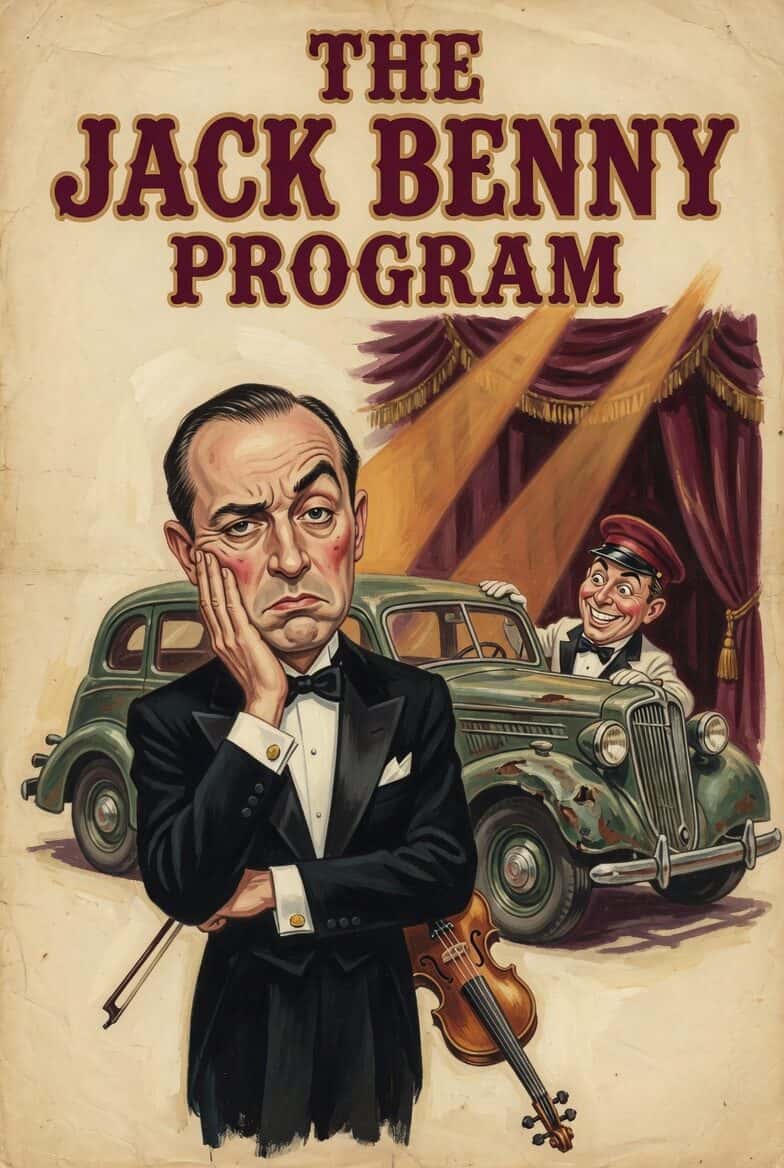
The Jack Benny program aired from May 2, 1932 until June 22, 1958. The show was identified by different names, which was based on the particular sponsor at the time. The Canada Drive program was on the air from May 2, 1932 until October 22, 1932. It starred Jack Benny, the announcer was George Hicks, with George Olsen and his wife Ethel Shuda providing music and vocals. and Jack's wife, Sadie Marks, as Mary Livingstone. The show moved over to CBS on October 30, 1932, to January 26, 1933. On CBS, the music was supplied by Ted Weems and his orchestra. The next sponsor was General Motors, and the program was called the Chevrolet Program. It aired on NBC from March 17, 1933 until April 1, 1934. The cast included Jack and Mary, with singers James Melton in 1933 and Frank Parker from 1933 to 1934. The announcers were Howard Kleene in 1933 and Alois Havrila from 1933 to 1934. Music was supplied by Frank Black. The program became the General Tire Show from April 6th until September 28th in 1934. Joining Jack and Mary was Frank Parker, and Jack's longtime announcer Don Wilson was added. Music was performed by Don Beester on the East Coast and Jimmy Greer on the West Coast. The Jell-O program was on the air from October 14, 1934 to May 31, 1942. The show started on the Blue Network until October 4, 1936 and then moved to the Red Network thereafter. The cast included Jack and Mary with Don Wilson.
Music was provided by Johnny Green in 1934 and 35, and then Phil Harris started in 1936. The program singers were first Michael Bartlett, then Kenny Baker from November 3, 1935. And finally, Dennis Day joined the show on October 8, 1939. Eddie Anderson became a regular on June 20, 1937. The show was produced in Hollywood. permanently starting in April of 1935. Post became the next sponsor, and the show was called The Grape-Nut and Grape-Nut Flakes Program. It aired on NBC and ran from October 4, 1942 until June 4, 1944. It starred the regular cast of Jack, Mary, Eddie, Dennis, Phil, and Don. Next came the Lucky Strike Program.
which aired on NBC from October 1, 1944 to December 26, 1948. The only change to the cast was Larry Stevens, who filled in while Dennis Day was in the service. Then on January 2, 1949, the program moved to CBS, and it ran there until May 22, 1955. Bob Crosby replaced Phil Harris on September 14, 1952. The best of Benny... which were repeat broadcasts aired on CBS from October 28, 1956 to June 22, 1958. Jack's first appearance on the radio occurred while he was interviewed by Ed Sullivan. His first words over the mic were, Ladies and gentlemen, this is Jack Benny talking. There will be a slight pause while you say, Who cares? This interview led to the first radio contact with Canada Dry. This first program, was mainly musical, with George Olsen performing seven musical numbers, and Jack was the master of ceremonies. According to John Dunning, the Jack Benny program evolved over time from its vaudeville roots to become a quintessential American radio program. It was a jigsaw puzzle where pieces were added over the years. For four decades, Jack played the part of a vain, miserly, and argumentative skinflint. Others tried this approach, but were unable to sustain it.
Jack worked with Harry Kahn to develop his character, as well as the character of Mary Livingstone, which he had played by his wife. Mary Livingstone was a very sarcastic but well-meaning friend to Jack. Sometimes she was presented as a date, sometimes as a love interest, but often she was just there. Her role changed from plot to plot, and she never really was a steady girlfriend for Jack. In 1933, Jack began arguing with his cast, adding another characteristic. which led to less musical numbers and more comedy. In April of 1934, Don Wilson was added to the program, and Don was Jack's announcer all the way up to the end of the TV show in 1965. He was the target of Jack's jokes, mostly about his weight, even though he was never really overweight. The next piece added was when Phil Harris joined the show in 1936. Phil's character was a skirt-chasing, arrogant, hip-talking bandleader who constantly put Jack down.
He's remembered for referring to Jack as Jackson. Then came Eddie Anderson, who started playing the part of a train porter and then joined the cast as a regular as Rochester in June of 1937 as Benny's personal valet. Early in the show's run, he often talked about gambling or going out with women, but later he just generally complained about his lack of salary. The last piece of this puzzle was supplied by the arrival of Owen Patrick Eugene McNulty. McNulty is better known as Dennis Day. Dennis was always in his early 20s, no matter how old he actually was. His character was sweet, but not very bright. One of the few memorable aspects of the program was the 15-year feud with fellow radio actor Fred Allen. In one occasion when ratings were falling, the I Can't Stand Jack Benny Because contest was run, which boosted ratings right back up.
Benjamin Kabelsky, who we know and love as Jack Benny, truly is a national treasure. So take the time to listen to some great, wholesome comedy that all the family can enjoy. For Old Time Radio Researchers, I'm your announcer, Patrick Andre. Enjoy the show.