
The written record
Read the transcript
Read along with the recording · About 14 min to read
Tonight, the Coca-Cola Company, sponsor of the Victory Parade of Spotlight Bands, is giving its time to the United States Treasury in order that you may hear a special war bond program from Soldier's Field in Chicago. Therefore, the Victory Parade of Spotlight Bands will not be broadcast, but will keep its date in person with the war workers of the Bruner Ritter Company at Bridgeport, Connecticut. Keep tuned to hear a gallop floor show among other headliners, Secretary of the Treasury Henry Morgenthau, Jr., Lana Turner, Jack Benny, Ray Bolger, Paul Lucas, and others. Oh, I see flashing that this America is only you and me. Its power, weapons, testimony are you and me. Its crimes, lies, theft, defections are you and me. Its Congress is you and me. The officers, Capitals, armies, ships are you and me. Freedom, language, poem, employment are you and me. Past, present, future are you and me. Ladies and gentlemen, the Secretary of the United States Treasury, Mr. Henry Morgenthau, Jr. This America.
is you and me. When you lend your government money for this war, you join a great crusade. General Eisenhower is called at that. A great crusade. Your bond is a symbol of your part in that crusade. Your money goes to the men fighting for us in this desperate war. They need that money. Every penny you can raise. They need it more than ever before. They need it now for ships and planes and tanks and bombs and bullets. For all the engines of destruction by which they mean to force surrender from the enemy on their own ground and to blast a sure foundation for the peace. They need money for war and they need it also for mercy. Mercy.
is expensive, too. The Medical Department of the Army has spent approximately $1 billion since Pearl Harbor. So far this year, we've spent more than $5 million for penicillin alone. We spent millions more, many millions, to fly the wounded and sick out of battle areas. Last year, we flew more than 170,000 wounded men to the safety of hospitals, 170,000 men. And out of that number, 11 men died. The rest were saved. Your bond helped save those men. America's great only if it puts the purposes of war before the war itself. Your bond is a sign of your part in that purpose. Ours is a war of liberation, the liberation of all peoples from oppression, from tyranny, from fear, from physical, moral, and economic bondage. We are involved in a partnership of nations sworn to the gigantic project of world freedom. Our common cause is the whole race of man. We will betray that cause.
if we make terms with the enemies of man. If we make terms with an enemy, we will betray our living heroes and our heroic dead. We know our enemy. We must not let him trick us into a false peace. The German war machine has plans for survival. We can be sure of that. Such plans have worked before. I am no prophet. But any man can see that when Germany decides upon surrender, her choice will be for a truce negotiated in France, in Finland, in Italy, anywhere except Germany. I have no inside information, but it's an easy guess that Germany may offer Hitler and the Nazi gang to bribe conditions out of us.
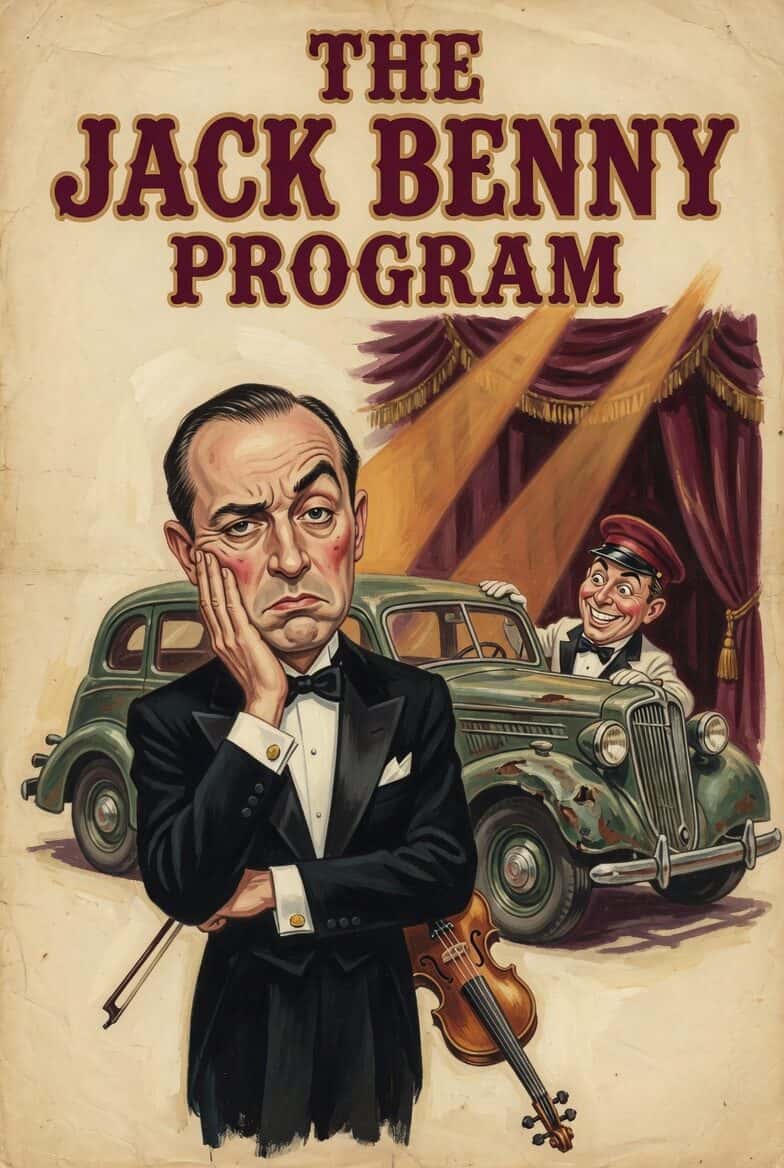
We won't be bribed. Our terms are unconditional surrender. From the earth, the hope of humanity, a hymn to a new world in birth. Song of the United Nations by the great Soviet composer Dmitry Shostakovich. And played by David Brookman. This is Lana Turner speaking. You're listening to a special broadcast by the United States Treasury Department. It's coming to you from out here in Soldier's Field in Chicago, where a lot of us, Lynn Barry, Oscar Levant, Susanna Foster, John Payne, Martha O'Driscoll, William Holden, Eileen Woods, and Eddie Anderson, just to name a few, are helping out on a fifth war loan drive. Ladies and gentlemen, this is Jack Benny speaking.
Yes, folks, Jack Benny, the alleged comedian. But right now, I haven't any jokes to tell. I'm not even going to try to make fun of Hitler. That used to be easy, but it isn't anymore. If you could cleanse Hitler of the blood of Europe's millions, he'd show up as the prancing little tickle grouper we used to laugh at before we knew better. But the blood won't wash off, and many men are stained with it. No, I'm not going to tell any jokes. I'd just like to say that I agree with what Mr. Morgenthau has had to say about our war terms. And I'm agreeing not only as a private citizen, but as somebody who has seen quite a lot of our men on the fighting front. I think I can tell you the way they feel about it. They want to come home. They want to come home badly. But they don't want to come home with anything less than unconditional surrender.
That's what they're going after, and that's what they're going to get. Now here's somebody else who's been entertaining in the war theater. Ray Bolger. Jack's right. They're pretty serious out there on the subject of surrender. America has given its word with the rest of the United Nations to destroy the Japanese and Nazi war machines. Destroy is the word, not just stop. There's a big difference. Your brothers and sisters and sons and daughters on the fighting front don't want you to forget that. They're sure you won't. My name is Paul Lucas. I would like to tell you how proud I am of what we've been saying on this program, that America is you and me. Most of you were born here, but some of you weren't.
Some of you, like me, have known the joy of becoming an American citizen. The question has been asked whether America is the symbol of freedom for all mankind. We can tell you that it is. I see before me the appraised arm of liberty as I give you this assurance. And I wonder if all of you can appreciate the words written on the base of her statue. Give me your tired, your poor, your huddled masses. yearning to breathe free the wretched refuge of your teeming shore. Send these, the homeless, tempest-tossed to me. I lift my lamp beside the golden door. This is between you and me. You listening and me talking to you. This is between you and me. First, let's get acquainted. Who are you? Your name, please. You don't have to speak it out or write it down. Just answer in your mind.
Your name? Your occupation? Good. Now then, what have you done for the war? I'll put it this way. What could you have done? What could you have done for the war that you haven't? I'll give you five seconds for that one. Just answer in your mind. What more could you do for the war? Okay, the five seconds are up. You could have used more time for that one, maybe. Maybe you've forgotten something. It's a tough question. What can you give the war besides what you've given? What could you be doing? What aren't you doing? I'll give you another five seconds. Time's up. Take more time if you need it. Take time after the broadcast to take it now. Think about yourself and then about the war and then about yourself again. Turn off the radio and do that. Your thoughts on the subject are more important than any broadcast. However, we urge you to stay tuned to this program if you want to. It's all about you. That's what I'm going to talk about.
I'm going to talk about you. I know you want to know who I am. I know what you're saying, or I think I know if I could tune in on you. Here's what I think I'd get. Me? What you want from me? And anyway, who's he? Who's that talking on the radio? What's he after? What kind of broadcast is that? Why's he giving me five seconds for me to tell myself what I could do? I'll take my own good time, mister. I know what I could do. What's that? I know. Listen, you've done plenty. I, I've done my share. I bought more bonds than any girl in my office. What's eaten you? You've given blood, haven't you? Three times you told me. What's eaten you? You've done enough. Enough? How much is that? My brother's in the South Pacific. My boyfriend's in Italy. I wonder, I wonder what they'd say about it. How much is enough?
You hear what that man's saying, don't you? What he's asking us? I know, I know. The curtains and the slipcovers, they didn't cost much. They look so shabby here. Yeah, better than a foxhole. I know. Oh, I'm not blaming you. I could have bought a bond last month with what I lost at poker. A fellow's got to have some fun, don't he? I'm lonely. Don't have many friends out here. I work in a war plant. Been working there more than a year. My home's a long way off. I help make shells, but I'm old. Too old for the work. I'm going to quit. I see what General Marshall says. We're going to have to build new war plants. I guess they need everybody they can use. Guess I'll stay on the job. I'm a streetcar conductor. I take them to work, take them back.
You ought to see the crowd shoving, the heat. I get so tired, I can't hardly stand. But here's the way I look at it. No matter how they cut me out, they're all my friends. What they're holding out to me is nickels, not bayonets. I got some money saved up for a fishing trip. I guess that'll wait. Guess I'll put it into bonds before I change my mind. Well, all right, all right. I work hard. Nobody can say I don't. Well, the fellow's got to have some fun once in a while. Oh, uh, excuse me while I get the door. Telegram for you, mister. Oh, oh, thank you. Thanks a lot. Uh, the Secretary of War desires that I, that I tender his deep sympathy to you and the loss of your son. Report now received states that he was killed in action on the 15th of May. I didn't know what I could do.
I need women in the services. I'm going to enlist. Oh, honey, please don't make me laugh. You weren't made to be a soldier. Neither was my brother. My little brother. But he cleaned up a Jap machine gun nest. Somebody's got to take his place behind the lines, or he can't do it again. I'm going to enlist. What am I doing? What am I doing? Eating? Sleeping? Going to work? Go into the movies? What can I do? I'm doing as much as the next fella. Who's that guy on the radio? Yeah, me. Mind his own business. Where does he get off? You're asking that, too. You must be. You're saying, who am I? Who am I to talk about you? If it comes to that, what am I doing for the war? Who am I anyway? Where do I get off? Well, I get off at the same stop on the bus you take. That's where I get off.
I work at the next desk. I live in the next house. I'm the next man in line. I'm the other fella. You know me, the other fella. I'm supposed to stop at the red light. I'm supposed to save my tires. I'm supposed to share the ride. You've heard him say, let George do it. Call me George. I'm the other fella. I'm supposed to stay at home on my vacation. I'm supposed to vote. When you forget to. I'm the other fellow. What about me? Well, maybe you went to the black market yesterday and stole some gasoline from our fighting men. Maybe you quit your job this morning in the war plant. Maybe you lost the dearest thing on earth an hour ago on the beaches of France. Maybe you bought an extra bond, or was it a fur coat? Or don't you know what happened to the money?
Can't you remember all the fun you spent it on? Or have you bought more bonds than anybody else in your office or your neighborhood or your city? Have you bought more bonds than I did? Anyway, you're you. Okay, you've heard all this before. Okay. It's as plain as the nose on your face, as obvious as breathing. Okay, stop breathing. Try it. I'm serious. Try it now. Hold that nose of yours and hold your breath. I'll give you five seconds. Time's up. Nice to be breathing again, isn't it? I'll tell you something. During that last five seconds, or two, or three, or one, during that half a second, while you were kind enough to hold your breath, a lot of men, an awful lot of men, stopped breathing for good. They were fighting men. They were fighting for plain, obvious things, such as life and liberty, the pursuit of happiness. They were fighting for you. Yes, I know.
They were fighting for me, too, but we aren't talking about me. I'm just the other fella. Remember? I don't matter as much. Tell you who you are. You're the one that counts. You're the one that makes the difference. I'm just the other fella. If I tried, I couldn't lose the war without your help. And you, you're gonna win the war. I can't win it without you. One of you. And one of me. That simple arithmetic, one of you and one of me, makes two of us. And two of us makes we the people. We the people are the justice of this war. The goodness and the greatness fighting it. We the people are the hope of the world. Sounds big, doesn't it? It's big.
Bigger than all the mountains and the oceans. Bigger than pyramids or skyscrapers. Bigger than anything we've ever built. Bigger than anything we're going to build. That's you and me. That's we, the people. Let the scientists count the molecules if they can. Let them calculate the light years from here to the most distant star no man can guess. How many there are going to be of us? Far we're going. It's flashing that this America is only you and me. Power, weapons, testimony are you. Defection are you and me. It's you and me. The officers, capital, armies, you and me. Freedom are you. Gentlemen, you've just heard.
a War Treasury Department program from Soldiers Field, Chicago. Tonight, featuring the Secretary of the Treasury, Henry Morgenthau, Jr., Lana Turner, Jack Benny, Ray Bolger, Paul Lucas, and others. The musical score for the Walt Whitman poem, You and Me, was composed especially for the fifth war loan drive by the eminent composer, Louis Gruenberg. The male chorus heard on this program was the Blue Jacket Choir of Great Lakes, Illinois. where Lieutenant Commander Sigbart J. Steen is officer in charge of choirs. Army Air Forces Band of the Training Command under the direction of Master Sergeant Harry Bluestone. Tonight's guest conductor, David Bruckman. The victory parade of spotlight bands was not heard tonight as the Coca-Cola Company put its regular time at the disposal of the United States Treasury for the presentation of this special war bond program. We invite you to listen tomorrow night when we'll be back again on the air.
with the music of Louis Prima at the United States Submarine Base, New London, Connecticut. We also wish to thank Coronet Magazine for relinquishing its time tonight in order that you might hear the complete War Bond program. The Coronet Storyteller will be heard tomorrow night at its usual period, 9.55 to 10 p.m. Eastern Wartime. This is the Blue Network.