
The written record
Read the transcript
Read along with the recording · About 35 min to read
Due to the special transcribed program which follows, On Trial will not be heard tonight. Listen for On Trial next Monday night at its usual time. Opportunity, an American watchword. Just 100 years ago, the world was electrified by the discovery of gold in California. And American pioneers, searching for new frontiers of opportunity, started their wagon trains rolling westward from Independence to Missouri. Today, the economic security and financial independence for which the 49ers fought and blazed the Overland Trail is within the reach of all of us through the purchase of United States savings bonds. It is to the opening of the 1949 Opportunity Drive for Savings Bonds and the opening day ceremonies at Independence that this star-studded program is dedicated. During the next hour, you'll hear Alan Lamb, Bob Hope, Bing Crosby, Irene Dunn, Lionel Barrymore.
Joe Stafford, Al Jolson, Roy Rogers, the writers of Purple Saves, Fred Waring and his Pennsylvanians, Edward G. Robinson, Jack Benny, Rochester, Edward Arnold, Frank Sinatra, Esther Williams, Gene Kelly, Betty Garrett, Jules Munchen, Red Skelton, Bernard Dalton, Robert Ambrose, the Secretary of the Treasury, and the President of the United States. Here is your Master of Ceremonies, Alan Lamb. Thank you, Ken Carpenter. Ladies and gentlemen. This is more than a program in celebration of the opening of a savings bond drive. It's a program to salute the savings bond as an American symbol of thrift, a symbol of opportunity, a symbol of security. Security for the nation, security for the American way of life, and individual security for every man, woman, and child. Today, we have the chance to bring to reality the dreams the 49ers shared for their futures and their children's futures.
A drama that began when John Marshall picked a few gleaming flakes of shiny yellow metal out of Sutter's mill race at Coloma and carried them home in the dented crown of his white sombrero. With a vigor born of necessity, the 49ers became empire builders, challenging the dust of the deserts and the plains, scaling the white walls of the high Sierras. There was gold in California, and in boom towns of canvas tents and shacks, dreamers and adventurers in hickory shirts, prospectors with pick and pan. Strong men, brave men, spattled the sun-washed creeks, panning gold and pride. Gold, gold, nature's treasure, sparkling metal that men die for. Precious gold, beautiful gold, bright yellow gold to drive men mad, to build empires, to... Lawrence, Olivier, please. Please, I'm acting. Gold, gold, take me with you. Wayne Crosby and Bob Hope. Say, Bob. Just call me hardpan.
My man, I'm sorry I ever let you talk me into coming out here to California. Last year, I lost my shirt. Pan and gold. What are you kicking about? I lost my pants. Keep the motor running. Let's stick with it, and when we strike gold, we'll have millions. Do you hear? Millions. Yeah, but we've been away from civilization too long. I'd give anything to be home. What's a home? That's where people live. What are people? You know. Men and women. What are women? We've been away longer than I thought. I can't go on much longer. I'm starving. I'm nothing but skin and bone. Go ahead, read your line. You can tell this is a fantasy, can't you? This place is loaded with gold. If we strike it rich, we'll have millions. Millions, do you hear? Millions, millions. I said millions. I can act, too, you know. Very little. Jane Wyman got an Oscar for Johnny Belinda. I'll be happy to give you mine if you'll shut up for an hour or two.
Hour and 20 minutes. Just put it in the pot, boy. I tell you, hard pan, let's go back. When you told me you made a strike here last year, you were just joshing. Please, no joshing. We had to. But I did make a strike. I came to town with a million dollars worth of dust. Well, what happened to your dust? I met a blonde vacuum cleaner. A.C. or D.C.? Besides, Nugget, we can't quit now. I gotta make good for my pa's sake. Pa came west and forged through the Cumberland Gap. He forged through the Laramie Flats. He forged through Kit Carson Pass. There was a pioneer. No, a forger. Ma was a pioneer. She came from an old pioneer strain. Ma had 20 children. Well, that's a strain on any pioneer. You speak from experience, don't you? Fair enough. Yeah, but Ma knew that this was a land of opportunity. She knew that men and women would be coming out here to raise their children. And their children will have children. And their children's children will have children.
That's why I tell you, Nugget, we can make a fortune out here. Digging for gold? Running a diaper service. Oh, no, not again. You mean you let me down, Nugget? We came out here for gold, and we're going to find gold. Well, do you have a doodle bug? No, it's my underwear that makes me so jumpy. We'll start digging without one. Well, what do we dig with? Oh, if you only had your golf clubs with you. Now, hold on here. Hold on here, Spouts. Now, don't knock my golf. I'm not. I admire it. Who else can perform brain surgery on gophers and play golf at the same time? Before you started sandblasting, there was no Grand Canyon. But to work. How are you with a pick? Well, not as good as you are, but then I ain't got that nose either. Now look, Noghead. I got a comeback for that, but I'm saving it till we go on to a show we get paid for. Don't you think that's fair? Besides pretzel ears. Pretzel ears. What is this? That's gratitude after I let you hide behind them when the Indians attacked us. What are we gonna...
What are we going to hide behind when the audience attacks? Well, you can make a slingshot out of your girdle. Now, wait a minute. This is the year 1849. We're in the California Gold Rush. Well, 1849. Hardly seems that only 75 years ago, Betsy Ross sat down to make the first American flag. And you helped to thread the needle all the time. Well, I'd show you I haven't got a single gray hair in my head if my hair wasn't plastered down with bear grease. Why kill a bear to do a cub's work?
Hey, look at that hole in the cliff. That must be a gold mine. Why bother digging gold? Let's just get a flashlight and climb down into your wallet. I tell you, Nugget, there's gold in that mountain. I can smell gold a mile away. And my nose tells me there's gold right there in that mountain. Hand me the dynamite. Here you are, hardpan. My nose has never been wrong. Now I light the fuse. Well, what does your nose say now? Ask it yourself. It's laying right over there. Well, it just goes to show what a mistake it is to go digging for gold, especially when you can be making money so much easier. Shall we tell the folks? By all means. You don't need a pick and a shovel to pick up a pot full of gold. The lettuce that you put in bonds for you and your chickadee will soon be happy cabbage when they pay you for for free. You can't buy new shoes on a shoestring or socks.
till you sock it away. If you want to raise a family, take this tip from Uncle Lillis. The stork may bring the babies, but he doesn't pay the billers. We used to be two vagabonds. Now we're lovely. We're engaged. No wonder we invest in U.S. Savings Bar.
They say that your face is your fortune. Why don't you go down and pick up your unemployment insurance now? Quite a lullaby. Yeah, quite a lullaby. We're dubbing something in. A girl who wants to be a bride can't dress like old Rob Crusoe. Put your dough in the savings bonds and you can get that Crusoe. Made it. A singer who stocks up in bonds. That singer will never go flat. It's time you bought some more. They say that Rita Hayworth likes to payroll savings plans. If Rita H. can do it, then we're sure that Allie can. We're two boys who once sailed for blind. But now we stay at home and count our savings.
If you were to look at the ancestry of the 49ers, in fact, if you were to look at the ancestry of any of us, you'd find just about every nation on earth represented. Our country was pioneered by English Puritans, Spanish Cavaliers, French Trappers, Dutch Traders. This was their land of opportunity, and they all came to stay. Flavoring the melting pot that's America with their accents, customs, and traditions. The people of the old country. And none with more charm and dignity than Mama Henson, the beloved Norwegian mother Irene Dunn portrayed in I Remember Mama. If I would ask Mama what she thought of United States saving bonds, Mama would probably say... It's good. Yes, but why are they good, Mama Henson? I thought you put all of your faith in a bank account. Oh, no. I had make-believe bank account. But when Papa want to visit relatives in Minneapolis...
You cannot pay fair but make-believe money. When children are sick and have to go to the hospital, you cannot pay doctor bill with talk. I see what you mean. Children need to know they have real savings, real security, to protect family in good times and bad. It's not good for little ones to be afraid, not to feel secure. It's why saving bonds are so good. You save automatic. No worry. You know, for every $3 you put into the bond, you get $4 back in 10 years. Yes, Mama. When you buy a bond for $18.75, you get $25 back 10 years later. A $75 bond is worth $100. That's two and nine-tenths percent interest compounded semi-annually. Isn't it, Mama? Yeah, yeah, yeah, yeah. It's good.
Almost every American song paints some sort of a picture in our imagination. Whether it be an old-fashioned waltz or the martial music that has a way of creeping under our skins and reminding us that we're American. But none captures the color and the excitement of a nation growing up more than Oh Susanna. The song of the 49ers. The song that hard-bitten cowboys, crusty prospectors, and weather-beaten wagon drivers took to their hearts and made their own. Here is... Lionel Barrymore to tell you a story. This isn't the story of how a song came to be written. This is the story of how a song came to embody the very spirit of a nation. The courageous, adventurous spirit of pioneers who came from the East seeking a vision in the West. A story of a song that can only be told in terms of other songs.
For as men pulled up stakes in the towns and in the cities and began to move their wagon trains westward with a dream in their hearts and a song on their lips, they left loved ones behind them. Wives, mothers, sweethearts, singing other songs. Songs that had their beginnings in the great smokies of Kentucky and Tennessee. Songs of sorrow and sadness. Songs such as this one sung by Joe Stafford. that said goodbye. He's gone away for, but he's coming back if he goes ten thousand miles. But he's coming back if he goes ten thousand miles. These were the songs that echoed behind them from the mountains as they came to the river. Rivers that had rippled to the silent sweep of Indian paddles.
I now knew the voices of these men in coonskin caps. Rivers named the Ohio, the Missouri, and the Mississippi. The great father of water. This was the country cut by the big river. The land that gave birth to work songs and the spirituals of the cotton fields and the cane breaks. Where in days to come, minstrel men on the show boats were to sing songs of the steamboats that blackened the skies. racing upriver from New Orleans to St. Louis. Songs that someday were to be popularized and sung by the greatest minstrel man of them all, Al Jolson. Way down on the levee in old Alabama There's Daddy and Mammy There's me, Prem and Sammy On a moonlight Guys, you can find them all While they're waiting What's that they're saying? What's that they're saying? While they keep playing, I'm humming and swaying. It's a good ship. Robbery leaders come to carry the cotton away. Watch them shuffling along. See them shuffling along. Go take your best gal. Your real pal. Go down to the levee. I said the levee.
Join that shuffling throng. Hear that music and song. It's simply great. Waiting on the levee. Waiting for the robbery leave. Watch them shuffling along. See them shuffling along. Go take your best gas. Your retail. Go down to the levee. I said the levee. Join that shuffling throng. Hear that music and song. It's simply great. When the 49ers began the winning of the West, prairies that once resounded to Comanche war hoops were introduced to the music of the fiddle and the guitar as Indian fighters gave their lives in a battle gulch in unsmoking hills. The homesteaders conquered the forest and made the fields and prairies, blocked them under the magic touches of plow. Cowboys riding herd into Abilene were singing the songs of the stage country. And as these outlived their lifetimes, there were other songs of the saddle to take their place. Songs that were to win a place in the heart of all Americans when sung by the king of the cowboys, Roy Rogers, and the riders of the purple train.
An old cowpoke went riding out one dark and windy day. Up on a ridge he rested as he went along his way. When all at once a mighty herd of red-eyed cows he saw. Up plowing through the ragged skies. And up a cloudy draw. Their friends were still on fire and their hoses made of steel. Their horns were black and shiny and their hot breath he could see. A bolt of fear went through him as they thundered through the sky. For he saw the riders coming hard. And he heard their mournful cry. Their faces gone, their eyes were blurred, their shirts all soaked with sweat. They're riding hard to catch that herd, but they ain't caught them yet.
Cause they got to ride forever on that range up in the sky. On horses snorting fire. As they ride on, hear their cry. Yippee-ki-yay! The riders loped on by him and he heard one call his name. If you want to save your soul from hell or riding on our reign. Then cowboy, change your ways today or with us you will ride. It's time to catch the devil's herd. across the endless sky. Yippee-ki-yay! Today, where once the red man rode silently in buffalo gray, the wind ripples across vast acres of green corn and yellow grain. The wooden blockhouses have become towns and the fort great cities. And a nation stretching from shore to shore has been knit into a neighborhood. A neighborhood of homes, lighted windows where children are wanted and parents can be proud. The dream of the 49ers has become a reality, and the song they made famous has become part of the nation's heritage, a heritage of which all Americans can rightfully be proud. And whether we hail from the cities or the little corners of the land, all of us share the same sentiments expressed so magnificently in music by Fred Waring and his family.
Yes, that's the music of America. And America has another kind of music we like to hear. The ring of a cash register. Or the clank of a coin being socked away in a piggy bank. That is, if you like piggy banks. But how would a fellow who knows the score size up that kind of savings? A fellow who knows his way around like those characters Edward G. Robinson plays. If Robinson were playing such a character, a really smart guy, he'd say, Sure, I'm a smart guy. Smart enough to know when I put a buck away, I don't want it loafing around the house no piggy bank. I want it out, working for me, see? I want it to be bringing me interest. The highest rate of interest I can get. And I don't want to get it from some fly-by-night outfit. I want my dough to be safe.
That's why I socked it in the United States Savings Bonds. The safest investment in the world. Hmm? Why'd I do this? I'll tell you why. For every three bucks I put into a savings bond, I get back four in ten years. Yeah, but how do you feel about waiting ten years? How do I feel? I feel fine. I'm not going anywhere. I don't mind salting it away for a while. At the end of ten years, I'll have something. And if things get real rough, I know I can always cash those bonds in with interest. You know, I used to be like a lot of these characters who think every cent they make, they got to throw it away on a poker game or a horse race or some tomato. And I got to thinking about this friend of mine. You know, this guy named Hennison. He don't make a cent more a week than I do. Yet he's got a house. I got an apartment. His wife and him got a cabin up at the lake for the summers.
Know where we can be reached? Apartment 6C. They got a nice nest egg. We scarcely even got a nest, let alone eggs. Where they get it? Good question. You know, for a smart guy, it took me a long time to figure out the answer. They were stashing away savings bonds while I was showing the boys at the pool hall the hole in my pocket. That's why I finally got around to United States saving bonds myself. And just to make sure I don't get slippery fingers, I'm buying them automatically at the place I work through the payroll savings plan. This evening as we retrace in spirit the path of the 49ers, those gallant pioneers who crossed the deserts and mountains into California, pausing only briefly for food and water, we too make a brief pause. A brief pause for station identification.
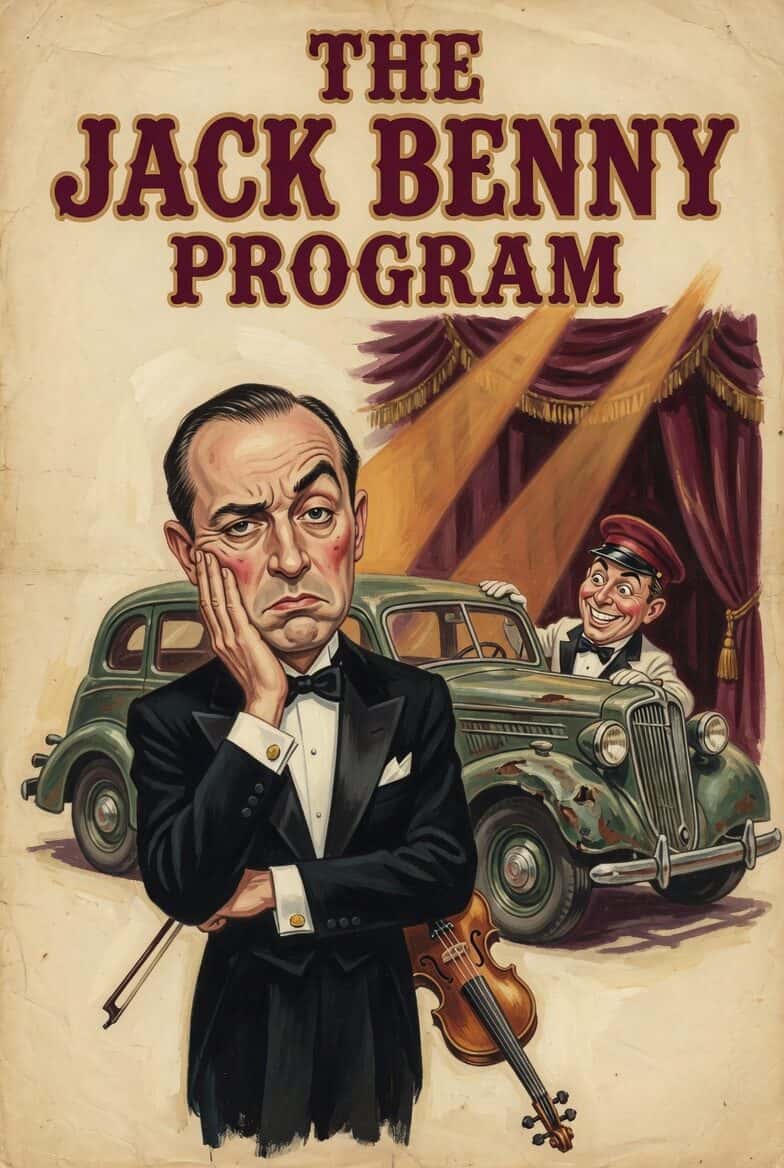
The star-studded United States Savings Bonds Opportunity Program continues with Alan Ladd, Jack Benny in Rochester, Edward Arnold, Frank Sinatra, Esther Williams, Gene Kelly, Betty Garrett, Jules Munchen, Red Skelton, Verna Felton, Robert Ambrose from this orchestra, the Secretary of the Treasury, and the President of the United States. And here again is your Master of Ceremonies, Alan Ladd. To those of you who have just joined us, may I say welcome on behalf of the host of stars who have gathered here this evening to salute. The 1949 opportunity drive for United States savings bonds. A hundred years ago when the Prairie Schooners arrived at the destination of Coloma, the mining camps were towers of Babel where the only word understood was gold. Today in California, there is probably only one place where money means so much. The home of Jack Benny and Rochester. It's payday, remember? What? You don't get paid till tomorrow. How about seeing me tomorrow night? But honey!
Honey. Oh, she hung up on me. Rochester, what's the matter with you anyway? I've been standing here ringing this bell for five minutes. Sorry, Mr. Benny. I was busy with the vacuum cleaner. The house needs a good sweeping. Look at this living room. It's a mess. You better start right in here. Okay, boss. Can I throw out the Christmas tree now? No. No, just undress it. And put it in the deep freeze. Christmas will be here again before we know it. Say, Mr. Benny, can I ask you a favor? What is it, Rochester? Can I have an advance on my last week's salary? How much of an advance do you want? A dollar. A dollar? Well, all right, Rochester, I'll give it to you, but I hope you know what you're doing. I mean, you'll only be short again next week. Oh, I'll be all right next week. I'm getting a free haircut, so I'll save a dollar right there. A free haircut? Yeah, a friend of mine goes to barber college, and I'm helping him with his final examination. Well, I could use the haircut myself.
Rochester, do you think this friend of yours could, uh, well, uh... I'll let you know when I go down there, and I'll take yours with me. Good, good. You, uh, you know how I like it. Tell him not to take too much off the side. Okay, boss. Uh, what about that dollar advance? Come on to the library. I'll write you out a check. I'd rather have the cash if you don't mind. Rochester, are you insinuating that my check isn't good? Oh, no, sir, but... Somehow down on Central Avenue, George Snyder's signature gets faster action. John Snyder, is that right? Yeah, John Snyder. That's right. See, George Snyder isn't the treasurer anymore. It's John Snyder. Just sign this receipt and I'll give you a dollar bill. I want to... My wallet. Rochester, my wallet. It's gone. Gone, do you hear? Well, don't stand there. Help me up off the floor. I'm sorry, boss.
You know, when you went down, before I could slip the sheriff under you. There you are. It must have been stolen. That's what happened. Somebody picked a lock on my pocket. Roger, to get the newspaper on the phone, I want to put an ad in the lost and found column. How do you want to word it? Just say lost imitation leather wallet containing $8 and valuable papers. The finder will return the $8. He can keep the valuable papers. There. Have you got that? Yes, sir. Oh, wait a minute, boss. You know, this ad will cost two and a half dollars. It will? Rochester, put down that phone. No sense throwing good money after bad. Why does this have to happen to me? Why was I born? Boss, you've got to pull yourself together. Now, lift up your head and let me dry your eyes. There. Well, it's not the eight dollars, Rochester. It's just, gee, it's just all the things I could have bought with it.
Now, boss, don't take it so hard. Time will pass. You'll make a lot more money, and after a while, you'll forget all about this $8. No, I guess you wouldn't. Rochester, I feel sick. You better carry me upstairs and put me to bed. Okay. Come on. Up the daisy. There. Just put your arms around my neck and hang on. Rock-a-bye, baby, on the treetop. There's a cradle we'll rock. Rochester, don't sing, will you? No piggyback around the room. I'm not in the mood for it. Say, boss, can I still have that dollar advance on my salary? He sure falls asleep fast. I wonder how he'd feel if I told him he didn't lose his wallet at all and he just left it in his pocket of his other suit. What? What'd you say, Rochester? Nothing, boss. Just thinking out loud. Say, boss, can I still get my dollar advance?
There's nobody like Mr. Benny. He can go to sleep at the drop of a hint. Well, here's the bedroom. I'll just lay him down on the bed. Wait a minute. What's that on the dresser? Looks like a wallet. What? A wallet? Where? Where? Right there, boss. Look. My wallet. I didn't lose it after all. I just forgot to take it with me this morning. Well, this changes everything. Rochester. Yes, boss? Don't put me down yet. I'll take that piggyback ride after all. Thank you, Jack Benny in Rochester. Well, Jack always has the money in his vault to fall back on. But when some people lose their wallets, they lose everything. That's why I think if you were to ask a good businessman or a banker, the type Edward Arnold plays on the screen, he might have a few more practical ideas on where to keep your money. Well, I should say I do. You know, they say money talks, and I don't know of anyone I'd rather converse with.
They also say it takes money to make money. That's why I say instead of putting your spare cash into your wallet, put it into United States savings bonds. You buy a $75 bond, go about your business and forget it. And what happens? In 10 years, it's worth $100. Your $75 went out and made $25 all by itself without you lifting a finger. That's my idea of making money. And that's my idea of keeping young. But just how will buying United States savings bonds keep a man young? Because worry ages a man faster than birthdays can, Alan. And when a man can't see his way clear to do the things he wants to do for himself and his family, own a home of his own, give his kids a college education, retire at a reasonable age, or set himself up in a little business, that's when old man worry gets in his inning. That's why I say the easiest way to scotch those worries is to buy United States savings bonds regularly. Automatically.
through the payroll savings plan where you work, or if you're self-employed, through the bond-a-month plan where you bank. It's painless, it's profitable saving, and it's guaranteed by Uncle Sam. 100 years ago, the favorite American pastime was dropping the family into a Conestoga wagon and heading for parts unknown. Today, we drop the family into a convertible and take off for the nearest ballpark. Roar the sun-kissed crowd in the bleachers and the smell of hot dogs engulfed in mustard. No, no, no, it somehow seems to provide reassurance that this is the land of the free. And when those pop bottles start flying through the air, well, you can be sure that this is the home of the brave. Here are Frank Sinatra, Esther Williams, Gene Kelly, Betty Garrett, and Jules Munchen in the musical sequence Strictly USA from Take Me Out to the Ballgame. Like a great big strawberry shortcake or a turkey on Thanksgiving Day like the Fourth of July.
Take a man like Abraham Lincoln. Take a state like Iowa. Take a sugar-cured ham. Or take your favorite Uncle Sam and shout a big hooray. You never can know a country till you know the folks see them in their native locale. If you want to see young acorns growing into oaks, you gotta see the fellas and gal. And as the sweetest extra special bunch of merchandise, the all-American gal with the pride.
It's been said that America belongs to its young people. And even back in the days of the Overland Trail, the march to the west was the march of youth. But when Mark Twain wrote that the 49ers... were not simpering kid-gloved weaklings, but stalwart, muscular, dauntless young braves brimful of push and energy. He didn't know that 100 years later, California would produce a young brave who made his predecessors look like sissies. Red Skelton, the mean widow kid, and his grandma, Berna Felton. I'm back from the store. Well, thanks for the warning, kiddo. What was that? You know that lamp that Grandpa gave you on your wedding anniversary? Yes. You better start hinting for him to get you another one, kiddo. You didn't break that beautiful lamp, Junior. Well, I didn't do you any good, I'll tell you that. From now on, you're going to have to use a candle to read that racing form, I'll tell you that. That doesn't. Junior, I don't want you to ever touch anything in this house again. Now hand me the hairbrush. Okay. Now wait a minute. First you say never to touch anything in the house again, and then you ask me to bring you the hairbrush.
Nuts! The whole family's nuts! Oh, I give up. Goodness. Did you bring me anything from the store to eat? Yes. I brought you something for your dinner. Some carrots, spinach, asparagus. Please, please, please. Please, I want to be able to eat the dessert. What did you get for dessert? Oh, don't be silly. Vegetables are good for you. They'll make you strong and give you muscles. Well, I'd rather be weak and flabby, trooper. And as far as I'm concerned, the only thing them vegetables is good for is to make nice decorations for garbage cans. That's all. Junior. Hmm? Watch your tongue. I can't. My nose is in the way. Junior, sit down. Hey, ma'am, it's about time for the ice cream man to go by. How come an ice cream man never melts? Hmm?
Oh, well, could I have a couple of nickels to buy me some ice cream cone? I don't care for an ice cream cone, dear. I was hoping you wouldn't. One is never enough for me, you know. Junior, I've been thinking. It's about time you started learning the value of money. Well, I know the value of money. One nickel is one ice cream cone. Two nickels is two ice cream cones. And anything above that is a bellyache. Well, you know, Junior, you're not going to be a little boy all your life. You mean I might turn into a widow girl? Over me dead body, I will. I mean, one day you'll grow up. Have you ever thought about your future? Well, the way I'm going, I might not grow up, Luna. Well, one of these days you're going to have to go out into the world by yourself, dear. And I hope the world will be ready for you. I see your point. But seriously, dear, all children should be taught to save their money now so that they'll be better equipped to face the future. Oh?
And there's a wonderful stamp program going on now. What's that? It's called the School Savings Program, under which school children buy saving stamps weekly on Stamp Day. Oh, saving stamps, huh? Is they good to eat? What, are they made out of chocolate or vanilla? No, no, no, dear, no, dear, no. They're like a piggy bank of the future. Once a week, the children put a stamp in their saving stamp book. And when they have $18.75 worth of stamps saved... They turn them in for a bond. Oh, come now, come now, kiddo. Don't you think I was a little young for a blonde? Not blonde, bond. It's like giving your Uncle Sam money to keep for you until you really need it. Now, how does Uncle Sam work his back, though? Well, he'll not only give you back your $18.75, he'll give you $25 for each bond you save for 10 years. Then you can use that money to go to college. Well, I got news for you, kiddo. I'm going to do like Gramps did. It's going to take me 10 years to get out of this third grade.
I'll have you know your grandfather graduated from college, and he was the highest man in his class. That reminds me, he was pretty high last night, too. Now, listen, we're talking about bonds. Oh, well, Grandpa will be here, boy. He sure goes for that bonding stuff, you know. Dear, I'm only trying to save your money so you can buy the things you'll need when you're older. Someday, clothes will be important to you, and trips with your school friends. And you'll be sorry you didn't listen to me now. I've been listening now, Ma. In fact, I'm going to start saving me money so I can get me a millions of bonds, see? And then when I go to college and they try to flunk me, I'll just cash in me bonds, buy the school, and fire everybody. Junior, I'm sure you'll find better use for your money. Now, why don't you get your piggy bank and give me the money that's in it to buy you some savings, then? I'll get the money. I've been keeping it in this vase on the piano here. Oh, now, Junior, you be careful how you handle that vase. It's...
Priceless. Not only is it priceless, it's useless now. That's all, brother. You come here to me. Now, now more, now more. Now, before you get happy with that hairbrush, look at all the money I got to buy stamps with. I'd like to buy just one stamp. A special delivery stamp to mail you back to the store. Thank you, Red Shelton. Tonight, as you sit in the quiet of your home listening to your radio, I wonder if it has ever occurred to you that this is not only a very special program, but that you are a very, very special audience. For you and I and the 148 million people in our country are a new generation of 49ers standing on a new frontier. Ours is the supreme adventure to achieve and maintain our own economic stability and the stability and peace of the entire world. The 49ers of the past endured hardship seeking the rewards of chance.
We don't have to gamble. When we invest in United States savings bonds, we're making the safest investment in the world. Tonight in the Kansas City Municipal Auditorium, some 14,000 persons are gathered to witness the opening of the Savings Bonds Opportunity Drive, a ceremony in which the Honorable John W. Snyder, Secretary of the Treasury, is taking a personal part. It is my privilege now to present Secretary Snyder speaking from Kansas City.
I should like to acknowledge my thanks to the people of Missouri and Kansas, our hosts for the opening ceremonies of the Savings Bond Opportunity Drive. The governors of those states are here with me now, and I want you to meet them. Governor Smith of Missouri. Mr. Secretary, the people of Missouri are solidly behind the philosophy of THRIFT, which the Savings Bond Drive program represents. We are honored to have you with us to inaugurate the Opportunity Drive, the greatest peacetime saving campaign in our history. Governor Carlson of Kansas. We Kansans share Governor Smith's pride at being selected to lead the nation in opening ceremonies for the Opportunity Drive. I can promise you the complete support of every citizen of my state in this great campaign. Thank you, Governor Smith and Carlson.
A hundred years ago, men and women from New England, from the Middle West, and from the South put their families and all of their belongings into covered wagons and turned their faces west. That mass movement, inspired by our people's continued search for opportunity, had much to do with the course of American history. The desire for opportunity, the need for security, are as strong today as they were in the hearts of the 49ers. And the Treasury Savings Bond Opportunity Drive, the opening of which we are celebrating tonight, will help achieve that desire. The covered wagon is our symbol for this drive, a symbol which we selected because it, too, is so closely associated with the idea of opportunity. And the nation's coast-to-coast participation in this new savings bond campaign is demonstrated by the presence here tonight of Governor Dever of Massachusetts.
and Governor Warren of California. Governor Dever. Thank you, Mr. Secretary. The people of Massachusetts gave the savings bonds program its identifying symbol, the Minuteman. Tonight and during the opportunity drive, the Minuteman shares honors with the covered wagon of 1849, symbol of American opportunity then and now. And Governor Warren. The motto of my state means, I have found it. And let me say, Mr. Secretary, that Americans have always found abundant opportunity everywhere. I am sure present-day Americans will want to be modern 49ers and take advantage of the opportunities presented by the Savings Bonds Program. Thank you, Governors Devers and Warren.
When we look ahead, we can see a future full of opportunity. Just as our pioneering grandfathers, we too are facing new frontiers and unlimited horizons for human enterprise. The bonds we buy as individuals and as a nation constitutes an opportunity fund. They will help us to accomplish the things we want most in life, help us to achieve financial independence and security. Three million volunteers are standing by, ready to devote their efforts to the sale of savings bonds. By this service, they earn the gratitude of us all. And now it is my honor and pleasure to present the President of the United States. My fellow citizens, the Opportunity Savings Bond Drive should have the support of all citizens. It is part of the effort we are all making together for the good of one another, for the security of our country.
and for the peace of the world. The practice of buying government bonds goes back to the earliest days of our republic. 160 years ago, Alexander Hamilton, the first secretary of the treasury, appealed to the wealthy people of the country to invest in securities of the government. There were two reasons why his appeal was addressed to the wealthy. In the first place, there were few persons in those days who had funds that they could invest in bonds. Secondly, These wealthy people had great influence, and Hamilton wanted them to have a stake in the success of the federal government so they would give it their support. We've come a long way since that time. The federal government, whose very survival was then uncertain, is today the safest place in the world in which to invest money. Furthermore, it is no longer just the wealthy few who are able to buy government bonds. Today, millions of Americans, farmers, workers, and professional people as well as merchants and bankers own government bonds. These changes, which have taken place since the early days of our republic, are of profound significance. They mark the success which has attended our efforts to establish a nation of free people in which all men have a fair chance to share in the benefits of their labor. We're going ahead to build further on these foundations. We shall strengthen our social security system.
improve our laws protecting the rights of workers, and strengthen our program for assuring a fair income to the farmer. We shall work constantly to bring greater happiness and greater opportunity to all our citizens. In this effort, every family has a part. The government can help to provide opportunity, but it requires self-reliance and determination on the part of the individual to take advantage of that opportunity for themselves. Every family should be planning and working toward a better future for itself. Every family should be saving what it can in order to obtain a better home, better equipment for the farm, a college education for the children, or economic independence. There is no better way of doing this than through the purchase of government bonds and a sum total of the bonds that all our families buy.
means purchasing power and opportunity for the whole country in the future. Like most citizens, I have a natural pride in my home community. Consequently, I am happy to be able to announce that Jackson County, Missouri has already exceeded the $7 million quota which was established for it for this drive. I am sure that citizens in other parts of the country will show just as much interest as the people of Jackson County in taking advantage of the real opportunities offered to them in this bond drive. The purchase of savings bonds by millions of our citizens in the past few years has demonstrated our unity and our faith in our democratic institution. In the opportunity bond drive, we shall give a further demonstration of that unity and that faith.
The United States Treasury wishes to express its thanks to the many stars who so graciously gave their time and talent to voluntarily appear on this program. To its producers, Cornwell Jackson and William Wilgus, and its writer, Ed Helwig. To Hugh Wedlock and Howard Snyder for Jack Benny's special material. And to John Fenton Murray for the Red Skelton sketch. To James C. Petrillo and the members of the American Federation of Musicians contributing through their record and transcription fund. To the Hollywood Coordinating Committee for its generous cooperation. and to all the others who participated in the program's preparation without compensation. Not forgetting to remember its master of ceremonies, Alan Ladd. The important thing to remember, Ken, is buy United States Savings Funds. This special treasury show was in part transcribed. This is ABC, the American Broadcasting Company.