
The written record
Read the transcript
Read along with the recording · About 82 min to read
This is Les Tremaine, Charter Life founder member and former member of the Board of Directors and creator and chairman of the Audio History Committee of the Pacific Pioneer Broadcasters. Following is the professional history of a PPB member told by himself in his own fashion on February the 5th, a Monday, 1979 in Hollywood, California. This material is for the Pacific Pioneer Broadcasters archives only. and is not to be released therefrom for any purpose without the permission of the interviewee and consequent appropriate action by the Board of Directors. These interviews are being taped in order to compile firsthand a living history of our members and their professional experiences. We are all that remains, as we laughingly call it, of the so-called golden age of radio, and this is an attempt to preserve as much data as possible for succeeding generations.
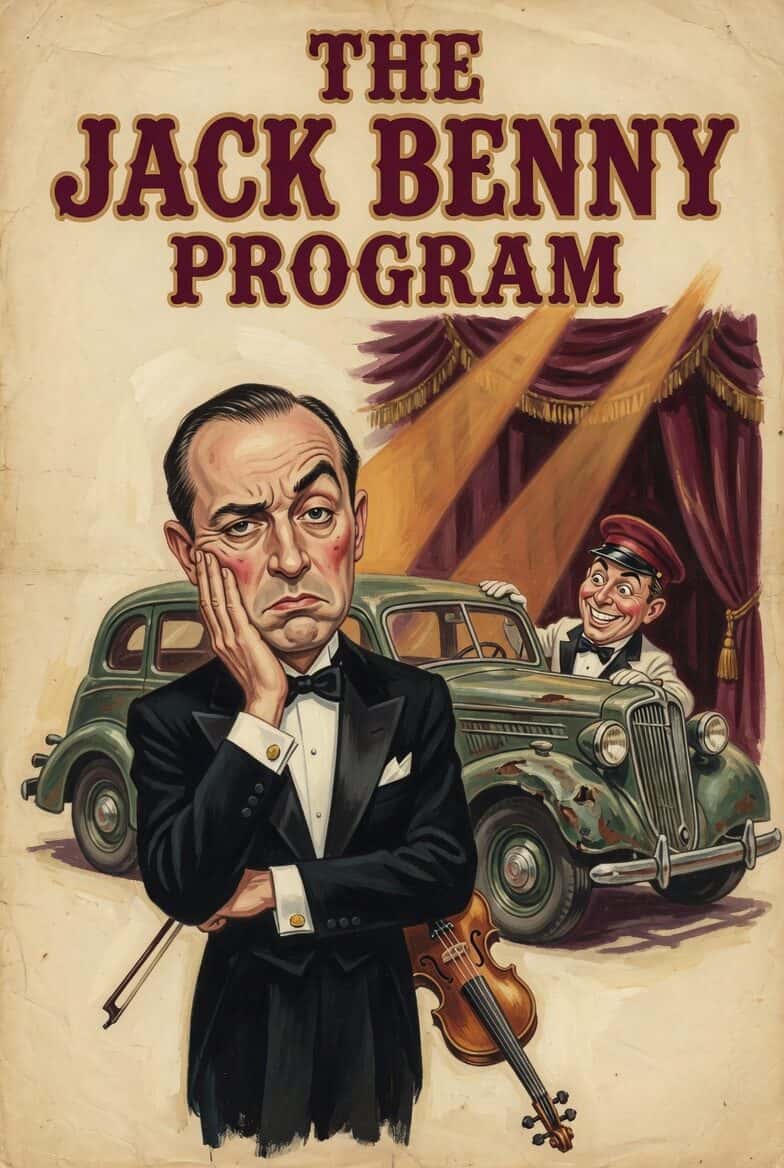
My guest today is a man who stands high in his end of the profession, broadcasting. A man who has been our guest on a nostalgia night, unbeknownst to us, because he was in our audience and we didn't know he was there. And we were talking about Jack Benny and luckily he put up his hand and asked if he could come up and talk and he told us a great many things that we were very happy to know about. He's an extremely well-organized gentleman, a handsome man who, all I'm going to say about him is that he was with Jack Benny as one of his top writers for over 25 years. May I present George Balzer. Hi, George. Les, thank you very much for that.
Very fine introduction. Whether I deserve it or not, I don't know, but that really doesn't matter as long as you said it. Well, we want you to feel at home and relaxed, and we want you to talk about yourself. So you say I as many times as you feel you should. Well... May I get us started by asking where you were born, for instance? We'd like to get you... All right, fine. Now, before I get into that... Although you can't go much further back than that, I don't believe. But there's one thing I would like to just touch upon. Please do. And it's the fact that in 1948, Frank Orser, I believe that's his correct name. 31 years ago. Wrote a thesis for a master's degree at Ohio State University in which his subject.
was the comedy writer. And since I fall into that category, I would like to disclose some of the things that he found in sending out questionnaires to all those people who were involved in writing comedy. And his findings were that comedy writers as a group generally were Jewish or Irish. And the reason for that is because through history, the two races suffered so much that in their lives they reached a point where tragedy was constantly happening. And they reached the decision that... Well, there it goes again, but let's not laugh. Let's not cry about it. We might just as well laugh because there's nothing we can do. As for myself, I happen to be Irish. My mother had the name of Bessie Sullivan and then married my father, who, with the name Balzer, was German, but I think in his family, too, there was some Irish.
Were you born in this country? Oh, yes. Oh, yes. I was born, and we'll start right there, because I think I can maybe draw a parallel through my own life. And then I became a comedy writer, and drawing this, my story, to kind of compare it with the findings that Mr. Orser... uh found in in his uh studies let's see if we can find any i was born in erie pennsylvania and i was the third of six children in 1920 of my father came home on a friday night and said to my mother with six young children says we're going to los angeles we're going to california and she says when and he says now well now wasn't quite that fast because they did take 10 days. Your father was a man of decision. He was a man of decision and perhaps didn't like the cold weather back there in Erie. Within 10 days we were all on the train and we came out to Los Angeles. And it is in Los Angeles where I really started my life. I was at the age of four then and soon I was enrolled in St. Michael's Catholic School.
where I stayed for several years up to the point that we moved again. And during that time, I did as most kids at that time enjoyed myself. And on top of that, I had a paper route. And it was on that paper route that I learned my first business lesson. And if we have a moment, I'd like to tell it to you. Anything you want to tell us. I had this route, and I believe I had something like, oh, say, 50 customers or so. But each day I always got two extra papers so that if I happened to come up short, I would have enough to complete the route. Well, most of the time I had two papers that had to be sold. So as I made my way along the route, and got near the end and knew I was all right with the customers, then I would try and sell the papers. Well, one blustery cold winter day as I was ending the route, I still hadn't sold my extra papers, but I got a brilliant idea. I finished my route, and I knew that only three or four blocks away was a very busy corner where I could then walk up there and sell my papers.
And as darkness fell, I made my way to that location. And as I approached, the boy who had that corner saw me coming. And he came over to me and he said, look, I've got three papers left. Now, if you will buy my three papers. You can then have my corner because I can go home. Well, that sounded like a pretty good deal to me. I bought three papers. It gave me the corner. I would have five papers to sell, but it would take no time at all. The corner only for that particular time. Just for that particular evening. Well, I paid him for the papers. I now had my two papers, his three papers under my arm, and he walked away. Within about three minutes, the lights on the market there on the corner went out.
We're now in total darkness. The owner comes out, locks the door, and there I am with five papers. So at least... That was my first lesson in business. What that had to do with my comedy writing, I don't know. The other kid knew that, didn't he? Well, he was sure. He knew time was approaching, and he left me with that hot spot. Even telling me before he left that they would sell like hotcakes. Well, it was a cold winter night, and there was no hotcakes involved, I'll tell you. Caveat emptor. Oh, so true. We lived in the southwest part of Los Angeles, down in the general area of Broadway and Manchester. Broadway at that time was called Mineta, so that goes back quite a ways. In 1926, the family moved to San Fernando Valley, where I went to Winnetka Grammar School.
The part of the valley we lived in was the West End, which is now Canoga Park. At that time, it was called Owensmouth. Well, in that day, it was a long, long way to Los Angeles, wasn't it? In a Model T Ford with eight people. It seemed like it took weeks, but we used to go out almost every weekend as my dad generated an interest in the area to visit the place and look around, and then eventually why we bought a small home out there. And the area at that time was principally devoted to the chicken business, which... My dad, even though he was in the sheet metal business, got into the chicken, or wanted to get into the chicken business on the side. A lot of all the vaudeville actors who decided to quit the business and buy a chicken. That's right. Yes, a few years after that, there was quite a few of them did that. That's funny. But we moved in 1926. And as I say, I went to continue my grammar school.
my grammar school studies at Winnetka Avenue Grammar School. And there was a great change between St. Michael's and Winnetka because having spent about four years in sort of some type of uniform, corduroy pants and shirt and maybe a tie and so forth, I suddenly found myself going to school in bib overalls and barefoot. Oh, my. And, of course, when you're barefoot in chicken country, that's kind of precarious. But it was enjoyable. It is today. To be that relaxed. So, well, we remained in the chicken business for, oh, perhaps a couple of years. And then my dad came home one night from the sheet metal shop.
that was in Los Angeles, he was still driving back and forth and announced that we were going to go in the egg business. And my mother says, well, aren't we in the egg business? He says, no, this is the chicken business. We raise eggs. We're now going to buy eggs and sell them. So in about two days, I would say, we were in the egg business, or he was in the egg business, and I used to go with him on Saturdays. He had the little baskets, and we would buy cases of eggs from the neighbors, and we would clean them up and candle them and so forth. And I can remember in 1907 and 8, where I would go with them on Saturdays.
And we would travel around through the Wilshire District here, Hancock Park, and this area. And in those years, I probably knocked on all those doors, those houses that are still standing, and have some friends now who live in that area and in those houses. And I remind them of the fact that I had knocked on their door so many years ago. Why didn't you open the door when I was here before? As a kid, yes. About two years in the egg business. Why, a laundry, which was located about two blocks from our home, small laundry, this was 1929, went broke. That was the start of the Depression era. And my father says, well, we're going in the laundry business.
Your father was very enterprising. He was very enterprising, and when you consider that he had six children, he not only had the egg business and the chicken business and the egg business to the laundry business, but on the side, in his spare time, he would sharpen lawnmowers, did sheet metal in the neighborhood, selling feed hoppers, they called them, and so forth. And was always busy, but managed to hold the family together. I mention these things only to try and get a parallel of what Mr. Orser was talking about. Well, we want some of your background. And we did have hard times. Not any harder than the rest of the neighbors. But in reflection, I can honestly say they were probably the best times. They were really the best times. It took so little.
to create fun, because anything you did that was enjoyable by comparison to what it could be was just so great that you really appreciated it. And you were very young. And very young, that's right. Those are the rosier times. Now, I graduated from grammar school in 1929, and I will never forget a letter which I received. from my principal. There were, I think, 15 of us in the graduating class, and she took the time to sit down and write each one of us a personal letter which she had put in the envelope with our graduation certificate. What a beautiful thing to do. She was a tremendous lady, and throughout The rest of her life, we maintained contact, which goes back to maybe, oh, 10, 15 years ago. But this was the content of the letter, generally speaking. She lived in Los Angeles on 37th Place, I believe. And she would drive each day out, up through Hollywood, out over Cahuenga Pass, down into the valley, and out to the west end of the valley to school. A long way. And she wrote...
to me and i've always been rather proud of this that when she would start the class in the morning she would look out there in that group of people and i would be sitting there with this big smile on my face and she told me how this lifted her whole day and made her forget her problems now when i read this in my letter i i was happy to read it But then I sometimes wonder if she just wasn't trying to tell me that I was a grinning idiot. What were you smiling at? I really don't know. But this is the little thing that I found out later is all ties in with the fact that the day would come when I would be involved in writing comedy. My job during the period of the laundry business was...
to pickups and delivery. And if I may say so, I was perhaps the quickest, fastest tire changer in the whole world. You had to be because with this old Model T Ford and very little money, you had to patch your inner tubes. And the tires were so thin that flat tires were very, very frequent. And I swear that I could... drive along, sense that a tire was going flat, jump out, grab the jack, the tire wrench, jack up the wheel before it had really stopped turning. And I would throw it down on the ground and I would spring the rim, pull out that tube, put a quick patch on it, get it back in, pump it up, and in three minutes I'm on my way again. Now the only reason I tell this at all...
is because having done this, it seemed like hundreds of times. I remember one day, four or five of my friends, my brother and so forth, came by the house, and they asked us if we would want to go play ball. Sure. Well, I was about to leave the grounds, and my father says, George, wait a minute. Before you go anywhere, I want you to... Take the tube out of that front tire and put it in the back tire and put the other tube, et cetera, whatever the rules were. Now, there was nothing wrong with that flat tire. It had its 60 pounds of air in it and those old high-pressure tires. 60 pounds. And I said, fellas, wait a minute. So they stopped. I said, I'll only be a second. Now, from habit, I grabbed the jack. I grabbed the wrench.
I lift up the axle, I take off the tire off the wheel, I lay it down on the ground, and I spring that inner rim. And just as I sprung it, I realized this was not a flat tire. Oh, my. Now, this tube... Where'd it land? This tube started to come out at me. It got the size of a watermelon, and it got bigger and bigger. And bigger. And this was a good tube now. It probably had only 30, 40 patches on it. This was one of our best tubes. And my father stood there. My father stood there, and he watched this thing come out. And all of a sudden, I realized what was happening, and I ran. And as I got up to run, he grabbed a broom handle. He took a swing at me. I ducked.
It hit the body of the car and put a dent in the car. Oh, dear. Now, that makes him sound like a pretty angry individual, and he had a right to be. He was just direct in everything he did. He was direct, and I just blew up what he considered a good tube. And in those days, you must remember that a tube sold for maybe 95 cents or a dollar. Well, that was a lot of money. And that was a lot of money. That was a lot of money. So over the years, we've laughed about that a million times. Well, what finally happened to the tube? Did it blow? It just came out the size of a, I wouldn't know how to describe it, a big balloon, and it blew. Later on, I'll tell you about something that may possibly reflect back to this whole thing. After finishing grammar school, I went on to high school.
Canoga Park, started with Owens Mouth High School, then they changed it to Canoga Park High School. In those days, there were only 300 students in the whole school. Four years of making 75 in each class. And I remember one day, I was sitting in economics class, I believe, and the teacher was instructing us and so forth, and then the bell rang. And she quickly says, George Balzer, don't you leave this room. So I don't know what this was all about. So I just sat there. Your life was full of surprises. Everybody else left. And she says, come up here. So I walked up to her desk. She says, you've got to tell me. What's wrong with me? The teacher asks you. The teacher, yes. What's wrong with me? I said.
Well, I don't know. I have nothing that I know. She says, is there a hole in my dress? Is my stocking falling down? Is there something showing that shouldn't? She says, I keep getting behind this desk and sliding down off the chair so people can't see me because I know something's wrong. I said, well, why do you say that? She says, because you sit back there and you've got that big smile on your face. And I know something's wrong. So I only tell this story to show that the smiling idiot from grammar school was now in high school. Why don't you smile anymore? But I sensed really that what was happening was that while everyone else was involved with the...
economics or history of the subject, whatever it was, I apparently was thinking of something that to me was funny. And I've got this grin on my face. I'm the only one who's enjoying it. But anyway, she believed me and everything was fine from there on. In high school, I had the pleasure of playing on the baseball team, the basketball team, and lettered a couple of years in each. After high school, I was destined to go to work in the laundry. Now, this was 32. This would take me back to 33. 33. And... We're still coming out of the depression, or trying to. That is, yes. Well, we're actually, we were not quite in the middle of the depression. During high school, let me get back to that for a minute. Along with going to school and working...
in the laundry, my free time, pickups and deliveries, we did at that time in the orange groves, and there were many of them out in the west end of the valley in those years, we did what we called smudging, which during the cold weather, you'd light the smudge pots and heat up the orchards, and then when at dawn, why, then you'd go back to the orchards and shut the pots off. and then the next day you would get on the tank wagons and fill those pots again for the next night. With what, George? With oil. Just a crude oil? Just a crude oil at that time. That's why there was so much smoke and they were called smudge pots. I only mention this because I did this for a couple of years along with spending weekends at what is now Woodland Hills.
Country Club was the old Girard Country Club where I was a caddy on weekends went to school lit smudge pots filled smudge pots and all that activity then I graduated from high school then became deeply involved in in the laundry business which incidentally was growing all the time Especially with those smudgy parts. I would say, yes, it helped considerably. I was out there dirtying clothes while my father and the family were washing them. Conspiracy. But in March of 1934, I had a little problem with my health. And the result of that was that from 1934, March, until April 1937, I spent... most of my time in bed at a hospital. And it was during that period when I developed my great interest in radio. Spent most of my waking hours listening to radio. Wasn't it a boon? It was tremendous. And out of it is where my whole...
I did not know it at the time. My whole career really, really started. And I know radio was on all day, lights out at 8.30. You could listen to the radio until 9. And then I happened to have a radio of my own, which was fair size, table model. And we found out that by running some wires from my set on up into the wall plug, we could tie in the whole ward. Oh, my. So that at 9 o'clock at night from the office where the nurse would click off the radio and that would end the night's listening, we would then stick our wires into the wall and we would listen to radio until maybe 11 or 11.30 at night.
Now, I bring that up only because this is when we would get Fred Allen and Town Hall Tonight and all those great shows that would come on between 9 and 11. Yes. Prime time, even then. Real prime time. So, after I came home... George, may I interrupt? Yes, surely. Up until now, you have not done any writing. Is that correct? Up until now, I have never touched pencil to paper. Never. But all of this stuff was stewing inside of you. I didn't really realize it, but listening to so much radio, and then I came home and continued because I still was down most of the time. And one of my favorite programs was Jack Benny. And thinking to myself, which probably took considerable nerve, but I did, gee, I think I can write that kind of material.
So over the next, oh, many months, I wrote five scripts, my version of The Jack Benny Show, what I thought the show not should be, but my idea of the show, having listened to it. When I finished the fifth script, that was it. What am I going to do with them? I knew nobody. I hadn't the slightest idea of who to contact or anything. Well, now fate, I find, has played a big part in my whole career. All of us. Out of the blue, a fellow named Tom Devine moved in on the acre of ground which backed up to our acre. And I found out that Tom was Andy Devine's brother. Oh, my. Now, knowing this, I made it a point to be over at Tom's one day.
when i knew that andy would be coming over and i said to andy i i told him what i was interested in doing i said is there any chance at all and he said well they use so much material that i don't know why it wouldn't be a good field for you to try for so i did and i felt very uh excited about the whole thing and then Three or four weeks later, I let Andy read my scripts, and he made little criticisms and so forth. Now, at this time, Andy was on the Benny show. Andy was on the Benny show. That is correct. And I got a call one day from Andy, who then, he lived in Van Nuys. And he said, George, I want you to call Young and Ruby Camp Advertising Agency and ask for Tom Harrington. I'm sure you remember Tom. Sure, of course.
So I did, made an appointment to see Tom, and I came into Hollywood and went up in the Equitable Building, the Y&R, and went into Tom's office. And I told him my story, that I was interested in writing. And he said, and I also explained to him, I said, I have never been inside a radio studio. Up to this time, I have. I have never witnessed a radio broadcast. He said, well, how would you like to come to the Jack Benny show on Sunday? Wow. Well, naturally, I was terribly thrilled. So he reached over and he picked up the phone and he said, I want four tickets for the Jack Benny radio show this Sunday. And at that time, Tom was the producer of the show. Along with being head of the office, he was also a producer of the show.
And he said, oh, and he put the phone back down, and he said to me, there are no more tickets. Well, of course, then I was ready to go right down to the floor. He said, but how would you like to come to the artist's entrance and ask for me, and then you can come on into the control room? Now, there again is fate. If the girl said, well, I'll have four tickets, I would have been sitting in the audience. So the first time that I ever saw a radio program was from the control room of the Jack Benny Show. Proper place for a writer to be, actually. And I'll never forget it, because George Burns and Gracie Allen were there. They were not on the show, but being very close friends of Jack and Mary, they were there.
Andy, of course, was there, and I met a few other people, although I did not meet Jack or Mary at that time. But after the show was over, I came home, and I felt now within the next two or three days, I'm going to get a call, and I've got a big job and everything. Well, of course, nothing really happened. That was sort of the end of it. But I kind of kept making a few notes. writing a few things. Had you given Tom your scripts that you had written? Yes. Tom had looked over my scripts and brings out an interesting point, too. He also sent me across the street, I think in the Taft building, to a gentleman named Everett Mead. You remember Ev Mead? He was in the advertising business. Then he became account executive for Lucky Strike, I think. I'm not sure. Years later. But anyway.
He read my scripts, wrote me a very nice letter in which he had a comment. He says, it's difficult to believe in reading your scripts that you have not somewhere, somehow had some writing experience. And he said, I would suggest that why don't you tell people that you're from... New York or from Detroit or someplace. He said, because the whole feeling out here is that the talent comes from the East. And he says, you're here from California. I didn't take his advice on that particular thing because it wasn't necessary, but not much happened in the next several months, maybe a year. In the meantime, I tried to keep up contacts. I met a man, fellow writer named Marvin Fisher, who at that time was doing Signal Carnival.
And we would call one another once in a while to see what was going on, or I would call him to see what was going on, and nothing was happening really. And one day I went back into Young and Rubicam just to touch base again with everybody. Again, fate comes into the picture. Nothing was happening. They couldn't help me. I got in the elevator, came back down, came out onto Hollywood Boulevard and around the corner. And if you remember, Daily Variety used to be right there just off the corner on Vine Street. And stuck in the window on a clip was that day's publication. Variety was facing out through the window. And I'm leaning over reading the front page. And Marv came by and he says, George.
I said, oh, hi, Marv. He says, what are you doing? I said, nothing. He said, I'll tell you what you do. Call Duke Atterbury. Now, Duke Atterbury was the writer for Bob Burns, old bazooka Bob Burns, who at that time was appearing on the Bing Crosby Craft Music Hall. So I got in touch with Duke, and he says, yeah, I think I've got a job for you. And I worked for the next... two or four months out at Duke's house, and I found out that the job was, he had files and files of jokes, all put away, categorized, and everything cross-filed. Just like Cliff Arquette. Yes, and I would sit up in his attic, which was furnished with a little couch and so forth, and I would write. Eight hours a day, I would just write jokes.
And he would look them over and select the few that he liked, put them on cards and so forth. Then when he would go into the show to get with Bob, why he would supply the material to Bob Burns. And as I listened to the shows, the first week I didn't have anything on the air. And the next week I had maybe one joke and two jokes out of a 12 or 13 joke routine. But as the weeks went by, I had more and more and more. And for this, I think there was one week I had about 12 of the 13 jokes. Now, I don't know how much money Duke was getting, but I heard he was getting considerable, up in the hundreds. I was getting $20 a week. Oh, boy. Now, this, coupled with the fact that I was driving my brother's car back and forth.
from the valley into West Los Angeles, where Duke lived. Then my brother played a dirty trick on me. He wanted to get married. So getting married, he couldn't let me have his car anymore. So I went to Duke, and I explained to Duke. I said, I'm getting $20 a week. If I could get $25, I could buy a car and pay $5 a week on it. And he said no. So I said, well, then I can't get to work, so I'll just have to quit. So I left Duke and for a while didn't do anything, but very short while, and I bumped into Marv Fisher again. And he said, why don't you come join us on Signal Carnival? Marv was always popping up at the right time. He was always popping up, yes. So I said, wonderful. So I went.
and joined Marv. At that time, Jack Carson was on Signal. Of course, Signal was just a co-show at that time from, I guess, up to Oregon, Washington, California, maybe on into Arizona for Signal Oil Company. Vera Vague, Barbara Jo Allen, was on that show. And I worked there on that staff, not too much money, another $25 or $30, something like that. per show. And then I get a call from Young and Rubicam. From Tom Harrington. Yes, from Tom Harrington and the people up at Y&R. And they wanted to see me. So I went up and they said, we are going to start in a few weeks the new Burns and Allen series. And we would like you to come and...
be on the staff now during the period in which i thought i was entirely forgotten somebody in that office remembered from two years ago when i had when i had made my original contacts now this is what 39 this uh was no this was about 1940 1940. um so i finished up with signal and joined the burns and allen staff and it was on it was there that i met sam perrin now sam and i wound up working together and it was the start of a partnership that lasted for over 30 years my goodness um is sam still here is he yes sam still lives out uh in the valley hasn't done anything uh recently i don't believe retired, I suppose. Yes. To kind of bring this back together now, the year with Burns and Allen went along very smoothly, and it was also during that period that the war started. And at the end of the 39 weeks, the sponsor wanted to save the Burns and Allen time.
reserve it on the air, so they put in, as they used to in those days, they put in a summer show. Yes. And the agency wanted Sam and myself to write the summer show. And that was Tommy Riggs and Betty Lou. Do you remember Tommy? Oh, yes. The man with the ventriloquist type of act, but did not use a dummy. It was just a second voice, just a high voice for Betty Lou. Which kind of brings up a story. Tommy would once in a while like to spend an evening out and have a few drinks and so forth. Well, the next morning, if he came into rehearsal, his voice was just perfect, but Betty Lou always had the hangover. Always had the hangover. That's cute. At the start of the summer, we then left Burns and Allen.
to do the Tommy Riggs and Betty Lou show for 13 weeks, at which time we would then move back to Burns and Allen. Shortly after we started on that summer series, I married the girl next door. In the meantime, we had moved into Van Nuys, and her name was Ada Marie Anderson. And about three weeks into that, four weeks into that summer series, that was actually now 1942. We got married, and we continued, finished the 13 weeks, and on about the 11th week, we got word from the agency that the sponsor, because of the ratings of the summer show, didn't want to let go of it, that he was going to hold it over and run it in the regular fall season. So we didn't go back to Burns and Allen. We stayed with Tommy Riggs and Betty Lou.
And eventually, we ran that 13-week assignment into 65 consecutive weeks. We worked the 13. We worked the 39 fall. We worked the next summer. And about a month before we finished is when I got the call, when Sam and I both got the call from Jack Benny. All right. Now, were you also writing the Burns and Allen show while you were doing Tommy Riggs? No, we didn't go back to that staff at all. We just stayed with Tommy Riggs. But ran it into 65 weeks, and as I say, the call came to join Jack. Well, now, you had been writing for radio before you went to Jack for, what, three years, maybe? I had been writing.
I would say almost three years. And I was very fortunate in that usually radio assignments would be 13 weeks or 26 weeks or 39 weeks. And you just went on. One way or another, I worked back-to-back constantly for I don't know how many weeks, but for 90... some weeks or whatever it might be or a hundred and some weeks then the call came to jack and that added another 35 on top of that so i've been very fortunate i've been very lucky well yeah but with your natural proclivity for comedy and those as you said that formative time while you were in bed all the time it really paid off didn't it it really did it and and i mentioned all those things only because uh the things that uh Frank Orser had talked about or written about, wrote about in his thesis, I really experienced many of them. So he was right. And to a degree, he was right. You know, there were times you'd say, oh, well, there's no use crying about it. Let's laugh. So you would make jokes. Well, anyway, in 1943, I took, I had to go to New York to meet Jack because during the summer he was in North Africa.
on a USO tour. I had never met Jack up to this point. Another thing, here I was, practically a country boy, who, except for that train trip out from Pennsylvania in 1920, had never been further east than maybe 60, 70 miles. And now I'm going to take a train trip. to new york it was quite an adventure on the santa fe chief sure so that was a big exciting thing for me and uh incidentally jack's writers at that time were bill morrow and ed boyne who were leaving the show bill wanted to move into into motion pictures i believe um no i'm sorry not bill eddie eddie billoy wanted to move into motion pictures and bill morrow was drafted into the army So they left, and then that is when I joined the show. And at that time, also, Sam joined the show. Milt Josephsberg came on new at that time, and a writer named John Tackerberry. All these big names in the writing field. I had heard some stories about Bill. Bill liked to enjoy himself, too, all the years that he was on the Benny show. Bill liked to drink, let's just put it that way.
You're not belining anyone. And you know, I know, so many do. But Bill did like to drink, and we used to get, I hear, there was quite a bit of comedy about the fact that when Bill went to a railroad station to travel with the show, and Jack traveled quite a bit, Bill would bring his bags, and the bags would be full of liquor. And over his arm would be two pairs of slacks, a sport coat, a suit, a necktie, underwear, and so forth. And then he would check his bags onto the train. And now that seems kind of ridiculous, but when you stop to think of it, when you're in a condition where you might fall down any minute, it's a lot better to fall on an armful of clothes than an armload of bottles. So I guess Bill knew what he was doing. But anyway, I got to know Bill fairly well after that.
Real nice guy, really fine fella. He was certainly always prepared, wasn't he? I would say. So we arrived in New York, and as I got to the hotel, we arrived in Chicago. We changed trains and took the 20th century limit on into New York. This is all terribly exciting to me, of course. Well, yeah, it was a big adventure. And up early the next morning going down the Hudson River and so forth. And we arrive at Grand Central Station. And then I go to the Warwick Hotel to check in. Well, of course, the room isn't ready at 9 o'clock in the morning, so I had an option. I could sit in the lobby or I could do a little sightseeing. So I did. I walked down to Fifth Avenue and turned right, south, past St. Pat's and so forth. And then I came to another boulevard and...
Made another right turn, and soon I found that I was doing exactly what I had been directed to do by a radio show, which was on every Friday night. I was going up 42nd Street across Broadway to that little theater off Times Square. Unless I think that was a warm spot. In your art. Yes, indeed, George. But it was terribly exciting. You didn't find it, did you? No, I didn't find it, but there was a sign right close by that said, Smoking in the Outer Lobby Only. That's cute. With the excitement of all, being in New York for the first time, perhaps I was a little... overwhelmed and sort of believed it all because I really thought that the man on the camel sign was blowing smoke rings at me. I thought my reception committee was Father Duffy standing out there just below the Coca-Cola sign. All the pigeons. Yes, and then I get up closer and I find out he's a statue. Now the pigeons knew this for a long time. But it was a terribly exciting...
adventure, and to show you how rapidly things can happen to a person. They happen fast to me, they do happen to other people, and will still happen this way. Jack had not arrived back from North Africa as yet. He was going to come in in two or three days. This was 43, you said? This was in 43, September 43. finally arrived and we got word to meet him at the sherry netherland hotel where he was going to have a press conference on his activities with the uso so we go over to the sherry netherland and in one of the rooms they had set aside for the cameras and for the newsreel cameras and so forth uh we wait and jack comes in and he was introduced around and as we shook hands for the first time, I'm sure that neither one of us knew that this was the start of a relationship that would last over 25 years. And the newspapermen were there, and Jack said, fellas, hold it a minute now. Let's just not do a cold conference. Let's get a little idea going. So he called the writers over.
And they said, fellas, can you give me some little idea that we might be able to use to just kind of hold this thing up? And we thought about it for quite a while, quite a while, maybe 10, 15 minutes. And then I said, Jack, I might have an idea. I'm not sure. But what do you think? How would it be if, as each reporter asks you a question, and as you start to answer, one of the others, there were four or five other people that traveled with him on that trip, one of the others butted in and supplied the answer so that you never really have a chance to say anything. And he says, yeah, yeah, that'll work. Why don't we do that? Now, of course, I felt sensational because to even think he would consider it, let alone do it.
And that's what we did. We wrote out the questions, and then when Jack would say, Mr. Benny, while you were over in North Africa, did you find that so-and-so and so-and-so? And Jack would say, well, and then would bump in and say, especially at the time when we were at the such-and-such base, when so-and-so and so-and-so and so-and-so. And Jack would say, yes, yes. That's the way we did the press conference. I noticed, George, excuse me, but I noticed you doing the same with your hand as Jack always did when you're playing Benny. Now, this worked twofold for me. Not only the general idea was accepted, but in lining up the questions, we didn't have enough reporters. There were only three newspaper men.
So in order to make the bit work, I had to play a reporter. I played the part of a reporter. And this, of course, I had to write home about immediately because in just two days I was going to be in newsreels all over the country, which is another unbelievable, exciting event for me. So we stayed in New York. We opened the season there. And we did two shows out of New York. We opened there on October 10th. We did the shows of the 10th and the 17th from New York. Our first show basically was about Jack coming back from North Africa. Our second show was sort of a continuation. I remember the sketch in that show. We did Casablanca. But in the fore part of the show, we had an idea where Jack was very military.
and because of being around the generals and all, he had assumed this kind of militaristic character. And we had a routine where Jack was drilling his writers. And so we wrote it that way with the four writers and Jack drilling them out in the hall. Now it came time for casting, and we said, Jack... Now, who will play the part of the writers? Who do we want to get? He says, you fellas. You guys. We said, wait a minute. What do you mean we're going to play the part of the writers? Of course, I had been in newsreels now, and I was already a big actor. I didn't mind it so much. The others were a little frightened. Jack, how do you want this played? He says, no, no, fellas. You're going to play it. And he worked on a theory which proved throughout his whole career to be so true.
You work with real people as often as you, as much as you can. If the real person is available or the real character and you can get them, that's what you get. Rather than get someone to play the part, especially on radio where it was a sort of current real situation in that kind of variety show. So, There we are now, the second show in New York. We're now on Coast to Coast Radio. So these are just a series of events that happened to me. I don't know the reason for it, whether I deserved it or didn't deserve it. I don't know. I only know that fate always stepped in when I needed it, and then things began to snowball. And one thing led to another, and we came home.
and went immediately to Palm Springs. That was another first for me, even though I'd lived here for all those years. I'd never been down to Palm Springs. So we'd go down there for a couple of weeks so that Jack could rest. And then we did the shows out of the theater down there, American Legion Hall. And throughout the years, that became a place where we would go frequently and do a lot of shows out of Palm Springs. And then we came back from there, and then we started another round of playing Army bases, Air Corps, Marines, Navy. Very active time during the war. Yeah, we got around an awful lot. And then in January of 1944, our first daughter was born, Bonnie Jean. That was in January of 44. And from that time on, we...
sort of stayed fairly close by, made no great extensive trips, and did a lot of shows out of the NBC studios right here. But in the meantime, we'd also get out. Right on the property where we are sitting now, George. That is right. It's just amazing, isn't it? I remember the relationship with Jack and his writers was always just sensational. unbelievable and we'll touch under that a little more later but i can remember and jack worked closely with us there was one saturday we were here and we were at nbc we had finished rehearsing a show and we were cutting the script now i had been with jack not over three four months when this happened and um while we had finished rehearsal And we wanted to fix the script a little bit, strengthen it where it was weak and cut it down to time and so forth, as you know. We come to a page and Jack says, fellas, I want a stronger joke in here. And there was silence from the four writers. And Jack says, I want something stronger, something better, something...
Something that's, that's, will get us a bigger laugh. I want something, something. And then I turned to him and I said, Jack, okay, we'll get you another line there. And he says, oh, you agree with me, huh? I said, no, but it's possible that the four of us could be wrong. Now, when he heard this, he slid right off the chair. He slid right off the chair, and he's propped up in the corner, sitting on the floor, and he is screaming. He is just laughing. You never heard such a loud laugh in your life. And as he got up, he looked at us, and he said, I wouldn't change that joke now for a million dollars. And you know, he didn't.
It went on the air just as we had it, and it played. Fortunately, it played. Amen. And when he did the joke on the air, you could see he looked up to the controller where we were all standing, as if to say, you smartasses. But that was the key. That was the key to the whole Benny operation, was fun. And he could laugh at himself. We had fun. And Jack loved to laugh. Yeah. And... You see, what you've always heard about him, George, is that he was a terrible worrier. That it sort of clouded everything else. Let me tell you something. I never bought that. Knowing Jack as well as I did for so many years. They used the word worry. I don't think he was a worrier.
I think he was a very concerned performer. And there's a difference. He knew what he wanted, and he recognized it when he got it, and he was always concerned as to whether it was right or not, but to really say he just worried. I never really found that. He had much confidence in his writers. That's why I brought it up. I wanted to hear from the horse's mouth. Tremendous confidence in his writers. And as we get along, you'll see that really he relied on us tremendously and then took our word for it. And I only cited that first incident because it was rather humorous. It was cute. And sort of brought out the kind of a man that he was. Well, now, in 1945, we went back to New York again. For personal appearances? To do, in 1945, we went back for, I think, to play some basses on the way.
or either on the way or on the way home. We were going to play some bass and do a couple of shows out of New York. And always dealing on the Benny Show in reality. To a great extent, we did the things that we were going to do in real life. In going to New York, we took the train. To take the train, you go to the railroad station, right? So the show, going to New York, Sam Perrin and myself, we wrote. the railroad station for the first time. That was the first time we ever used, and we created, pardon me, Anaheim train leaving on track five for Anaheim, Azusa, and Cucamonga. Marvelous. Now, we used that from that day on for the next 25 years. Sure. It was one of those lasting things. Great running gang. Everybody in the country laughed at this. It was just...
Marvelous, the way it held up and the various things that we were able to do with it. Was it Mel Blanc? Yes, Mel was the announcer. While we were in New York, a very exciting thing happened is that Sam Parrott and myself were approached by a Broadway producer, asked if we would want to do or would do for him the book on a musical comedy. and we spoke to Jack about it, and he was absolutely thrilled, and he says, fellas, take it. So we did, and we finished out the radio season, came back to Hollywood, finished out the radio season, and then at the start of the summer, why, Sam and I went to New York, and we wrote the book on a musical called Are You With It, which ran for, it opened in Philadelphia.
And while it was in Philadelphia, we were now busy with the new fall radio season out here, but we flew into Philadelphia, did a rewrite on the second half in three or four days, then came back to the coast. Then they moved the show on into New York, and it opened at the Century Theater originally. We weren't even there. And then a short while later was moved to the Schubert Theater. And Alto ran about 16 months, which was a pretty good run. Got wonderful reviews. We were very happy about it. Probably would have run longer, but in the meantime, the war ended. And the mood of the whole country changed. And a lot of the shows that were based on really just fun.
We're now a little bit out of kilter with the thinking, and so then gradually my new shows came in. But we got our 16 months out of it. That's a long road. We were terribly excited. So we had that taste of show business. Now, in 1945-46 season, we started something which I think has an interesting story behind it and again reflects on Jack. Excuse me, George. I'm going to have to see. I think we're run out of tape by now. In what way, George? Well, we had gone off the air at the end of our Sunday broadcast and, of course, had no idea for the following week, took Monday off, and... On Tuesday, we met at Jack's home, as was customary, in Beverly Hills. And we were sitting around trying to get an idea for a show, for the next Sunday show. And one of the writers, I think it was Sam, who said, Jack, why don't we have maybe a contest involving where we ask people to write lyrics?
and send the lyrics in, and then to the best of the group, we'll have the musical conductor, who was Malin Marek at the time, write music to them, and then we'll play them on the air and have kind of a, let the audience participate in a little contest of some kind. And Jack thought about it a minute, and he said, no, I don't think so. And there's kind of a long pause and a silence while we're all trying to think of something. And I said, Jack, I think I've got an idea. We hear on the radio so much of, please write in, in 25 words or less, I like ABC toothpaste because. or I like such and such a soap because, or I like this or I like that in 25 words or less because, and they give away prizes. I said, we hear that all the time. He says, I've got an idea for a contest that maybe would work. And he said, what's that? I said, well, why don't we ask people to write in in 25 words or less and say, I can't stand Jack Benny because.
now when i remember when i suggested this there's absolute silence and jack doesn't say a word he just sits there in his chair and and you're wondering if you should just the other writers are now looking at me and i figure oh and i'm probably about to leave when jack got up and he walked across the room and he stood right in front of me and he said That's it. We said, Jack, what do you mean? He says, that's what we're going to do. I'm going to ask people to write in in 25 words or less and tell why they can't stand me. We says, Jack, you got to be crazy. He says, no, I'm not. He says, that's what we're going to do. And you know, we did it. Out of that one little idea, we got 11 shows.
We ran that for 11 weeks. We had to find the gimmick as to how we would initiate it, which we found. And we carried that thing for 11 weeks. And I will say it was a tremendous success. The mail poured in. It poured in. We had to hire eight girls to sort the letters. Getting rid of those that obviously could not win because they were just that bad. By bad, I don't mean they were in the wrong attitude. The response was exactly what we thought it would be. The people appreciated the humor. Tongue-in-cheek. Tongue-in-cheek. The crank letter was maybe a half of 1%. But the crank letter you're going to get anyway, whether there's a contest or not. That's right.
And we ran that for 11 weeks and was tremendously successful. But Jack had the guts to recognize that this thing could be a big event. And it was. It was terribly successful. I love the way you described how he played it, though, when you first approached him with the idea. Yes. How he played it for dramatic effect. Yeah, he did. You were ready to go home. He was really, yeah. He really didn't tip which way he felt about it. But now, in retrospect, you know that he was really mulling this over in his mind and came to the conclusion that that was it. Now, in that same year, we initiated the phone operators, which originally were B. Benederat and Sarah Berner.
The Sportsman Quartet, which is with the show for 15 years after that. Mel Blanc playing Professor LeBlanc, the violin teacher. Yes. We also started in that year the Age. My partner and I started this. Age 39. Story behind that, it didn't start at 39. We started that with 36. And the way we did it, Jack was on the air. It was a knock on the door. Come in. It was Mel Blanc. And he said, Mr. Benny, I'm writing a story about you, so forth, so forth. All I have to have is what is your age? And Jack says, I'm 36. He says, no, no, wait a minute. 36? He says, well, that's all I am, 36. And Mel wouldn't believe it because Jack at that time was maybe...
54, 55. So 36 was a joke. The next year, we did it several times that year at 36. The next year, we always celebrated his birthday. He became 37, and we did jokes with him saying he was 37. The following year, he became 38. The year after that, he became 39. The next year, we had a birthday party, and Jack says, fellas, hold it. 40 isn't funny. 40 is not funny. 39, that's where we stay. And out of that, he remained. He was 39 years old until the day he died. And it was always a beautiful gag. Always worked fine for us. Another thing we started, I'm only mentioning these things because they had such long life on the shows after they got started. Well, it's interesting to hear how they developed.
which I think is important in an interview like this. Another time we were doing a sketch, sitting in Sam's backyard, and Sam lived very close to me out in the valley at that time. We were sitting there in the backyard, and we were doing our half of the show. You two always worked together. We always worked together. We would split the show in half, and Sam and I would take one half, and Milton Tack would take the other half, and it really didn't matter too much who did what, just so we split it in half. We kept in touch by phone. So we'd have our blends. We were doing a sketch based on a new picture called Treasure of the Sierra Madre. Humphrey Bogart was the star in the picture, and in our satirical sketch, Jack was going to play the Bogart part. And Sam and I were sitting there working, and I guess maybe because I knew, I think, two words of Spanish or Mexican.
The locale of the picture, as you remember, was Mexico. So I got an idea, which I told Sam, and I said, I think it would be funny, since yes, in Spanish, is C, it might be funny if we could work that into a routine, and then in the end, why we have the switch and so forth, without saying what it is, I'll demonstrate it. So we... said, by golly, that might work. And this is roughly the original routine that we did, where Jack, as Bogart, in Mexico, sees a Mexican bandit. And he walks up to him and he says, you're from around these parts? And Mel, as the Mexican, says, si. Says, you have a lot of your other bandits around here with you? Says, si. Says, you people all think you're pretty tough, don't you? Says, si.
And Jack says, what's your name? Mel says, Cy. Jack says, Cy. He says, C. Now that routine, we only meant to do it once when we originally wrote it. It's a gem. Again. Again. We had found something that we played it as often as we could for the next 25 years. Became a real classic. We did variations on it. He had a sister. What is your sister's name? Sue. What does Sue do? So, so, see. And it just, you know, that kind of a thing. Was the brother's name Saul? Saul. We had practically every angle on it and worked very good. It was the next summer after we had gotten all these things started that Jack, this was 1948, incidentally.
I guess it would be about a year later. Jack was going to go to England to play the London Palladium, which he had played 17 years before, but it was now going back. As Jack would say, I was such a big hit, they called me back. That was 17 years later. So Sam and I went to England with him to prepare that material. So there's another plus. A country boy who's been able to do all these things, and now the trip to Europe. Made the trip on the old Queen Elizabeth. Sensational. And play the Palladium. It was just marvelous. One of those things that sort of fairytale, you know, even when I stop to think of it. Were you able to take your missus with you? Well, this brings up a point.
When I first went to New York on my very first trip, she couldn't, it was 1944, 43, when I first joined Jack. Ada Marie couldn't go because she was about seven months pregnant and couldn't make the trip. In 1948, when I was about to go, I had to go home and tell her I was going to go. to uh europe and she couldn't go because at that time she was pregnant with our second daughter judy such timing so so this cost me um the next summer it cost me a trip to uh honolulu on the uh on the uh lurline we took literally so i promised her that i said all right you can't go to london with me But next summer we'll go to Hawaii, which we did. So I guess that kind of made up for it. But the trip to England was terribly exciting and just wonderful and so forth. Now in 1948 is when negotiations started for Jack to leave NBC and go to CBS. This meant...
that even though he worked very closely with us, we always did the rough scripts and then we would get with Jack and then he would sit with us and we would tailor it to fit his requirements. And then there was a long period where he was so busy that he was with us very little. We would write the shows mostly without him because he was in these negotiating meetings with the agents and the network people and so forth. And one day he came back. into the room, and he says, well, that's that. We're going to CBS. That closed the deal. And I said, Jack, I hope you got a good deal. He says, I don't know if I got a good deal or not. I only know that we'll all be working together for the next seven years. Oh, my God. Now, isn't that a tremendous thing for...
A writer to hear. For anybody in show business. Right. It's such a treacherous situation. But to know that you're going to be working for the next seven years. That's great news. Which was a great thing to hear because it was only a few months after that when Judy was born. Of course, I didn't want to waste any time having to run around looking for a job, you know. George, may I ask, why did he want to leave NBC? Was this a sponsor thing? No, it was strictly money. I see. If you recall, at that time, CBS was trying to build a strong network. And they bought several shows. I mean, bought personalities. They bought Amos and Andy. They bought Jack. And I think there was another show or two involved. And for big money. I think Jack...
Jack's deal involved something like $2 million, which at that time was a lot of money. That's 30 years ago. Today it'll buy you a pitcher with a sore arm. So that is when we moved to CBS, where we stayed for the whole 16 years or more. Now, in 1950, moving along, We did our first television show. We continued our weekly radio show, but now we started to get into television. We got in on a basis of doing one every six weeks. To do it, we would have to go to New York, and the television shows then at that time, Sam Parrott and myself, as partners, we wrote the television. And they were live, weren't they? They were live, right on the camera. And that's a whole story in itself, the way that worked. I don't think actors today could do it. They aren't schooled that way. We've got the tape. Everything can be fixed. But then we were live. When the button was pushed, the light went on, and you were coast to coast, standing out there barefaced. And not only live, but no cue cards.
in those days everybody knew their part you betcha so we go to new york we're going to do our first television show dinah shore was the guest and we were working on the script just before a dress rehearsal and jack said i want an opening line just as he started his monologue something to get started with um that's a little better than we have I don't know what it'll be, but just a real good opening line. So we thought about it a bit, and I said, Jack, I've got an idea that might work. I said, why don't you just walk out on the stage, and you stand there looking around, and your first word should be, since this is your first television show, your first word should be, I'd give a million dollars to know how I look.
And he said, that's what I'll do. And sure enough, those were the first words that he uttered on national television. So apropos. Do they have kinnies of those things? Yes. As a matter of fact, we had to make a kinnie because the live show only came west as far as Chicago or Omaha, I think. Then a week later, we would get a kinney of it out here. They were black and white. All black and white. Sure. Yeah. In that same show, I had an idea for the ending, which we used, too. Even though I read a book lately, written by somebody who mentions the ending, but they never give any credits, you see. Sure. But anyway, basically an ending where the big...
event of the evening on the tv show was that jack was going to play the violin so he gets his violin but he'd bring it out to him and he tunes it up a little bit and then he starts to play and he plays only for about 10 or 15 seconds and the cameras pull back and we had the entire audience get up and leave and that was the finish of the show jack just kept playing up on the stage and you could see these people on cue who would just get up And by the time he finished playing, the studio was absolutely, we did it in the theater, was absolutely empty. There was no one left in the house. Beautiful. There's the lonely figure. And he's there on stage. There's not even anyone left to thank, and he just walked off. Beautiful. So that was the start in television. We did the show in that fashion every six weeks.
Then as time went on, we did them a little closer together. Then we got down to where we alternated every other week with my favorite secretary or... Oh, I can't think who was in that now. But anyway, we did every other week by alternating with other shows. Then we got on to a weekly basis. Wow. Now, in the meantime, at this time, up to now, we're doing radio and television together. And you and Sam are doing a whole television show. We're doing mostly television. But we did have to add two boys, Hal Goldman and Al Gordon, which we called the new or the junior writers. They joined the staff, and that gave us six writers. So they devoted, along with Milton Tack, most of their time.
to radio then when we went to television rehearsals why then we could move them all over so we could all be involved with television rehearsals when we did the radio shows we would go over there and get involved with the radio rehearsals now were the radio and the television shows um the same show or were they entirely different entirely different entirely different a lot of work and uh Then we reached the point that we're going to now go on television weekly, so we have to drop radio. That was about 1954. That's still early television, isn't it? Yes, it is. So now Jack had a decision to make. The budget of just the television show would not support a staff of six writers. And for his purposes, he decided it was best that he keep Sam and myself.
and the two new writers. And Milton Tack moved on to other things. So that sort of led us into the long years of television, in which we fortunately won a few Emmys along the way. Well, I was going to say it made no difference. Of course, Jack was from Vaudeville anyway. He knew the theater, and he was a stand-up performer. But there was no slump there at all. No. You changed from radio to television. We made the transition period, and we found we also resurrected some of our radio shows from out of the past and converted them to television. And I imagine they worked very well. We found out. That many of the shows that Sam and I wrote converted more easily than some of the others because we thought more in terms of picture, even though we used words. We thought more in terms of picture rather than the stand-up jokes. Did you enjoy the change to television? Oh, yes. Very much. Very much. It was all new and a whole new excitement went with it.
Really, as far as your end of it was concerned, there was no great change, except that you had to think even more visually, I suppose. That's right, and we always thought, even in radio, we always thought visually. Then we would try to develop this picture on paper with words, whereas on television we just developed it with direction, because the set was there, and it was just a very exciting time. You told me, perhaps I'm jumping the gun on you here, but it seems to me you told me the other night something about the creation of a dungeon. Do you want to get into that? Oh, well, yeah. What I mentioned was that radio, as a means of enjoyment to the listener, really surpassed television.
in that the mind would build, always goes to the ultimate. If you describe with words something very beautiful or very nice, you will imagine it to be even nicer than the words ever really said. Your imagination takes over and you enhance on the whole thing. Conversely, if you describe something that was very distasteful, why, your mind would make it even more distasteful than the words indicated. With television, you build a set and you photograph it, and there's no area for your imagination to work. That's it. Your people, who may have beautiful voices, can only be as pretty. as they are in person or as good looking as they are in person whereas if you hear this on radio the girl becomes the most beautiful and the man becomes the most handsome yes and we found this to be very true in that because we had had such great success with the vault which we had started on radio again back in 1945 where jack kept his money under the house um We had such great success with it that when we got into television, we said, we've got to do that on television. So we did a show in which we built a set depicting the cavern underneath his house as we saw it. And we thought we had a pretty good replica.
of what the vault should be like. We had cobwebs. We had the moat. We had the drawbridge. We had the chains. We had the barred doors. We had everything there. We went on the air, did it on camera, and released it throughout the country. And in a few days, as you would walk down the street and you would meet people you knew, and this happened to Jack and to us as writers, they said, That's not the vault. We said, well, what are you talking about? He says, the vault under Jack's house is, it goes way down, and it's dark, and it's got this, and it's got that. We said, well, why does it? He said, well, because that's the way I've always pictured it. And I think that brings out the point that you were talking about.
Imagination. The impact of radio. Because each person used his own imagination, of course, and built his own picture. I think I read somewhere, more or less recently, a little girl who knew nothing about radio, was raised on television, had a chance to listen to a dramatic radio show for the first time in her life, and she was only, I think, six. six or seven or eight years old, very young. And she listened to this show. And when she finished, she said to her mother, she says, you know, the pictures on radio are much prettier. And I think that sums it all up. That's a beautiful thing to remember. Because I've heard the reverse of that, you know, with the kids, when the mother...
of the young boys was trying to interest them in radio, and television was already here, and they said, but mommy, we can't see it. Well... It wasn't introduced to them properly, I must say. That's true. See, they didn't have that training. Now, a very strange thing, I'm going to skip just a little bit and bring my son into this, who was Tim, was born in 1953, and years later... When he was a student back at the University of Notre Dame or he went to where he did his undergraduate work has since Attended UCLA where he got his master's degree in in marketing and finance But while he was at University I of Notre Dame I sent him about six or eight tapes of the old radio shows and A few days later, he called me and said, do you have any more? I said, well, what do you want any more for? He says, well, all the boys gather in the dorm, and we play these tapes, and they think they're just great. Now, here's a whole generation that really did not know radio. It's amazing how they embrace it, though, once they hear it. Yes, when they once hear it and appreciate it, they become real radio fans.
So I think that says an awful lot for it. So, I don't know. I guess there's still more to tell if you've got time. Yes, yes. We'll finish out this hour and then we'll come back to it later, George. All right, fine. Because there is some more I want you to bring with you. I would like you to bring some of your favorite excerpts from... Many shows, if you will. I would be delighted. But let's continue now. All right. What's next? Well, let's see. Where were we? We were just really getting into television. You had just told us about the dungeon or the vault. Yeah. Now, I have a story which I think is interesting because it tells a little bit about writers.
And I think there's a little humor here. Can you hold your thought long enough for me to digress and ask you a question? Yes. What did you ever do with the vault after that? Did you adapt it? Did you modify it? Or did they learn to accept it? After that, we tried to develop it a little further and make it even more so. than than we had it originally and then we used it on film maybe all throughout the next 15 years maybe we used it six eight times something like that and after the first shock was over the people didn't mind yes and by that time too you then you said this is our vault yeah and and and we used it yeah now about writers well what i was going to say was um not always when you have an idea do your other writers and I could be also this could work with me when somebody comes in with an idea maybe for some reason or other you don't grasp it immediately and you sort of push it to one side but I recall at one time I came in with an idea I didn't know where to go with it but I just felt that the The nucleus was funny. I said, fellas, I got an idea. If we will do a hospital sketch where Jack is a surgeon, and this is what I want to do. We have Jack operating on a patient, and by the patient's head, we have the old-fashioned respirator, the balloon-type thing. And we show...
we indicate that as the patient breathes, the balloon expands and contracts. Expands and contracts. And we make sure the audience knows what that is and that that is the patient breathing. We photograph it in such a way so that when Jack says to the nurse, pulse, she says, 64. He says, respirations. Then she looks at this balloon, which is expanding and contracting. And she says, 16, or whatever is the proper number. And we do a little more operation with comedy. Then he says, nurse pulse. She says, 60 or 58, whatever it is. Respirations. She says, 14. And this way, we tell the audience what that is. Now, when we know the audience knows what that represents, We never look at it again. All we hear on expansion and contraction is the shh. But it says at a point, it doesn't contract. It just expands, expands. And as the patient keeps breathing, this balloon gets bigger and bigger and bigger and bigger and bigger and bigger.
And they kind of looked at me and said, eh, I don't know. So I said, okay. So in the next half hour or so, we got an idea for another show. And we did it. Don't remember what it was. And it was a very good show. The next week, we're trying to get an idea for a show. I said, fellas. Why can't we use the hospital routine with the balloon as the patient breathes, just continues to expand and expand and expand? No, I don't do that. Okay. We get an idea for a different show, and we do it, and it plays very well. Well, this went on for about four or five weeks. Now we go to New York. This is a running gag all behind the scenes. All in our room becomes a running gag.
Now we go to New York, and I try to sell this idea at least six, seven times. I always brushed it off. So we're in New York, and we have just done a show on Sunday. It's now Monday. We're going to fly out about 5 o'clock in the afternoon. We're going to fly home. But we had to get together early on Monday morning because we needed an idea for the next week's show. So we're sitting in the hotel room, and we are trying to think of a good idea for a show, and nothing much is happening. Nobody's coming up with anything that makes too much sense. I said, fellas, would you like to go shopping today? I said, sure, I'd like to go shopping. I haven't bought anything for the kids yet. I said, well, would you like to walk through the park? Would you like to just relax?
Would you like to just not have to worry about the show? They said, sure, we'd like it. I says, all right, then why don't we do the show where we have the balloon? They said, that's it. We'll do it. We'll do it. And within two minutes, they're all gone. They run out of the room. It was my room. They run out of the room and they're gone because they didn't want to spend the last day in New York working. So they grabbed onto this thing. Pleased to be stubborn, but... They grabbed on to it, and so the next week, sure enough, we did the show. Now, in order to do it, we had to have a little gimmick. So the gimmick was that Jack and Rochester were up in the attic, and they were cleaning out the attic. They were really rearranging the attic, because everything they'd pick up to throw away, they'd say, no, you better keep that, so they put it someplace else. And Roch found a diploma that said, Jack Benny.
graduate of such and such university and so forth, and medical school. And so he said, boss, what's this? Oh, he says, I never talk about that, Rochester. But he says, I graduated from medical school, and then I decided to give it up and just stick with the violin. He says, no, that's right, Rochester. You know that if I had continued with medicine, today, I would probably be the world's greatest surgeon instead of just the world's greatest violinist. Then Jack got called away to answer the door or something, and Roch is left with this diploma. And he says, gee, that's unbelievable. Mr. Benny being the world's greatest surgeon. The world's greatest surgeon. The world's greatest surgeon. And we dissolve, and we go to the hospital, and we have all the jokes and the fun and the so forth. Now it comes time to operate. And we do the thing.
Jack is working on a patient, and he does, you know, a pulse and gets the numbers, respiration, and the thing is going... In and out. And at a point, the sound remains the same, but the balloon gets bigger and bigger. Now, the audience spies this, and they start to laugh. This balloon, in order to do it, we had to get three weather balloons from the armed forces. We were doing it on film. This wasn't live. When we finished, the whole stage was filled with this balloon and Jack and the nurses and the assistant surgeon were underneath it and they never once mentioned it. They never looked at it. And they would lift this thing up and you would see them under there working and it's clear to the ceiling. It filled the whole stage. That's funny.
At the very end, why, then we cut to the outside corridor, outside the operating room. And you could hear the balloon. You could hear the noise going, shh. And then all of a sudden, the biggest explosion you ever heard. The walls shook. Plaster came down. Pictures fell. And then Mel, who was the assistant surgeon, came running out into the hallway. And Jack is behind him. And Mel says, congratulations, Dr. Cronkite, or whatever the name was. He says, you've made medical history. You were the first surgeon to ever blow out a man's appendix. That was the thing. And the show played. It played just great. But that was, I thought, kind of an interesting thing. I couldn't sell the idea. I couldn't sell the idea until...
It was advantageous to them to do it. We only have two more hours left. So we did it. Funny. Did they listen to you after that, George? No. No. No. No. Gosh. You know, again, and I'm repeating, we had fun. We... Always had fun. I can't think in all those years of any time where there was real panic. There were times when we were under pressure for a short time. But today, in fact, this is one of the reasons why I'm here today and not at somebody's typewriter or on a stage with people producing or creating shows. They tell me. The panic that goes on is unbelievable. Oh, in television now? In television now. Unbelievable. Yeah. So I don't know how long, if inflation keeps on, I don't know how long I can stay out of it, but if I don't ever have to go back, I'm... You'll be very happy. I'm not going to. Oh, let's see. Another thing I liked about the whole career, It gave me a chance, being a little bit of a ham, to perform in that on radio, I used to do bit parts on radio. Did you really? Not many. We had a staff of great performers. You played a newsman, too, as I recall. Yeah, I played on the newsreel. But when we traveled throughout the country, we would even carry bit players with us.
But every so often parts would come up, a hotel manager, an interruption, or whatever it may be, and I would do it. And then in television, many times before I'd be getting ready to leave home for rehearsal and the phone would ring, it would be Jack. Oh, George! yeah jack what is it he says uh i'm going to be a little late today when you get there why don't you just get rehearsals and he'd be late because the night before he was probably out on a benefit which kept him out till 10 11 o'clock or whatever you know and so i'd go down to the studio and this gave me my i would always play jack yeah And it gave me a chance. You do it rather well, too, I might add. It gave me a chance to have fun. Sure. And that was kind of the whole thing, fun. That was the key. I think, if I can digress for just a moment, this was the prevailing climate in all of radio, underlying most of it that I did, and it was in a different vein.
There was an exhilaration and a fun connected with it. Sure, there was pressure, but it was an enjoyable way. It was more understandable in radio than television in that fewer people were involved in radio. But in television, there are so many people. Yes. behind the scenes and directors have that much more pressure. Producers have that much more pressure. Performers have that extreme pressure. It's just a tough business. Just a tough... Well, anyway, this whole thing we've been talking about with television and all went on for another 15 or 16 years. And... Here you can really use the old gag. You thought it was going to be a steady job, can't you? Yes, you can. I'll tell you, it was surprising and happily so for me. And if I may say so, I think we agree. I think the listeners and viewers agree. Jack did pretty good shows. Yes, he did. I'm not going to say they were sensational, but week after week after week, we went along on a pretty high...
standard. And I'll tell you the reason for it, I believe, and it was Jack himself, because he had a philosophy as a star. And I'll tell you what it was. I have heard him say this many times in interviews, and he has also said it to me personally in conversation. And this was his philosophy, as he would say to the person. I come first, meaning himself, Jack Benny, because I'm the star and it's my show. And he would have a little twinkle in his eye when he would say that. Then after me come my four writers. Then come the parking lot attendant, the producer. the shoeshine boy, the script girl, my manager, in any order you want to put them. But don't you dare put anybody between me and my writers. Oh, he was right. And that was his philosophy. And because of it, really very simple philosophy, he became known as a genius, which he really was, the fact that he knew.
It was that marriage between the creative people and the star. And one of the problems we have today is there are too many people between those who start it all on paper and the people who have to do it. There are dozens of people in between and they all seem to dilute what originally was. it was intended to be done it just happens that way and quote the good book in the beginning was the word and i don't know why they get so sidetracked well it is very difficult today on most shows for writers to even get with the principal people to even talk to them uh the people in between uh are very reluctant to have that happen because they know and i say this now in deference to all writers if you let the writers talk long enough to the people who do it the people who are who have to get up on that stage suddenly realize that wait a minute these are the people what are all these people in between so the people in between protect themselves against that against that happening on every level george so um What can you do? You know, it's... Unless you own your own network. It's the way the business goes. And, well, let's see. What else can we talk about? Well, I'm sure from what you've told me, you would not change one bit of it, would you? No. No, I really wouldn't. I can't think of anything in the past.
That if I had the opportunity to just repeat it, I would do it exactly the... There's nothing else you would rather have done... Exactly. ...with your life? No. No. As a matter of fact, right now, the last few years, a couple of years, I've been involved in just taking care of my own affairs. And, of course, that book, I've written the book. I'm putting together a... sort of seminar or lecture-type series in which I cover in more depth the same things that we've covered here. Are you going to do this for colleges? That kind of presentation. Because it's a little too much in-depth, I think, for, well, what, women's clubs, that sort of thing. They want something on a lighter vein, don't you think? Unless you got up and told jokes.
well what you do i have it all prepared and i've kept it i've kept it very light and much much lighter than we have here today in that i try to work a lot of humor throughout all the build-ups and then having presented the the ideas and the problems then by playing a two or three minute tape of the old shows i can show them i reach a point where i say now out of that comes came this, and we play three or four minutes of a tape of a show that many of them, if they're old enough, will recall as having heard that tape. It should make a very interesting lecture. One of the nice things about the association with Jack is that he dealt with real people. When we had guest stars, they didn't just play parts.
come on as themselves. We've had governors, mayors, judges, top business people all playing themselves, military people playing themselves. And it gave me a chance to meet these people. One great exciting time for me was when we went back to Independence, Missouri and did a show out of the Truman Library. and I found him, found Truman, to be a most interesting personality. And I have a lot of pictures at home which really don't make too much sense, but I'm kind of proud of them. We're sitting there together going over a script, and you feel a little bit ridiculous talking to the president of the...
Say no, read it this way, Harry. Yes, where you're saying, Harry, next time you read it, for God's sake, will you give it a little laugh? But it was great. It was great. It was time to eat lunch. We all piled in his car, and he drove us down to Howard Johnson's, which was about a block or so away. We're the Secret Service men. We're sitting in the back, and he's driving. So he went from my president to my chauffeur. In a very few months. What other activities have you pursued besides your career? Anything particularly? No. Or have you just concentrated on that? Yeah, I haven't really gotten involved in any particular hobby. I do most of my own, or a lot of my own kind of maintenance work.
Oh, do you? That's fun. Around the house or on the car. I don't work mechanically to a great extent on the car, but minor things. And it's amazing how much time you can use up each day. Just enjoying it. Yes, yeah, and it makes it kind of nice. But if the right thing came along, I would still maybe get involved again. Mm-hmm. But I want to try this other thing now with maybe playing a few colleges and so forth and talk to the younger people who are interested in this thing and maybe kind of help them along a little bit. It's pretty exciting. I've done some of it. It's very exciting. For just a moment, if we have time, getting back to Jack, and if I may read perhaps or just comment a little bit on a couple of things that...
I have in my book, I think it makes a great point. Periodically during the 41 years of Jack Benny's broadcasting career, a question often discussed and debated was to what can the tremendous success of his programs, radio up through television, be attributed. And being one of his writers, I'd like to think that the material, the words given to him to say, had something to do with it. And I'm sure it did. But, in my opinion, the real reason for the show's success was the man himself. This was sensed by listeners and viewers and was perhaps best expressed by the letter that won first prize in the previously referred to I Can't Stand Jack Benny contest.
So if I may, I would like you to hear it. I have a copy of it here. And this is what was sent in by the man who won top prize, which incidentally was $5,000. Nice piece of money. And he put it in the form of a poem, and all based on the theory of why he can't stand Jack Benny. He says about Jack, He fills the air.