
The written record
Read the transcript
Read along with the recording · About 49 min to read
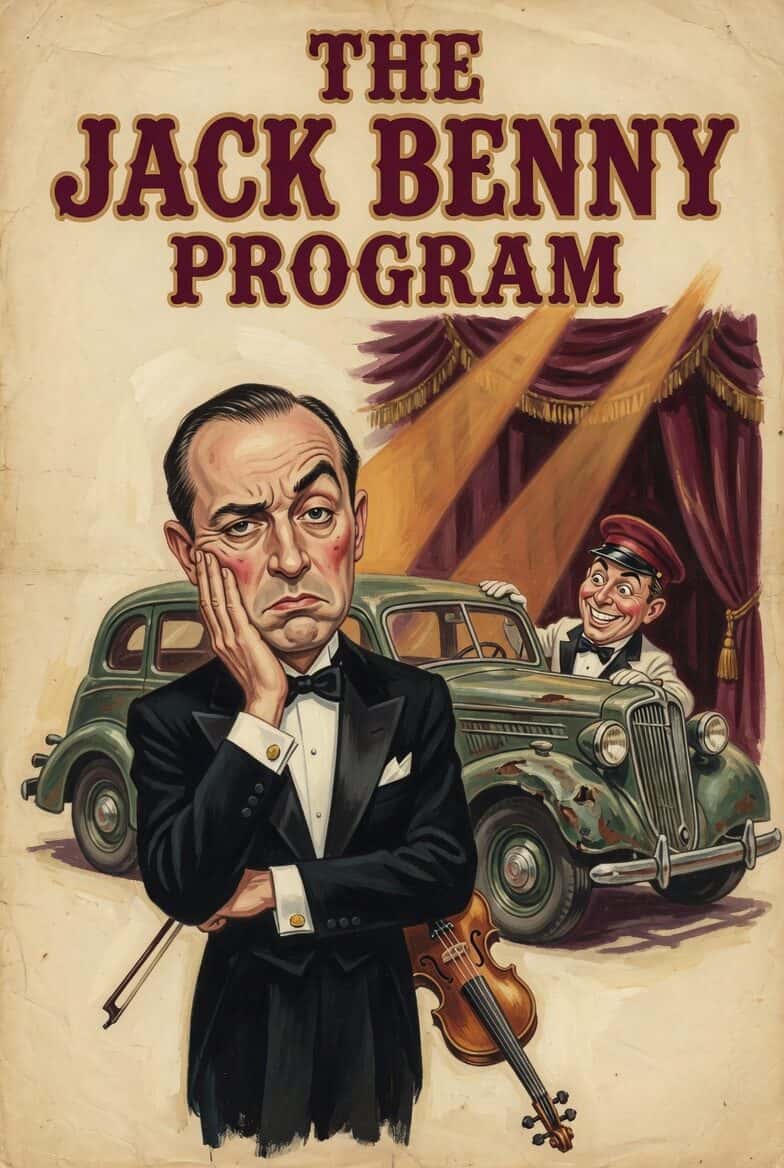
Good morning, everybody. I dare say there is nobody in this audience who does not recognize that song, which is called Love and Bloom, the theme song of the Jack Benny Radio and Television Program's concert series for 50 years and more in this country. Jack Benny died just about a year ago at the age of 80, and now there's a book out by his good friend, by his former manager and business partner, Mr. Irving Fine, called Jack Benny Remembered, an intimate biography. And Irving is one of my guests on the program this morning, along with... Brady Harris, who talks to people on Broadway and writes a column which appears in a trade paper called The Hollywood Reporter. And together, all of us will reminisce about Jack Benny and talk about great names in show business, their personal lives to some extent, but more importantly, I guess, their philosophies of life and how they made things work before the cameras and the microphones and in the recording studios and how they get on in their business dealings, etc., etc., etc.
Also we have with us this morning a gentleman named Humes. I'll just say Humes here at the outset, but this is a man who at one time wrote jokes for Richard Nixon. Now think that one through carefully, because he'll be out here later on in the program and give us some of the great one-liners from those wonderful days gone by. I have a short item left over from this evening's news on Channel 4 here in New York, which has to do with Tussauds Waxworks, the wax museum in London. Is that correct? They have the statues there of all the people in the wax, right? all in concert with the brotherhood of mankind, under the sisterhood of the Lord, all together. Peace, brother. The most popular figure in Tussauds Wax Museum for the second year in a row is Henry Kissinger. More visitors said they came to stand before his wax image than any other dummy in the entire museum. This is what they said. We will continue after these announcements, and remember Jack Benny and a host of others, and I hope all of you will stay tuned. Thank you.
If I told you Excedrin worked better than regular Aspirin, you might not buy it. But would you listen if there was medical evidence? Well, in two medical research studies on pain other than headache at a large hospital and a leading university, doctors reported that Excedrin worked significantly better than the regular Aspirin tablet. Right. There's medical evidence that Excedrin has worked better than Aspirin. So the next time you're in pain, try Excedrin, the extra-strength pain reliever. See if it doesn't work better for you. I don't usually jump around. If I like something, I stay with it. But I just don't feel that way about antiperspirant spray. I've tried most of the leading brands. But then I found Ultraban Antiperspirant Lotion. Keeps you drier than Right Guard, Arid Extra Dry, Mitchum. I like the idea of using a roll-on instead of a spray. I also like the smooth lotion formula. Ultraban Roll-On Lotion.
If it keeps me as dry as it does, and it feels as good as it does, I'm gonna stay with it. Heinz Ketchup. Think how good it's gonna taste when it finally gets there. Anticipation. Slow. It's rich-tasting Heinz Ketchup. It's slow. Good Lives presents Morris. That neighbor kid's okay. She's finicky. Baby's finished. Your turn, Morris. Catch my finicky act. kid. Din-din, Morris. Say, kid, be immovable. There's nine lives. But, uh, keep an open mind. Nine lives, liver and egg or tuna? Tuna. Nine lives. Nutritious foods cats really like. Even Morris. Nine lives. I'll give the kid finicky lessons tomorrow. My first guest this morning is Mr. Irving Fine. Mr. Fine has been referred to in the press.
As Jack Benny's former agent, you're really more than an agent. You were never an agent. You were his business manager for a time. You handled his relationships with CBS when he was there. And you must have been his friend, huh? I was his friend. I was his executive producer of the television shows. And how long did... I was his personal manager. Yeah, and how long did your relationship with Jack Benny last? I was with him for 28 years. And how did it start? I went to work for him in 1947 as the publicity and advertising director of a company he was involved with. And I stayed with him right through. That company was sold to CBS. And I went with him and CBS to the company, to CBS. And I became a vice president of CBS.
And then I went back with Jack as president of the company. Aren't you in select company, though? And then I became president of J&M Productions, which was a company that Jack and I were involved in. We were in that for 10 years, we had that company. We sold it to MCA. Some time ago, we had Kate Smith on here, and we got to talking about her relationship with her longtime associate and personal manager, Ted Collins, and how it began, and how it was a handshake arrangement, and how they developed such trust in each other. And we never really had time to talk about, because audiences know that performers have such things as personal managers, we never had a chance to talk about what that relationship involves and what a personal manager does for a talent. Well, a personal manager is a friend, an advisor, and works with them all through his career and every phase of it.
And our relationship was slightly different in that I did everything for him. We had nobody else. I was his personal manager. I was his business manager. At the end, I was his press agent. I was his stage manager. I ended up, I didn't know anything about music. I was his musical director. I knew how the music went. You know, da-da, break. And I would work with the orchestra leaders and tell them how the music went, and we would do it. A little over a year ago, I had the opportunity to sit down with some people that work with Jack when NBC did its tribute to Jack Benny and his years with NBC when he died last year. And I couldn't help but notice how everybody that worked with him got top billing in his life. I mean, he made Don Wilson, his announcer, a star. He made Eddie Rochester Anderson a star. He made people that did bit parts on his show.
into stars he made sheldon leonard an important guy on that show how did he manage to do that was he a casting director or did that come from somewhere no jack was smart enough to know that he couldn't carry that half hour or that hour every time all alone and he had to give other people importance and the more importance he gave them the more important he became very often in the program he wouldn't have one funny line he would say yes and well and really And at the end of the show, everybody else had the jokes. But the next night, people would say, Jack, you were so funny. You were so funny, you were great. I remember once when John Crosby was the eminent television critic. Sure. He heard a program that he thought was hilarious, and he called for the script. We sent him the script. He wanted to quote some of the big jokes. And he read the script, and there was nothing funny in the script. It was all situation.
There were no big jokes. The thing that I was saying to you before we came on here, one thing that I remember so about Jack Benny was his non-appearance on Truth or Consequences. When I was a kid, you know, they had this walking man contest. And Ralph Edwards would come on every week and say who's the walking man and give a clue. And you'd send in a postcard and maybe they'd pull it and you'd win money. And my old man was sending a postcard and every week I will give to the folio because it's a human thing to do or whatever. How do you get involved in that to become, you know, a part of a quiz show, really, and to become the mystery guest or the hidden personality? Well, Ralph Edwards asked Jack to do this for him, and they asked people to send in a contribution for the Heart Fund with their guests, who was the walking man, and every week they gave clues. And the only people who knew who the walking man was were Ralph Edwards, his producer, the engineer.
Did you know? I knew. And Jack's agent. And this was in the days when they didn't tell. And that's right. And nobody told. As a matter of fact, we used to go to parties and sit around and people would guess. Gee, is it Van Johnson? Is it so-and-so? And people would guess. And Jack and I would sit and look at each other. Everybody would guess. You couldn't even wink at each other. And I think that contest raised $1,800,000 for the Hart Fund. And that started the Hart Fund. And 20 years later... At the 20th anniversary of the Hart Fund, Jack Benny was awarded the Golden Hart, the first Hart Award, and the number two award went to Dr. DeBakey. Remember the payoff line on that whole contest, and why is Jack Benny the walking man? Because he's too cheap to ride. I don't remember that. I remember Ralph Edwards saying that. He's the walking man because he's too cheap to ride.
which gave more luster to the legend of Jack Benny being a very careful guy with a buck, which he was not. No, Jack Benny was a very generous man. And he developed this thrifty image. And it was wonderful because he became the embodiment of thrift in the United States, all over the world, in England and Australia. And when you thought of a cheap guy or a thrifty fellow, you thought of Jack. And in order to prove that he wasn't, he would overtip. wherever he went. We figured out once that he spent $7,500, $10,000 a year just over tipping to prove that he wasn't the chief guy. Did he ever have any problems in his relationships with the television companies or the radio companies for which he worked where they didn't want to renew him or they didn't want to pay him what he was worth or what he thought he was worth or was it all just smooth sailing and everything was good?
No, Jack was a very lucky fellow. His whole career, he started in vaudeville and made $15 a week, then he made $50 a week, then he made $100 and $200 and $400 and $1,000, and then he went to radio and he quickly became number one, and then he stayed number one and he became a big star. And then he went to television and he was one of the few who made the transition very gracefully and successfully. And then he did personal appearances and broke records and was very successful. And he played Las Vegas and he was very successful. And he never had any real setbacks in his life. Lucky man. Lucky man, yes, he was. And not only lucky, but a very smart man. There was a book out, Irving, some time ago. It was a novel about television. And in there, there was a character, the comedian.
who the television executives thought was over the hill and should not be renewed etc etc and scuttlebutt in the industry was well that was jack benny was that ever true that some television executives might have thought hey the guy has been around for 40 or 50 years and and we ought not renew him i mean that may not be a proper question but but i'm sure you might have heard the story or heard illusions well we heard the illusion and i don't know if that was true or not but there was a time when um They were always looking for new, fresh, young people. Still are. And still are. But Jack always was successful. When he finished his weekly program, he decided to do specials. And he was 70 years old at the time, and he decided that it was too difficult to do a weekly show at his age, and I encouraged him not to do it. And he started to do specials, one or two a year, and he did very successful specials. He was always in the top five, top ten.
What kind of reaction did audiences have for his appearing in commercials? I think he did one for an oil company. He did one for Texaco. Notice I said an oil company. Well, he did this one. They came up with a very... That was his really first commercial venture. And he went and he did it because it was such a good idea. They did a... A line where Jack did a commercial where he went in to buy gas, and he asked the fellow about the gas. He made the fellow explain why it was such great gas, and the fellow would tell all the qualities of this gasoline. And after Jack listened to all this sell, he would finally say, one gallon, please. Yeah, give me a quarter. One gallon, please. And that was the line, and it was funny, and as a matter of fact, it was amusing, and people liked that. What about the thing with 39 years old? Where did that start?
Well, nothing ever was planned on the Jack Benny program. He never planned to be a cheap character. He started to do cheap jokes, and before he knew it, he was doing cheap character. He once went to a doctor's office in a show, and they said he was then about 50 years of age. And the nurse said, what's your age? And he said, 36. Well, everybody knew he was older, and they laughed. So from then on, he was 36. Then he became 37. Then he became 38, and when he became 39, he tried to stay 39. And then once we did a show where he decided to turn 40, and the audience wouldn't accept that. As a matter of fact, there was an editorial in a paper in Boston that said, please, Mr. Betty, stay 39, because that makes us all want to be young and all want to stay young. And so he said, forget about it. He stayed 39, and from then on, he was 39 for the rest of his life.
What was the thing there that he had going with Fred Allen? This was before I ever started listening to the radio. But there was some kind of a feud. There was a feud. That, again, was not a planned feud. It happened by accident. There was a 10-year-old boy who played the B on Fred Allen's program. And when he finished, Fred Allen said, Jack Benny should be ashamed of himself. Immediately, the following week, Jack Benny announced that I could play the beat when I was 10 years old. And the following week, Fred Allen had a young man on who said, I was there in Waukegan when Jack was 10, and he could not play the beat. So the following week, Jack had supposedly his first violin teacher who said Jack Benny could play the beat when he was 10. And before they knew it, they were going back and forth. On their own programs, back and forth. And they never consulted each other for about eight months.
And they went to this feud for about eight months before they met and said, hey, let's keep this up. And they kept it up until Fred Allen died. Why doesn't something like that go on today? You know, that's gone from television, that rapport that performers who do different programs have for each other, even though they might not see each other on the street or speak by telephone or through communication. But you know what I mean? One guy takes a little shot at the other guy, or a lady at the end of a song says, and by the way, Ellen, ready, or something like that. I wonder where that's gone. I don't know, but there was more of a camaraderie then. Like in the old vaudeville people, they grew up together, and they played together, and they worked together, and I think that they had more fun together. Yeah, yeah. I think so. A lot of the fun is gone now.
We will continue, and Rady Harris will be joining us, and we'll continue talking about Jack and some of the other people in show business after these announcements, and I hope all of you will stay tuned. You ever played this number before, Buzz? Played it? I made it! Benny! I don't mean the spirit of 76. My band was called Jack Benny and His Sizzling Gobblers. Sizzling Gobblers? That's the line they gave me. We specialized in turkey trot. That's the line.
We continue now with Irving Fine and joining us is Rady Harris, who has a book out called Rady's World, The Memoirs of Rady Harris. Rady has been writing about people and show business for a long, long time. She has a column which appears regularly in The Hollywood Reporter. And I am told that you are a person who is not disliked by the people you write about, that performers, entertainers like you, and that you have many of them amongst your friends. Which I find to be a little bit unusual. Most entertainers do not form great friendships with people who write about them in the press. Well, I've always worked on the credo that I want to be liked in spite of my column, not because of it. You know, because I've seen what happens to a great many people if they lose their bylines. You know, then they can count their friends on one hand. And when I was in Hollywood two weeks ago, when Fred Astaire invited me to have dinner with him and Adele, just the three of us.
I mean, this was the greatest compliment I could get because Fred is not prone, you know, to inviting the press for dinner, particularly an intimate dinner like that. And this is worth more to me. I mean, having these enduring friendships and stories that you have that people, you know, it's a big scoop one day and then it's forgotten. Would you be described possibly, and I mean this in the best sense of the term, as a soft touch? Oh, no. Or do you still write critical things? Oh, yes. What I hope I am is a reporter of great integrity and honesty. I was asked on Cup Show last week in Chicago how I like Barry Lyndon. And he asked me with Marissa Berenson there, who's in the picture. And I said, well, it's a rather embarrassing question to ask me with one of the stars on the program, too.
But I didn't like it and said I went out whistling the scenery and I didn't like Ryan O'Neill. But I, you know, then I was nice to Marissa. But now afterwards, did you go over to Marissa and say, but incidentally? No, no, but I did say to her, but I did like Marissa. You know, I did say on the program I did like Marissa. And then Ryan O'Neill was a little bit mad when he criticized her in that Time magazine article saying she was overbred. I don't know what that means, overbred. And Stanley Kubrick had sent him, sent Marissa a cable saying, pay no attention to Mr. O'Neill's critique. In the friendships that you have formed, I'll ask you about the dinner with Fred and the Devastator. What do you talk about at something like that? Well, it's just very impersonal. We have so many mutual friends in common, you know. I knew Fred in New York in the theater.
when he was doing all those great musicals and when he first went to hollywood and i remember the press agent at mgm saying hey radio from new york have you ever a fella named fred is there and i said yes i've heard of him he was only one of the biggest stars on broadway then adele lives in phoenix now since the death of her husband and we talked about our mutual friends and i asked him whether he watched his own movies which Every Fred Astaire, Ginger Rogers fan, all the fans of his watch and are so grateful for it to have on the late night shows. And he said, no, he doesn't watch them because he doesn't look back. He doesn't like looking back. He's doing, that's entertainment too now. He's 75 years old, as dapper as ever. He came to collect me himself and no chauffeur driven car, no butler called to announce.
to invite me, you know, through a butler or a secretary. Fred was on the phone himself. It was Fred the radio. Yeah. And it's interesting because Fred is such an introvert in a way. I mean, he's very shy and very modest, doesn't like to talk about himself. And Adele is a complete extrovert. She'll fall out of WordGal and everything. And she was always the last one in the theater. when they were in the theater, and Fred was always the first one in the theater. And he's still that meticulous about what he does. In the case of Jack, how important to Jack's career was press, publicity, public relations, that kind of stuff? Well, Jack didn't woo the press, but on the other hand, he realized that the press was important to him. He realized that...
If you're on television, your rating was important. And in order to get a rating, you had to let the public know that you were on television. And therefore, he went out and cooperated and did press interviews and did press conferences and appeared on television programs to tell about his forthcoming specials or his forthcoming appearances. I had a marvelous relationship with Jack. And everyone at the press loved him. And Rady knew Jack very well, and Rady mentioned Jack in the book. I have a vignette on Jack in my book. And I'd love to tell you this one story because it was so delightful. Jack, we were in Paris together. I always used to see Jack primarily in London because whenever he was at the Palladium or Albert Hall, I just happened luckily to be there to see him. And we both stayed at the Dorchester.
So we would meet for tea in the lounge. And two women in back of us one day, I overheard one of them saying, you wouldn't think anybody who was as cheap as Jack Benny could afford this hotel, you see. And one night he invited me out for dinner in London, and he was diabetic. So he traveled with his own cookies that his cook made for him. And he was not supposed to eat sweets, but he said, just feel like having some ice cream tonight. He said, would you share a plate with me? So we ordered a plate and two spoons, and he took these cookies out of his pocket. And just then, some other customers passed by and said, you see his reputation? He even brings his own cookies, you see. Then when we were in Paris, we were at this marvelous nightclub in Chenier. And when the violinist came around, They didn't recognize him because he's radio at that time. He was in television. So he couldn't stand hearing them play the violins. He said, gee, I'd love to get my hands on one of those. So I said to one of the head violinists, I said, who can I love, radio artist Jacques Benny? He said, may we, may we. I said, say Jacques Benny, ma'am. Then they got very excited. And just then it was the break.
where the dance music came in. And he said to Jacques, Ne quitte pas, ne quitte pas, don't go away, don't go away, we come back, you see. So we waited and waited, and it got later and later, and finally Jacques said, listen, you know, let's not wait, you know. It was, dawn was coming up. So we were standing on the sidewalk in front of this supper club, this very exclusive supper club in Paris at dawn. It was just fantastic. And just then... the head violinist and all violinists came out on the sidewalk and serenaded Jack with Love and Bloom during the interval they had been practicing it. And he was so touched. And I thought that was a charming story, which I've told in my book. Which reminds me, can you separate a little legend from fact here or vice versa? Did Jack Benny set out to be a concert violinist or a musician of some sort?
Yes, his parents wanted him to be a concert violinist, because he had talent. And as a matter of fact, they sacrificed to send him to a good music school in Chicago, from Waukegan, where he lived. And until he was 12 years old, he went to this school and studied the violin, but he didn't like to practice. And little by little, he fooled around with the... He played in a pit orchestra in the Vaudeville Theater in Waukegan. and then we went to vaudeville little by little the violin became a prop as he started to do more and more humor and finally he stopped playing altogether except to scratch out love and bloom or play the chords or exercises and he didn't play the violin again seriously until he was 62 years of age when he did a television show in which he dreamt that he was a concert violinist playing with a symphony and in order to do this show He had to play fairly well. So he took lessons for about three weeks. And he finally enjoyed it. He started to take lessons and he started to play more and more. And he gave a concert at Carnegie Hall to save Carnegie Hall. And we charged $100 a seat. And from then he started to do concerts with symphony orchestras. He did that for over 20 years. And he must have just loved it. He loved it. As a matter of fact, after Sunshine Boys, which he was planning to do, he planned to practically quit most entertainment except for doing the concert symphony, which he didn't get paid for. He raised almost $6 million playing with symphony orchestras for symphonies. That's that cheap guy that everybody loves. I've paused for just a couple of announcements. We'll continue with Radian Irving in two minutes and five seconds, and I hope you'll all stay tuned. Hi, folks. I'm Doc Severinsen. You know, when I want to really hear my favorite music the way it was recorded, I slip on a pair of Koss stereophones.
Because unlike speakers, Koss Stereophones mix the music right in my head and not on the walls of my living room. So take a tip from the old doctor and slip on the sound of Koss. I think you'll find that Koss Stereophones will make your old records and tapes sound like a whole new music library. Try them at your audio retailer and just tell that dude that the old doctor sent you. It's your face. Let's shake, love it. It's your face. Let Schick love it. It's your face. Let Schick love it. Push, pull, click, click. The Schick Injector System loves your face this quick. Push, pull, click, click, and you lock a Teflon-coated blade into place for a really smooth, close shave. It's your face. Let Schick love it. Schick Injector System. Regular or twin blades. When the cold season's here, you need all the help you can get.
And soft, gentle Kleenex tissues are a big help. A real comfort for tender noses. And right now, specially marked boxes of Kleenex tissues have a coupon that saves you 10 cents on your favorite brand of delicious orange juice from Florida to help maintain your family's good health. Comforting Kleenex tissues and this 10-cent coupon because when cold season's here, you need all the help you can get. It's the number one best-selling pot pie in America. And here's why. First, we start with our own savory gravy. Then we add carefully selected vegetables and government-inspected chicken or beef or turkey and put it all in a tender, flaky crust. It comes out of your oven, piping hot. It's absolutely delicious. Number one selling pot pie in America? Banquet pot pies. You have to sneak into a tour to save 60 cents. Who, me? Jack.
How can you be so cheap? All right, go ahead. Be like the other radio comedians. Tell some cheap jokes. I won't even eat in the sun. My shadow might ask me for a bite. Shadow has teeth? Look, if you're cheap, you're cheap. That's just a smidgen of Jack Benny and Fred Allen during a make-believe feud on the radio network years and years ago. I don't know how many people you must have interviewed in your years as a Broadway correspondent or a journalist. I'm a roving correspondent, really. I spend a lot of time in Europe. and I go to Hollywood too, but I base in New York. Is there one common denominator that runs through all the people that you know and all the people that you've interviewed? You know, what are they like, the biggies? The bigger they are, the nicer they are. Is that true? Oh, absolutely. Very true. My closest friend was Vivian Lee. Really close friend. And Ty Power. And Gertie Lawrence. And Noel Coward. And, you know, if...
If I had dinner with Noel Coward at his home or in a restaurant, it was like having dinner with a cozy friend. I mean, he took my mother to dinner at Las Vegas, and you would have thought she was the queen mom. I mean, he had that kind of quality, and all those big people are like that. It's only the insecure people, I mean, who put on a big front and make a noise like an actor or an actress. But the big people don't. I've always had the feeling that all people who perform at those levels must have a certain amount of insecurity just to keep them going. Did you not find that so? It's a combination of insecurity and ego. I mean, they've got to have some sort of ego to keep that drive. As Larry once explained it, he said it's humility and ego.
I mean, if you're a great actress, I saw Irene Worth last night in Sweet Bird of Youth for the second time. And I think she's one of the great actresses we have in the theater today. And each time she goes on, it's a fresh performance, and she's worried about it. Gertrude Lawrence, Helen Hayes, all those people are terribly nervous. But once they're on, then they know that they're all right. And Jack was like that. I was going to say, did Benny get butterflies ever? Oh, sure. Always. Listen, some of the great stars. I remember I knew Fanny Bryce, who was in the theater for 40 years and one of the great comedians. And she was a nervous wreck before she went on. She'd be standing before she, and she'd just shake before she went on. But as soon as that music would hit, like Jack. Did Jack ever say, I don't want to go out there? I'll tell you, the only person in show business.
Absolutely, and I think Irving could bear me out on this, who has no nerves whatsoever. She says, supposing there are some critics out front tonight, if they could do what I could do, they'd be up here doing it. It's Ethel Merman. Ethel Merman. I mean, she has got a nerve in her body. But you know, the first time Jack met, Ed Sullivan saw Jack. Ed Sullivan and Jack became very good friends. As a matter of fact, Ed Sullivan gave Jack his first radio job. And because of Ed Sullivan's... Jack got his first radio show. But the first time Ed Sullivan saw Jack at the Palace in 1927, I think it was, he thought this was a cocky guy. He was so sure of himself and so know-it-all, and he said, I don't like that man up on stage. But then when Ed Sullivan got to know Jack, he realized that Jack was a very nervous fellow in that cocky...
nonchalant look he had was covering a very nervous... There are some comedians who, their very nervous energy makes them appealing because they perspire and they're telling a joke a second one, you know, shotgunning the audience with one-liners and stuff like that. Whereas Benny almost had, well, he had a cadence to his performance. It was a very measured and slow cadence. It was the iambic pentameter of comedy. He didn't rush. He wasn't a... A one-liner. Oh, no, he took his time. As a matter of fact, we went in Las Vegas, we went back to see Jack Carter once. Jack did a show 45 minutes, and Jack went back to see him and said, you did more jokes in 45 minutes than I do in five seasons. Jack was a marvelous audience. Yes, Jack was wonderful. I mean, you would say it's a nice day, and he'd fall down, you know. And he adored Noel Coward. I mean, he really did.
Well, we were in London once when Noel Cowell was playing the Café de Paris. And Jack, we went every night. Jack, we'd go every night to see Noel Cowell. He was fantastic. Hey, performers are always the best audience for other performers. And actually, performers are also the biggest starstruck people. You know, big stars are big fans of other big stars. If you don't know the other big stars... Well, it takes talent to recognize one talent to recognize another one. It takes one. Well, and there's something else at work when you... have somebody on who is in your eyes a large star. You don't want that person to walk away feeling that you don't know what you are talking about. You follow what I mean? That you're at least somewhere near his or her level of confidence. The thing about Noel that was very interesting, he always went backstage to congratulate somebody, but he never just stopped at the star dressing room. He would go up to the fourth floor and congratulate a minor player.
And one night we went to theater together, and as we came out, all these gallery girls, these fans, were at the stage door, and they said to Noel, how did you like the play? And he hadn't liked it. But he said, I liked it rather well. And so this one girl said, but I didn't at all. I thought it was terrible. And she said, but who am I to argue with a genius? And Noel looked at her and said, you are absolutely right. I have to get on to humor in the White House, which Lord knows we could use some of, but I must thank Irving Fine and Rady Harris for being here, for sharing some reminiscences, not only of Jack Benny, but...
Fred Astaire and Noel Coward and Adele Astaire and everybody else. Thank you both very much. Thank you. You're going to tell them to read the book, aren't you? I beg your pardon? You're going to tell them to read the book? No, no, I'm not going to tell them to do that. I'm certain after hearing your fascinating recollections, Irving, they're going to do it themselves. They're going to rush to the book. Absolutely. And raise the book, too. Right. Before we go to the commercial... No, ho, ho, ho, ho, ho, ho. False cue. My fault. We were talking about that before. Doris Day's got a book out. Jimmy Cagney's got a book out.
Jack Lemmon. Jack Lemmon has a book out. David Niven has a book out. James Cagney. Niven. Why is this everybody writing books all of a sudden? I'll tell you. I mean, I don't mean you because you're a writer or you because, you know, you had other things going for you. But all of a sudden, every actor and actress you hear about has got a book coming out. Well, some of them are written in self-defense because there are so many unauthorized biographies with so much bilge in them, really, you know. And Cagney, I mean, came out, you know, and said, I'm going to write, there are three of them out on me now, and I'm going to write this one myself. When Kate Hepburn is another one who is very anti, she's very anti-press. She doesn't like to be interviewed. And when this author came to her, she was impressed with an interview that he did with her in the New York Times.
And he said he wanted to write a book, and she said she didn't want to cooperate. He said, then I'm going to write it myself anyway. I've got enough material. And so then she did give him some names of people that he could see. But I don't know. I don't know how you can write about somebody that you've never met. I mean, really, or really know. I mean, everybody that I've written about in Rady's world, like the Bogarts and the Burtons and the Oliviers. You at least spent some time with those people. I knew all of them, you know, on a very, very personal level. But I couldn't write about it. I don't think I could write in depth at all on somebody that I just had a casual meeting with. Or picked up a stack of biographies and newspaper clippings. Or go to the morgue, you know. Listen, they're really moving me on here. Again, Rady and Irving, thank you so much for being with us, and we'll continue.
and talk about laughter in the White House as generated by presidents past and present right after these announcements. Let me hear that bit. Now's the time to grab a pencil so you can get ready to grab your share of incredible profits and big money, which experts forecast during the boom ahead. In fact, the boom may be here a lot sooner than you think, so be prepared. Write today for your six-month trial subscription to Changing Times magazine. Plus, you'll get free the amazing money-saving book, 99 New Ideas. It shows you how to live better and yet save real cash every day. You can't buy it on any newsstand. Price is only $3 complete. Send $3 today and also get as your free bonus your income tax. Do it right and save. Annual subscription to Changing Times alone is $9, and most folks say that's a bargain price. Yet, when you send your check, you get all this for only $3. Your income tax, plus 99 new ideas, plus six full months of Changing Times. Money-back guarantee. Send $3 to Changing Times, TV 702.
Washington, D.C. The very next issue of Changing Times could easily show you how to cash in big on the boom ahead. So send your check for $3 to Changing Times, TV 702, Washington, D.C. It's no problem getting the redness out of my eyes. All these drops work just fine. They all soothe and clear my eyes. The problem is getting the drops in. So for me, it's Ocusaw. Because Occy Sol's little nose bridge makes it easy. It helps steady my hand, so... Ta-da! Feels nice. The big difference in eye drops is Occy Sol's little nose bridge. Because you can't get the redness out till you get the drops in. Well, Pete, I'd try shake and bake. But will it make chicken crispy, like my fried chicken? See for yourself. You take two drumsticks. Coat one in flour and fry. The other, shake. Then bake.
See, the fried is crispy, but look how crispy the drumstick made with Shake and Bake is. Pete, you're right. Shake and Bake makes chicken real crispy, like my fried chicken. And you prove it to yourself. Shake and Bake coating mix is better than frying. James Humes is a former state legislator in the Commonwealth of Pennsylvania who has served in the White House and in the State Department. He wrote speeches for President Nixon in 1969. as well as speeches for corporation executives, governors, senators, and other assorted members of the governments of the United States and several states. And he has put together some of his better one-liners in a book entitled Podium Humor, A Reconteur's Treasury of Witty and Humorous Stories. Now, I want to know some of the jokes that Nixon didn't deliver well that you can give us tonight that were riotously funny. Well, I think the Fifth Amendment. The person who wrote one-liners for...
Richard Nixon was Paul Keyes. And we know what happened to him, don't we? That's right. I wrote homilies, not humor. Most of a speechwriter's job is like Buncombe in Gilbert and Sullivan's Patience. Forever writing platitudes with stained glass attitudes. And my specialty was the Schmaltz King, I was called. I was on a talk show not too long ago. Were you the phony piety king? No, no, no, no, no. You know, 90% of all the speeches any president gives, whether Johnson, Nixon, Kennedy, 98% are speeches as the head of state. They're not political speeches. They're speeches, you know, toasting the queen, welcoming the Girl Scouts, putting a...
writing the inscription on a medal of freedom for Duke Ellington. And as we stand at the crossroads in this year, 1976, we must once again reattune our visions to the high purposes of the founding fathers of this country. I can get you a job. I may need one the way this thing is going. Well, I was on a show, I said about a year ago, and this man said, well, now, Mr. Humes, now, let's face it, you didn't write the difficult speeches, you know, the ones on foreign policy. and the ones on economics, you wrote the less important ones. And I said, well, I resent that question. I think I wrote the difficult pieces. Because anyone can rewrite a draft of Henry Kissinger on foreign policy. But when you have to write an hour speech, as I did, on the dedication of the Lady Bird Johnson Rose Garden, on the 45th anniversary of LBJ and Lady Bird, Now that takes imagination, talent, and skill. And research. Exactly. So I thought that I wrote the difficult speeches. Smaltz King. When you're writing a speech for somebody to deliver on a platform, do you put jokes at the top of it? You know, where it says, give me one story to start off. I want to get everybody to laugh. I think, yeah, speakers like jokes. I think the best place for humor, it's like a dinner.
You know, appetizer and dessert, but not in between. And right now, everyone wants one-liners. And I sort of regret that because the indigenous American humor is that of the raconteur. I mean, Lincoln, Davy Crockett, Benjamin Franklin, Sam Irvin, the raconteurs. But television has really destroyed the raconteurs because there's no time to hear a story by Abraham Lincoln. Five minutes and off. That's it. So now we have the one-liners. I remember a veteran lobbyist telling me in Washington, he said, Humes, I can control the margin on any vote in the Senate if I have two things at my disposal at all times. And I said, what's that? He said, one, a live-in domestic for the senator's wife, and two, a one-liner writer. And I don't know whether he was exaggerating or not, but the senators love those one-liners.
to, you know, to start off the speech. Well, in putting you on here, I billed you as a guy who did humor for presidents, and I guess from what you said, you didn't do anything. Well, no, you know, the only time we ever was the gridiron dinner, and everyone was asked to, you know, come up with some lines for the gridiron dinner. You know, that was sort of a National Press Club dinner, and everyone does that. But Paul Keyes was the one. Alan King did some for Kennedy, and Bob Orban now does it for... of President Ford. But I'm not, you know, I'm not for the one-liners, really. You know, when I was ordered to write them, I wrote them. But, you know, and I feel a little bit plastic, some of them. Now, let me hear some one-liners that you've written. Well, I wrote them for myself when I lost election in Williamsport for re-election of the legislature. And I said, I want to thank all those who voted for me.
And my wife wants to thank all those who didn't. I didn't laugh. Were there any other one-liners that you... Thanks. Thanks. One-liners have to be at the topic of the moment. I mean, you know, if you're writing it now, it's about, you know, a couple years ago, it might have been energy last year. Right now, you take it, it's the... all the Democratic candidates in New Hampshire. And so you have to take, what is the topical thing? Exactly. A couple months ago, it was the New York City financial crisis. Bob Hope had a line in here. At the airport, there's a sign, the city carries $5 and change. That's a, you know, one-liner. Or if you didn't like what President Ford did for New York City, be happy, look what he did for Saigon. You know, fast, quick, quick, quick, quick, quick. Oh, yeah.
So when you take thumbs, you know, back from two years, they're not going to sound funny. Right. But in the occasion, it is funny. Why do presidents have such a difficult time with humor? Oh, I don't think presidents do. FDR, for example, had an accident. Lincoln did. Kennedy was good at it. But Johnson and Nixon have not been what you'd call comfortable with humor. Well, you know, Johnson was a great storyteller. They're just not clean stories. But he was a marvelous storyteller and a marvelous mimic. Kennedy was good. I'll tell you who else was good. Spiro Agnew was good. Spiro Agnew would have made a very good stand-up comedian. He had a stony face and timing. Look at the one-liners he had at the courthouse in Maryland. Let me out of here. He had a natural bent for timing, which was the secret of it. I'm not getting on to politics. I'm saying he did.
regan's an actor so he can he does fairly well at the one-liners too and he's doing very well right now as a very formidable candidate but i think uh i think humor is a good sign in a presidential candidate three ways i think in the first place wit is a sign of wisdom actually they have the same root uh etymologically and secondly the the person there's a certain vulnerability in the person who laughs uproariously that invites affection and warmth. And that's a second aspect of humor. And the third is a person who has a sense of humor doesn't take himself that seriously. And I would say in these days when we talk about an imperial president, I think that's very important. Now, I don't see many people in the past who combined all three. I think Jerry Ford laughed at himself.
but I don't think he has the quick wit. Of course, you know, Carl Sandburg writes about how Lincoln laughed up Rorys until he cried. So did Lyndon Johnson. So that's another element. Okay, I've got to stop for a couple of seconds, and we will continue here with Mr. Humes right after these announcements and talk about the memorable plaque which our astronauts have left on the moon. You know the plaque I mean, don't you? We'll get right to that after these announcements. I never thought one toothpaste could satisfy everyone in my family. But guess who has as much fluoride as Crest? Breath fresheners for close-ups and a name this famous for cleaning and whitening. New McLean's Fluoride. Unsurpassed fluoride to fight cavities. Breath fresheners. Whitening with low abrasion and a fresh new taste. It has everything my family wants. New McLean's Fluoride. It has everything your family wants. On your left is 48 servings of mashed potatoes. On your right...
is 48 servings of mashed potatoes. Most of these are U.S. Grade 1, the best you can buy. Most of these are U.S. Grade 1, the best you can buy. These make great-tasting mashed potatoes. These make great-tasting mashed potatoes. So if you want great-tasting mashed potatoes, either mash these or buy these. Hungry Jack, made from the best potatoes you can buy. It's love at first sight for Chico, but double vision for his new girl. He looks just like her old boyfriend. Tony Orlando guest stars. Looking good! Chico and the Man, now Wednesday at 9, 8 Central. Then it's the premiere of The Dumplings, a luncheonette where things simmer only until they're ready to boil over. James Coco and Geraldine Brooks are The Dumplings, Wednesday at 9.30, 8.30 Central time. Cricket lighter is really quite a lie. It'll last for months.
And still burn bright. What a song. What a lighter. America's favorite disposable. Now, their Super Cricket Lighter. Sleek. Thin. Super Cricket. The newest lighter by Gillette. It's slim. The trimmest cricket yet. Two Cricket Lighters. What a choice. Or a Super Cricket Lighter by Gillette. We continue now with John Humes, who did not write one-liners for Richard Nixon. who is not an expert on presidential humor, who doesn't know the first damn thing about humor in the White House, and who is here to tell us about the plaque on the moon. Now, ladies and gentlemen, here is a man. Take the Fifth Amendment. Now, before you go any further... No, no, come on, I'm going to get it out of here. Before you go any further than that, well, you know, as a speechwriter, we're all asked to contribute something, and my contribution that I wrote was brilliant. It was just as man explores space...
Hope unites mankind, exalting science. Now, what you have to know, what do they call this? Acronym. Acronym. The first letter of hope unites man, exalting science. First letter of each word spells H-U-M-E-S, this man's name. Now, is that plaque, in fact, on the moon? No, of course not. Of course not. It's on Venus, right? No, everyone wrote a version. I just sent that in. I thought I'd liven things up in the White House at that time. As I said, I think the presidents do need humor. FDR had that. You remember when his campaign speech against the Teamsters and he said, you know, These Republicans, not content are they to attack me, my wife Eleanor, my sons Jimmy and Elliot. No, not content with that. They now attack my little...
Dog, follow. He had that wit. Churchill had that wit. I remember going... Wait a minute. I'm astounded. What a great FDR. Well, I remember being in the House of Commons and... Do your Churchill. And Attlee was describing the benefits of the Socialist government. You know, under the law for seven years, under the Socialist government, we've finished more hospitals than ever before. We've built more housing units. And it's a matter of statistics. It cannot be gained to say that we've witnessed the greatest increase in population that this island has ever seen. And with that, Churchill got up. It sort of reminds me of Charles Laughton. I do believe that even the right honorable gentleman would concede with that last statistic on population, that it is due to private enterprise. That was a wit. Churchill had the real wit.
But Kennedy had some, which you remember in the 60 campaign where it came about that Truman said all people who voted for Richard Nixon should be condemned to perdition. Not in those words. He said you should go to hell. That's right. And Kennedy said, I sent a letter to President Truman saying this. Dear Mr. President, although I very much approve. of your commitment and enthusiasm. I do wish you would refrain from bringing up the religious issue. You remember that. I surely do, and I remember then-candidate and vice president Richard Nixon calling upon all Americans to vote for a man who would not tolerate foul language in the White House, such as that that we have heard from Harry S. Truman. And then, of course, we all have the expletives. It's amazing how everything comes full tilt, isn't it, as you go through the veil of light.
All of us together in brotherhood and harmony with each other and in concert with the universe of whoever it was that was talking about it. Do you do any other imitations? Oh, my, I don't know. Churchill, I remember the one story that was great about Churchill when his first Lord of the Admiralty in the First World War, he came back in the second, and the British Temperance Union called on him and said, Mr. Churchill, we think it a horrid practice, this practice of launching ships with champagne. We think it would be a singular example. to the temperance movement to cease it. But Madam Chairman, the hallowed practice of the Royal Navy of launching ships with champagne is indeed a splendid example for temperance. The ship takes its first sip of wine and then proceeds on water ever after.
Lincoln had that. Moving right along. Yeah, well, Lincoln did. Lincoln, remember when someone came up to Mr. President, this administration is going straight to hell. As a matter of fact, it's only about a mile away from hell right now. This was Senator Wade in the White House, and Lincoln looked up and said, well, Senator, say about a mile away from the White House? That's just about the mile from the Senate to this Oval Office. Difference between wit and humor. Listen, I've got to get out of here, but John, I thank you for coming on and giving us a little example of the difference between wit and humor, which you've really done quite well tonight in your fantastic impersonation of FDR. We'll be seeing him at many hotels and casinos all over the world doing these fabulous impressions. Thank you again, my friend. We'll continue and tell you all about tomorrow night's program right after these announcements. This is Freedent, the great-tasting chewing gum that won't stick to most dental work.
You run into a lot of problems on a job like this. One problem I don't have is chewing gum sticking to my dental work. That's since I started chewing Freedent. Freedent's great. No sticking at all. And chewing Freedent makes my mouth and my breath feel fresh. And that's important to me, too. Thanks. I don't have a sticking problem. I chew it because I like the way it tastes. Feel free to chew Freedent. Freedent in the bright blue pack from Wrigley's. Won't stick to most dental work. Thanks to science, there's an exclusive formula that thoroughly cleans and conditions all your leather and vinyl possessions. It's the tannery. While it cleans, it restores luster to chairs, sofas, luggage, shoes, car interiors. Using soap, water, or harsh cleaners can crack, dull, dry, or bleach them. The tannery is safe. Regular use of the tannery helps keep any color leather and vinyl soft and supple, like new. Now get the tannery in spray or liquid cream.
In 1836, he moved like a shadow through the mountains and forests of southern Canada and Montana. Only one white man had ever seen him. His own people, the Blackfoot, were in awe of him. They said he could see like an eagle, smell like a wolf, and run like an antelope. As a warrior, he was terrifying. When his people were dying of smallpox, he stepped out of the shadows and asked the white man for medicine. He got treachery and bullets instead. In revenge, he kidnapped a white girl and boy and in an incredible journey, outmaneuvered a group of mountain men through the high country for almost a year. His name was Winterhawk. And his story was only told around Blackfoot campfires until now. Charles B. Pierce brings it to the wide screen as one of the epic adventure films of all time. Winterhawk. Winterhawk starts tomorrow at a theater or drive-in near you. Check local newspaper.
Tomorrow night here we have Mary Jo Reischer, the woman from Texas who was denied custody of her son because she is a self-avowed lesbian. I hope you'll join us then. And for all of us who work the late, late shift in the heart of New York City, good night, everybody.