
The written record
Read the transcript
Read along with the recording · About 31 min to read
Hi, this is Bob Kennedy, about to put you in contact with the exciting world of people, places, and ideas. Through WBZ's unique electronic systems, you are in contact with the world of excitement on Bob Kennedy Contact. How's your old memory tonight? Let me shake it up just a bit. Name is my theme song, Love and Bloom. Whatever number I would have, often would have been my theme song. is Love and Bloom only because I fooled with that number a lot. Everything we've ever done in time has been done by accident. I did nothing anyway. I'm doing more now than I've ever done in my life. You know, I said nothing to Gracie. How was your brother? And for 17 minutes, and I smoked a cigar. I took half the salary.
There you have the sounds out of a dusty old radio we found down the end of a long closet the other day. The sounds of the old days of radio. Or as our guest tonight calls them in his book, Radio's Golden Age. And once again, we welcome back to contact Frank Buxton, author, TV personality, and producer. And ahead with Frank, we have some of the sounds of the old days, some of the sounds of the old days of radio. We have contact conversations with... Well, with some people we contacted on our phone today. George Burns, for one. Fred Foy, a friend of Frank's, we find out. There's a lot of Fs in there. Frank, first off, before I go on and on, welcome back to Boston. Thank you. It's nice to be back for my fifth...
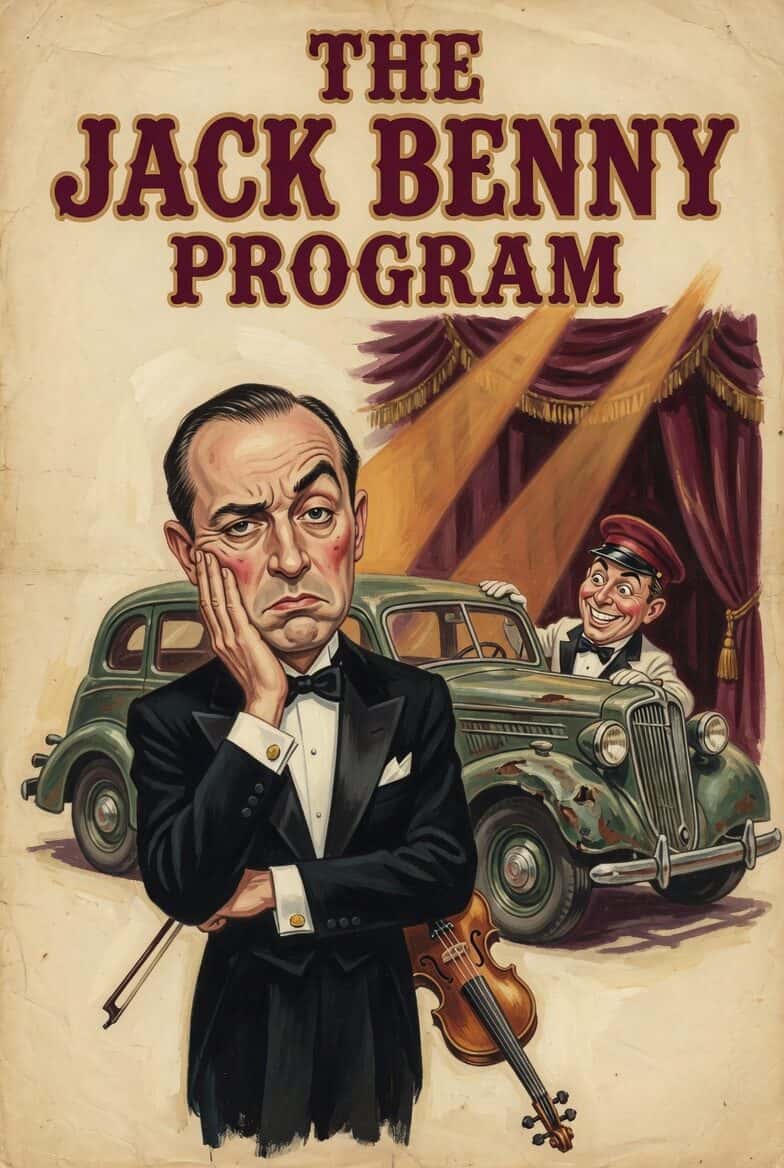
On Bob Kennedy Contact. It's kind of an anniversary. I've got some surprises for you, too. I'm sure you do. And as always, we'll have a few questions. We'll play a sound or two, and we will not mention who the sound is and see if you can guess it. And if you guess it, we have some nice prizes for you as we go along. And also Jack Benny will be joining us, and Big Brother Bob Emery a little bit later on our contact line. First, though, first thing, I have a question for Frank Buxton. That is, Frank. What was the first radio show you remember? Whatever one pops into your mind first off. I would have to choose probably one of the adventure serials that was on in the afternoon, like Little Orphan Annie or Dick Tracy or Buck Rogers or something like that. Maybe, I don't know, maybe Uncle Don. I really don't remember. Uncle Don, Let's Pretend. Those kind of things come to my children's programs, obviously, the first things I remember because...
Part of radio's golden age occurred when I was a child. What kind of a radio did you sit in front of and listen to them on? I think we had a Stromberg Carlson. Oh, boy. Seems to me. Are they still in business? I think they are. Ours was a Brunswick. Are they still in business? No, I think they went into the bowling ball business back about 1949 when TV came along. But ours was the Brunswick Radio. Do you recall how many programs you've cataloged in radio's golden age? We have about, I've never counted them up, but there must be about 1,200, I would say. Different programs, which obviously if there are 1,200 in the book, they range from the very well-known to the absolutely obscure. Although we did not get down to including...
programs that were not on a national basis, say on a network, or an unusually successful program that was a landmark, like, well, I mentioned Uncle Don. Uncle Don was only on the network for a very brief time, but it was a landmark in radio broadcasting and was heard for a great number of years in something like seven states, just from WOR in New York, which was a powerful station there. So Uncle Don, of course, is in here because he was a pioneer, a landmark. But everything's in it, from Fred McGee and Molly to Amos and Andy to The Big Show to Vic and Sage. To The Cuckoo Hour? Yeah, sure. You remember that? Sure. Because you have so many in here, I know it's kind of hard to pull an obscure program out and say you remember The Cuckoo Hour. No, The Cuckoo Hour is in here. I couldn't believe that. Yeah. They said from KUKU. There wasn't a station, was there? That's right. There is some script material on The Cuckoo Hour in here, too. For instance, good evening, friends, and what of it? The next 15 minutes are to be devoted to a broadcast of The Cuckoo Hour, radio's old worst...
Excuse me, I'm not an actor, I guess. Radio's oldest network comedy program. Neither were they looking at some of this material, frankly. And if you don't think that's something, well, maybe you're right. Sounds like Groucho, doesn't it? At the Coco's feature, Raymond Knight, the radio humorist, as station KUKU's master of ceremonies, and Ambrose J. Weems, and a lot of other disreputable characters. We now turn you over to station KUKU, and Raymond Knight would say... Good evening, fellow pixies. This is Raymond Knight, the voice of the diaphragm, enunciating. You know, when you talk about the old days of radio, I'm kind of glad that they're gone when you hear things like that. Some of it was pretty bad. Some of it was pretty good. Yes, I, uh...
I will probably be chastised for this, but I will say that the best of radio is better than the best of television. And let's see what some people have to say on the contact line about that. Our number once again is 2545678. As always, we have some sounds from that dusty old radio. I'd like to see how this one jars your particular memory. And Frank, anything that it strikes in your memory, feel free to talk about it. Here we go. Presenting Hop Harrigan, America's ace of the airwaves.
CX-4 calling Control Tower. CX-4 calling Control Tower. Standing by. Control Tower. 1200. You know, it sounds like Hop was really coming in in that particular thing. It also sounds like Albert Alley, who was also one of the writers of Hop Harrigan. Do you remember, Albert Alley, you asked me what was one of the first programs I ever remembered. I want to ask you that same question. But Albert Alley played a lot of the heroes on Let's Pretend. He was one of that. the stock company of characters, and was also Miss Hopperigan, I'm pretty sure. It sounds like it to me. And you know the interesting thing about Let's Pretend is it stands up as well today because we found that they still have Let's Pretend records available for kids. And I went over and bought four of them for our daughter, and she's three, and she sits in front of that phonograph and listens to those things hour upon hour upon hour. Here's one that was sent in particularly for you, Frank, but don't mention who it is because I want to, this is a little obscure, and we'll make this the first of our content.
So we have dinner for two, a buffet dinner for two, at the Gaslight, at the 21 Gaslight Club at 21 Broad Street in Boston. If you can name this particular program. Where was Seaburn last seen? In front of the People's Bike Building. Who was the last person to see him? Michigan Fishigan from Michigan, Michigan. Well, how does anybody know? Russell, honey, it was agreed that you could remain. However, if you persist in interrupting the grown-up... Let me ask that question. How does anybody know Michigan Fishigan from Fishigan, Michigan was the last person to see Feedburn? That's ridiculous. Gumpox, your precious garbage man is on duty wearing the official lodge regalia of the sacred stars of the Milky Way. He is, huh? Gumpox, your precious garbage man. He's not my precious garbage man. I imagine he'd be astonished. You have volume seven, do you, Russell? Uh-huh. Deposit it on the gas stove. Then station yourself at the window and yell at the top of your lungs when you see the garbage man come along. Okay.
There you go. Do you know who it was? Yeah, I'm not going to say who it was because you obviously want to use it for a contest, but I must say that though I'm not really a nostalgia nut, hearing that almost makes me weep for my lost youth. That was such a great program. When I heard Fred Foy in an interview that we'll play in just a minute on the phone, when he started doing that return with us now to those thrilling days of yesteryear, really, you just... And you know what I kept calling him? Sir. Sir, why is it you have such a strange feeling when you get in the presence of these voices that you heard in the old days of radio? If you listen carefully, we'll talk more about Fred, I'm sure, later on in the program. But if you listen carefully, after the after strike on the ABC...
television network, you'll hear Fred doing station breaks and promos and things like that. He was the announcer for the Les Crane show. Was he really? For the time that was on. Was that seen in Boston? I'm sorry for him. No, no, it wasn't. Les Crane was not seen here in Boston. We'll have that interview with Fred Foy in a moment. Frank, you want to take some phone calls? Yeah, sure. Once again, our number is 2545678. Incidentally, if you're going to call up and guess, please make sure you have a question or a comment to add on to it, because I'm sure we'll be through that contest mighty fast. Our guest tonight is Frank Buxton.
who, along with Bill Owen, wrote a book published by Eastern Valley Press called Radio's Golden Age. Bob Kennedy, you're in contact now. You're on the air. Hello. Hello. I know the answer. Vic and Sade was one of my favorites. That's right. Sade just won dinner for two. Congratulations. Thank you. Okay. Got a comment or question? No. I remember one of my early ones. Sure. And Amos and Andy. Amos and Andy. That's right. I would say you're about our age if you remember the same thing. Do you remember the store that Amos and Andy worked in? No, I'm thinking of Laman Abner. The fresh air taxi cab. That's right. Taxi cab. What store did Laman Abner work in? Do you know, sir? No, I don't. Okay, Frank, do you know? The John M. Downs store, wasn't it? John M. Downs store, that's right. The John M. Downs store in Pine Ridge, Arkansas. There you go. Right? And I remember Bobby Benson. And the B-Bar B-Raiders. Sure.
B-Bar, B-Bar. You have Raiders? Riders? I don't know. Close. Jack Armstrong, the all-American boy. Okay. Thank you, sir. Okay. Okay, good night, boy. He had a whole stream of that. Now we can talk about Vic and Sade. That's great. Vic and Sade was a program that was done from Chicago. It was written by a man named Paul Reimer, who died within the last two or three years or so, who was a marvelous writer and really captured the... kind of Midwest small-town dialogue with just a little bit of acerbic touch to it that kind of gave it that little extra spice. And on that tape that you just played, they talked about Jake Gumpox, the garbage man, which is a great, great name, and Ishigan, Sishigan, or whatever, Ishigan, Sishigan from Sishigan, Michigan. When did they finally go off the air, Frank, do you remember? I don't remember. Art Van Harvey, I'm just thinking about who, one of the...
interesting and kind of sad parts about doing the research for a thing like Radio's Golden Age is that you find that many people are no longer alive, and that helps you to date programs, but it's a terrible way to do it, because Vic and Sade were played by Art Van Harvey and Bernadine Flynn the whole time. Nobody else ever played those parts, so that would be the way that I would date that program. Frank, let's take another phone call. Mm-hmm. Now, I have a friend at school who's rather a loudmouth, and I argued ad nauseum with him about this. He insists that he has the tape of the show. Now, he's no older than him, and I asked him if it was from one of his friends. I bet you it was. And he said, no, it wasn't. It was a tape. Yeah. Well, the...
To answer your question, I hope, anyway, to the best of our knowledge and through extensive research, we have discounted this rumor, and I've heard it time and time again that it never happened. I would recommend that you get hold of the fluff record that alleges to be Uncle Don and play it against the tape and see if they are exactly the same thing. I can only tell you what I think I know. I have never heard an authentic tape of Uncle Don. doing that allegedly terrible thing, or allegedly doing that terrible thing, I should say. Okay, sir. Fine, thank you. Fine, thank you for calling. Good night now. Here's another one. Toss this around. Who is this singer?
You can guess the name of that fellow. You're better than Frank or me at this point. Because, well, we'll see. We'll see. We wonder if we have our cue sheet quite up to date on that. Well, you know, there's a big controversy on this. As a matter of fact, after the book came out, I got a letter on this very thing, who the whispering baritone was, as versus anybody who is now calling in to say that it's Jack Smith. I think that's wrong. Jack Smith was whispering Jack Smith, but he wasn't the whispering baritone. This is another guy. And I'm not sure who it is. Well, let's see if anyone who knows who his name, what his name is. That would be great. I'd love to find out. And then what show is this opening from? Into that drugstore. He's stepping on the scales. Weight, 237 pounds. Fortune, danger.
And there you go, friends. I thought it was a man that used to introduce that program. I never remember a woman. Well, you know, Bob, openings changed all the time. As a matter of fact, we have printed three or four versions of the same opening for some shows in our book. It could have been a man. Sometimes I remember a man, too, but obviously some lady did it, too. Are you asking this for a prize so we shouldn't talk about who that was? No, that's right. That's a prize. That and the one before. Yeah, who was she talking about? Right. What show was that theme, the opening from? And if you can tell us the name of the Whispering Baritone before you get a dinner for two, buffet for two. Bob Kennedy, you're on contact. You're on the air. Hello. Hello, Bob. Yes, ma'am. I originally called about the Vic and Say, but I guess I'm too late for that. Uh-huh. But that Whispering Baritone, the only one that comes to my mind right after.
No, no, I don't think so. Okay. Sure. What ever happened to Tom, Dick, and Harry? Well, I don't know. We know they're not working. We are sure of that. Unfortunately, I only know about what used to be, not what is. Oh, I see. I was wondering if they ever went on to become, you know, more prominent. They were on, yes, they were on a number of programs, actually. The program you're referring to was a program called The Affairs of Tom, Dick, and Harry. And I don't know if you remember how they introduced themselves. Do you? Can you sing it? It takes three people, really, to do it. Tom, Dick, and Harry. Right, exactly. Very good. I used to listen to that every afternoon when I came home from school with my mother, and they were very, very funny. They were also on a program called Plantation Party, which was kind of a variety show. The man who played the part of Dick of Tom, Dick, and Harry was... Well, let me start differently. Tom and Harry were played by brothers Bud Vandover and Gordon Vandover, and the man who played Dick was a man named Marlon Hurt.
Who, let's see if I can catch you, Bob, later became... Marlon Hurt. Later became... Marlon Hurt. Later became... This is a great trivia question. Marlon Hurt. Beulah. He created the part of Beulah. Oh. You mean the lady Beulah? That's right. This is one of the strange things that could happen on radio. Marlon Hurt was a white man. Beulah, the character, was a Negro maid. And he created that part. Later on television, played by... Hattie McDaniel? I'm thinking either Hattie McDaniel... Hattie McDaniel as Beulah, wasn't it? Yes, Hattie McDaniel. Can I ask one more question before I... Sure. Could Frank please tell me what the theme song was for Helen Trent?
I'm sure that must have... Oh, I'm glad you brought that up because I would wonder if he also would know the man who hummed that all those years. Stanley Davis. You're kidding. You know his name? Oh. You're crying, aren't you? You know why I'm crying? Why? Because I lost about 25 fabulous prizes on another radio station because I couldn't answer that question. It was Nita. Juanita. Juanita is the name of the show. It's hummed by Stanley Davis and later by a man named Lawrence Salerno. Neither of which I know. Frustrating dumb job. Can you imagine? That was, of course, in those days, they rarely ever taped it. Well, they certainly didn't tape it. They might occasionally put it on a disc. Every day he had to hum. Every dumb day going to work. To hum. What do you do? Well, I hum. I'm a hummer. I'm a hummer. Okay. It's nice to know that there are two fellows around that are the same age as I am.
We all have the same memories, at least. That's true. Well, we all grew up together. Right. With radio as a thing. You go back, turn that radio up, because I want you to hear a conversation that we had just this morning with a fellow by the name of Fred Foy, the gentleman who introduced the Lone Ranger shows for all of those years. And we started our conversation by asking him, kind of a dumb question, I suppose, but did he remember the introduction? Yes, indeed. How could I ever forget? sit here and sort of shed a tear. It takes us all back. That must have been a magnificent era in which to work. And of course, all of this was done live, was it not? Yes, indeed. And I wonder if because of this, you ever had any interesting happenings because of the liveness of the old days? Well, yes, there were occasions. How many different Lone Rangers did you announce for? How many different ones were there? And how long, Fred, were you with the show? If in a closing, and again, it's just such a delight to hear the opening.
Maybe a little more of the opening to The Lone Ranger. Could you do that again, please? Adios, as they used to say. Adios. Great. And when he started announcing that, he had the same beat, the same rhythm, the same phrasing. Yeah, my wife met Fred Foy at a party in December, and she said, he looks like The Lone Ranger. I was thinking that, talking about your wife meeting him at a party, I thought, I wonder if this man is constantly... bothered by people coming up. You know, like they say, do you know the little orphan Annie on the piano? Now come up to him and say, would you please do that Lone Ranger thing? And, you know, the man has to stay in the middle of a party and do four minutes from the Lone Ranger. One of the great things about doing this book was that we met a lot of people like Fred Foy, and when you meet them, you go, huh, I know your voice. You're a counter-spy. You're Dick Tracy. We talked about a fellow that does the same thing to me every time I pass him in the hall, Big Brother Bob Emery. I remember when he was doing Rainbow House.
And I still pass him today in that little, hi, big brother, kind of, you know. We'll be talking to him a little bit later on our contact phone, too, on the old days of radio. On our contact phone, we'll be talking with George Burns, of course, Burns and Allen, and Jack Benny. Bob Kennedy, you're in contact. You're on the air. Hello. Hello. Yes, ma'am. I would just love to know if you or any of your listeners remember Joe and Johnny Green. that used to have an orchestra, and they had featured the piano and the xylophone, and their signature number was The Perfect Song. The Perfect Song. Was this by any chance a local Boston program rather than a network one? I think it was in Chicago that I used to listen to it. But it might have been broadcast out in the East here, too. Yeah. Oh, I would just love to know. Maybe we'll have an answer for you, so stay tuned.
Joe and Johnny Green. Joe and Johnny Green. It's just a xylophone and the piano and the perfect song with their signature number. I can hear that song. I'll just never forget it. Can you hum it? Well, you know how the perfect song goes, but how the xylophone and the piano would sound together. And they just had it perfect. Okay. Thank you for calling. Bye-bye. Thank you for the privilege. All right. Bob Kennedy, you're on contact. You're on the air. Hello. How do you do? I wonder if WBZ has any plans for bringing any radio drama. on the air anytime soon. No, frankly, I doubt that very much, really. Few stations have across the country, and they have been, they have not gone over well at all. For some reason, when you do hear these old shows, at least the couple that I've heard, when you hear them after the years, they don't stand the test of time too well, and people like their drama on television, not on radio. Right. By the way, that was a fat man on the... By the way, you just won dinner for two at the 21 Gaslight.
Fine. Okay, buffet for two. Did you give your name? Did we get the name in there, Charlie? Please. Okay, make sure you give your name to Charlie Bishop in there, okay? Fine. It's interesting that he should ask about reviving radio drama. You are right. Times have changed. And, of course, so has radio, too. Sure. And the problem is not so much that I don't exactly agree with you, Bob, that it doesn't stand up. Some of it stands up extremely well. But nobody knows really how to listen to it anymore. Get nervous. It's like now trying to listen to a baseball game. You desperately want to go over and turn on the television set. Yeah, that's a good simile to this. Bob Kennedy, you're in contact. You're on the air. Hello? Hello? Yes. Mr. Kennedy, this is John Pellucci from Framingham. Hello, John. Well, and my question is, who played Raymond the host in the show Lights Out? John, you probably never even heard that program. Oh, I haven't. Okay. But anyhow, who did? Let me help you, John. First of all, it wasn't Lights Out. It was Inner Sanctum.
And Raymond was played originally by a man named Raymond Edward Johnson, who was a fine radio actor who did much other than that, but he is remembered mostly for being the good evening, this is your host, Raymond, welcoming you into the inner sanctum. This was after the squeak, after the squeak. Later it was played by Paul McGrath and by House Jameson. Really? Who just said, this is your host. Clink. Without a name after it. They didn't say, this is your host, House. House. That's right. He later played Henry Orange's father, didn't he? Right. And you still see him around on television. As a matter of fact, for those of you who saw Woody Allen smash it.
Comedy, don't drink the water here in Boston. You saw House Jameson playing the part of the father. He was also Henry Aldridge's father, as Bob said, plus the host on Inner Sanctum for a while. Frank, as I used to say in the old days of radio, we're a little late. We have to go now. Hitting the red hound around the clock. That's right. We'll be right back after news. And then there's something I'd like to talk about, and it was triggered off by the fact that there were programs on, like Lights Out Everybody and Raymond, that sometimes people are a little concerned about the shows on television, and they say that, gee, the youngsters will be frightened by them, and it might do something.
some damage to their little ids, remember some of the things we listen to, huh? Ah, yes. Maybe we'll talk about that on the other side. On the other side. Try this in your old radio. The Tom McFarlane's Trace Shooters are on the air. And here comes Tom McFarlane, America's favorite cowboy. That's right, cowboy. Start the day off shining bright. Give you lots of cowboy energy with a flavor that's just right. McFarlane's Trace Shooters And from out of the West, America's favorite cowboy, and his wonder heart, Tony! Can you sing it all the way through, Frank? People are taping this. That's right. There you go. I didn't think of that. I can see all of the bumps out there. The tape recorder is going, Kennedy, shut your mouth. Don't sing over the sounds. Incidentally, all of the or most of the sounds are courtesy of Dr. Barry Brooks. Yeah, Barry has a great collection, doesn't he? Oh, has the world's most incredible collection of old radio sounds and memorabilia. He's going to drop into the television show tomorrow. For those of you who are two-timers, Frank Buxton, our guest tonight. Frank, along with Bill Owen, wrote Radio's Golden Age.
will be with us on the TV show tomorrow morning from 9 to 10 on Channel 4. And we're having an audience tomorrow. It's going to be marvelous. And we asked Dr. Brooks if he could come over and be part of our audience and come up and share a couple of his memories with us. For any of the people who are coming in tomorrow who also... saw the night that I was on the Tonight Show a few weeks ago, I assure you I didn't bring the boa constrictor this time. Do you have a boa constrictor? I don't, but I took one on the Tonight Show with Woody Allen. You're a nice guy. A couple of weeks ago, yeah. I'll wear the same suit. What did you call it? A Hertz-Rent-A-Boa? Where'd you get the boa constrictor to go on the show? You have to work through an agent. And they're vipers. Oh, here's another one for you. Two-in-one shaker-upper used to make cold chocolate shake-ups to drink every day.
There you go, all the giveaways and the premiums. Did you have an Orphan Annie shake-up month? I must have had everything. I had the Jack Armstrong pedometer, which was known as a Jack Armstrong hycometer. Do you remember those? They were very good. Yes, I do. Rugged and sturdy and all that stuff. And you could walk around and see how long it took you to walk to school. That really proved a lot. And the Captain Midnight. I remember the Captain Midnight to coders. Do you remember the rings that they used to send out as premiums? Do you remember what they used to sound like? Sound like? Yeah, you sound like this. Oh, yeah. After about three days, your finger turned green and it got all filled with, excuse me, spit. And it was just awful. Your whole hand was green and wet.
We're reviewing with you the old days of radio, the golden age of radio. And in a few minutes, we'll be hearing from George Burns. And the amazing thing about this man is you call him up, you ask him a question, and he gives you a monologue. And what a wonderful, wonderful report he gave us. He's what's known in the trade as a... Good interview. Oh, what a nice man. Truly, what a nice man. Yes, I've heard that. And we have a little bit of a contest going. We're giving away some buffet dinners for two at the 21 Gaslight. Incidentally, this will be the time of the Muscular Dystrophy Mardi Gras celebration, and it'll be Tuesday or Wednesday, April, we'll get it from Monday, too, Monday, Tuesday, Wednesday, April 10, 11, and 12. So here's a quickie for you, and see if you can guess this. Good evening, Mr. and Mrs. North American. All the ships are sealed. Let's go to press.
What newsman started out that way? Here's just a little bit more. Ah, there's good news tonight. Okay, and what newsman started out that way? If you can give us either of those names, we'll give you a dinner for two. And let's try one more as long as I have the machine punched up. Here's an old comedian for you. Did I ever tell you about my last hunting trip? I was shooting giraffes in Texas. There are no giraffes in Texas. I know. I shot them all. Oh, you shot them. Forget it, Charlie. When all of a sudden, from nowhere, comes an old boy. An old boy running... Wait a minute. What in the world is an old boy? Oh, that's a bird. It's a bird. Oh, that's a big bird. Old boy is a bird. Yeah. And when it runs past you... Yeah. Old boy.
There you go. What comedian was that? And an even harder one, so we have four little things going there, Charlie. An even harder one. Who was the fellow with him, his partner? Vasudev, Charlie. That's right. Let's take a phone call, a couple phone calls, maybe Frank, and then we'll hear from George Burns. Bob Kennedy, you're on contact now. You're on the air. Hello. Good evening, Bob. Yes, sir. I wonder if your guest remembers the program. Sure. And whether or not he remembers. Well, that was her name, Lulu McConnell. Who's buried in Grant's tomb. Not Lola McConnell. Do you know who she was? She was a vaudevillian. That program was one of the highlights of her career. The others on that program, on the panel, were Harry McNaughton, who died about two weeks ago. Was he the one they say used to work in that town? No, that was George Sheldon. Howard, wait a minute. I've got to look it up. Sorry, I can't remember everything. There you go.
Sheldon Howard was the comedy team that was on it. Then the other fellow who'd say, I have written a poem, mister. That was Harry McNaughton, who also played Bottle on Phil Baker's program. His butler. Do you have another question while we're thumbing through Radio's Golden Age? No, that's it. Thank you very much. Okay, thank you so much for calling. Let me finish that off. The quiz master was Tom Howard. And the panelist was George Shelton, I was right. Lula McConnell and Harry McNaughton. And they would ask, as you said, such dumb questions as who's buried in Grant's tomb. Sure. It was a very funny program, as I recall. Bob Kennedy, you're in contact. You're on the air. Hi. Hi, Bob. Yes, sir. I think I have an answer to that last one of yours. Sure. Walter Winchell and Gabriel Heater. Okay, you've just won doubleheader there. Okay, so dinner for two, a buffet dinner for two at the 21 Gaslight is yours, sir. I have a question for you, yes. Great.
Whatever happened to Burt Gordon, the program? I don't know. I know who you're talking about. I have no idea what he's doing today or even if he's still alive. Yeah. There's an obscurity for you. Yeah. You know what I mean? Hello, Cantor. Yeah. He used to say, and Cantor would say, okay, Russian, recite the alphabet. And he'd say, hey. And Cantor would say, yes. And he says, there's more. Great. You all have a great day. Yes, indeed. Okay, sir. Okay, Bob, do I give my name to... Yeah, give your name to Charlie Bishop in the control room. Fine, very good, thank you. Very good, thank you. Incidentally, I hate to get into this area. We're talking about the old days of radio. Tomorrow night on Contact, we talk about growing old. And Dr. Elliot Rebo is with us. And along with Dr. Rebo will be another doctor who made headlines, in fact. This week, Dr. Robert Kistner.
They're both gynecologists and obstetricians, and they'll be talking about some of the physical problems of getting old, particularly the menopause in women. So that'll be tomorrow night on Contact. Bob Kennedy, you're in Contact now. You're on the air. Hello. Hi, Bob. Hi. I just missed one of your ads, but I didn't know whether it was the old Ovaltine ad or not. But I have a few old programs that we listen to, and I haven't heard them mentioned yet. And one of them is the Tasty Gestures. Billy Jones and Ernie Hare. They were known as many things. The interwoven pair. Yeah, it depended upon who they were on the air for. They were originally the Happiness Boys, and that was the name kind of forever. But when they were on for Tasty Bread, they were the Tasty Bread Loafers. Yeah, tasty to your appetite. You mean that one? Yeah, that's right. The other one was Snow Village Kids.
sketches of Parker Finley. Sure. But I don't remember who his partner was, and that's what I wanted to ask you. All right. How about Arthur Allen? Does that sound right to you? No. I think it was, but I'll just take a quick look. They did, Parker Finley and his partner did a bunch of programs that were all basically the same thing. Well, this was their title, Snow Village Sketches. Right. They did Snow Village and the, well, wait a second. I'll look them all up. That's a long way back. Yeah, it was Arthur Allen. Arthur Allen and Parker Finley. Well, maybe that's true, too. And the other one was Eddie Peabody with the banjo that used to sound like about four or five. And then Tony Warren. Right. And the gospel singer. The gospel singer? Did he have another name? I think it was Ted McHugh, the gospel singer.
Well, maybe it was Frank McHugh or Ted McHugh or somebody, the gospel singer. He used to be coming around like that.