
The written record
Read the transcript
Read along with the recording · About 10 min to read
We are back now. There are very few entertainers in the world who had the popularity of Jack Benny. I never met anybody who did not like Jack Benny. And this is a thoroughly entertaining book called Sunday Nights at Seven, a Jack Benny story. And his daughter reminisces about her rather strange upbringing. Would you welcome Joan Benny. Joan, jello again. Jello again. It's good to see you. I had more fun reading this book. It's just delightful. Thank you. It's funny, but you, when I said out here in the opening, I said about a strange upbringing, I didn't mean it in that sense, but you grew up, your dad and mother knew all of the toast of Hollywood, the biggest stars and producers, and you grew up as a little girl around this. What was that like? Did you have any concept of what was going on? Well, there was a kind of duality about it. I mean, on the one hand, their closest friends, let's say, were...
Aunt Barbara and Uncle Bob, and they were Aunt Barbara and Uncle Bob. But over here, they were Barbara Stanwyck and Robert Taylor. To you, they're just two? Well, over here, they were just the friends, but over here, I mean, I saw Waterloo Bridge and Double Indemnity, and I had their autographs, and I had glossy pictures, and they were movie stars. So there was that duality. But there was a duality about growing up as a celebrity's daughter, too. It was like, he's a celebrity and you're not. So there was that kind of thing, too. I remember I learned a very good lesson. I was a teenager. Now, as a kid, you know, we went to premieres or I went occasionally with my parents. Got the Klieg lights, the bleachers, the fans. Four people stick their head in the limousine and they yell to the bleachers, that's Jack Benny and Mary Livingston. As they say, fade out. I'm now in college. I have a date. We go to the premiere. Same Klieg lights, same bleachers, same fans.
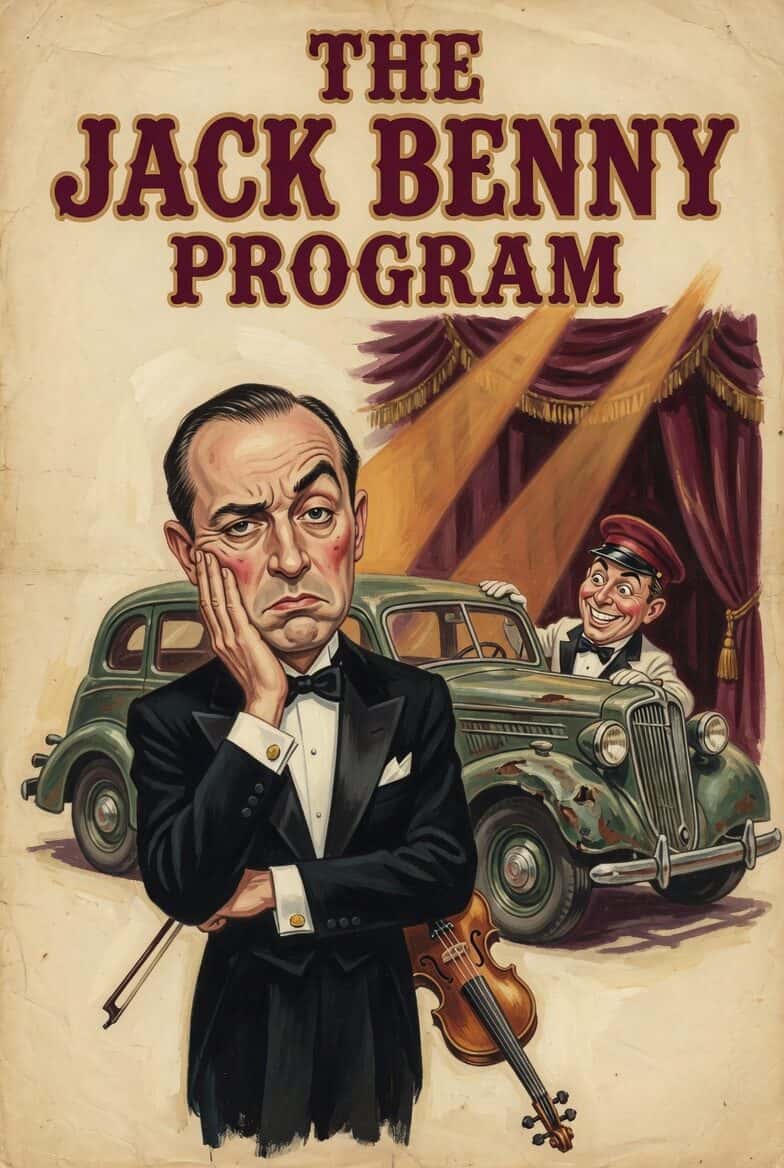
The foreheads come in the car and they yell, that's nobody. Oh, oh. So there you are. Yes, it's all relative. Your dad, I knew, well, not as well as George Burns or Freddy DeCordova, who knew him for years and directed him on a lot of his shows. Jack was really a comedy actor. Is that a fair thing? Yes, it was what Ernst Lubitsch said when he directed him in To Be or Not To Be. Yeah, he was a marvelous actor and played that persona all through his life. Right. And I once asked him, if you had your choice, of being the world's best known comedian or the best known violinist in the world what do you think his answer would have truly been oh violinist i mean no question about it the only people i think he really held in awe were isaac stern and yasha heifetz i mean they were his heroes right and of course when he first played carnegie hall i mean would you believe he could fill up carnegie hall and there were concert violinists who couldn't right and so he fills up his first time he did it i'll never forget it The next day, there's the review. The headline of the review says, Benny played Mendelssohn. Mendelssohn lost. But he was an accomplished violinist. I mean, not by concerts or Isaac Stern, but an accomplished violinist. And he loved it so much. It always seemed to frustrate him. And that became part of his persona. Didn't you love Isaac Stern's line about him when he said, you know, he walks out on the stage so suave, so sophisticated, so elegant.
Isn't it a shame he has to play the violin? Was your dad funny around the house? Now, when we would go out to dinner, Jack was a great foil for other comedians. He loved other comedians. He was never jealous of anybody like people are in this town. He would always promote. I remember when I first met him, he promoted me. He enjoyed other comedians and would break up at the silliest things. And George Burns could do it to him all the time for no reason at all. Oh, well, I mean, that was almost symbiotic, you know. George just had to look at him, and my father was on the floor laughing. Well, what do you remember about the house when you come home from doing the show? Mainly that he'd talk about the golf games more than anything. My mother and father talked about golf at dinner. You think, well, gee, these Hollywood, all the dishing, you know, what's going on in Hollywood. No, it was, you know, I was in a trap on the second hole, and I hooked my shot on the third. It was...
Really exciting. Fred used to tell me the stories when your dad would go to a restaurant because the character that was created over a number of years in the radio was the penny-pinching, very vain, youthful 39 years old. He never knew how to tip in a restaurant. Is that true, Fred? That's true. He would get the check and Jack was going to say, Fred, I don't really know how much I should give. And would you take care of this? And Freddy DeCorvo would have to sit and figure out the tip. Because I think your dad was worried that if he left too little, they'd say, Well, it's true. Oh, no, he always wanted to be extra generous and be sure that, you know, that character, you know, didn't go over into real life. But so many funny things happened. There was a time he overtipped a hat check girl, and she gave him back the money and said, please, Mr. Benny, don't disillusion me. The character was so strong and so well-crafted that people did actually believe, I'm sure, that he was a tight one. Not only did they believe, but you didn't even have to tell a joke.
All you had to do was mention nickel, dime, peso, ruble. It didn't matter. You mentioned money, and the audience laughed. Well, as you well know, one of the longest laughs in radio history. In fact, I was listening to it, believe it or not, on the way home the other night. I had one of the old radio tapes that I put in the car. I'm watching it on the way home, and that's where he is. He's been over to the Ronald Coleman's, and he's going back to the home, and it's dark. And all of a sudden, you hear the stick-up man say, Hey, bud, and stops him and says, Your money or your life? And you don't hear anything. This long, long pause. And the stick-up man says, I said your money or your life. And Jack said, I'm thinking it over. It was the longest sustained laugh I think I've ever heard. That's what you do when you've got that character so well adapted. He talks about that in his autobiography, which is, of course, half of this book is his own autobiography. Yeah, a lot of this is Jack's own words. Yes, it is his own words. And then, of course, half of it is my view of growing up with Jack Benny.
And he talks a lot about how those routines developed and who wrote them, how they were written. It's in a way almost a textbook of comedy. Ben K. Benny for a while he was, right? Fiddling with Ben K. Benny, then he became Jack Benny. Now Mary at first was never really comfortable, was she, working on the shows? No. She was marvelous at it. I think she was more comfortable in the early days. And as time went on, she became more and more nervous. And you always knew when she was nervous because the palms of her hands would get red. Right. And that was always the giveaway. She finally, I know Jack wanted her to stay on the television shows, but she finally said, I think it's time not to do it. Because she got more nervous as she got older? Yeah. And he did talk her into doing a few television shows, but not many. And that was the end of it. Even in the last year of radio.
I did some of the shows for the live audience because technology was such that they could tape her voice. And she wouldn't even come to the studio. I mean, she was a nervous wreck. That's funny. She almost panicked. Well, luckily, all of those shows are available and they're showing them now. Yes. A lot of times you'll see them on Showtime or HBO. I caught myself on one the other night with your dad from about 23 or 24 years ago. And thank goodness we've got all those. He left a marvelous legacy. They were wonderful. Anyway, the book is marvelous reading. Sunday nights at 7, that's when most of us were sitting in front of the radio, by Joan Benny. Read it. You'll enjoy it. We'll be right back. Oh, we're back. We just have about a minute. What was it about your dad? He liked the simple things in life. He'd go to a restaurant and he'd say, that's the best cup of coffee I've ever had. And he'd mean it. Yes. What was it? Just enjoying small little things?
No, I think he was so focused on the show, on next week's show, things didn't get, you know, this was, the simple life was what really got to him. But he did have an ego. There was a time I remember he went to the Caribbean on a vacation. And it was a foreign-speaking country, and nobody knew him. And no one asked him for his autograph, and no one stopped him on the street, and he was home the next day. You're kidding. No, I'm not kidding. So all of that, huh? Anyway, the book is Sunday Nights at 7 by Joan Bunny. Thanks for being here. I hope it's a big success for you. Rita, you'll be in Las Vegas at the Sands over Thanksgiving? Yes, with Jeff Altman. With Jeff Altman. And, Jimmy, where are you heading? I'm not doing anything. I'm taking my daughter to the circus tonight. Okay.
Just stay here if you want to. Stay here. The couch makes up into a bed. You know, just stay here. Stretch out. Next week, we have almost too many people to mention. Some of them, Ray Charles. We'll mention a couple. James Garner, Father Guido Sarducci, Louis Belson is here. Some wonderful acts from the Cirque du Soleil. Many, many, too numerous to mention. We'll see you.