
The written record
Read the transcript
Read along with the recording · About 48 min to read
John and Larry Gassman with Same Time, Same Station, and we're here today with Beverly Washburn to talk about her book and to talk about her life, to talk about some of the radio she did, movies, etc. First of all, let's get a plug in for the book, Beverly, and then we'll kind of talk about how the book came about and about your early life as an actress, etc. But it's called Real Tears, but real isn't really spelled the way you would think real would be spelled. Did I say that? Dare I say it again? Only once. But it's not R-E-A-L, it's R-E-E-L, and that's, I assume, the reference to movies. It is. Yeah, it's a little play on words. But first of all, Larry and John, thank you so much for having me on your show. This is an honor for me. Thank you. And the book is available from where? Well, you can get it on Amazon or also Barnes & Noble.
And unfortunately, all the Borders bookstores are closing down, which is pretty sad because they used to be able to get it there too. So it can be bought online through Amazon or in your Barnes & Noble store or barnesandnoble.com as well. Let's start by talking about your early life because when you were very little, you weren't an actress. You were a little child. So how did you get to the point where you decided or someone decided for you, she needs to be an actress? Well, I actually started by modeling children's clothes when I was three. And I don't really come from a showbiz family, although my aunts and uncles were in vaudeville. But my older sister and older brother.
were kind of in it my brother did a lot of plays and my sister was an acrobat and she used to go around and do different shows for the various hospitals and veterans etc and so i would kind of tag along and usually i'd get up and sing on the stage and so my mother decided to get me an agent but it was one of those catch-22s because She would send me on auditions, but I had, you know, no credits. And so nobody would hire me because I didn't have any experience. And can you imagine that? Three years old, no experience. And so anyway, when I was, I guess I was five or six, I was with my sister and we were doing a benefit show for the veterans in Long Beach, California.
And one of the celebrities that was there was somebody named Jock Mahoney, who fans will remember from Yancey Derringer and the Range Rider. And so I met him, and of course I was enthralled with him. He was this big cowboy, you know. And so as luck or fate would have it, a few months later, I was on an audition at Columbia Studios for a movie called The Killer That Stalked New York, which starred Evelyn Keys and William Bishop and Dorothy Malone. So I was on the audition and none other than Jock Mahoney, this was like six months later after I'd met him, happened to be walking through the lobby and he remembered me. So he asked my mother what I was doing there and she told him. And so he said, OK, I'll be right back. So he went in and told the producer that I had done this and I had done that. And of course, I hadn't done a thing, but they kind of took me on his say so because.
He was under contract to Columbia at the time. And so they had me read. And so between my reading and his kind of telling them that I had done all this, I got the part. And it was a speaking role. And so after that first film, it kind of made it easier for me to get other jobs because I now had a speaking role under my belt. So that's how it all began. And you were how old again? I was six, and it was a movie called The Killer That Stalked New York, and Evelyn Keys was supposed to be a carrier of smallpox, and so whoever she would come in contact with would get smallpox. So there's a scene where she's at the doctor's office, and I'm also in there, and she starts talking to me, and I notice this beautiful brooch that she's wearing on her jacket.
So I admire it and she takes it off and gives it to me. And when she gives it to me, I give her a big hug. And then in doing so, I contract smallpox. So then in the next scene, it shows me laying in the hospital bed with an oxygen tent and I die. So I died in my first film. Hopefully not in more ways than one. Yeah, exactly. I mean, it's like you can only go uphill from there. But so did you decide, okay, I want to be a film actress? Was that pretty much it? Well, you know, it was fun for me. And my parents were very supportive and, you know, very excited. But they were wonderful parents because they never forced me, you know. And sadly, there are a lot of...
you know parents in the business that kind of live vicariously through their kids and i i believe because i've had people say to me well would you want your children to be an actor and and i always say well it depends on the child because if they don't want to do it i i think there's nothing sadder than you know forcing a child to do something that they don't want to do And so my parents always said, you know, as long as it was fun for me, as long as I kept up my schooling and wanted to do it, and as long as I didn't get a big head, that I could pursue it. And so that's kind of how it happened. And I've always just kind of loved doing it. And so right after that, I was sent on an audition at Paramount for a movie called Here Comes the Groom with Bing Crosby and Jane Wyman, Franchot Tone, Alexis Smith.
Louis Armstrong and Dorothy Lamour. It was the big cast. And I was cast as the little French war orphan that Bing Crosby adopts. And then after that, I did The Greatest Show on Earth at Paramount with Charlton Heston and James Stewart. And then Shane with Alan Ladd. That was also at Paramount. And after that, I did Hans Christian Andersen with Danny Kaye. I was the little girl that he's saying Thumbelina to outside the jail. And so it just kind of, you know, started to flow like that, you know, going from one job to the next. So I was very blessed. You had a great agent who got you a lot of good parts. You worked with all the major people. I did. In a short amount of time. Yeah, I was very, very fortunate. But, you know, when you're like seven or eight years old and you're being directed by Cecil B. DeMille and Frank Capra.
George Stevens, it really doesn't mean anything, you know, because you're too young to really know what that means. And like working with Kirk Douglas and, you know, Jack Benny and Bing Crosby and all those people, I had no clue, you know, because I was too young to get that. Sometimes it just gets in the way. Yeah. And so, of course, my parents were thrilled, you know, because they know who they were. But it wasn't until I became an adult that I looked back over my career and I thought, wow. I'm so blessed to have, you know, worked with those people. And, you know, Loretta Young and, you know, just so many people. And Lou Costello. I did a wagon train episode with him. It was the only dramatic role that he ever did. And he was wonderful. And I think one of the big thrill for me was when I did Superman and the Mole Man. Because for me, it wasn't about working with George Reeves. Because, again, I didn't know who George Reeves was.
But working with Superman was what the thrill was for me. And even though I didn't have an actual scene with him, I was the little girl, if people remember Superman and the Mall Men. I'm in bed and the little Mall Men climb in through my window and we start playing with my, I have a ball and it lights up and then the mother comes in and screams. But anyway, George Reeves was on the set in his. Superman costume. So for me that was my thrill because at that age I thought he really was Superman. Now were you going to school as an actress where they would send somebody in to work with you daily or were you going to the regular mainstream schools in between jobs?
Well, in between jobs, I went to a public school. It was called Gardner Street School. But in the movie business, they have a ruling that when you're a child, you have to have on the set what's called a welfare worker. And they call them welfare workers because they're actually there to look out for the welfare of the child. you know, they are given the proper breaks and that they have three hours of schooling each day. And, you know, you have to have an hour for lunch and you can't work overtime and, you know, all that kind of stuff. So, and they're actually sent from the Los Angeles Board of Education. And so in between scenes, you're required to do three hours of schooling and it has to be done in 20 minute increments. So in other words, they can pull you out of your little trailer or wherever they have it set up for your school to do a scene, but not if you've only, say, done 10 minutes or 15 minutes. You have to have at least done 20 minutes, and then you go back to the school and continue until you've completed three hours, and then you're free to do whatever scenes are done for the day. By the time you worked with Cecil B. DeMille, he had already left Lux.
Over the contract after dispute, etc. What was he like to work with? Well, he was wonderful. You know, again, I was only like seven at the time. And so he just told me what I needed to do. And my scene was at the circus where I'm under the big top and I'm sitting there. And then, you know, Jimmy Stewart comes up in his clown makeup and his mother in the film is sitting right there and they're talking because. He's like hiding under his makeup because of a crime that happened. And so, of course, I didn't know anything about that at the time because I was too young. But he just told me what I needed to do. And to me, he was just a man being a director. I didn't have any idea who Cecil B. DeMille was at seven years old. But now I look back and I think, wow, how cool is that to have been directed by him? Was the description for...
Was direction that a director gave you any different from a child's perspective than it might have been if you had been older? In other words, did he give you more description because you were a child? No, I don't think so really. I mean, it might be a little more involved as an adult because you can understand more what they're talking about, you know, as far as like the character and things like that. But when you're a child, they just kind of give you the specifics, you know. But, you know, you're taught all these things. Like, you're not supposed to look at the camera. And you try to keep it as real and natural as possible. And, you know, just talk as though you're really talking as opposed to acting. But it was a fun time. And I feel, you know, fortunate that I have so many nice memories to look back on. Let's talk about Jack Benny. Not only because it has to do with...
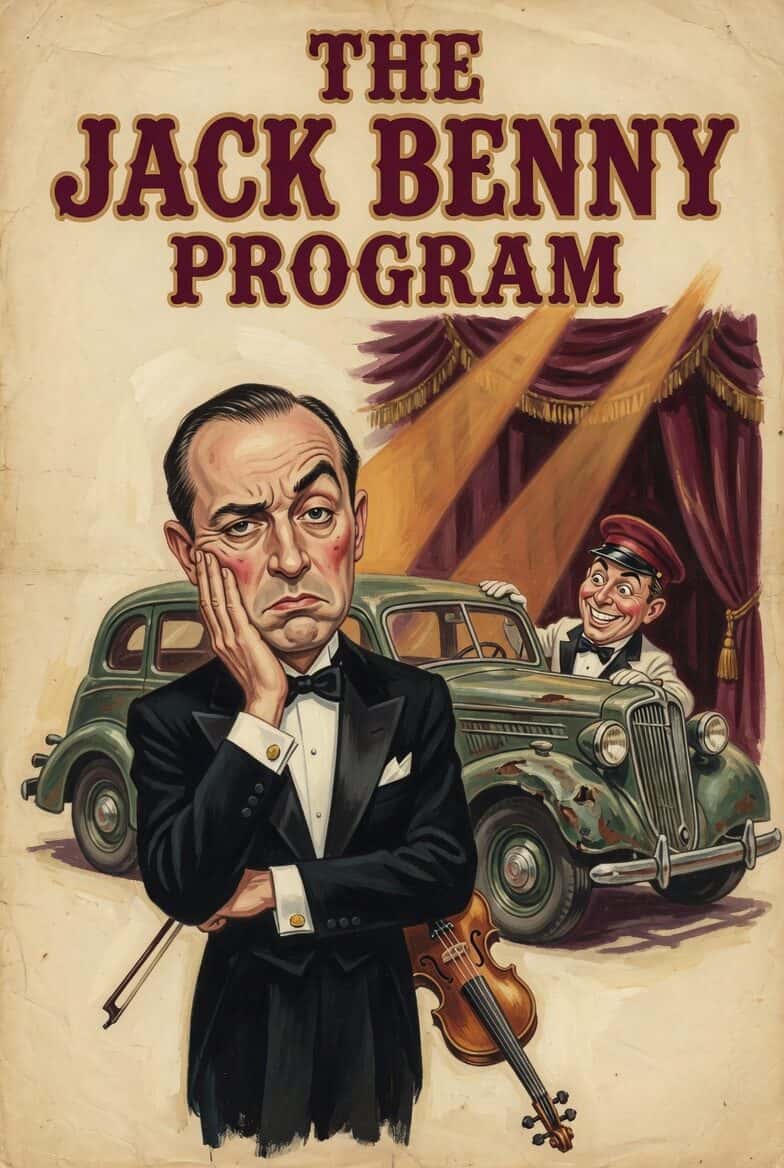
The radio shows that you did, you did a few radio shows, and I assume they were all for Jack Benny. But how did you meet him? How did I meet Jack Benny? Yes. I was sent on an audition, and I just read for the part. It's a very funny bit. It was back in the 50s. I don't remember the exact year, but it was back in the days of live TV. And it's actually on YouTube. I discovered you can see it. And it was a very funny. cleverly written that where i'm planted in the audience and he's doing his monologue and i come up out of the audience and of course i have to walk through the orchestra pit and all the um you know the orchestra is pretending like they're trying to stop me but because they're in on it but the the rest of the people in the audience have no idea that i was a plant they think that i'm actually coming up from you know out of the audience and i go up and i ask for his autograph and then um We do this little bit where it turns out that my name is Margaret Truman. And it was a very, very funny bit that can be seen on the Internet. I think all you have to do is click on to Jack Benny and then I think it's the Margaret Truman episode or something. I don't know. I can't remember. I'm not very good on the Internet, but I know it's on there.
Well, let's hear that excerpt. It's an excerpt from a TV program from the Jack Benny program with you, Beverly, and it's from November 30th, 1952. And now, ladies and gentlemen, I would like to introduce the, uh, uh, what is it? What is it, little girl? Mr. Benny, can I have your autograph, please? My autograph? Oh, well, that's sweet. Honey, look, if you'll just wait until after the show, you know, I'm right in the middle of the show now, I'll be very, very happy to give it to you. Okay. It's cute. Wait a minute, honey. Come back here. Come back. As long as you came up like this, I mean, it's cute. I'll give you... Is this your little book? Come right over here. I'll give you the autograph. I'll be very happy to. That's cute, isn't it? Coming up like that. What's your first name, honey? Margaret. Margaret. That's a pretty name, isn't it? I'll tell you what, I'll put it to Margaret from Jack Benny. How do you spell that, honey? M-E-N-N-Y.
No, no, honey, look. Look, I know how to spell my name. You understand what I mean? But, you know, there are different ways of spelling Margaret. You see, two different ways. How do you spell yours? M-A-R-G-A-R-E-T. Oh, M-A-R-G-A-R-E-T, all right. Margaret from Jack. Margaret, what's your last name? Truman. Wait a minute, honey. Your name is Margaret Truman? Uh-huh. Wow. I mean, that certainly is a coincidence, isn't it? Your real name? Margaret Truman? Well, isn't that... I mean, you're not kidding me or anything. Oh, no, Mr. Dunning. You're not. That's your right name, Margaret Truman. Well, isn't that cute? Okay, well, here you are, honey. Thank you. By the way, what's your last name? Truman. Truman, Margaret Truman. And do you live here in Los Angeles, too?
No, sir. I'm only visiting here. I live in Washington. In Seattle or Spokane? Washington, D.C. Wait a minute, honey. You live in Washington, D.C., and your name is Margaret Truman? Uh-huh. Well, that's the strangest thing I've ever heard. You're not kidding me now. You didn't just come up to me. Who knows? You're laughing. Okay, Margaret Truman, and you live in Washington, D.C. Well, that's the oddest thing. Really, have you lived in Washington long? No, sir. Where were you born? Independence, Missouri. Now, wait a minute. You didn't want an autograph at all. You just came out to make fun of me. Oh, no, I didn't, Mr. Benny. Really, I didn't. Now, wait a minute. You see, your name is Margaret Truman. You live in Washington, D.C. You were born in Independence, Missouri. I mean, those are too many coincidences.
I mean, does your father work in Washington now? Yes, sir, until January 20th. I'm sorry I gave you the order. Your father's working now until January 20th. And that's no coincidence, huh? Now, wait a minute, honey. Somebody told you to say that. That's just a trick. Oh, no, Mr. Benny. Nobody put me up to it. My name is Margaret Truman. I was born in Independence, Missouri. And the only reason we live in Washington, D.C. Because my father works there. Oh. Your father works there in Washington. What does he do? He's a piano player. That began a friendship that lasted until he died, correct? You know, he was probably... I mean, people have always asked me, who is your favorite to work with? And it sounds so corny, but it's true. I mean, I have so many favorites, but I guess if I were to...
pick just one um I'd have to say Jack Benny he was just the nicest most generous wonderful man and I met him when I was I guess I was seven or eight when I did that and after that he had me do a couple of his radio shows and then um I did a little act with him that um we did in Scottsdale Arizona and then I remained friends with him my whole life and then in the 70s um He had me tour with him. It was an act called the Smithers Sisters. And we toured all over the East Coast. And we played at Melody Land, which is across from Disneyland. We were on the Hollywood Palace. And then we were in Las Vegas at the Sahara and Lake Tahoe at the Sahara. And it was just such a wonderful.
memory for me and I always got a kick out of the fact that he played the stingy tightwad because he was truly probably the most generous man I've ever known and but he did it not in a way that you know to be boastful or so that people would know he did it just from the heart like when my father was very ill and was in the hospital Jack Benny actually sent over his personal physician To see my dad at his expense, you know, and he gave me this beautiful St. Christopher that says to Beverly with love, Jack Benny, that of course I'll have forever and a beautiful string of pearls. And he was just so generous. But as I said, you know, a lot of people will do things for the notoriety or so that people know about it. But he just did it straight from the heart. He was just.
So kind, and every Christmas he'd always send over a big basket of fruit and all kinds of things for my family, and just an amazing man, just wonderful. Everybody we talked to has said basically the same thing. We never had a chance to meet him because he was, well, I think we started collecting in 70 or 71, and he passed away in 74, but we got a chance to meet almost every other member of the cast. and some of them became very, very good friends, and they all, without exception, said that, the same thing you just said. There are some people that you can talk about, and they were good and bad about them, but there were a few, very few, like Jack Benny, where no one ever said a bad word about him. Right, right. And he was so generous in other ways, too. I mean, just as a comedian, you know, because so many of the comedians of today...
They have to be the one with the punchline, you know, and he didn't, you know. Of course, he didn't even have to say anything. He could just do, you know, his long take where he, you know, put his hand on his cheek and just stare into the audience and people would be laughing, you know, just to his expression. And, you know, it never bothered him if he didn't have the punchline. You know, he could be the one who set up the joke and he would allow the other person to get the laugh. He often said that it didn't matter. If someone else got the punchline, it didn't matter because in the end, it was his show. So people would remember that it was his show, and he didn't have to have the last laugh. Other comedians, it wasn't always that way. Exactly. Yeah, he was an amazing man. He was wonderful, and I just feel so blessed that I had that friendship throughout my life.
And something that will always be in my heart. Now, the radio shows, do you recall? Because I haven't looked yet, but I will before this airs. Do you recall what you were doing on his radio shows? Were you part of the Beavers? Yeah. On one of the shows, I played the part of Mary Livingston. Okay. Yeah. And then the other was just like a little cameo thing where he just introduced me. It was a little gag thing where he said, I just come up and say, hi, Mr. Benny. And he goes, oh, that's my little friend, Beverly. How are you today? And we just talk. And then he says, her name is Beverly because she was born in Beverly Hills. And then he does this long take. And then he says, her brother's name is Pismo. Of course, if people don't know Pismo Beach in California, they might not have gotten that joke.
Just silly little things like that. Do you remember offhand when this was, roughly what year? I want to say like 51 or 2. Yeah, that's when I kind of figured it would be. So for you, you didn't do many radio shows. What was it like doing radio versus film or TV? Oh, it was fun. It was all fun for me, whether it was TV or a feature or radio or whatever. I just felt like I loved it. I guess it's the ham in me or something. I don't know, but it's just something that I've always enjoyed doing. It's just always been fun for me. Of course, back then it was the days of live TV where you don't get a second chance. It comes on the air as you do it, where even now, like with the soap operas, they'll tape them and they try not to have to go back and...
redo anything you know but like if there's a little flub of a line or something they'll let that slide but if something disastrous happens they have the you know capability of going back and redoing it but back in the days of live tv they didn't have that luxury so whatever happened just happened you know but it's in the mind of the actors especially when you're recording something on tape or or or on film or television mentally they know if something does go wrong, they can go back. And it's a little bit different mindset than earlier on when they said, well, whatever happens, happens. Yeah, but for me, because I was a child, I think children are more fearless. You don't think about stuff like that, where some of the adults would be a little bit nervous because what happens if something goes wrong? And from the mind of a child, it wasn't scary for me maybe it would be now but it wasn't back then you know beverly you mentioned the jack benny show and we're going to hear the performance now that you made on that show when the beverly hills beavers did a spoof of the jack benny radio show we also have the rehearsal for that show by the way which we're not going to have time to play but let's hear the beavers on the jack benny program from february 20 1953. you know mary this idea the little kids doing my radio program is really clever isn't it yes jack i think it's the cutest thing that Oh, the curtain's going up. Yeah, yeah. And look, look, they've even got a kid orchestra. Quiet, here they go. With Mary Livingston, Rochester, Dennis Day, Bud Crosby, and yours truly, Don Wilson. The star of our show. A man who still has the first dollar he's ever earned. Not because he's cheap. Because you can't spend Confederate money. Jack Benny. Thank you, thank you. Hello again, this is Jack Benny talking. And Don.
Did you think up that introduction all by yourself? Yes, Jack, and I thought it was very funny. Oh, you did, eh? Yeah. Don. Don. Good boy. Easy. The last time you shook like that, you got a proposal from Hilo Hattie. And another thing, Don. Oh, hello, Mary. Hello, Jack. Hiya, Don. Hey, Mary. I called you last night, but your maid said you were out. That's right. I went to the baseball game with Van Johnson. That was nice. Who won? When you're with Van Johnson, who watches the game? Mary, what's this you dropped on the floor? That? Oh, that's the letter I got from Mama. From your mother, eh? What does the third dimension of playing field have to say? Just read it to you. My darling daughter Mary, just a few lines to let you know that we are all well.
The weather's nice here now, but as you probably read in the paper, last month we had an awful blizzard. And when your father came in from the barn, his milking hand was frozen. Gee. I hope it thaws out soon, as we'd like to get the cow out of the house. Hey, Mary. Mary, that little girl is a natural-born actress. Yeah, she went right on reading the letter, even though her bloomers were slipping down. Yeah. so we'll close now. We love your loving mother, Mama. You know, Mary, your mother's letters get better all the time. But let's get on with the show. Oh, Bob. Bob Crosby, I'm talking to you. Oh, I'm sorry, Jack. I didn't hear you. Didn't hear me? No, I've been rehearsing the band and my ears are still folded. Oh, say, Bob.
I meant to ask you, did you learn how to pronounce that word yet? I think so. Let me hear you say it. Manischewitz. Well, fine, Bob. You don't want to disgrace your wife and children. Say, Jack, what is it, Don? I think this fellow has a telegram for you. Well, what's he waiting for? Oh, boy, boy.
Are you from Western Union? Who do you think I am with this uniform, Nelson Eddy? Never mind. Just give me the message. Here you are. And here's a tip for you. Oh, boy, a nickel. Now I can send my father through college. Say, I've had trouble with you before. What's the matter with you? Do you enjoy aggravating me? Oh, joy! See, I wonder who this jug is. Jack, you only gave a nickel tip. That's the cheapest thing I ever heard of. Mary, be quiet. I'll be known as Nylon Nelly at the May Company. And now, ladies and gentlemen, for our feature attraction tonight, we are going to do... Hello, Mr. Benny. Hello, Mary. Hello, Dennis. Hey, kid, I'm glad you got here because it's time for your... Wait a minute. Dennis, look at me.
Huh? Dennis, this is the first time I ever saw you wearing glasses. Are your eyes bad? No. Then why are you wearing those glasses? My uncle died and left them to me. Your uncle? Oh, that's a shame. Yeah, I can't see a darn thing with them. Well, for heaven's sakes, kid, if you can't see with them, take them off. Just because somebody leaves you something in a will, you're not compelled to use it. I'm not? No. Anybody want to buy a set of teeth? Now, take off those glasses. It's time for your song. Okay. While you're singing, I'm going out in the hall and get a candy bar out of the machine. Where's the candy machine? Oh, here it is. Now, let's see. They've got Hershey's, Circus Peanuts, Lifesavers, Babe Ruth, and Milky Dip.
I think I'll get that one. A milky dip. Hey, bud. Bud. Come here a minute. Yeah, what you doing? I'm getting some candy. What kind? A milky dip. Uh-uh. What? Get a hoishie bar. Why a hoishie bar? In this hot weather, nothing runs like chocolate.
I want a milky dip. Milky dip hasn't got a chance. What are you talking about? Milky dip not only has chocolate on the outside, but it has cream in the center. That's what'll give you the trouble. What? Cream is hard to handle unless you whip it. Gee, I never thought of that. You really think I should get a Hershey bar? Can't miss. Look at the last performance. Last performance? Yeah. Coming out of the machine, Hershey was boxed in by a lifesaver, but got through the hole. Really? A lifesaver was the favorite. I don't know. I'm still gonna... Wait a minute. I know what I'll do. I'll get Almond Joy. Okay, it's your dog. Wasn't he cute, Jack? Just like the tout on our show. Yeah. Hurry up, Jack. Dennis has finished his song. Okay, Mary. What took you so long, Jack? Oh, I ran into that racetrack tout. Now, where were we? We're supposed to start our sketch. Oh, yes. Well, hold it a second. Kids, before we start, I want to call Rochester. Oh, maybe.
What is it, Gertrude? Mr. Benny's line is flashing. Hello? Hello? Gertrude, will you try to get me Rochester, please? Just a moment, Blue Eyes. He wants us to get him Rochester. It's a good thing he talked to you. I'd have hung up on him. Why? Jack took me out once and didn't even kiss me goodnight. I can't understand it. I even brought my lips up close to him. Like this. Well, no wonder he didn't kiss you. What? I've seen a better laundry bag. Rochester. Yes, Mr. Benny, I'm ringing for you. Mr. Benny's residence, star stage, screen, radio, television, and get your income tax filled out by the man who knows. Never mind that, Rochester. Oh, it's you, boss. Yeah.
Did the man from the used car lot come around to buy my car? Yes, sir. Well, did you tell him the price was $1,000? Uh-huh, but he told me that the used car market has dropped some in the last few days. Oh, what did he offer you? $750. Well, that isn't so bad. You ought to see where the decimal point is. Rochester, stop being on his side. You know as well as I do that the car is worth $1,000. Oh, Bob, come now. All right, all right. Well, tell the man I'm not selling it anyway and come down to the studio and pick me up. Goodbye. Goodbye. Jack, you were on the phone so long we haven't got time to do the play. I don't know. You try to put on a program and something always happens. Play, Bob.
Lemonade, get your lemonade in the lobby. Jack! Oh, I'm sorry. You mentioned Jack Benny. Are there others? And I'm sure there are other people who you especially liked either being around or being with as a child. Yeah, one of my other all-time favorites, of course, was Loretta Young. And I remained friends with her up until the time she passed away. And she was such a lovely... Just this beautiful, glamorous, you know, the epitome of a movie star. And she was just a lovely lady. She was like a second mother to me. And she would do these really sweet things. Like one time I went to my mailbox and there was this beautiful scarf that, of course, I'll have forever. And with just a little note that I was out shopping and I saw this scarf and thought of you and joy, you know. And then...
When my husband was dying from cancer, she and I stayed very close. And she sent me a little book on angels. And she always said that she would keep him in her prayers. And then she sent me this little crystal dove. And just, you know, sweet, thoughtful things like that that you would never expect. You know, I just feel so fortunate. And she was adorable. In her later years in life, I remember one time I was talking to her and it was funny. She didn't like to be called Loretta and she didn't like to be called Miss Young. She liked to be called Mrs. Louis because at the time before she passed away, she was married to Jean Louis. And so she just liked to be called Mrs. Louis. So anyway, I was talking to her and I said, you know, Mrs. Louis, you know, you're such a legend and people love you so much.
I said, would you ever consider doing another film because I'm sure people would just be in such awe. And she said, you know, honey, I get scripts submitted to me on a daily basis. And she said, but they're just not the kind of films that interest me. You know, they're so different from, she said, when I was working. And she said, you know, it's too much sex and violence and, you know, all this crazy stuff. She said, it's just not anything that interests me. And then she took this long pause and she said, besides, I'm too old, I'm too tired, and I'm too rich. And then she, after so long, she started laughing, you know, at what she had said, which was, it was so cute because it was kind of out of character for her to say something like that. But it was, it was very cute. What about your experiences working for Disney?
Well, Chris, Old Yeller is the film that most people remember me for. And it was a wonderful time in my life. I happen to be a huge animal lover. In fact, I have... quite the little zoo here they're all rescues right now I'm actually over my limit so I shouldn't be telling this I have four dogs and two cats and they're all rescues and the other night I was sitting there watching tv and I thought oh my gosh I feel like Dr. Doolittle I had them all like all around me and my niece she was so cute she said Aunt Beverly I bought you this I couldn't resist And it's this little plaque that I hung by my door and it says, welcome to the zoo. Anyway, and also the proceeds from my book, I always send a percentage to my animal charities because it's a way of giving back. But anyway, working on Old Yeller was a thrill for me because, you know, getting to work with Old Yeller, who was a rescue, by the way. His real name was Spike.
And they got him out of his shelter. And what was so cool about him is that, unlike Lassie and Rin Tin Tin, where they had several German shepherds and several collies to do whatever the scene called for, like one dog might be better at doing a particular scene than the other, with Old Yeller, they didn't have that luxury because there was just one of him. So he did everything, and he was an amazing dog, and it was a thrill, too. work with him and I always like to tease that I think his dressing room was bigger than mine but he was a great dog and so I auditioned for that part and I really didn't think I'd get the role because at the time they were filming the Mickey Mouse Club and of course any one of the Mouseketeers could have done that job you know probably far better than I did and so I thought for sure that one of them would get cast so I was When I went to read for it, of course, I was hoping I could get the role because I'm such an animal lover. And so I did a screen test and met Walt Disney. And when I got the call that I had been cast, I was thrilled. And then so during the filming of Old Yeller, which took three months, I had school in the big red trailer that all the Mouseketeers would have school in. And I've remained friends with many of them to this day. In fact, one of my very best friends, is Sharon Baird, who was one of the original Mouseketeers. In fact, she wrote a little something in the beginning of my book, a little thing that I included, and she and I have been just the best of friends forever. I forgot, because I haven't. Did she actually, did she talk in your book? She did, yeah. That's what I thought. I thought that was her. Yeah. Yeah, because some of the voices that you, that actually wrote in your book originally actually talked.
Kind of what they wrote, which was really neat. And Tony Dow, he played Wally on Leave it to Beaver. He did the foreword for my book, which was a thrill for me. He's such a nice guy. And we've remained friends. I did an episode of Leave it to Beaver, and we've remained friends all this time. In fact, hopefully we're going to be doing a film soon in which we play husband and wife. It's a movie called December Dilemma. Isn't that supposed to start this month? Well, it was supposed to, but it's actually a union film, but it's a low-budget union film. And so they don't have all of their funding yet. But Richard Benjamin, who's just such a sweet man. You know, he's married to Paul Apprentice. And they're the loveliest couple. Anyway, he's the main star. And then his son in real life, Ross Benjamin, is also in it. And then Tony Dow and I play husband and wife. And Ross Benjamin.
is supposed to be our son-in-law. So it's a wonderful family holiday film, and if people want to know about it, they just have to go to DecemberDilemma.com, and it's spelled just December, like the month of December, and then Dilemma, and they spelled it D-I-L-E-M-M-A dot com, and it tells all about the cast and the story. And it's a wonderful family film that people can take their children and grandchildren to. And it's just a really fun, sweet holiday film. And the writer just said he's so tired of all these crazy movies that are out now. And he wanted to get back to the old holiday films, you know, like It's a Wonderful Life and Miracle on 44th Street. 34th Street.
There was another America that we won't talk about on 44th Street. I was going to say, I'm sorry I'm blonde, but I can't even use that anymore. I've got gray roots. Anyway, I just said that backwards, didn't I? Yeah. Anyway. You still qualify. Sorry. That's okay. Most of our listeners are standing on their heads. Anyway, it's that kind of film where you can, it's just a holiday film that can come out year after year. Well, I changed phones because I thought my battery was starting to get low, so I switched phones. I hear Yeller barking in the background there. Sorry about that. He was the miracle on 44th Street. I'm never going to live that one down. Oh, my gosh. The book, of course, is Real Tears, R-E-E-L. And did somebody suggest to you that it was time to write a book, or have you been considering that for years?
It's kind of a long story. I'll try not to bore you with it. We've got a couple of years. Go ahead. My mother had always wanted to write a book because she thought that all the experiences that we've had and the memories over the years would be interesting. So she started writing. and making little notes, and it was her intention of writing a book, and it was going to be from her perspective, and it was going to be called The Trials and Tribulations of a Hollywood Mother. So she started writing it, but it just kind of fell by the wayside. She sadly got ill and got Alzheimer's, but she had written quite a bit, but it wasn't ready for publication or anything. So then when my sister and I...
One time we were cleaning out my mother's things after she passed away and we ran across the manuscript. And my sister said, you know, we should finish this in mom's honor and she would like us to, you know, to have a book about you. So, and then my sister said, she said, but I'll write it and it'll be from my perspective as being an older sister in the movie business. So my sister wrote it and it was changed to Hollywood Child. And so she's... wrote it, but, you know, none of us are really writers. And so it wasn't ready to be published or anything. And it wasn't complete, but it was kind of, you know, the story of my life and her perspective from being an older sister of a child actress. And so anyway, but it wasn't finished. And then it just kind of sat around.
And then my sister sadly passed away from breast cancer. And so it just kind of sat there collecting dust for years. And so my husband used to always encourage me. He'd say, you need to finish that book. And I said, well, I don't know how to write. And I don't know if anybody want to read it and on and on. And he kept saying, you really need to do this. It would honor your mother and it would honor your sister. And he said, please do it. You have a lot to say. So anyway, I kind of dragged my feet because I said, I don't really know how to write. Well, then it just kind of sat there. And then my husband got ill and he passed away from cancer. Well, then I was bound and determined. I thought, I've got to finish this book because everybody wanted me to do this book. My mother, my sister, my husband. But I didn't really know how to start. And so I was at an autograph show.
And somebody came up to me by the name of Kenny Miller, who he's an actor. And I knew who he was. He was big in the 60s. He did a lot of teenage, you know, heartthrob type things, surfer movies and beach movies. And he was actually a few years older than I was. So we didn't run in the same circles. But I knew who he was because he was on every movie magazine back in the 60s. And so he came up to my table and introduced himself. And he said, I'm sitting behind you, but he said, I have a favor. I want to get an autograph for somebody from Superman. Because he said, when I told him who was going to be here, he remembered Superman in the moment. So he said, can you sign a picture to Don for me? And I said, sure, I'd be happy to. So just then somebody came by my table and he said, well, just bring it over to me when you're done.
A little while later, I went over and he was sitting there and he had a book called the Kenny Miller story, Hollywood inside and out. And I said, oh, my gosh, you've got a book that's so wonderful. And I said, I've been toying with this idea of doing a book for years and I've got it, but it's not ready to be published. And he said, well, duh, you know, the guy who you just wrote the photograph to, Don. And I said, yeah. And he said, he's the one who helped me. put my book together he's not really a ghost writer but he he knows how to put books together so he said why don't I put you in touch with him so he did and we spoke and he said well you send me the manuscript and let me take a look at it and so he I sent it to him, and about a week later he called, and he said, I think you've got a story to tell, but this needs a lot of work, and it's not ready to be published, and it's not updated, and it's not current. So he said, I would be willing to help you, but he said, you have to do the writing, but I'll put it in order and put it into PDF files, whatever that is, and we'll just take it from there. So he said, every day, as you think of...
things. I just want you to email me from the time you can remember. And so I did it. And he said, but he said, I have to be honest with you. If we can't find a publisher, he said, I'm going to have to beg off because it's too time consuming and too expensive to publish it ourselves. So he said, if we can find a publisher, then I'm on board. Otherwise I'm going to have to pass. So he said, give me two weeks and I'll see if I can find a publisher. And I said, okay. And I prayed real hard that night. And the very next day he called me and he said, looks like you're going to be writing a book. I found a publisher. So Bear Manor Media is the publisher. And he said they jumped on it and they're willing to do it. And so he said, we have to come up with a clever title. And so because my whole life, it seems like every show that I ever did, for whatever reason, I always had to cry. I don't know why, but it just seemed that way.
So I decided that tears had to be incorporated somehow. It had to be about tears, but something clever. And so we just kind of toyed with it. And then a friend of mine said, what about calling it something like The Little Girl Who Could Cry Real Tears? And I said, well, that seems like a long title. Maybe we could shorten it, you know, and then maybe just... crying real tears and then somebody else named Bruce Dettman said what about just real tears and then it just kind of evolved and we were talking about various things and then Rick Sapphire who designed the cover he called me and said what about spelling it like the film reel and because I said it in the end I wanted it just to be called real tears because a lot of children I don't know why. I was fortunate. I could always cry on cue. I guess I'm just overly emotional. And a lot of kids can't really cry, and so they would have to spray menthol in their eyes or use glycerin to make the tears come down. And for whatever reason, I could always cry real tears. So that's how the title came up. And then Rick Sapphire came up with the idea of spelling it that way.
And so then every day for several months, I would just email Don with all my stories. And then he kind of put it in order and put it in the files and sent it on to the publisher. And that's how it came about. Wow. That's an interesting way for a book to come about. So how long did it take from when you actually started working on it until it was actually done? It took about eight or nine months. We had a deadline. And so in the end, I felt like I was rushing a little bit, but they had a deadline to go to press. And so after it came out, of course, then I thought of a million more stories that I wanted to include. And that's why we came out with the revised edition, which is now, you know, the audio version, which is basically the same book, but there's a lot more stories. Oh, I didn't know that. Yeah. Okay. And how much of the previous?
writings before you met these people actually found their way into the book um well there were a lot of stories that you know my mother had you know written about or my sister but i just kind of embellished them you know and added just a little bit to that and then you know i kind of relied on my memories from you know doing all that so But it's been fun to have a book, and I've been so grateful for the response. And as I said, I like to donate part of the proceeds to my animal charities. And I certainly appreciate being on your show and having you talk about the book. And hopefully people will want to read it, and I hope it doesn't put people to sleep. No, it won't. The only reason it put me to sleep is because I started looking at it at 11 o'clock at night.
Okay, you're off the hook. Yeah, thank you. So I got up and read some more. Oh, did you? And it's a terrific book. Thank you. Thank you so much. And it was nice. And you read it, the audio version, you read it as well, which is nice. Yeah, they don't employ other actors to do that. They actually get the person who actually wrote it to read it. Yeah, that was through Tim Knopfler and Walden Hughes, two of my favorite people in the world. And it's been so much fun because I've gone to Spurred Back and then Reps, you know, in Seattle. And we do radio reenactments, which has just been such a joy because, you know, so many people really miss the old radio shows, you know, and they're gone now. And so they're trying to keep it alive. And it's just been such a wonderful.
Always one of my favorite things to do was to go to the conventions, wherever they were. We were involved with Spurred Back for about 20 years and then moved on, but still have a lot of friends with all of the organizations. And we heard you when you were in Seattle. And on Walden's show and tons of other places. Yeah, isn't Walden like the dearest man in the world? Yeah, we're doing stuff with him now, some other little projects and things, and we're involved. And Walden used to listen to our radio show back in the... 80s and 90s that's how he first heard about us and and I we knew of him because he would always call when somebody when we had somebody on and uh and then later on of course he kept going when when we got out of the hobby and we're doing other things and and now that we're back in we're working on some other projects and things together so and it's a lot of fun right yeah I just love him he's just he's just a sweetheart and I love his humor he always makes me laugh So tell us, are you doing other shows, other things to plug and publicize the book? Well, this coming Thursday on the 11th, I'm going to be at the Star Trek convention here in Las Vegas where I live at the Rio. It's actually the 45th celebration, 45 years of Star Trek. Isn't that amazing? And so they're going to have people come. They said they're expecting like 10,000 people from all over the world.
to come to this it's like a four-day convention i'll only be there on thursday um they have me coming to do a q a and a panel and some photo things that um they're supplying some photos from the episode i did which was called the deadly years it was from the original uh show in the second season and i played lieutenant arlene galway and i die of old age and so they um have all these venues, you know, the whole weekend from, you know, different people that have been on the show and then they, like they have a, I guess it's a thing where they're calling it a VIP backstage thing where they come back and I get to meet the fans and have pictures taken with them and stuff like that. So I'm looking forward to that. That should be fun.
And I just got back from Indiana doing the 100th celebration of the Roy Rogers. Now, I never worked with Roy Rogers, so I was kind of surprised that I got invited to that. But I did work with the Lone Ranger, so I guess that was close. That's right. That's right. You did the movie in 1956, I think it was. And then, of course, I'm hoping this movie happens. They're working diligently trying to get the rest of the funding. so we can start shooting that. Good, good, good, good. And that's a great idea for a movie, and I think people will really appreciate it if it makes it into the theaters. Yeah, well, that's what we're hoping and praying for. You know, it's just a really sweet family film, and it'll make you cry, it'll make you laugh, and it's just a movie that people can take their children and grandchildren to, you know? And so I'm really looking forward to that, and I'm hoping it...
It all happens. I mean, they said it's going to happen. It's just a question of time. So they're working now trying to get the rest of the funding. Well, I sure appreciate you having me on your show. I'm always honored when people want to. I mean, I know I tend to ramble because I hope I didn't talk too much. No, no, you did fine. You did really, really well. It's so much fun to reminisce, you know, because I think the one thing as we get older that we can always keep forever are our memories, you know. That's right. And I've been blessed with so many wonderful memories having worked with so many amazing people. And sadly, so many of them are gone now, you know. Right. Well, and the recordings really are what we have in the video. Yeah. To remind us of what tremendously channeled people have come along throughout the years.
The book is called Real Tears. It's by Beverly Washburn. And it's available wherever good books are sold. Even bad books. Even bad books. But the good ones stay and last longer. They do. And Beverly, thank you for chatting with us for the last several minutes. Thank you both so much. This has been a real pleasure for me. And I'm just grateful that you both wanted me on your show. Thank you so much. You're more than welcome.