
The written record
Read the transcript
Read along with the recording · About 28 min to read
Washington, D.C. is the single most important structure in the world. Decisions made here affect our lives, the lives of our children, the lives of all mankind. But in spite of the high drama, most of us are surprised to find that when we visit the White House, even for the first time, it all seems warm and friendly and familiar. It seems we've been here before, and we have countless times through the magic of the motion picture and television cameras. And much of what we've shared with the families inside has touched our hearts and often brought a smile or a tear. And when we have needed it most, a smile has bridged the gap between the most powerful man in the world and his people. Few White House visitors have ever charmed an audience as Pearl Bailey did in her unforgettable duet with President Nixon in 1974. There is no place in the world that anybody ever had a head of state.
Play the piano while they sang a song, would you? I know. To show you a real ham, you know what he said when he turned his back? Now, what number do you think would be our best number? I'm ready. Okay. Okay. Finding him or he's finding me. Wait, I didn't start yet. Wait. Playing and singing. No, you said you were playing for me. He's playing and singing now. Did you ever... One card first, so that you know what the key is. Mr. President. Mr. President. Mr. President, wait a minute. Mr. President, may I... Mr. President, may I say one thing? I wanted to sing a song. I don't want to ride a horse. Well, sir, I enjoyed that. Didn't you have a good time?
The friendly give and take between the president and the reporters who follow his daily life has left us a rich store of campaign memories. One absolutely unforgettable story, which our grandchildren will tell their grandchildren, concerns Harry Truman, who wasn't expected to spend seven years here, just three, filling in after the death of Franklin Roosevelt. When Truman won the nomination of his party at the 1948 National Democratic Convention, Most political experts insisted it was the only victory Harry Truman could expect that year. In any event, Truman relished his moment of triumph. I accept the nomination. Senator Farquhar and I will win this election and make these Republicans like it. Don't you forget that. My duty as president requires that I use every means within my power to get the laws the people need on matters of such importance and urgency.
I am therefore calling this Congress back into session on the 26th of July. I must have your help. You must get in and push and win this election. The country can't afford another Republican Congress. The Republican candidate, Governor Thomas E. Dewey of New York, was an overwhelming favorite. For the first time in 16 years, the Republicans didn't have to face the Roosevelt magic. It looked like a Dewey landslide. On January, buddy. We will enter on a new era. There will begin in Washington the biggest unraveling, unsnarling, untangling operation in our nation's history. Truman conducted a gallant whistle-stop campaign, making 350 speeches across the nation, but the polls said it was all in vain. On election eve, Dewey's campaign manager, Herbert Brownell, announced the Republican victory.
We now know that Governor Dewey will carry New York State by at least 50,000 votes and that he will be the next president of the United States. Out of 50 political writers polled before the election, 50 picked Tom Dewey, every one of them. The most famous political reporter of the day, H.V. Kaltenborn, announced Mr. Truman's defeat to a nationwide radio audience in a voice everyone knew as well as Bogart or Gable. Here's H.V. Kaltenborn as Mr. Truman heard him on his bedside radio on election night, 1948. Well, that's a gain again for Dewey. All the gains that I have figured out so far are on Dewey's side with the exception of West Virginia. Well, Mr. Kaltenborn and all the other experts were wrong. President Truman gave it back to them, all of them, at a post-election dinner in Washington.
And along about 12 o'clock, I happened to wake up for some reason, and the radio was turned on, on the National Broadcasting. And Mr. Kelvin Barron was ahead in the popular vote we have yet to hear from. When the country vote comes in, Mr. Truman will be defeated by another funding society. Go back to bed and let's sleep.
A splendid portion of the wit and warmth in the White House has been mixed with the yips and yaps of presidential pups. Come and get it cries have echoed through these doors for Fala, him and her, Prudence Prim, and among others, Laddie Boy. In 1920, the new White House residents, Warren and Florence Harding, shared the spotlight with their famous Airedale Laddie Boy. Laddie had the run of the place. The president and Mrs. Harding became expert at keeping their feet while Laddie Boy charged in and out of the front door. Calvin Coolidge had a pack of pups. His favorite was his pure white collie, Prudence Prim. Lyndon Johnson's beagles, him and her, occasionally had their ears pulled by LBJ just to make them bark, said the president. It's good for them. Some dog lovers disagreed and howled even louder than him and her, but the president stuck by his dogs, and they stuck by him.
Franklin Roosevelt's Scotty Dog Fallow brought about one of my favorite moments of wit and warmth. FDR was once criticized for wasting taxpayers' money, taking Fallow along on a World War II inspection tour. The president's defense of his little Scotty came in a classic 1944 campaign speech. Well, here we are. Here we are again. After four years, and what years they have been. You know? I am actually four years older, which is a fact that seems to annoy some people. These Republican leaders have not been content with attacks on me, on my wife, or on my sons. Not content with that. They now include my little dog, Fowler. Well, of course, I...
Don't resent attacks. And my family don't resent attacks. Colin does resent attacks. He has not been the same dog since. Robert Kennedy, in the final moment of his quest for the presidency 24 years later, showed that he had learned some lessons well from Franklin Roosevelt. I want to express my gratitude to my dog Freckles who's been alive. And I don't care what they... As Franklin Roosevelt said, I don't care what they say about me, but when they start to attack my dog. And I'm not doing this in the order of importance, but I also want to thank my wife. President Kennedy was the first president to allow his news conferences to be broadcast live. His first broadcast was viewed by an estimated audience of 65 million people.
After the third broadcast, a poll showed that 90% of the people interviewed had watched one or more of President Kennedy's news conferences. The reason for Kennedy's instant acceptance was his wit and warmth, his ability to think on his feet, and the obvious relish he took in the give and take with the nation's outstanding reporters. Congressman Alger of Texas today criticized Mr. Salinger. As a, quote, young and inexperienced White House publicity man, end quote, I question the advisability of having him visit the Soviet Union. I wonder if you have any comments. I know there are always some people who feel that Americans are always young and inexperienced and foreigners are always able and tough and great negotiators, but I don't think that the United States acquires its present position of leadership in the free world if that view were correct.
Now, he also, as I saw the press, said that Mr. Salinger's main job was to increase my standing in the Gallup polls. Having done that, he's now moving on to... Your brother, Ted, recently on television, said that after seeing the cares of office on you, that he wasn't sure he'd ever be interested in being the president. I wonder if you could tell us whether, if you had it to do over again... you would work for the presidency, and whether you can recommend the job to others. Well, the answer is, the first is yes, and the second is no. I don't recommend it to others, at least for a while. A political question, sir. The Republicans are holding leadership conferences around the country, including here in Washington today, with the purpose of upsetting the democratic balance of power in the congressional elections that are coming up. Would you care to comment on the task the Republican teachers have?
and with what hope they might look towards success in the fall. Well, I think that I'm sure that I don't know who's giving the leadership direction, but I'm sure that they'll have a varied program. Mr. Nixon in his book has indicated that he feels he won three of the four debates. In view of this, do you think that future debates are advisable? Well, I would think that... They would be. They'll be part of the 64 campaign. I've already indicated I'll be glad to debate. Even if I did, as the Vice President suggested, lose three out of the four. Mr. President, it's been a long time since we've had a definitive report on your health from the best possible source. How is your aching back? It depends on the weather, political and otherwise. It's very good, though, today.
There have been suggestions that you are putting Mr. Gronowski into the cabinet to pay some old political debts in Wisconsin, as well as to lay the basis for future political support elsewhere. Would you tell us your reasons for naming him? I don't know why it causes quite so much excitement when the name is Gronowski, as opposed to when it may be Smith or Brown or Day, I think, or even Celebrisi. I think that... It's a good one. I think the issue is whether he's a Polish extraction. Therefore, it must be political. But if it's not a Polish extraction, it isn't political. I'm not sure I accept that test. I think Mr. Gronowski is a fine public servant. I'm glad to have him here. And I think we just happen to be fortunate that his grandparents came from Poland. Mr. President, in the 1960 campaign, you used to say that it was time for America to get moving again. Do you think it is moving?
And if so, I'll ask you the question, Mr. President, that the Republican National Committee recently adopted a resolution saying you were pretty much a failure. I'm sure it was passed unanimously. December the 12th, 1962, comedian Vaughn Meter had a big hit record which cleverly satirized the Kennedys down to their voice inflection. It's been a long time since a president and his family have been subjected to such a heavy barrage of teasing and fun-poking and satire. I mean, there have been books on back stairs at the White House and cartoon books with clever sayings and photo albums with balloons and the rest, and now a smash hit record. Can you tell us whether you read and listen to these things and whether they produce...
Annoyment or enjoyment? Annoyment. Yes, I have read them and listened to them. Actually, I listened to Mr. Mead's record, but I thought it sounded more like Teddy than it did me. May Craig, the Washington correspondent for a chain of Maine newspapers, was often President Kennedy's co-star at these news conferences. May Craig was well into her 70s during the Kennedy years. She had marched in a suffragette parade at Woodrow Wilson's inauguration and won the respect of her colleagues at the press conferences of five different presidents. She once directed a touchy question at Franklin Roosevelt who said to her, May, you must have stayed awake all night thinking that up. I did, she snapped back. Here is May Craig on stage, supported by President John Fitzgerald Kennedy. Yes, Miss Craig? President.
Your speaking of historians induces me to ask you this. Most former presidents have put their official papers in libraries in their home states where they are not readily available to scholars and historians who come here to work for the Library of Congress and other agencies here. Have you decided where to put yours and would you consider putting it in Washington? Yes, I'm going to put it in Cambridge, Massachusetts. Thank you. Yes, Miss Gray. Mr. President, the practice of managed news is attributed to your administration. Mr. Salinger says he's never had it defined. Will you give us your definition and ask us why you find it necessary to practice it? You are charging us with something, Miss Gray, and then you're asking me to...
define what it is you're charging me with. I think you might let me just say that we've had very limited success in managing the news if that's what we've been trying to do. And perhaps you tell us what it is that you object to in our treatment of the news. Are you asking me? Yes. Well, I don't believe in managed news at all. I thought we ought to get everything we want. Well, I think you should too, Miss Gray. I'm for that. Mr. President, do you think that Mrs. Murphy should have to take into her home a lodger whom she does not want, regardless of her reason, or would you accept a change in the Civil Rights Bill to accept small boarding houses like Mrs. Murphy? The question would be, it seems to me, Ms. Craig, whether Mrs. Murphy had a substantial impact on interstate commerce.
That's great. Thank you, Mr. President. Mr. President, visitors who go out to visit Lincoln Park on East Capitol Street are dismayed to find it a slum. Congress has authorized and the National Council of Negro Women will erect there a memorial stadium and a statue of the great woman educator Mary Bethune. Now the transit company proposes to put an eighth... Lane freeway between the park and the Capitol, cutting it all. Could you inquire into that and see if the freeway could be put further out beyond the park? Yes, I will. Very gentle today, Miss Craig. October 9th, 1963, six weeks before Dallas. It had become clear that Barry Goldwater was the man President Kennedy would most likely face in the 1964 election.
Reporters were warming to the task ahead, and why not? No nation on earth enjoys an election year as much as we do. It is a colossal show, and Goldwater and Kennedy promised to be a top-notch attraction. October 9th, 1963, six weeks before Dallas. There's a widespread impression that you expect Senator Barry Goldwater to be the Republican nominee for president next year. I think your speech in Salt Lake City had something to do with that. I think Senator Goldwater has a trying seven or eight months which will test his endurance and his perseverance and his agility. There are a couple of obvious candidates in another party who say they're going to make their announcement of their decisions in December or January.
Have you set a timetable for yourself or are you already a candidate? No, no, I think I'll wait. This next year I can wait longer. The motion picture cameras and television have provided the 20th century presidents with a stage from which they have proved to the people that power can be mixed with warmth and humanity. The cameras have also provided a stage for some of the world's most notable humorists to chip away at the number one men in the nation. Here are three of the best. Will Rogers, George Bernard Shaw, and Bob Hope. Will Rogers once ran for mayor of Beverly Hills, but his politics were mostly confined to the presidency. In 1930, Will joined Calvin Coolidge and a group of peace-piping Indians at the opening of a new dam. Will seized the opportunity to review what Mr. Coolidge had accomplished while in office. Coolidge, come into our lives at a peculiar time in our existence.
He was, you know, he was milled about every other political job there was to hold. And there was a time about two or three years after the war, four years after the war, when our country had been, you know, everything was turned upside down. He was the man we needed. He didn't do nothing, but that's what we wanted done. Two years later. Will indoctrinated candidate Franklin Roosevelt. We must have some 80 or 90,000 people here tonight. That's the most people that ever paid to see a politician. Now, here tonight, here tonight, Governor, you are not allowed to refer to politics. They won't let anyone talk politics in here because this stadium was dedicated to art, sport.
and any useful enterprises. Now, Franklin, I can't call you Franklin because I've known you for many years. You used to come to the Follies as a boy and see our show. In fact, you've come there as an old man to see it, too. Now, this introduction hasn't been very... Well, you know, it hasn't been very, perhaps very learned or very flowery. But remember, you're only a candidate. As a president, I'll do right by you. Because I'm certainly wasting no oratory on a prospect. George Bernard Shaw, one of Britain's great gifts to the 20th century, was known to many of us for his work Pygmalion. which became My Fair Lady. He was a great wit, always ready to sound off at the drop of a hat. On a 1936 visit to the United States, Shaw stopped in Miami, Florida, to rest. It was a time when Franklin Roosevelt was attracting as much attention in England and America as George Bernard Shaw. This is my first visit to Miami. Now you stop. You're going to ask me, how do I like Miami?
I don't like my army. I have no feeling whatever about it. How do you feel about Mr. Roosevelt? Well, Mr. Roosevelt, you see what the situation is. You have a good president and you have a bad constitution. And the bad constitution gets the better of the good president all the time. The end of it will be that you might as well have an English prime minister. It's no good in this country putting questions of national importance to me. I've been here before. I told you what to do and you haven't done it. In 1951, President Truman honored Bob Hope for completing a decade of service to our GIs. Bob has never been president, contrary to what a study of White House film of the past three decades might lead you to believe. On the other hand, Bob has spent more time in and around 1600 Pennsylvania Avenue than anyone.
except to seek for service. Well, the president is now preparing for his next whistle stop, and I tried to get him to take Jane Russell on the train. I thought that might help. There are a few with a lot of whistles, but... You and Crosby both neutral in this particular campaign? Well, I imagine, I imagine O'Lard is neutral, because I remember one time he came out for John Quincy Adams and got in deep trouble. What did Dwight David Eisenhower and John Fitzgerald Kennedy have in common? Well, for one thing, a love of art. President Kennedy was more the advocate and Ike the participant. But during their successive terms in office, Eisenhower and Kennedy stimulated an artistic renaissance throughout America. President Kennedy and his lady hosted a most unusual guest in 1963. The Mona Lisa came to Washington and flashed her smile. The thousands of Americans who stood in lines four abreast for hour after hour to see if the famous lady measured up in person to the images we had seen in every compilation ever published in the world of art. Mr. Minister, we in the United States are grateful for this loan from the leading artistic power in the world, France. And I want to make it clear that grateful as we are for this painting, we will continue to press ahead with the effort to develop an independent artistic force and power of our own. That artistic power of our own came from the brush of Dwight David Eisenhower. Ike brought great warmth to his canvases in a style good enough to achieve a New York exhibition in 1967. And what would you think the president's favorite would be? Well, I think it's one of the down below of Lincoln. There's one, I tried Lincoln twice, and I think the...
One, where he's sort of philosophical with the beard. Now, let's make no mistake. Let's don't call my stuff art. I am fascinated by colors. And when I had a chance some years back to get a hold of some brushes and some paint and put it on a white surface, I found it was fun. And all of these things were done just to satisfy something about me. They've framed them so beautifully that I look at the frames and they themselves make the picture look something. For example, that one over there. Very lovely frame and it makes the picture look respectable. Well, I'll tell you, there's about a half a dozen here that I wish I could burn right now. The 77th birthday party of Dwight David Eisenhower was as rich in wit and warmth and love as any party anywhere, anytime.
Fortunately, the motion picture cameras were there and a very precious moment of American history was preserved. Mimi and I did get to the church on time. Of course, this was 51 years after we were married. But not only were we on time, but we were 10 minutes early. 49 years ago. I was promoted to the grade of lieutenant colonel. And needless to say, I felt very important. And I went home for lunch that day. And my wife, only two or three years, of course, but she wasn't very happy. And so I walked around her in every way I could see to get her to understand that those golden leaves had changed to silver.
And she paid no attention to me. And finally I said, don't you see anything different from me? No. Well, that was finally I said, well, how about my leaves? She said, hmm. And she thought they were just tarnished. And I guess she thought that I was hitting that she should take those major's leaves and polish them up. Well. Finally, we got this thing straightened out. But I do remember that birthday of 49 years. This yesterday, there were some of the representatives of the press came to see me and asked me a number of questions. And I told them I'd gotten to the point that I welcomed each birthday. And because I...
really understood that I'd made another year. And I reminded him that I had no idea of stopping at ambition. I told him, well, I've heard the expression that who wants to live a hundred years? I can tell him for sure there's one man, that's the man that's 99. Ike died on March 28th, 1969. He was the embodiment of human decency. A soldier who led powerful military forces without a hint of militaristic strut. A president remarkable for his great faith in our nation and its people. The last words Ike spoke to Mamie on the day he died were, I've always loved my wife, my children, my grandchildren, and I've always loved my country. A marvelous moment when Jack Kennedy, a Harvard man, received a Yale degree back in 1962.
I am particularly glad to become a Yale man, because as I think about my troubles, I find that a lot of them have come from other Yale men. It might be said now that I have the best of both worlds, a Harvard education and a Yale degree. FDR's 1937 birthday party, his mother Sarah had come to visit. Hi, Sarah. She had come down from the Roosevelt home at Hyde Park, the home FDR grew up in. The First Lady, Eleanor Roosevelt, cut the cake. And then an auction was held at which Eddie Cantor and cute-as-a-button Shirley Temple raised some money for the March of Dimes, the President's favorite charity. Then, a warm and tender moment. Shirley sang Happy Birthday to the President. In 1938, Jack Benny teased with Mrs. Roosevelt. Mrs. Roosevelt, it gives me great pleasure to sell you the first ticket for the Motion Picture Art Fund for German refugees.
I'm very happy to buy this ticket from you, Mr. Venner, and how much do I owe you? Well, that's 25 cents for one ticket. Can you give me change for a dollar? For a dollar? Well, I took the change with me just now, but I'll be glad to send it to you if you just stay in one place. Backstage with Olivia de Havilland and the Trumans in 1950. There's Margaret. Harry and Bess. Olivia had just won an Oscar for her performance in The Heiress. Mr. Haviland, it gives me great pleasure to present you with this certificate, which has been earned by hard and strenuous work. Good evening to you. I would like to say that I have always enjoyed your acting, Mr. Haviland. Well, you're very kind to say so. It's a very exciting evening. It's nice to have you here. Thank you. No one could be more delighted than I to be here.
Ike honored Irving Berlin in 1954 as James Madison might have honored Francis Scott Key with a gold medal authorized by Congress for contributions to America through his magnificent music. Mr. Berlin's credits include White Christmas, Easter Parade, and God Bless America. I don't know if anything could possibly happen that touches me as deeply as this medal. God Bless America isn't just... A song that I wrote, but it expresses my gratitude for the opportunities and the freedom to write that song and to the country that inspired it. Thank you very much. 84-year-old Sir Winston Churchill came to visit Ike in 1959. Deaf, but too proud to wear a hearing aid, the voice still resonant, but the bulldog with a little less fight. Mr. President, ladies and gentlemen, I am most...
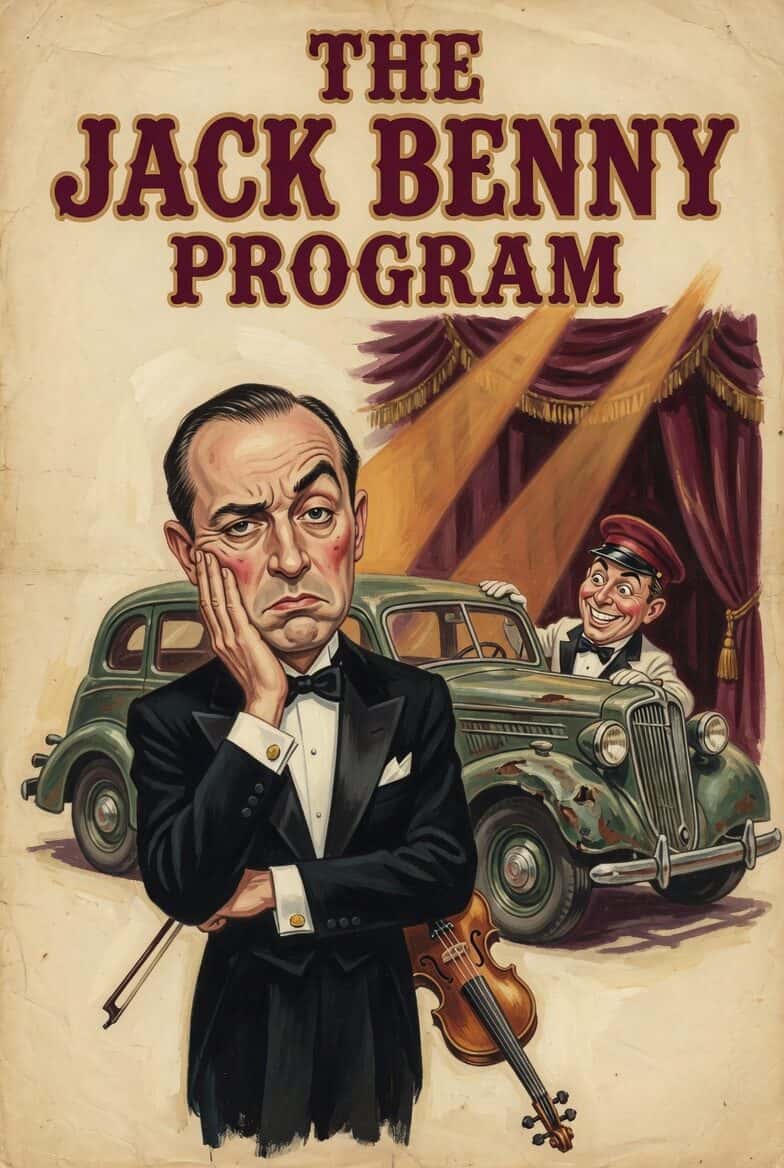
Sir Winston said the trip was a huge success. He had renewed old acquaintances, had good conversations. taken a helicopter hop with Ike to Gettysburg, and achieved his desire to ride for the first time a jet airplane. Ike's vice president, Richard Nixon, played a famous duet with Jack Benny, 21 years after Jack's visit with Eleanor Roosevelt. In the 1960s, Benny told LBJ about his White House visits in the 30s, 40s, and 50s, and told us all his secret of staying young. People think that I look, they know I don't look 30 now. Now, what's the use of kidding? But they think I do not look as old as I actually am. So I say, I think it's because I've said 39 so long, and I keep thinking that I'm 39, and I give myself that image. I had someone ask me in New York, what is your image of yourself? How do you think you look? I said, well, I think I look much younger than I actually do, and I think I've got a lot of hair.
And when I walk out to do a television show, I think I look very, very young, like 40 years old. Of course, after I see it, I'm disappointed. The walls of the White House are time and again alive with the sound of music. And while the chords may occasionally be questionable, there has never been any doubt as to the intensity of the men behind the piano. Harry Truman used all 88 keys with equal enthusiasm in and out of the White House. One of his classic performances was a duet with the president of the American Federation of Musicians, James C. Petrillo, at the Musicians' Convention. Ladies and gentlemen, when we get through with this, this will show you why we don't want any more canned music in the United States. If that gang out there can take it, we're going to give it to them, isn't we, Mr. President? That's right. Now let's see where we go here. President Johnson.
presented the old piano player with the nation's first Medicare card when Mr. Truman had reached the age of 81. They told me, President Truman, that if you wish to get the voluntary medical insurance, that you'll have to sign this application form. And they asked me to sign as your witness. So you're getting special treatment since cards won't go out to the other folks until the end of this month. But we wanted you to know, and we wanted the entire world to know, that we haven't forgotten. At age 84, Harry Truman and his wife, Bess, were visited by Richard Nixon and Pat. The White House piano and the president had followed Mr. Truman back home to independence. Thank you very much. Mr. President, Mrs. Truman, ladies and gentlemen.
I have a very special privilege and honor today, and that is to present to President Truman the piano that he used when he was in the White House during the years he was in Washington. To show you the special affection he had for this instrument, and I have checked its history, I find that it was one of the few pieces of furniture that he moved from the White House to Blair House and had it in Blair House. While the White House was being run out, and then moved into Carson, we moved back to the White House. I'll play something for the president. I play everything at the key of G, Mr. President. My ear. Let me try it out for you. Whatever their differences, the two old piano players were members of the world's most exclusive club, the presidency.
The wit and warmth and wonder of what a president can achieve all come together in the 20th century tradition of the president throwing out the first ball to start the baseball season. The man who started it all was William Howard Taft, and wouldn't it be nice if we could go inside and ask him how it all began? President Taft, how did you happen to come up with the idea of the president throwing out the first ball? Were you a fan? Well, I love sports, play a little golf, but baseball was my favorite. In 1910, I just decided I'd throw out the first ball, and I did. You know, I was a good catcher as a youngster, got an offer from Cincinnati, but my father wouldn't hear of it. Anyway, I never thought the idea would catch on. Wilson, that's Woodrow there, he wasn't really a big fan, but he carried on the tradition, and the ballplayers sure got caught up in the spirit of it. That ball became a real prize.
There's Harding. That's Babe Ruth with Warren. There's Bucky Harris with Calvin Coolidge. Good man, Coolidge. I was Chief Justice at Herbert Hoover's inauguration. Most Americans don't know that I became Chief Justice after being president. That's FDR with his son Jimmy and Judge Landis. FDR holds the record for most throws by a president. There's John Garner with FDR. Look at that toss. Not bad for a Democrat. You know, Harry Truman could throw with either hand. Switched around each year. There's Ike with Walter Olsen and Casey Stengel. Can you imagine if Casey had run for president? Might have made it at that. Ike looks good. Jack Kennedy. Kennedy always brought his whole clan along. I wish I had taken Teddy Roosevelt with me. Teddy would have loved this. LBJ with, uh, let's see if I can get him. Jerkson? Mills?
McCormick and Humphrey. Not bad for an old-timer, huh? Watch out for the LBJ Democratic elbow. I used to kid with William Jennings Bryan like that all the time. That's a nice toss. Dick Nixon did it. And I suppose it will just keep on happening as long as there's baseball in America. I really started something back in 1910, didn't I? He certainly did. William Howard Taft, the baseball immortal. The wit and warmth we've shared with the residents of 1600 Pennsylvania Avenue in the past hour are the salt and pepper in a robust Washington stew. Without that flavor, it could all become a little bit too difficult to chew. America's ability to smile at itself is unique. I'm reassured by the fact that our nation's number one men have, in good times and bad, had a sense of tradition.
a sense of humor, and an interest in sharing their joys with us.