
The written record
Read the transcript
Read along with the recording · About 22 min to read
Now, who wears the trousers? Our series exploring husband and wife teams in American comedy. Mary Livingston played the foil to husband Jack Benny. She was the smart aleck who always got the last word. But behind the laughter was a woman who suffered terribly from mic fright and self-doubt. To the outside world, their marriage was perfect. But behind closed doors was a very different story.
If you were the only boy in the world. And you were the only girl. Comedy has never been an easy occupation for a woman. But for 20 years, from the 1930s to the 1950s, American radio comedy was dominated by husband and wife teams. What makes this such a cultural phenomenon was that at the time, married women were forbidden from having a career at all. Here's Dr Lucy Dillap, research fellow at King's College Cambridge, to explain. Women's career experiences were extremely fragmented. And you had a situation in America where 26 states having in their statutes laws against married women being employed. Some of the husband and wife teams were double acts in the true sense. Others were a comedic marriage of convenience.
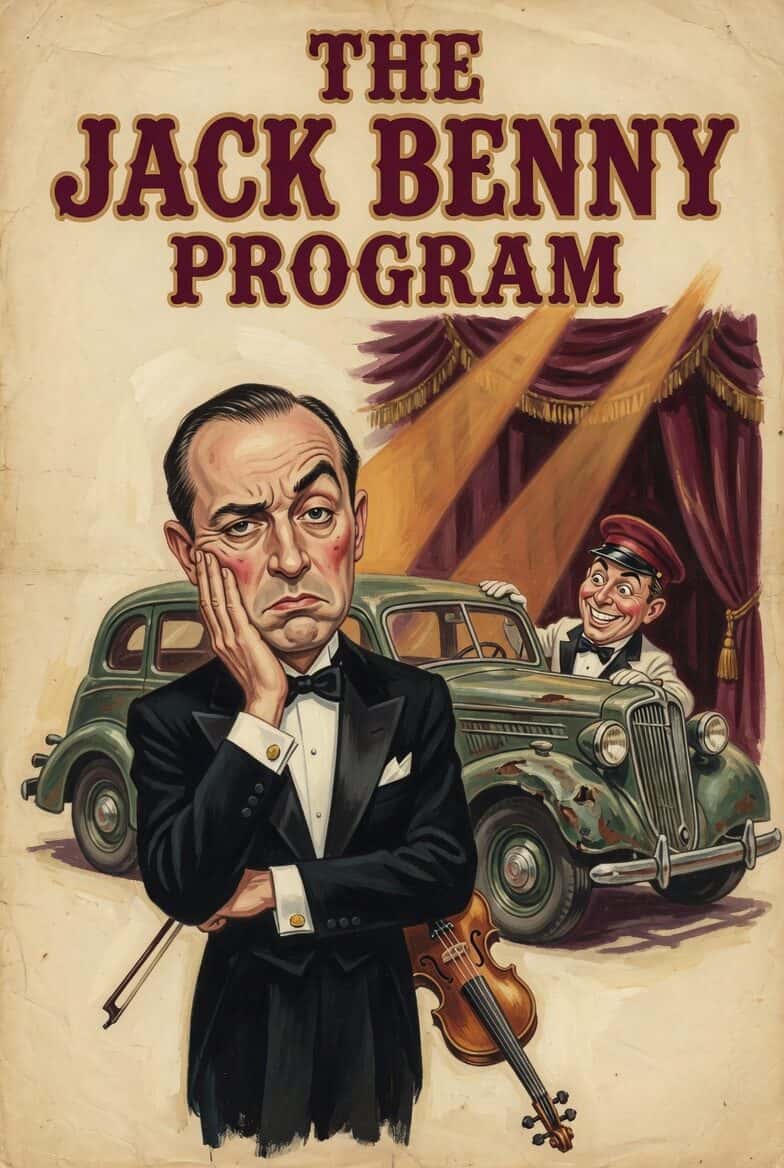
This week, I'll be remembering Mary Livingstone, who was married to Jack Benny. She'd never performed in her life and owed her entire career to a burst appendix. Oh, Don, look who's here. Hello, Don. Hello, Jack. Hello, everybody. Hello, Mary. Mary Livingstone was born Sadie Marks into the home of a wealthy businessman in Vancouver. But when she was 17, her family moved to Los Angeles. Jack Benny was appearing there at the Orpheum Theatre, sharing the bill with Sadie's brother-in-law, Al Bernavici. Al had asked Jack out for dinner. Sadie was invited to make up the numbers. Jack ignored her. For Sadie, it was proof apparent that Jack Benny was possibly the rudest man she'd ever met. Jingle bells, jingle bells, jingle all the way. Oh, hello, Mary. Hello, honeybunch.
Honey Bunch, well, I suppose I'm a swell guy. You're glad to see me, and I look like a million dollars. You took the words right out of my hand. Oh, I see. Why don't you ask me for a kiss now? Go ahead. It's near Christmas. You ask me for a kiss, and I'll turn you down so fast it'll make your head swim. That's more than your kiss would do. But Sadie would soon find out that Jack's rudeness belied his growing attraction for her. Sadie was working on the hosiery counter in the May Company department store in Hollywood. The day after their meal, Sadie was surprised to see Jack come into the store. He bought two dozen pairs of silk stockings. This continued every day for a fortnight. I bought enough French hosiery to restock the May Company, Jack explained later. And in that two-week courtship, Sadie broke all sales records for the hosiery department in the history of the May Company store.
But the path to marriage was a difficult one. Jack was away on tour and Sadie, convinced that Jack was just another profligate vaudevillian, became engaged to another man. Jack found out and persuaded her to come to Chicago. Five days later, they were married, using Jack's mother's old ring because he hadn't had time to buy one. Mary wrote later, I'm quite sure that I was not in love with Jack Benny when I married him. I'm convinced that he was not in love with me either. At the beginning we had nothing in common except our senses of humour and the fact that when I was little I had studied the violin. Jack was working when they married and so Sadie spent a wedding night backstage at the theatre while Jack performed.
Sadie, who described herself as being pleasingly plump, was intimidated by the confidence of the trim-figured chorus girls who were sharing a dressing room with her new husband. It worried her, and she became paranoid and jealous, and in the first six weeks of marriage she lost over a stone in weight. It was an insecurity that was to remain with her for the rest of her life. Jack was breaking in a new act that needed a female stooge to play a dumb girl character, a popular stereotype of the time. The female sidekick was a leftover from burlesque, where male comedians paired up with pretty assistants who wore very little and weren't renowned for their wit. As burlesque seeped into vaudeville, the girls put on more clothes and became feeds for their male partners' jokes. But if they were given their own funny lines, they had to play stupid.
Sadie Marks never had any intention to go on the stage. She was content to be Mrs. Benny. But a burst appendix was about to change all that. Here's Joan Benny, the couple's daughter. He was doing a two-act in Vaudeville. I believe he was in the Los Angeles area. And he by then had married my mother. And the girl in the act got sick. She was whisked away to the hospital. And he had to go on that night and he didn't have his partner. Well, my mother had been standing in the wings over the weeks that he was doing this particular act. So she had it down pretty cold. And so he said, I don't know what to do. You're going to have to go on. And she did. And that's really how it began. And the manager of the theater was so thrilled with her. He liked her better than the girl who had gone off to the hospital. And so she stayed.
with the act at least for a while and it was only meant to be a temporary arrangement jack had been spotted by a hollywood film studio and to all intents and purposes his boardable days were over the couple moved to hollywood and sadie settled into a life of privileged indulgence like many of his contemporaries jack benny thought of radio as a passing fad but jack's career in films hadn't really taken off and so in 1932 when he was offered a weekly show by the canada dry ginger ale company for new radio network nbc he accepted sadie hadn't performed with jack for four years and it settled back into the role of mrs benny but for a second time fate was to play its hand here's joan benny when he did the radio show. His writers wrote a script that called for a fan from Plainfield, New Jersey, whose name was Mary Livingston, to go up to my father and, I believe, ask him for an autograph, and then they get into conversation. The writers and my father and the producer and director auditioned quite a few girls to do it. They finally picked one.
And it was déjà vu. The same thing happened. She got sick and my mother wound up playing the part at the last minute. Mary later wrote of the experience. When it came time for me to deliver my dialogue, what I did mostly was to laugh because by then I'd had enough sense to get nervous. The character went down so well that Jack put her in the following week's show. But Sadie was still unable to control her nervous giggles. After that, the Mary Livingstone character was dropped. but an avalanche of protest came in from the listeners. What happened to the adorable Mary Livingstone from Plainfield? We love her. We missed the girl with the wonderful laugh. Sadie had captured the hearts of the audience, and Jack decided to make her a permanent member of the team, a decision helped by the fact that Jack's new sponsor, Chevrolet, had made it part of the sponsorship deal that the girl who laughed became a show regular. Here's Irving Fane, Jack Benny's manager.
Well, she wasn't an actress. She just happened to do it because Jack needed her for a bit, and she did it a bit. And little by little, she became Mary Livingstone. The transformation of Sadie Marks was only complete, however, when she changed her name permanently to Mary Livingstone. The gauche girl from Vancouver was no more. Mary Livingstone, the star, was here to stay. Tell him what happened when he went to Carol Lombard's party the other night. Now, don't start that. What was it, Mary? Well... Oh, cut it out now. Come on, tell us, Mary. Well, Carol invited us over to her house the other night, and Jack thought he had everybody a big laugh right away. Oh, that's all. So when we got there, he rang the bell. Then he stood on his head and started to bark like a dog. Well, what of it? And when they answered the door, was he embarrassed? Why? It was the wrong house.
The character of Mary Livingstone began as a dumb dame, but gradually transmogrified into a sharp and sophisticated wit who punctured Benny's inflated ego. Here's writer and broadcaster Michael Poynton. Mary was very good at delivering those lines, I must say. She could put him down and was very good, and maybe she did it in real life, so maybe it was easy, it came easy to her, but why not? And it would appear she did do it in real life, at home. Mary was very much in charge. She was the one with the lavish bedroom suite. She was the one who dished out the discipline. And she was the one who kept an iron grip on her husband's diet. Playing a sassy wisecracker who was allowed to get the better of her male star, Mary was carving out a unique niche for herself. Here's comedy writer David McGillivray. With Jack Benny and Mary Livingstone, the scriptwriters are observing.
the real life marriage and wondering how it can be fantasized. And so they're using elements of Mary's real life relationship with Jack, which was very unusual. You have a unique situation where you have a very powerful male character, but Mary still gives as good as she gets. And that was not common. She's able to cut him down to size. And it would appear, you know, that she did wear the trousers in real life, and so the scriptwriters are obviously going to introduce an element of that into the programme. But some things about Mary's character were still in keeping with the times. In each show, Mary would begin by reading out letters from her mother. The letters were full of news about the rest of Mary's family. At Plainfield, New Jersey, December 10th.
My dear daughter Mary, last Monday was the coldest day of the year. It was so bad we had to milk the cow with an ice pick. Your Uncle Julius was showing off yesterday and went outdoors without his earmuffs. Yes. So today he's going out without his ears. Well, it serves him right. This caused a lot of trouble as now we have to glue his glasses on. This was a common device of the time. Female characters were supposed to be disproportionately interested in their extended family. For a non-performer, Mary was riding high, but every now and again she would fluff her lines to the delight of the audience. With the show drawing in more than 30 million listeners, Jack and Mary were becoming superstars.
allowing mary who is developing a reputation for extravagance to indulge her lavish lifestyle she was renowned for her great food she always had the best food and when i got old enough to appreciate it she always had caviar which i thought was quite wonderful and mary was a hollywood hostess beyond compare her parties were legendary and were frequented by the hollywood a-list gary cooper barbara stanwick Clark Gable, Cary Grant, Loretta Young, Spencer Tracy, Humphrey Bogart. I mean, you can go on and on. They were just huge stars. And as I said, I look back and they were my parents' house for their parties. And I think, no, it can't be true. Mary was much happier playing the Hollywood hostess than she was performing. Despite becoming an accomplished comedy actress, she never felt as if it came naturally to her.
She increasingly became dependent on Jack's notes during rehearsals which she would scribble studiously in the margins of her scripts. Slow down, she would write, and wait for my look please. Even though she was regularly teased by the rest of the cast for relying so heavily on coaching, she didn't care. Mary was beginning to feel that she wouldn't get any laughs if she didn't do exactly what Jack told her and the effect it was having on her went beyond the psychological. Here's one of the writers of the show, Al Gordon. She fainted a lot. You know, she was frightened, you know, she worried about her looks. And she had Jack, who really didn't do it on purpose, he overwhelmed her, you know. He was very strong. Mary was very good, but her mood was, you know, this business wasn't for her. Apart from her growing nerves, life for the Bennys couldn't have been more pleasant.
America was in the grip of the Great Depression, but radio was booming. Vast salaries were being paid to its stars, but Mary's taste for the elegant was drawing criticism. Her constant quest for the best things in life was seen as one upmanship by her contemporaries. George Burns and Gracie Allen were another husband and wife team of the time, and George and Jack were the greatest of friends. But George had his reservations about Mary and wrote of her, If any of her friends had something, she wanted it. But she wanted it bigger and better. Whilst his wife, Gracie Allen, who was portrayed in show business magazines as Mary's closest friend, confessed. Mary, Benny and I are supposed to be the dearest of friends, but we're not. I love Jack and I can tolerate Mary, but there are some things about her I don't like. Every time I get something new, she has to go out and get the same thing. Once...
I bought a pair of boots that I really loved, and I showed them to her, and she went out and bought six pairs of exactly the same boots. She always has to have more than I do. So I can't show her anything at all, and I don't think that's a good friend to you. But was this just professional jostling, or was there an underlying problem that Mary was plagued with? First of all, she did not come from a show business background in any way, shape, or form. And she married my father, which was a kind of rebound marriage because he'd been in love with someone else. And he met her on the rebound. And she was just the kind of girl that his parents would have approved of, did approve of. And it just seemed to be the right thing. Now, she immediately was thrown into a vaudevillian's life. She was thrown.
with Gracie and George and other vaudeville actors and actresses, and I think she felt terribly out of her element. I think she felt that she couldn't keep up with them, that she didn't have the wit and the funny, and the show business people are sharp and witty and funny, and they're traveling and they're doing, and it's a kind of excitement to the life of show business. And my mother was a foreigner. And I think my father's close friends were a little bit wary of accepting her because they did know the former girlfriend who was very accepted into that group. So I think it was rather uncomfortable for her to be a stranger and to have to join a group of people who had known each other for a long time and were very close. And here's this stranger in their midst. But Mary's lack of confidence didn't just stem from feeling like a fish out of water.
What was more damaging was the constant comparison that Mary made between herself and Gracie Allen. Now she winds up in radio, and who is her rival professionally, because they were the two main couples, Gracie Allen. In her mind... She couldn't begin to compete with Gracie because Gracie was from a show business family. Gracie's sisters were all in show business. Gracie had been in show business since she was three years old. She was a baby when she first went on the stage. She was a very experienced Irish actress when George found her and she agreed to be part of his act. She was very experienced.
no right to even be mentioned in the same breath with Gracie Allen. Can you imagine all the insecurities and all the discomfort? Maybe that's why they weren't close friends. But far from being an upstart, Mary deserved to be where she was. She was a genuinely funny performer, and being funny was about to become crucial to the American psyche. America had joined the Second World War, and radio was to play a vital role in bolstering the home front.
Mary was a character who was portrayed as confident and strong, and this reflected the new position that women found themselves in. Here's Lucy Dillap again. It was an irreversible experience that meant that women never expected to stay at home in the same way they had before the war. Six million women joined the labour force during World War II, and two million of them were in heavy industry. So this was a whole new sectoral experience for women. When they were asked during the war, would they like to keep working after the war, 80% said yes. So that's an amazingly high number. And yet, in 1946, when war was over, 4 million of them were immediately fired. So you get this curious experience during the war. The Rosie the Riveter campaign leads women to think that, yes, employment discrimination has gone and all areas are open to them.
And government officials were saying that openly. And yet after the war, you get a campaign to put women back into the home. But that campaign cannot be wholly successful. The character of Mary Livingstone was by now so polished that it's difficult to imagine that in real life Mary was anything other than supremely confident. She was working big crowds, especially the shows for the troops, and there is nothing in her performance that belies the turmoil that she went through. Well, if it isn't Miss Livingston. Say hello to the soldiers, Mary. Hiya, boys. Let's hear some noise. You asked for it, and you got it. I can't understand it, Mary, but every time we entertain the soldiers, you get a much bigger reception than I do. Why is that? I guess my legs are prettier than yours. Huh, cutie? Oh, I don't know about that, young lady. Now, I'll leave it to any... Oh, roll down your pants. Who cares? The colonel wants to hear your poem. I'm only too happy to oblige him. What's the title of it?
I like a soldier. Boy! Uh, she, uh, she means I like a soldier, boy. I know what I mean. Okay. Soldiers, they're so gay. And they're charming, I might say. So give me a soldier any day, or any night if he can get away. I went dancing at the Y, and I saw a handsome guy. I dropped my hanky trimmed with lace. He picked it up and wiped his face. He passed me by without a glance. So I spoke to him and took a chance. Say, buddy, would you like to dance? I'd love to, miss, but I ripped my shirt. But you ripped it? Yes. Mary, that doesn't rhyme. It rhymed at rehearsal. She was wonderful, and my father did give her more and more because he knew how wonderful she was as a comedian. It's just that she didn't know it. Eventually, it got the best of her.
I think she tried, you know, it's sort of like mental illness. You try to keep it at bay for as long as you can, and all of a sudden, like the straw that broke the camel's back, all of a sudden it was just an abyss. She just couldn't do it anymore. Like, as I say, the mental illness where you just fall into the pit. The lack of confidence in her professional life was, sadly, beginning to seep into her personal life. Here's Al Gordon and Irving Fane. She was frightened, you know. She had to go to a party, like Irving will tell you. Jack says, we're going to a party in three weeks. She started three weeks early to get prepared for it, and then did she go, Irving? And then she'd cancel it the last minute. But a party wasn't the only thing that Mary was thinking of pulling out of. Mary wrote, In the beginning, my appearances on Jack's radio show were fun. I actually enjoyed working once a week.
But ironically, the more shows I did, the more nervous I became. I still can't figure it out logically. All I know is that every Sunday wound up being the most torturous day of my week. I waited until we were off on our summer holiday, and when the right moment came, I told Jack that after 17 years of doing the show, it was taking too much out of me. I ended by saying that I would not be on his program any more. I just couldn't stand it. Jack was surprised but supportive. Mary was an integral part of the show, and although he agreed that she shouldn't do any more live recordings, a technological breakthrough meant that Mary could still put in a weekly appearance. She couldn't make herself go to the studio, and the technicians came to the house, and I think she even did it from her bedroom.
They recorded her voice. Somebody prompted her with the lines. They recorded her voice and put it in the show. And that's the way the show came out. You heard the show with Mary Livingston as Mary Livingston. Mary's performing days were over. She continued to pre-record her lines for the radio show for another year. But then in 1949, when Jack made the leap to television, Mary decided their professional partnership was at an end. Husband and wife teams had been immensely popular for over 20 years. But what is unusual about Mary and Jack is that in their public personas, they weren't married at all. Here's Al Gordon and Irving Fane again. I wrote 20, 25 years. And to this day, we don't know who Mary was on the show. She wasn't the wife.
She was there, you know, and it didn't make any difference. She was a woman on the show. Who Mary Livingstone was is a difficult question to answer. She'd been competing all her life. She'd begun by competing for her husband's affections, gone on to social one-upmanship, and had had to contend with a friendship with one of the greatest comedy performers of all time, Gracie Allen. I think my mother never, ever had the self-confidence get out there and and not be nervous i don't think she ever looked in the mirror and said to herself hey i'm a good comedian i don't think she ever had that without his wife jack continued to perform on stage television and screen until he died in 1974. mary lived on another nine years spending her time in relative seclusion There can be no doubt that her lack of self-esteem was the driving force behind her personality, leading many to think of her as a difficult and needy woman. Here's Michael Pointon. We hear now that she wasn't that nice to Jack in later years, but loved to ride on his reflected glory, really, and wasn't entirely loved within the profession, which is a bit of a shame, you know. Perhaps in early years they got on very, very well, but I think later on...
She was more interested in spending all the money and enjoying herself. And maybe Jack liked going to the Friars Club and places like that and playing cards with the boys. Her relationship with her husband had been a loving one, but it had been unusual. They had separate bedrooms and in many ways they led separate lives. And for Jack and Mary, perhaps that was the price they paid for working together. Whilst there is no doubt that Jack would have been successful without Mary Livingstone, it cannot be denied that she owed her entire career to her husband. When I got married, Mary wrote, my life began. She was an ordinary girl from an ordinary family, thrown into a world that she found thrilling, but ultimately overwhelming. But did Jack and Mary enjoy working together?
The show went on the air and she was standing there with her script and her microphone. I think she loved it. She got into it and I think the nervousness was gone when she got into it. It was getting there. Despite the wealth and the glamour, she was a woman who, although she became a consummate comedy performer, never stopped feeling out of her depth. The tragedy of Mary Livingstone was that she never believed she was good enough. But the American public loved her. To them, she wasn't the insecure woman constantly trying to prove herself. She was just sweet Mary Livingstone, the laughing girl from Plainfield. Mary, what are you laughing at? Gee, do I have to have a reason?
Who Wears the Trousers was written and presented by Emma Kennedy. The readings were by Amanda Boxer and Andrew Westfield, and the producer was Elizabeth Freestone. Next week, Lucille Ball and Desi Arnaz.