
The written record
Read the transcript
Read along with the recording · About 42 min to read
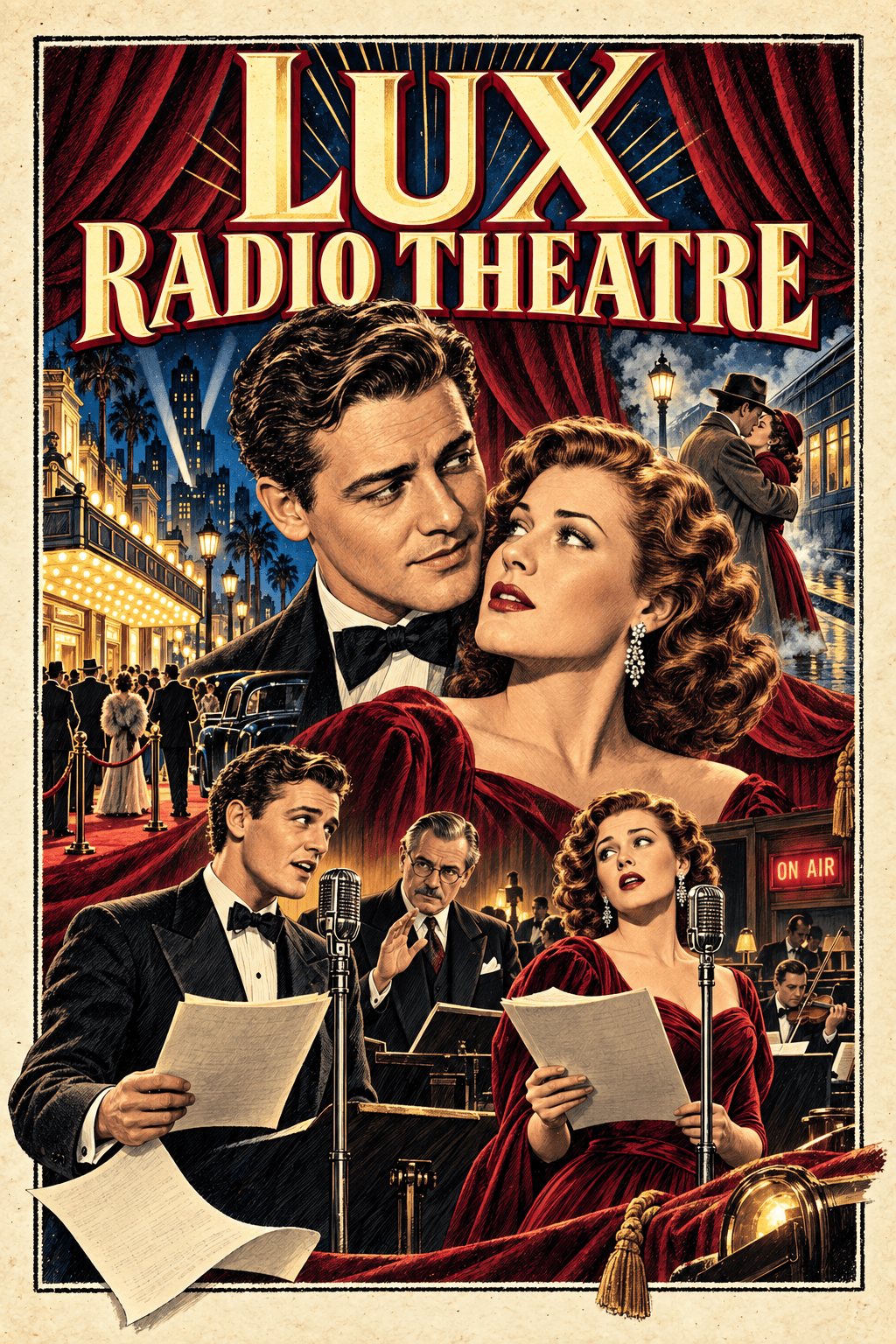
Lux presents Hollywood. The Lux Radio Theater brings you Orson Welles and Rosemary DeCamp in A Tale of Two Cities. Ladies and gentlemen, your guest producer, Mr. Frank Craven. Good evening, ladies and gentlemen. Between the peoples of the English-speaking world are, fortunately, many strong and common bonds. Respect for freedom and democracy, a sense of fair play and a love of tolerance. And to those bonds, you may well add, a common love of Dickens. There are many writers we pay homage to, but none has come as close to our hearts or moved us so thoroughly to tears and laughter as the author of tonight's great story, A Tale of Two Cities. And I say great, not from my judgment only, but because time and the world have called it so. And Dickens himself expressed the humble hope that posterity would consider it the best thing that he had ever written. But to him, it was an attempt to explain in terms of one man's life and actions one of the most inexplicable and violent periods of human history, the French Reign of Terror, when 25 million people armed with torch and saber bathed Europe in the blood of vengeance. Here, indeed, is the material of drama, recorded by a vivid and imaginative writer and portrayed for us tonight by two stars worthy of this staunch assignment, Orson Welles and Rosemary de Camp, both veterans of this stage and of the screen and theater.
Originally, most of Charles Dickens' works were published in installments and came to America by sailing vessels. Records tell us of how crowds thronged the wharves of New York City to receive the latest news of their favorite hero and a hero. For already the names of Dickens' characters were household words, as much, I imagine, as Lux Toilet Soap is a household word throughout America today, and for very much the same reason. The ability to find approval among people of all kinds of ages in every walk of life. Not only among women who are anxious to preserve their loveliness, but with every member of the family, young and old, Lux Toilet Soap is quick to make friends and to keep them. And now our curtain rises on Europe, 150 years ago, as we bring you the first act of A Tale of Two Cities, starring Orson Welles as Sidney Carton and Rosemary DeCamp as Lucy Manette.
with Dennis Green as Charles Darnay. Paris, 1793. The French Revolution is over. The cause is won, but the bloodshed has only started. The reign of terror sweeps through the land in all its fury, and each day Madame de Guillotine has fed her share of human life. The dripping glade rises and falls, and the crowd counts in monotonous rhythm as each noble egg rolls to the ground. The knife rises again and sweeps downward.
Twenty-two lives in a single day, and more to come, and more and more until nightfall draws a curtain on the scene. Behind the bleak walls of the forest risen, the doomed of the following day await their fate. In a bare dungeon cell, a single lantern throws a ghostly glow on their faces. With a rattle of chains, the great iron door is thrown open. In the name of the people of France, this tribunal hereby declares that you shall be put to death by the guillotine on the morning of February 2nd, 1793. Citizen jailer, which one of these is Charles Evremond? Evremond! Step forward. Evremond! Charles Evremond, called Charles Darnay. Which one of you is he? I am Evremond. Step forward. Charles Evremond, known as Charles Darnay. In view of the excitement occasioned by your trial, it was felt that some small favor would be in order. We have decided, therefore, that you shall live long enough to witness the execution of your friends here.
Fifty-one heads will fall tomorrow. Yours will be the 52nd. Citizen Evremont. Yes? I didn't know you were here with us. So dark. Oh, yes. What is it you want, Chris? Don't you know me? I'm Lisette, the seamstress. We were brought to La Force together. Oh, of course. I forget for the moment of what you were accused. They accused me of plotting. But I'm innocent. How could I plot against the Republic? I'm nothing. I'm no one. Don't cry, child. Too late for tears. I try to be brave. Soon the morning will come. It's going light even now. You have an hour yet. That's more. Ask God for courage. Look. Sun's rising. I'm afraid. Yet I'm glad. At least we can see again. Wait. What is this? You are not everyone. You are not Charles Evermore. Quiet. I'm you, Charles Evermore.
His eyes were blue and his eyes were brown. His hair was light and your... Who are you? Like you, I am nobody, nothing. You are going to die for him. Why, monsieur? I could never make you understand. But I could set you free. One word for me and... You can't do that. You must not, please. Tell me about yourself. How can I? It would help so if you'd talk to me. Perhaps it would help you too, monsieur. There's so much to tell. It all began... So long ago. When? 25 years ago. 1768. Have you ever been in England? Never. There's a long hill on the Dover Road that sweeps down to the sea. The pleasant road on a summer day with the sun shining. The devil's own highway at night in the winter rain. On just that sort of night, 1768, a coach topped the rise of the hill. The mail bound east.
The Dover. Come on, get up there. Get up, get up. Top of the hill, Tom. Better rest them for a moment. Oh, oh. We'll be lucky if we make the boat recalibration. Listen. Hear that? What do you say? I say a horse at the canter coming up the hill up. I say a horse at the gallop. Oh, there. Tender old fire. Who are you? What do you want? Is that the Dover mail? I want a passenger. What passenger? Mr. Jarvis Lorry. Keep where you are. Is there a gentleman named John Lorry in the coat? I'm Lorry. Who wants me? It's me, Mr. Lorry. Jerry. I know this messenger guard. There's nothing wrong. I hope so, ain't there? Hello, you. Come on at your footpath. Well, Jerry, what is it? A dispatch, sir. Sent after you from London. Quick about reading it, sir. I don't like this. It's not very long, you see. Wait at Dover for Mademoiselle. Very good.
Jerry? Yes, Mr. Lawry? Ride back to London as fast as you can. Tell them my answer was recalled to life. Recalled to life. I was in Mr. Lawry's business that night. To recall to life a man who had been buried alive for 18 years, a prisoner of the French nobility. The man had escaped and was now hidden by friends in the village of Saint-Antoine. To that village went Mr. Lawry to the wine shop of a certain... Madame Defarge. You are Madame Defarge? I am. My name is Jarvis Lorry. I have just arrived from London. This young lady with me is Miss Lucy Manette. Good morning, mademoiselle. Please tell us, is my father here? Is he safe? No father. There is no one here, mademoiselle. But Mr. Lorry was talking... One moment, my child. Madame Defarge, perhaps I should have presented my credentials sooner. Recalled to life.
There is a man here. A man old beyond his years. A mender of shoes. Will you come this way? My husband and I have kept him locked in a room upstairs. Did you say locked? Yes. Of his own desire? Of his own necessity. He has lived too long alone. He would be afraid if his door was left unlatched. Oh, Mr. Lorry, I'm frightened. Hush, my dear. Dee, Dr. Manette. You are hard at work. Yes. I am working. You have a visitor, doctor. Show him the shoe you are making. Now tell monsieur the maker's name. You ask my name? Yes. 105 North Tower. That is all? 105 North Tower. You see, monsieur, he remembers nothing. Dr. Maynard, do you remember nothing of me?
Look at me. Is there no old banker, no old business rising in your mind? Think of England, a man who was your friend, Jarvis Lorry. It's no use. This is what they have done to him. Lucy, come here, my child. Yes. Now speak. Call him. Speak to him as you did long ago. Father. Yes? Father. Do you remember, Dr. Manette? I remember a little girl with long... golden hair. Ages, ages ago. What was her name? Her name? She laid her head upon my shoulder when they came for me that night. Don't let them take you, father. Hush, my child. My baby. Lucy. Lucy. I lost the channel that night to a safe refuge in England.
There for five years, the good doctor rested until at last his memory returned and he was well again. But now, in the English courts, a trial was in progress. A trial of a certain Charles Darnay, accused of plotting treason against his majesty's government. Dr. Manette, called as a witness, sat with his daughter near the judge's bench. The court was hot, humid. For me, one man seemed quite at ease. The assistant counsel for the prisoner. His court wig dipped in a slovenly fashion over one eye. His court gown stained with wine. His name, if anyone was interested, was Sidney Carton. We must act quickly. With the evidence they presented, Darnay will hang by morning. Carton, do you hear me? I hear you, Mr. Stryver. Well, what shall I do? If I were you, I should sit down. Darnay is my client. I'm trying to protect him.
I pay you well for your assistance, and I expect to have it. You will have it, Mr. Stryver, when the time comes. See, you've already had your bottle today. Two, I believe. Always drunk. Listen to me. At the present time, I'm more interested in Dr. Manette. Dr. Manette to the stand. You are Dr. Manette? I am. Dr. Manette, the prisoner Charles Darnay has been accused of carrying secret messages from Louis of France to spies here in England. Look upon the prisoner. Have you ever seen him before? I don't know. Really? Is it not true, Dr. Manette, that the prisoner was a fellow passenger with you five years ago on a boat from Calais to Dover? I cannot say. When I came from France that night, I had been newly released from a long imprisonment. I have little remembrance of the occasion. My mind was blank for some time. I see. Your daughter made the trip with you, did she not? Yes. That will be all.
Are there any questions from the defense? Any questions, Carton? No questions. No questions, your worship. Miss Lucy Manette to the stairs. And now, Miss Manette, look upon the prisoner, please. Have you ever seen him before? Yes. Where? On board the packet boat you mentioned. You spoke to him? You were friendly with him? Yes. Good. Now tell me, did he come aboard alone? No, when the gentleman came on board... Do you mean the prisoner? Yes? Then say the prisoner. Oh, when the prisoner came on board, there were two gentlemen with him. But these two did not make the crossing. No? Now tell me, did you see them give certain papers to the prisoner that night? No. You're sure of that? I, uh, I don't know. It was dark. Then they might have given him certain papers. Is that right? Yes, but I... That will be all, Miss Minnette. Please, I know he isn't guilty. That will be all, please. Are there any questions from the defense?
Will Carton? No. Carton, you're mad. No question. No questions, your worship. Your worship, the prosecution would like to recall its chief witness, the prisoner's accuser, Mr. John Barset. Now, Schreiber, we might have some questions. Mr. John Barset? Right here, sir. Mr. Barset, look upon the prisoner. Do you recognize him? I do, sir. He's a spy against his magnetist government. That's what he is. I was on that mail packet myself that night, and I saw the kind of papers that passed into the hands of the prisoner. They were lists of our troops. Thank you, Mr. Barsad. No more questions. The council would invent. Well, Carton? Ask him these questions I've written down here. Mr. Barsad, how do you know the papers you saw were lists of British soldiers? I saw them. Ah, you saw them.
Then you took them out of the pockets of the prisoner, Charles Darnay. Yes, sir. No, sir. They fell out, they did. Oh, then you didn't take them. You're not a spy yourself. A man who makes his living by making accusations, just or otherwise, against his fellow countrymen. That's a lie, a darn right insinuating lie. One moment. Will Carton? Mr. Stryber, you've no imagination. Mr. Barthold, where did you get money to live on? My... Property. Your property. Where is it? I... I don't exactly remember. Then perhaps you can remember how you got that property. I inherited it. From whom? From relatives. Distant relatives. Hmm. How many times have you been in prison? Six times, isn't it? What's that got to do with it? Have you been kicked for cheating dice? Well, now, I... Mr. Barsad, you were positive it was the prisoner you saw that night with those lips. I am? It couldn't possibly have been someone else. No, it couldn't. Mr. Darnay, you will please face this witness. Now, Mr. Barsad.
Look at Mr. Darnay. Look at him carefully. Well? Now, Mr. Barsad, look at me. At me, the assistant counsel for the defense. You notice a resemblance between us. We are very much alike, are we not? Well, now that you mention it, you are. As a matter of fact, it could have been me you saw with those supposed lists that night, could it not? Well, now... Could it not, Mr. Barsad? All right. Yes. That's all. Thank you. Are there any more questions? The jury will retire to consider it in Darnay. We agree. We have your oath, Your Worship. And how do you find the prisoner, Charles Darnay? We find the prisoner not guilty. Mr. Darnay, may we congratulate you, sir? Thank you, Doctor. I'm happy our testimony did you no harm. Thank you, Miss Lucy. I'm sure it did nothing but good. It was Mr. Carton who really won your case. Mr. Carton? Mr. Carton, sir? Don't call me.
May I thank you, sir, for saving my life? Yes, it's only a part of my business. Mr. Carton, this is Dr. Manette and Miss Lucy Manette. Mr. Carton, how do you do? Oh, we thought you were splendid, Mr. Carton. Mere professional claptrap. Ah. May I ask, sir, how did you happen to notice the resemblance between you and me? Oh, it was very simple. I looked at you and admired your bearing and your character. You see, I have nothing but admiration for myself. Lucy, my dear, we must go. Goodbye, Mr. Darnay. Will you call at our house soon? Thank you, Miss Lucy. And Mr. Carton. Aye. Yes. Thank you. Good day, then. Good day, gentlemen. Good day, Doctor. Mr. Carton, would you care to dine with me? Oh, you feel you must repay me. I could never repay you for my life, sir. Oh, don't be too certain. Bottle of wine or two? My fees are very low.
Another glass, Mr. Darnay. Thank you. I've had enough. Well, Mr. Darnay, how does it feel to be alive again, instead of hanging by your neck? Well, I'm a little confused regarding time and place, but it's good to feel at home in the world again. Oh, it must be an immense satisfaction. For me, the world has very little to offer, except wine like this. Oh, you and I are not very much alike in that particular, are we? You speak very faintly, Mr. Darnay. I, uh, I didn't speak at all, sir. Oh, come, Mr. Donner, call a help. Propose your toast. What toast, sir? Oh, it's on the tip of your tongue, man. It's been there all evening, out of it. Very well, then, Miss Lucy Manette. Miss Manette. As a fair young lady to hand into a coach in the dark, eh, Mr. Donner? As a fair young lady to be pitied by and wept for by. How does it feel, Mr. Donner? Is it worth being tried for one's life to be the object of such...
Sympathy and compassion? I don't take your meaning, sir. Darn it. Let me ask you a question. Do you think I particularly like you? You've acted as if you do, but I don't think you do. I don't think I do either. Nevertheless, I hope there's nothing in that dislike to prevent my calling for the reckoning and parting without ill blood. Nothing at all. You call the whole reckoning? If I may, sir. In that case... Innkeeper, more wine. Yes, sir. Good night, Mr. Carton. One last word, Mr. Darnay. You think I am drunk. I think you have been drinking, Mr. Carton. You know I have been drinking. Well, since I must say so, I know it. You should likewise know why. Because I care for no man on earth. No man on earth cares for me. Much to be regretted. You might have used your talents better. Maybe so, Mr. Darnay. Maybe not.
Good night, sir. Good night. And don't let your sober face elate you. Never know what it may come to. Innkeeper! The wine! Coming, sir. Well, has Mr. Darnay shown you what you've fallen away from? What you might have been? Changed places with him and what you've been looked at by those blue eyes to see worse? Come on. Have it out in plain words. You hate the film.
Sidney Carton knew it was too late to change his way of life, but he took to brushing his shabby coat and combing his untidy hair. And there were times even when he remembered that a gentleman does not drink himself nightly into a stupor. On Sunday afternoons, he would appear in Miss Manette's garden, sitting quietly, speaking but seldom. But Charles Darnay was there too. One evening, just at dusk. An approaching storm sent them indoors. Listen, it's coming soon, Mr. Darnay. It comes slowly but surely. Isn't it impressive? Sometimes when I've sat here of an evening like this, listening to the thunder in the distance, I've had such a strange fancy. I've imagined that the thunderclaps were echoes. The echoes of footsteps that will one day enter our lives. Well, if that is so, there is a great crowd coming into our lives. I take them into mind gladly.
It was my foolish fancy, Mr. Cartman. Yeah, there is. A great crowd bearing down upon us now. Thousands upon thousands. Here they come. Fast. Fierce. Furious. Oh, you make my fancy seem too real, Mr. Cartman. A great crowd coming into their lives. A numberless, overpowering crowd, which one day would decide the fate of these three. At first it was but a whisper in the city of Paris, a whisper that was to grow with the years into a crashing roar of hatred. Slowly but surely, as the storm came, the crowd was coming too, up from the cellars of Paris, up from the bare fields of a starving peasantry. The crowd was humming, chanting its hate, screaming for blood. The people of France, in all their might, rising.
In revolution. In just a moment, Frank Craven and our stars, Orson Welles and Rosemary DeCant will return in Act Two of A Tale of Two Cities. And now, here's a dance floor. Music. A soldier and his girl. Did I ever dream this afternoon I'd be dancing with you tonight, Bill? I just couldn't believe it when you pulled me from the station. Gosh, what a thrill seeing you. You're prettier than ever, Mary. You're sweet to say that, Bill. and me wearing my old rainy day dress. I'd planned to wear a real glamour gown for our first date. Oh, you look like a glamour girl to me, Mary, with those eyes and that peaches and cream skin. Say, I wouldn't care if you were wearing blue jeans, darling. It takes a lovely luxe complexion to win a compliment like that. There's something irresistible about soft, smooth skin. That's why screen stars, lovely women everywhere, never take chances with complexion beauty. They've discovered a care so simple, so effective, that they use it regularly. Here's what pretty Ann Baxter says. I wouldn't dream of neglecting my daily Luxe toilet soap facials. Active lather leaves my skin so soft and fresh. Luxe toilet soap is a real beauty soap, you see. The gentle, extra creamy lather is right for delicate skin. Feels like smoothing beauty in when you cover your face with a rich Luxe soap lather. I work it in gently but thoroughly. I rinse with warm water and splash with cold and pat my face dry with a soft towel.
That's my beauty facial. It really does things for my skin. Why not try these Hollywood beauty facials famous screen stars use? They really make skin lovelier. Recent tests showed actually three out of four complexions improved in a short time with this daily Lux soap care. Remember, gentle Lux toilet soap is Hollywood's own complexion soap. We pause now for station identification. This is CBS, the Columbia Broadcasting System.
two of A Tale of Two Cities, starring Orson Welles as Sidney Carton and Rosemary DeCamp as Lucy Manette. In La Force prison, awaiting death by the guillotine, the man called Darnay continues his story. The little seamstress condemned to die with him within the hour listens quietly, her eyes fixed on his face. As time went on, Sidney Carton appeared less and less frequently in the Manette home. For he knew that Lucy loved Charles Darnay. It was an evening in April, almost ten years ago, that Charles Darnay spoke to Lucy's father. I've only hinted at marriage to Lucy, sir. I didn't want to speak until... Well, there are certain things about myself that you should know. Yes? Dr. Manette, my name is not Darnay. I chose that name when I first left France and my heritage. Heritage? I'm of noble birth, sir, but...
I do not boast of it. Through generations, my family gained its wealth at the expense of the poor. When my uncle died, I was the sole remaining heir. I returned to France to sign away my title to the estate. Why do you tell me this? Because, sir, I... I know what you have suffered at the hands of the French aristocracy. Your uncle's name and yours. What... what was it? Saint-Evremond. The Marquis Saint-Evremond. He was... Doctor, you're... you're ill, sir. No. Charles... Lucy is not to know what you have just told me. Not now, do you mean? Not now or ever. She is not to know. Your word. Very well, doctor. You have my word. Now go, please. Go. In every moment. In every moment. Father, let me in. I got your message. Is anything wrong? Father, he's been locked in his room all day. I'm so afraid. Dr. Manette, open the door. Dr. Manette. Miss Lucy.
I found the key in the storeroom. Well, give it to me and take Miss Lucy downstairs. Come, my dear. Come, my lady. Dr. Manette. Dr. Manette, what are you doing? Do you hear me? Doctor, what work is this you're doing? A lady's news. A young lady's walking shoe. It should be finished. Let me be. Is he all right? Dr. Jimson is with him. You've been very kind to stay so long. I tried to reach Charles, but he wasn't at home. I'm so worried. A few days and he'll be well again. After all these years to go back to that, what happened to him? How can we know? A shock, perhaps some sudden jolt of memory. A man's mind can play queer tricks, you know. I brought you a cup of chocolate. Oh, thank you, Miss Proff. And the doctor says everything will be all right. You are not to worry. Oh, thank you.
Oh, Sidney, you're not leaving. It's growing late. Not for me, of course. I doubt if you see the dawn very often. No, I don't. But I can welcome it today. A few hours ago, everything was so black and fearsome. Now, all my troubles are past. All my hopes are reborn. It's always that way, isn't it? There are some hopes a man may have which remain in the shadows forever. Do you have such hopes, Sidney? No more. I'm like one who died young. Sidney, you've come often to the house in the past few months, and yet we know very little about you, except that you're our friend. Is there nothing I can do to help you, Sidney? I could never hope to repay what you've already done. May I tell you something? Will you hear me without shrinking from me? What is it? You've been the last dream of my soul.
Seeing you here in your home has stirred old shadows that I thought had died out of me. I've heard whispers from old voices impelling me upward that I thought was silent forever. I've had unformed ideas of striving afresh, fighting out the abandoned fight. A dream, all a dream, but I wish you to know that you inspired it. How did me? Will nothing of it remain? Perhaps as a dream might linger on after the dreamer awakes. But try to hold me in your mind as sincere in this one thing. I would embrace any sacrifice for you or for those dear to you. Think now, men, that there's a man who would give his life to keep a life you love beside you. Poor fool. Drunk this time with self-pity. And from that day on, he was seen rarely in the men at home.
He was there when Lucy and Darnay were married. And again some years later, when their child was born. A girl. But his visits were short and he'd slip away at the first opportunity. In France, during these years, the echoing footsteps of the crowd had been growing louder. Grim patriots who were to bathe the soil of France in the blood of the hated nobility. And then the storm broke in all its fury. In July 1789, they swarmed from the rat holes of Paris to cover the country with a blanket of red. An army of vengeance bent upon destruction and death. Steelers are knit so calmly on this day. Our victory will come only when every noble head is rolled from every noble shoulder. And in this knitting I have inscribed their names. The names of those who have starved.
killed us. And for every stitch, another head shall roll. For every stitch, we shall be avenged. I'm looking for Mr. Sidney Carton. The inn is not open. There's no inn in London open at this time of night. I want to see Mr. Sidney Carton. Let me in. Where is he? He's in there. Wake up. Wake up. Who is it? Oh, Donnie. Oh, Mr. Donnie. Welcome, Mr. Darnay. You have some wine? No time for that. Listen to me. I'm leaving for Paris within the hour. Paris? There's some business there that I must attend to at once. Paris. Very warm this time of the year. If I were your lawyer, I should advise against the journey. How much do you know of me? This is an excellent wine, Mr. Darnay. French wine from the cellars of the aristocrats who fled the country.
There will be few of these bottles left now. It's being poured into the streets, along with the blood of the nobles who once drank it. Must you go to Paris, Mr. Starling? I see there's little I have to explain to you. But I received a letter this morning from a man who was once my servant. They've threatened to send him to the guillotine unless he can explain why he's in possession of certain property. That's why I must go, to save his life. What of your own life? I'll be in no danger. I've renounced my inheritance. It's easily proved. Why do you come to me? There's no one else I can turn to. I don't know how long I shall be gone. I should like to feel that there's someone here in London who's watching over my family. I? You'd trust me to watch over your child? Your wife? Yes. I know that you love her. When did you say you must leave? Tonight, now. Have no fear about your family. They'll be safe. Thank you, Carton. Good night. Good night, Godspeed. Carton!
More wine, sir? No. I'll take it away. Where are you going, citizen? I'm going to Paris. Let me see your papers, if you'll hurry, please, citizen. I must be in Paris within the hour. What is your name, citizen? Charles Darnay. Darnay! Also known as Evremont. Why, yes, but I... You are confined, Evremont, to the prison of La Force. In just a moment, our stars will return in Act 3 of A Tale of Two Cities. And now, here comes our young friend, Sally. My, Sally, that's a pretty corsage you're wearing. I got it at the flower show this afternoon, Mr. Kennedy. What a lovely show it was, too. A regular preview of a spring garden. Lilies of the valley, lilacs, daffodils, narcissus, oh, and dozens of other kinds of flowers. I can't think of anything more refreshing to see right now, Sally. The whole air was fragrant with them. A fresh, delicate perfume you never tire of. A fresh, delicate perfume you never tire of. Mmm.
Now, when you say that, Sally, you make me think of something. Why, of course, Mr. Kennedy. The perfume of Luxe Toilet Soap. Sure thing, because that's just what the makers of Luxe Soap had in mind when they created its perfume. They knew women would enjoy delicate, subtle fragrance, like the combined scent of many spring flowers. Yes, and they do enjoy it, Mr. Kennedy. Screen stars say that's why Luxe Soap makes a wonderful bath soap. It leaves such a lovely, clinging fragrance on the skin. Well, it took a lot of experimenting to make that Luxe Soap perfume. To be statistical, Sally, it took a blend of 34 different ingredients. It's a fragrance that's distinctive and different. And expensive, too, I should think. Yes, many of those ingredients are costly. But the price of Luxe toilet soap is very low because so many millions of cakes are sold every year. It's a thrifty as well as a luxurious bath soap. Here's a little trick I've discovered other women might like to know about. I slip a few cakes of Luxe soap in my dresser drawer until I want to use them.
They make a perfect sachet for my lingerie and handkerchiefs. Thanks, Sally. Why don't you enjoy the luxury of this fine, fragrant white soap nine out of ten screen stars recommend? Use it for your daily beauty bath. Luxe soap is hard-milled to satin smoothness. It's economical. Each cake can be used to the last thin sliver. And now, Frank Craven returns to the microphone. For a verbal introduction to our stars tonight, you're invited to join us after the final curtain for a brief chat. Now, act three of A Tale of Two Cities, starring Orson Welles as Sidney Carton and Rosemary DeCamp as Lucy Manette. The sun rises slowly over the roofs of Paris, and the long shadow of the guillotine falls against the walls of La Force Prison. In the cell of the condemned, Sidney Carton speaks in a hushed voice, his story meant only for the ears of the little seamstress. They brought Charles Darnay here to La Force Prison.
to be held in secret. Somehow the news filtered back to England. Soon his wife and child were in Paris with Dr. Manette and with Dolore, their old friend. For months they waited for some word from Darnay in his cell, but no word came. And every day through the streets the tumbrils passed, filled with the condemned on their last journey to the guillotine. Father, did you see him? Did you see Charles? No, they would not take me to his cell. But I have news. Yes? Charles is summoned tomorrow for trial. Tomorrow? Oh, Father. I think it will go well, my child. They're going to allow me to testify for him. You? Why, they'll brand you a traitor. They'll kill you, Father. No, my child. I bear a charmed life in this city. I have been a prisoner of the Bastille. Silence! Dr. Manette, is this tribunal to understand that you endorse the accused?
The prisoner Charles Evremond? That is so. He is of noble blood. He is a traitor. He is no traitor, I will swear to it. Dr. Manette, we know your life, the cause you fought for. You are one of us. Yes, and as one of you I speak. The accused Charles Evremond was my first friend when I was released from the Bastille. The accused Charles Evremond is my daughter's husband.
In all these years, he has had no part in the tyranny against which we fought. He has renounced his share of the estate and returned it to the people. Charles Evremonde is no enemy of the revolution. I give you my word, he is innocent. Free the prisoner! If the doctor of Beauvais says he is innocent, free him! Is the jury ready to declare itself? We are. I'll say you then. Let the prisoner be freed. Wait! Wait, I say! The prisoner cannot be found. Citizeness Defarge. I see the prisoner still stands accused. By whom, citizeness? By three voices. By my husband, Ernest Defarge. By myself. And the third? By the doctor of the way, Dr. Alexander Manette. I protest. I protest against this. Continue, citizeness. Hear me, all of you. Dr. Manette.
You have said Charles Evremond was your first friend. I was your first friend. It was to my wine shop you were brought where you made shoes under my care. You knew yourself then only as a number. 105 North Tower. The cell in which you had been confined. Is that not true? If you say it is, I must believe it. I can't remember. But I remembered. And I resolved one day to examine that cell. And on the day the bat steel fell, I went to 105 North Tower. Hear me, citizens. In that cell, hidden in the stonework of a wall, I found a paper. A paper written by Dr. Manette in the year 1767. Before the dark and loneliness drove him mad. It is that paper I hold in my hand now. It describes in the doctor's words.
How he was called one night to attend a peasant girl dying in a miserable bed of rags. A girl and her unborn child. In the stable, her brother with a wound in his chest was to breathe his last before the morning. And why? Because these two creatures had protested against the noble family who held them in bondage. Had protested against the murder of the girl's father and her husband. killed by those same noble hands. The doctor buried the girl and her brother the following morning, but he had seen too much and heard too much from the lips of that dying girl. That night the doctor was thrown into the bastille. The noble family had silenced him forever. And the name of that family, the name of those murderers, Evremond. And now hear this.
Listen to the words of Dr. Alexander Manette himself. The words he wrote. I, Alexander Manette, prisoner of the Bastille, having thus set forth the causes for my imprisonment, do denounce the marquise on every man and his descendants against the time when these crimes shall be answered for. I denounce them to heaven and earth. No, no, stop. Listen to me. I have the crimes of the Evermont family knitted in my register. Ask my husband, is that so? It is so. On the great day when the Bastille fell, I brought this paper home and we read it together, my husband and I. Ask him, is that so? It is so. Then I told him that I had a secret to communicate with him. I struck this bosom with these two hands as I strike it now and I said, Defarge, I was brought up among the fishermen of the seashore and that peasant family so injured by the Evremont.
is my family. That sister of a mortally wounded boy was my sister. That husband was my sister's husband. That unborn child was their child. That brother was my brother. Those dead are my dead. And that summons to answer for those things is sent to me. To the prison of La Force to await death by the guillotine. That was the sentence passed by the tribunal. That same night, a coach left Calais for Paris. Carrying but one passenger slouched low in his seat, his shabby greatcoat pulled high about his neck. Reaching Paris, he haunted the inns and taverns, wandered like a lonely ghost through the city, and at last made his way to the lodging house where Lucy waited news from the court. Didn't he come? You must forgive my coming at this hour.
I didn't wish to be seen. I knew you'd come. I've been waiting. Sidney, they're going to take Charles. They're going to kill him. How long has he? Until the morning. And they won't let me see him. I can't be near him in these last hours. Lucy, remember what you said long ago. The dark hours. There'll be no dawn tomorrow. It'll be dark now, always. Lucy, if there was some way I could comfort you. You must hope. What hope is there? What comfort? My husband is going to die. Lucy. You were right. I have no strength to offer you. You came to us tonight. I shall never forget that. I tell you, it is useless to speak to Dr. Manette. He's in no condition to see you now. Mr. Laurie, if you will forgive me. There is nothing you can do here, Mr. Carter, nothing. Mr. Laurie, you are a man of business, are you not? I am. Well, I am here on business. Really? I know your opinion of me, Mr. Laurie.
But a drinking fellow may learn things around the town if he can listen at the same time. I've learned that Dr. Manette is in great danger. He and Lucy must leave Paris tonight. Leave Paris? And they must take the child with them. But why? The revenge of Madame Defarge does not stop with Charles. The accusation is against the Marquis of Saint-Germain and all his race. Lucy, her child. Now may I see Dr. Manette? It will do no good, sir. He's gone back to his work. His work. He would not know what you are saying, Mr. Carton. Miss Laurie, you have a pass that will let you through to Calais. Will it serve for Dr. Manette and Lucy? Yes, for as many as are with me. Then you will use it tonight. You will arrange for a coach to meet you all here at midnight. The coach will take you to the side gate of La Force Prison. Do you understand? Prison? There you will be joined by another person who will make the trip with you to England. What time? You will not stop to ask questions. You will proceed at once to the gates of Paris and on to Calais. As fast as the coach can take you. But this other person, who would it be? Who?
Mr. Sidney Carton. I don't understand. I may be in poor condition for travel. I usually am at that hour, but as soon as I'm in the coach, drive on. But you, at the gate of La Force, will you be within the prison tonight? Yes. Yes, I'm going to see Charles, a certain Mr. Barsad, English spy of the turnkey in the prison. He'll open the doors for me. I don't understand all this, sir, but you give me hope. And you will save them all, Mr. Lorry. Not only I, sir, I shall have a young and ardent man at my side. With the help of heaven, you shall. Tell me, Mr. Lorry, yours is a long life to look back on. I'm in my 78th year, sir. You've been useful all your life, trusted, respected. There are many in this world who would miss you. A solitary old bachelor? No, there is nobody to weep for me. Wouldn't she weep for you, Lucy? Yes, thank God, I didn't quite mean what I said.
It is a thing to thank God for, isn't it? Surely. Surely. If you had to say with truth tonight, I have gained the love of no human creature. I've done nothing good nor serviceable to be remembered by. Your 78 years would be 78 heavy curses, would they not? I think they would be. But you are not old, Carton. No, I'm not old. But the road I took was never the way to age. Good night, Mr. Lawrence. Long before Darnay has taken from his cell, what were the others? I can't tell that. Perhaps only an hour now. Leave us alone. Stay within call. Did you keep your promise? I told you that I could get you in and out again. But the abodes are trying to leave. Yes, but I know, I know. Open the door. Who's there? Have you come for... you? Of all the people on earth, I am the least expected, is that it?
Why are you here? You shouldn't have taken the risk. It can serve no purpose. It can serve one. I bring you a message from Lucy, a request, rather, that you do exactly as I say and ask no questions. Take off your coat. Take off my... Yes, take it off and change it for mine. Quickly now, man. Are you mad? Do as I say. It's her wish. Put on my coat. Your hair. Rumpel it so, as mine is. Carton, there's no escaping from this place. You'll only die with me. Have I mentioned escape? Do as I say. Now take my cover. Here, give me yours. Carton, I warn you, it's... Be quiet. Look. There are pen and ink on the table. Is your hand steady enough to write? It was when you came in. Steady it then. And write what I dictate quickly now. To whom do I address it? To no one. Write. If you remember the words that passed between us long ago, you will understand when you see them. Have you written that? I don't... What vapor is that? Vapor? It was a strange vapor, something that crossed me. I am not conscious of it. Take up the pen and finish.
I told you once that there was nothing that I would not do. Nothing that I would not... What is it? There is something. That odor... You mean this on my handkerchief? Yes, yes. It's also... Breathe deeply. No, no, no. Breathe, breathe. But I can't... Breathe. You down there. I am finished. I am ready to... Watch this. What's the matter with him? Nothing. He's unconscious. Carry him out of the gate. But you changed clothes. Listen to me. Sidney Carton fainted from the shock of parting with an old friend. You'll find a coach at the side gate. Put him into it. Tell them to drive as fast as they can to Calais. No, wait. I'll finish this note. If you remember the words that passed between us, there was nothing I would not do to keep a life you love beside you. Here. Take this note. And hurry. To Calais. Jarvis Lorry from Telson's Bank. Fast.
Dr. Manette. Fast. His daughter. Fast. His grandchild. Who's there on the floor? He... He is Mr. Sidney Carlton. Miss him. Sidney Carlton, eh? Fast. Home in the gate. Let this coach go through. They're on their way now. Perhaps by this time, they've reached Calais. Abound for England. And home. And you... You are Sidney Carlton. And you're dying for him. The Charles Darnay. Hold on. There's someone else. Your carriage is awaiting. Six tumbrils will carry the day's wine to Madame La Guillotine. Guards, take them out. You, everyone. It will be as I promised for you. You shall wait for the last tumbril. Your head shall be the 52nd today. I'm ready. Move along, there. Move along. Mr. Cotton, may I go with you?
Keep your eyes on me, child. Mind nothing else. I mind nothing while I hold your hand. It is a far, far better thing that I do than I have ever done. It is a far, far better rest that I go to than I have ever known. Pull our curtain on the roaring crowds of Paris and the sacrificial destiny of Sidney Carton and raise it again on the stars who have made tonight's performance such a vivid memory. Orson Welles and Rosemary DeCamp. Well, Frank, it was a real privilege to be cast as Sidney Cotton and to play opposite Rosemary. Thank you, Orson. Orson, I understand that for your many attributes of writer, actor, producer, and magician, you've added a new one, journalism. That's right, Frank. I've got a newspaper column running now called Orson Welles' Almanac. Yeah, I know. I have a copy here. Full of biting witticisms, I imagine, Frank. Well, it depends upon what you call biting witticisms. It starts with the following items. Never salt turnips while cooking.
Always wash spinach with warm water. Arsene, aren't you afraid you'll start a social revolution with those radical ideas? And the final item in the column is as follows. Always use luxe toilet soap for the complexion. Now, wait a minute. I've been sabotaged. Oh, no, you haven't, Arsene. That's the best advice that you could give to any girl who wants to look her best. And I can see it's the advice you follow, Rosemary. Tell us, what was your first bit of acting in the theater? Uh, the very first, uh... I was a bunny in an Easter pageant. The original female Harvey, hmm? Were you ever a rabbit, Arthur? Well, if he hasn't been, just give him time. He'll get around to it. Well, as a matter of fact, when I was five, I impersonated Peter Rabbit in Marshall Field's department store. Well, any time you two want to be rabbits here in Lux, we'll lay in a supply of carrots. Thanks. What do you have for Lux next Monday night, Frank? For next Monday night, we have a deeply moving play that brings us some of America's best-loved music.
It's the 20th century Fox hit, Swanee River, and the story of that brilliant, colorful composer, Stephen Foster, whose life of romance brought us such immortal songs as Old Kentucky Home, Susanna, Jeannie with the Light Brown Hair, Old Folks at Home, and many others. Whom do you have in the cast, Frank? Well, for this special occasion, we have a gentleman who's billing all of us red, the world's greatest entertainer, Al Jolson, co-starred with the ever-popular Dennis Morgan. And the lovely Francis Gibbert. Well, that sounds like a great combination, Frank. Good night. Good night. Good night, and happy Easter to you. And now, a brief reminder from Uncle Sam. That to the millions of American men and women overseas, nothing is more important than mail from home. Write often. Make your letters cheerful. And be sure to use V-mail. V-mail is private, speedy, safer. And it helps to lighten the burden of delivery. Our sponsors, the makers of Luxe Toilet Soap.
Join me in inviting you to be with us again next Monday night when the Lux Radio Theater presents Dennis Morgan, Al Johnson, and Francis Gifford in Swanee River. This is Frank Craven saying thanks for listening and good night. Frank Craven will soon appear in the 20th Century Fox 30th Anniversary production, Colonel Effingham's Raid. Orson Welles, currently working in the international picture Tomorrow is Forever, can be heard on This Is My Best every Tuesday over this network. Rosemary DeCamp will soon be seen in the Warner Brothers picture, Pride of the Marines. Heard in tonight's play were Dennis Green as Charles Darnay, Griff Barnett as Dr. Manette, Verna Felton as Madame Defarge, Norman Field as Laurie, and Ken Christie, Charles Seal, Lorene Tuttle, Ferdinand Meunier, Jay Novello, Robert Regent, Eric Snowden, Boyd Davis, Paul McVeigh, Alec Harford, Thomas Mills, Regina Wallace, Virginia Gordon.
and Herb Litton. Our music was directed by Louis Silvers. This program is broadcast to our fighting forces overseas through cooperation with the Armed Forces Radio Service. Our Lux Radio Theater production of A Tale of Two Cities has come to you with the good wishes of the makers of Lux Toilet Soap, the beauty care that nine out of ten Hollywood screen stars use. This is your announcer, John M. Kennedy, reminding you to tune in again next Monday night to hear Swanee River with Al Jolson, Dennis Morgan, and Francis Gifford.