
The written record
Read the transcript
Read along with the recording · About 21 min to read
<!-- kimi_cleaned -->
Ladies and gentlemen, the distinguished author, Mr. Aldous Huxley.
Brave New World is a fantastic parable about the dehumanization of human beings. In the negative utopia described in my story, man has been subordinated to his own inventions. Science, technology, social organization, these things have ceased to serve man. They have become his masters. A quarter of a century has passed since the book was published. In that time, our world has taken so many steps in the wrong direction that if I were writing today, I would date my story not 600 years in the future, but at the most 200. The price of liberty and even of common humanity is eternal vigilance.
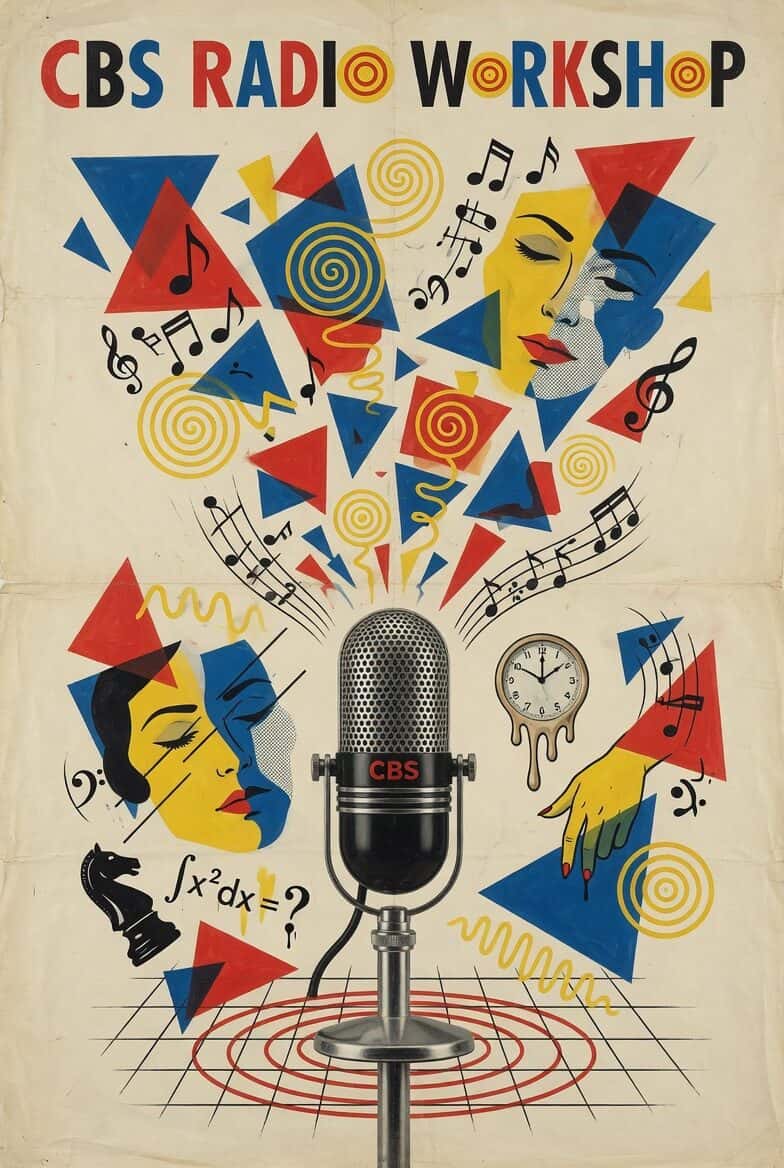
CBS Radio, a division of the Columbia Broadcasting System and the Columbia Broadcasting System. The Columbia Broadcasting System and its 217 affiliated stations present the premiere broadcast of the CBS Radio Workshop, radio's distinguished series dedicated to man's imagination, the theater of the mind. Tonight, part one of two half-hour programs devoted to one of the world's most shocking and famous novels, Aldous Huxley's terrifying forecast of the future, Brave New World. We are proud to have Mr. Huxley as narrator. He is the narrator for these broadcasts. Original music is composed and conducted by Bernard Herrmann.
This is Aldous Huxley, and these are the sounds of the Brave New World, of test tube and decanter, of hissing injectors and gurgling blood substitute. The year is AF 632, 632 years after Ford. We are inside the London Hatchery and Conditioning Center, and this is the fertilizing room. An enormous laboratory where the temperature is never allowed to fall below 98.6. And here comes the director of hatcheries and conditioning in person, bringing with him a group of young students.
Tomorrow you will be settling down to serious work. Today I just want to give you a general idea of things. These are the incubators, and here is the weak supply of ova, kept at blood heat. Come along, boys. Now here, we immerse the eggs into a warm bouillon containing free-swimming spermatozoa. Immersion continues until the eggs are all fertilized. Ah, and over here, here is where we bottle the alphas and betas. In short, gentlemen, the perfect process for manufacturing healthy babies. Are there any questions?
Sir, will you explain the Bokanovsky process?
I'm glad you asked that. Students, take this down. Bokanovsky's process, wherein olden times one egg made one embryo, which made one baby. Today we've improved on all that. Now the egg will bud. The egg will divide from eight to ninety-six buds, and every bud will grow into a perfectly formed embryo, and every embryo into a mature baby, making ninety-six human beings grow where only one grew before. Progress!
But what advantage is it, sir? I mean...
Oh, my good boy, can't you see? Where in olden times nature allowed us only to have twins, or perhaps triplets or so, today we can create scores, yes, scores of identical individuals. We can manufacture men and women in unison, and we can form batches, think of it. An entire factory staffed with the product of one single egg. Ninety-six identical individuals working ninety-six identical machines. At last, society really knows where it stands. Remember, it was our Ford who gave us the concept of the assembly line when he was on Earth many centuries ago. And now, boys, we will go up to the bottling room, where we shall see how we create each class of society, the alphas, betas, deltas, etc. Come with me.
Where's the Nina?
Oh, director.
Oh, charming, charming. What are you injecting into our embryos today, my dear? Typhoid antitoxins?
Yes, sir.
Are you busy this afternoon?
Oh, not after five, sir.
Good. Suppose we get together then on the roof.
That would be fine. I've admired you for some time, the Nina. I'm looking forward to a closer acquaintance.
Thank you, sir. And now, boys, we're off to the bottling room.
You are a lucky girl. The director of hatcheries and conditioning.
Oh, hello, Fanny.
Oh, you can trust the director to be the perfect gentleman. I saw him patch you. He wants me. You see? That shows what he stands for. The strictest conventionality. And it's about time you started belonging to someone else, my dear. But I like Henry Foster. We've only been with each other four months.
Four months? Well, what would the district world controller say? You know how he disapproves anything intense or long-drawn. And it isn't as though there were anything painful or disagreeable about being with one or two other men besides Henry. After all, everyone belongs to everyone else.
You're quite right, Fanny, as usual. Good girl. Fanny, do you know Bernard Marx?
Bernard Marx? Why not? Bernard's an alpha plus. Besides, he asked me to go to New Mexico, to the Savage Reservation with him.
But his reputation.
His reputation? They say... They say he doesn't like obstacle golf.
Oh, they say, they say. And that he spends most of his time by himself alone. They say somebody made a mistake when he was still in the bottle. Thought he was a gamma and put alcohol into his blood substitute. That's why he's so stunted.
Oh, what nonsense. Well, very well, Lenina. It's your life, my dear. But I think you're heading for trouble.
And here we have the bottling room. Little embryos carefully bottled, being rocked gently to and fro as they did in old times. In the olden days, when carried by their mothers. Now, boys, you must learn to distinguish between smut and science. I am going to use that word again. As scientists of tomorrow, you must learn to cope with it. Mother. There, that's better. As a matter of fact, there is an area in our world where humans are still viviparous, still give birth to their children. The Savage Reservation in New Mexico. I visited there once myself. Many years ago. Dreadful, filthy place. Naturally, civilization has improved on all that. Ah, it is here we control the embryo's growth. Each batch carefully regulated to produce the exact class of citizen we desire. And here is our Mr. Henry Foster in charge of bottling. Oh, Henry.
Yes, sir.
Please explain the process to the students.
Oh, delighted, sir. By the way, Henry, before you begin, I made a date with Lenina Crowne this afternoon.
Oh, really? I'm delighted, sir. Thank you, sir. Mr. Foster, I'm sure you'll enjoy belonging to her.
Good. Very pneumatic girl. Now, please proceed.
This way, gentlemen. Here, we advance the process. One by one, the eggs are transferred from their test tubes into these larger decanters and moved along to the labelers, carefully labeled as to heredity, date of fertilization, sex, name, serial number. Gentlemen, there are 88 cubic feet of card index in this room.
Amazing.
Now, here is where we actually begin. We predestine and condition. Nothing is so unstabilizing to society as unhappy people. We avoid all that by preconditioning our embryos. And now we are entering the heat conditioning room. Hot tunnels alternating with cool tunnels. Exposure to cold is accompanied by exposure to X-rays. By the time these babies are decanted, they have a perfect horror of cold. Thus, they are perfectly prepared to emigrate to the tropics to be miners and acetate silk spinners and steel workers. And that's it. That is the secret of happiness and virtue, liking what you have got to do. All conditioning aims at that, making people like their unescapable social destiny. Oh, ten to three boys, time to visit the nurseries.
And so the director continued on his tour. Meanwhile, in his rooms high above the city, Bernard Marx nervously paced the floor.
I'm taking Lenina Crowne in New Mexico with me, Helmholtz, to the Savage Reservation.
Well, it's about time.
What do you mean by that?
I'll be frank, Bernard. There's been a lot of talk about your behavior at the College of Emotional Engineering. Of course, I've been defending you.
And I'm supposed to be grateful? Because you're a successful feelies writer? Because you're tall, well-built, have all the girls you want?
Oh, Bernard. Now, you know how I feel. I want to write. I mean seriously, not slogans or feelies. I want to write something important. Lately, I've been...
Cutting out my committees. And my girls. The director called me in just the other day.
Are you in trouble, too?
There's a poem I wrote. Too emotional, he said. He gave me the lecture about being an alpha plus. About remembering to behave even as a little infant. I know. I tried to explain to Lenina. But she doesn't understand. Or won't understand. All those other men she belongs to. Henry Foster, Benito Hoover. They treat her like... Like a side of beef. It's disgusting.
It's socially proper. We share and we share alike, remember?
But I want her for myself, alone.
Bernard, you're my closest friend. Now, you listen to me. You can't win this way. Follow the rules. Play the game. Be happy.
The nursery was on the fifth floor. The sign over the door said, Neo-Pavlovian Conditioning Room. It was a large, bare room, very bright and sunny. Half a dozen nurses, trousered and jacketed in the regular clothes. They were wearing a white viscose linen uniform. They were engaged in setting out bowls of roses in a long row across the floor. The nurses stiffened to attention as the director of hatcheries and conditioning came in, followed by his students.
Set out the books.
In silence, the nurses obeyed his command. Between the rows of bowls, the books were duly set out.
Now bring in the children.
They hurried out of the room and returned in a moment, each pushing a kind of toy box. It was a tall, dumb waiter, laden on all its four wire-netted shelves with eight-month-old babies, all exactly alike a Bokanovsky group, and all, since their caste was Delta, dressed in khaki diapers.
Put them down on the floor. I'll turn them so they can see the flowers and books.
Turned, the babies at once fell silent, then began to crawl towards those clusters of sleek colours, those shapes so gay and brilliant. From the front door, ranks of the babies came little squeals of excitement, gurgles and twitterings of pleasure. The swiftest crawlers were already at their goal. Small hands reached out uncertainly, touched, grasped, unpetalling the roses, crumpling the illuminated pages of the books.
Watch carefully, students. All right, nurses, pull the lever. Rub in the lesson with a mild electric shock. All right, take them away, nurses. Observe. Henceforth, books and flowers will be associated in their minds with loud unpleasant noises and electric shock, and after 200 repetitions of the same or a similar lesson, will be wedded forever. What man has joined, nature is powerless to put asunder. They'll be safe from books and botany all their lives.
But, sir, since these are lower caste children anyway and will never read, why botany? Why bother to condition them against flowers?
Simple economics. If gammas, deltas, or even epsilons like flowers and nature, soon you'd see them wasting their time visiting the countryside. And of what economic use is that? A love of nature keeps no factories busy. It was decided to abolish it, at least among the lower classes. Any further questions?
Sir, would you tell us about sleep teaching?
I'm glad you asked that. The most ingenious development of all, sleep teaching, is given to all our children as they are taught. They grow to maturity. A little voice murmurs slogans in their ear all the night long while they sleep. Of course, it's useless for teaching, but as a method for giving post-hypnotic suggestions, it is invaluable. It's what conditions our minds to love our future role in life.
Now, boys, tell me some of the lessons we've all learned through sleep teaching.
A gram is better than a damn.
A good example. We have learned to take a gram of soma whenever we feel out of sorts. Euphoric, narcotic, pleasantly hallucinant. It transports our minds into a beautiful sleep filled with wonderful images. It gives a soma holiday, thus preventing unnecessary impulses such as anger, jealousy, envy, anxiety. Next.
Ending is better than mending.
Good. It's better to throw away something than to repair it. New clothing, new possessions keep our factories humming and make us happier. Next.
I'm glad I'm not a gamma.
Ah, yes. We're all taught in our sleep to enjoy our own caste, whatever it may be. Gammas are taught to think, I'm glad I'm not an epsilon. Betas learn to be glad they're not deltas or gammas. And glad they're not alphas, because we alphas sometimes have to use our minds, and that's very painful. Very good. Very good indeed.
Well, students, I think our tour is over for today. I'm sure most of you have dates with pneumatic young ladies. Some, of course. Most will be wanting to get in a game of obstacle golf. But before we finish, I'd like to add a few footnotes to the things you've seen today. Today, we have a controlled society, a happy society. We have stability. Ah, there was a time when these things did not exist.
Didn't people grow old and feeble in those days, sir?
Indeed they did. Old men in the bad old days used to renounce, retire, take to religion, spend their time reading, thinking. Thinking! Now, such is progress. At 60, we have the taste and the powers of a 17-year-old. The old men have no time, no leisure from pleasure, not a moment to sit down and think. They're much too busy scampering from feely to feely, from girl to pneumatic girl. Fortunate boys, no pains have been spared to make your lives emotionally easy, to preserve you as far as possible from having emotions at all. Ford's in his flivver. All's well with the world. Ford's in his flivver. All's well with the world.
And solemnly and devoutly, they made the sign of the T and hurried off to join their fellow citizens at play.
In spite of Fanny's dire warnings, Lenina Crowne made a date that evening with the eccentric Mr. Marx, partly to show Fanny her courage and partly because she was curious. When they were safely in their helicopter and climbing above the city, she turned to him.
Shall we play escalator squash or go to the feelies?
Escalator squash is a waste of time.
But what else is time for?
All right, then, let's go to the feelies. You know, they're showing love on a bearskin rug and everyone says it's terribly exciting. You can actually feel...
Lenina, please, couldn't we just go for a walk and be alone together?
But, Bernard, we'll be alone all night.
Well, I meant alone for talking.
Talking? Well, what about?
Talking? Oh, you're beginning to feel nasty, I can tell. Take a soma, Bernard.
I'd rather be myself. Myself and nasty, not somebody else, however jolly.
A gram in time saves nine.
Oh, for Ford's sake, be quiet.
Lenina, don't you ever want to be just you? Not enslaved by your own conditioning to be free?
But I am free. I'm free to have the most wonderful time. Everybody's happy nowadays.
But wouldn't you like to be free to be happy in your own way and not somebody else?
I simply don't understand you. Bernard, do you really like me? Everyone says I'm awfully pneumatic.
Eventually, Bernard took Lenina to the Westminster Abbey Cabaret, where Calvin Stopes and his 16 saxophonists were playing. Also featured was London's finest scent and colour organ and all the latest synthetic music. With the aid of four soma tablets, Bernard managed to spend a successful evening with the girl. And the next morning, he agreed to apply at once for a permit to visit the Savage Reservation.
He was quite nervous as he stood before the large desk of the Director of Hatcheries and Conditioning.
Ah, going to take Lenina Crowne, I see.
Yes, sir.
Very pneumatic.
Yes, sir.
New Mexico Reservation. How long ago was it? Let me see. 20, 25 years? Hmm. I must have been your age then.
Sir?
The same idea as you. Wanted to have a look at the savages. Got a permit for New Mexico and went there for my summer holiday with my girl of the moment. She was a beta minus, I think. Oh, yes. She had yellow hair and was especially pneumatic. Well, it was terrible. We rode about on horses and all that, and the last day of our stay, she got lost. Somewhere in those horrid mountains. Lost. We never did find her, poor girl. Must have fallen in some crevice. Yes, we searched for days, but no luck. Oh, miserable trip.
Oh, you must have had a terrible shock.
What? Oh, don't imagine there was anything unethical about it. Nothing emotional or long-drawn. It was all perfectly healthy and normal.
I'm sure it was, sir.
What's that? Oh. Mr. Marx, I should like to take this opportunity of saying I'm not at all pleased with the reports I receive of your behavior outside working hours. Alphas are so conditioned that they do not have to be infantile in their emotional behavior, but that is all the more reason for their making a special effort to conform. And so, Mr. Marx, I give you fair warning.
Yes, sir.
If ever I again hear of any lapse from a proper standard of infantile decorum, I shall ask for your transference to a sub-center, preferably to Iceland. Good morning.
The journey was quite uneventful. The Blue Pacific rocket lost four minutes in a tornado over Texas, but was able to land at Santa Fe less than 40 seconds behind schedule. Lenina and Bernard slept that night at Santa Fe, and Lenina was very happy.
Imagine 60 escalator squash racket courts in the hotel, and obstacle and electromagnetic golf, too. Oh, Bernard, it's simply too lovely.
There will be no scent organs, television, or even hot water once we get out on the reservation.
I can stand it. You'll see. Only progress is lovely, isn't it?
They took a rocket ship into the interior, and from there they traveled on horseback. And all Bernard could think about was Iceland and how cold and barren it would be. The director's warning had made him even quieter and more sullen than usual. And then, that evening, they reached their destination. Before them was the village of Malpais, situated on a mesa. Adobe hovels growing out of the stony ground, dust and squalor, and the smell of wood smoke.
What an awful place. I don't like it. Look, who's that man coming toward us?
He's to be our guide.
I'm frightened, Bernard.
Quiet. We shouldn't have come.
Oh, good morrow. You're civilized, aren't you? You come from outside, from the other place?
My name is Bernard Marx. This is Lenina Crowne.
My name is John. Come with me.
He speaks English. That's strange. Probably trained as a guide. Where is he leading us?
To that hut, I believe. There seems to be... There seems to be some sort of activity over there.
Porgy, porgy. Why, it's like our lower caste communities sing. Only look, now they're beating themselves with whips.
Oh, no, Bernard. It's got something to do with their religion. What a wonderful intensity of feeling it must generate. I often think one may have missed something in not having passions like that.
Nonsense.
Bernard, what's wrong with that man?
Where? Oh, he's just old, that's all.
Old? But we don't look like that when we're old. He's so wrinkled, so... Oh, it's horrible.
That's because we age all at once. We stay 17 until we're 60 or so, and then... And then we die, and they burn our bodies and recover the phosphorus for the good of the world's state, just as it should be. But this... What is it? That... that woman!
Oh, Bernard, no! Take me away! Take me away!
She's only nursing her baby, Lenina. That's her child. She's the mother.
Bernard, how can you be so... Bernard, how can you be so vulgar? I think I'll be sick. Please, Bernard, anywhere. Anywhere!
Is something wrong?
I think we'd better take Lenina inside. Over here. Follow me.
My soma. I'm out of soma. Bernard!
I'm sorry, Lenina. I didn't bring any.
Here. Inside. This is my home. This is my home. You are welcome to remain here.
John? John?
Yes, Mother?
Mother! These are people from the outside, Mother. They have come to see the reservation.
From the other place?
From the other place.
Don't come near me. But don't you see I'm from there, too? I'm civilized. I don't belong here. It's all a terrible mistake. This is my mother, Linda.
Were you born here?
No! No! I tell you, I was decanted like normal people. Oh, thank Ford someone has come. At last, thank Ford.
Bernard, Bernard, please keep her away.
Could you tell us about yourself, please?
Well, I came here 25 years ago with a man. His name was Thomas. We went riding together on horses. There was a terrible storm. I got lost, lost in this horrible place. It was the last day of our stay. He left me here.
Lenina?
Yes?
You will be interested to know that our director of hatcheries and conditioning is named Thomas and that he came here 25 years ago.
Oh, no, no. It can't be.
But it is. He told me so himself. What a discovery. This boy, this boy is our director's son. Our director is a father.
Oh, it's too horrible.
Mother, what is he saying?
Iceland. Iceland, indeed. Bernard, stop it. We'll see who tells who where to go now.
Uh, John.
Yes, sir?
How would you and your mother like to return to civilization?
Do you mean it? Oh, please, do you? Listen, they're crazy here. I was a beta minus. I always worked in the fertilizing room. I was a good worker. But how can I tell them? They don't understand. They mend things. They don't know what a helicopter is or soma. They have babies like dogs. Oh, it's too revolting. Oh, thank Ford. If it hadn't been for my son, for John. What a comfort he has been to me.
Your son? How can you? You were beta minus.
I know, I know. But he's been a comfort to me just the same. If only I'd had soma. Oh, do you mean it? Will you take us back to civilization?
Of course. We'll leave tomorrow. You and your son. Back to civilization.
And Bernard was as good as his word. That very night, he and John and his mother and Lenina took the Blue Pacific rocket to London. For Lenina, it was a happy trip since she had taken four somas the minute they got back to the hotel. For John, it was a voyage of discovery. Poor Linda, his mother, could only weep for joy. But for Bernard, it was a moment of peace. It was a moment of triumph. Triumph such as he had never known before.
Brave New World, part one, by Aldous Huxley. A startling, shocking account of what can happen to our civilization six hundred years in the future. And more importantly, a warning to all of us against the destruction of moral standards, family life, and the soul of man. Join us next week when we will continue with part two of Aldous Huxley's terrifying forecast of the future, of what could become the Brave New World.
Presented on the CBS Radio Workshop. The CBS Radio Workshop is produced and directed by William Froug. Brave New World was adapted for radio by Mr. Froug. Featured in the cast were Joseph Kearns, Bill Idelson, Gloria Henry, Charlotte Lawrence, Byron Kane, Sam Edwards, Jack Kruschen, Vic Perrin, and Lurene Tuttle. Original music composed and conducted by Bernard Herrmann. This is the CBS Radio Network.