
The written record
Read the transcript
Read along with the recording · About 19 min to read
<!-- kimi_cleaned -->
Ladies and gentlemen, the distinguished author, Mr. Aldous Huxley. Brave New World is a study of the future as it may be, unless we are extremely careful. It depicts a society in which man has replaced nature by science, morality by drugs, individuality by total conformity. It is a hideous prospect, yet we seem determined to follow this path of self-destruction. But Brave New World need not be our future. The choice, after all, is always in our own hands.
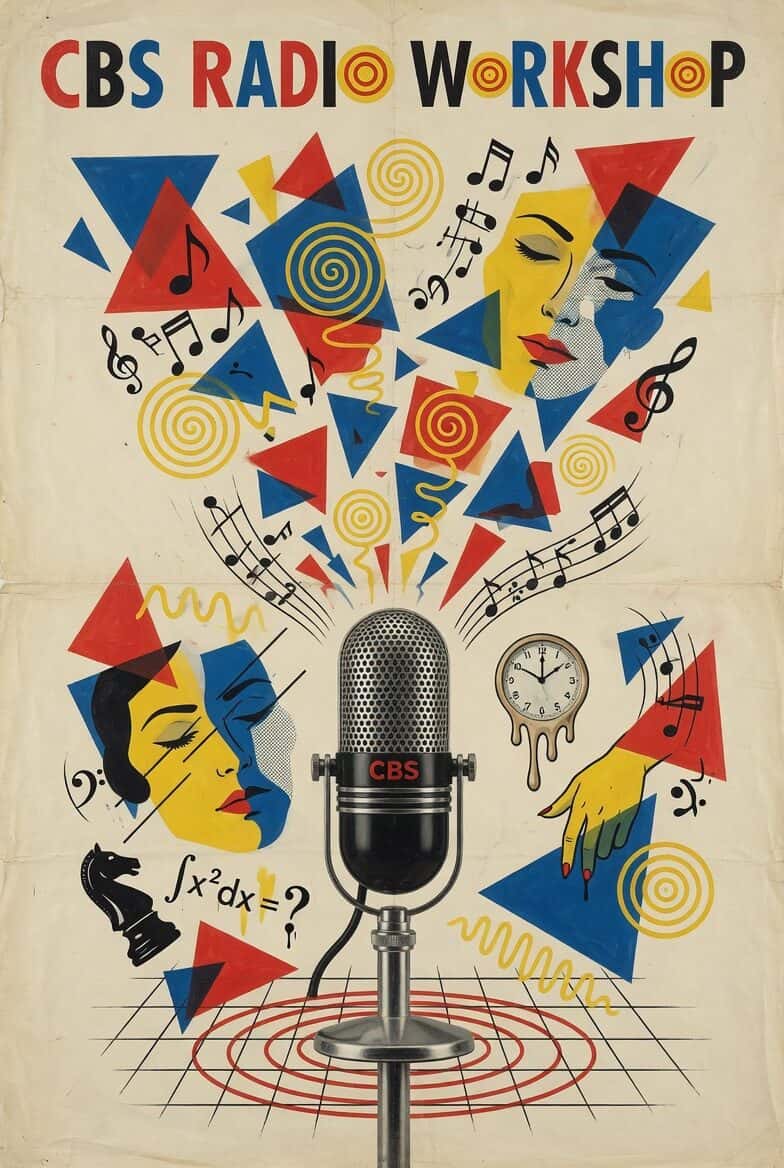
CBS Radio, a division of the Columbia Broadcasting System, and its 217 affiliated stations present the CBS Radio Workshop. Radio's distinguished series dedicated to man's imagination, the theater of the mind. Tonight. Part two of two half-hour programs devoted to one of the world's most shocking and famous novels. Aldous Huxley's terrifying forecast of the future, Brave New World. And we are proud to once again have Mr. Huxley as our narrator. Original music is composed and conducted by Bernard Herrmann.
This is Aldous Huxley. In the garden outside the London Hatchery and Conditioning Center, it was playtime. Naked in the warm June sunshine. Six or seven hundred little boys and girls were running with shrill yells over the lawns or playing games or squatting silently in twos and threes among the flowering shrubs. And strolling across the smooth turf came the director of hatcheries and conditioning, followed eagerly by a group of new students.
And here we have playtime for our little tots. Notice the games, all carefully constructed to use as many mechanical devices as possible. In olden times, children... ...used to play simple games using only a ball and a bat. Madness. Nothing was added to increase consumption. Then came our Ford. He taught us the principle of mass production in the assembly line many centuries ago and changed all that.
Good morning, director.
Sir, what an unexpected pleasure. Boys, this is the resident controller for Western Europe. This is his Fordship, Mustafa Mond. Boys?
Good morning, sir.
Good morning, sir. I was just showing the students the children.
Lovely children, busy as bees at their unrestricted play. Controller, if you have the time, I wonder if you might tell the students something about the bad old days.
I might. Where are you taking them?
To the hatchery and conditioning center to see the manufacturing of the babies.
Very well. I'll walk along with you. Yes, in the old days, children lived in a place called home. A rabbit hole with suffocating intimacies. Maniacally, the mother... Please don't be shocked at that word. The mother brooded. She brooded over her children. Her children. Our Ford, or our Freud, as for some inscrutable reason he chose to call himself whenever he spoke of psychological matters, our Freud was the first to reveal the appalling dangers of family life. Unpleasant as they may seem, students, these are facts. People used to be viviparous. Gave birth to their children. What were the consequences? A world dominated? By mothers and fathers was a world full of every kind of perversion, from sadism to chastity. There were also husbands, wives, and lovers. Now everyone belongs to everyone else. Thank Ford for progress.
Thank Ford.
Actually, we still preserve a few outmoded ethics of pre-stable societies in our savage reservations. Did you ever visit a reservation, director?
Yes, I once went to look at the savages in New Mexico. Twenty-five years ago, mothers, fathers, marriage. Oh, very repulsive. Yes. Well, here we are. I'll say goodbye.
Goodbye, controller, and thank you.
Thank you, sir. You're welcome. And now, boys, if you'll follow me inside the hatchery. And here we are, a hive of activity. Alpha superintending, betas doing the skilled work, gammas in green, busy at routine jobs, and deltas in khaki, incapable of doing anything except sweeping the floor. Every member of society, perfectly content to belong to his predestined caste. Except for a few criminal exceptions, which reminds me, one of those criminal exceptions is meeting us here at 11. An alpha plus, no less. Mr. Bernard Marx.
What has he done, sir?
What has he done? He refuses to participate in mechanical sports. He is lacking. He... Ah, here he comes now.
Good morning, director.
Mr. Marx. You will need a crown returned from the savage reservation. Last night, I understand.
Yes, sir. We visited some of the places you told me about last week, director. In fact, we...
Silence! Your attention, please. Everyone step this way. If I have interrupted your labors, it is because a painful duty constrains me. This man who stands before you, this alpha plus, the highest level of society, has grossly betrayed the trust imposed in him by his heretical views on sports and SOMA, by his... scandalous refusal to be promiscuous. He has proved himself an enemy of society, a subverter, ladies and gentlemen, of all order and stability, a conspirator against civilization itself. For this reason, I am ordering his immediate transference to a sub-center of the lowest order. In Iceland, he will have small opportunity to lead others astray by his unfordly example. Bernard Marx, can you show any reason why I should not now execute the judgment passed upon me?
Yes, I can.
What did you say?
You told me you visited the Savage Reservation 25 years ago, Director, with a young Beta Minus, I believe. You told me she was lost during a storm and that you returned without her. I thought perhaps you'd like to see her again.
Linda? Thomas! Thomas, it's me! Don't you remember?
You're Linda!
Oh, I knew I'd recognize you, Thomas. You look just the same. No one ages here. Thomas, look at me. I'm Linda, remember? Hug me, hold me.
What is the meaning of this? Who is this hag?
Thomas! Oh, Thomas, it's Linda. Linda, you're Beta Minus. John, look, it's him. It's your father.
Father. Father.
What's the meaning of this disgusting joke? Who is this savage and this dreadful woman? Take them away!
It isn't a joke. It's absolutely true. I'm his mother and you're the father.
Father. Father, it's me, John. I'm your son.
And now, now who is guilty of antisocial behavior, director?
Oh, no. No, no, no, no, no, no!
A father as director of hatcheries. It was out of the question. The controller asked for his resignation. And all upper caste London was wild to see the savage and his mother. Bernard Marx became a hero and even Lenina Crown had her share of reflected glory.
Good morning, Lenina.
Oh, good morning, Fanny. Well, you certainly seem pleased with yourself.
Yes, I am pleased. Bernard called up half an hour ago. He has to go to a party at the controller's and he asked me if I'd take the savage to the feelies this evening.
Oh, lucky girl. What's he like, Lenina? I've heard he's terribly good looking.
Oh, he is. But so very odd.
In what way?
Well, the day Bernard and I left the reservation, the savage came into my room. I'd taken a soma, so I didn't notice him until suddenly I awakened and there he was again. He was bending over me.
What happened?
Well, naturally, I assumed something was going to happen, but instead of that, he just ran out of the room.
Well, how odd. What a terribly ungentlemanly thing to do. Doesn't he like you?
Oh, I'm sure he does, so I can't make it out. And please don't tell this to anyone, Fanny. It upsets me because I like him. I mean, I really like him.
Oh, Lenina.
I know it's immoral, but I just can't help myself. I do like him.
The days passed, success went fizzily to Bernard's head. His diffidence turned to bumptiousness, his non-conformity was forgotten, and he became completely orthodox. The resident world controller appointed him official escort for the savage and asked him to make regular reports on the young man's reactions to civilization. This Bernard did assiduously.
Today I sent the savage to the feelies with Lenina Crown. The feature was three weeks and a half ago. A helicopter. Instead of holding the knobs on the chair arms, thus enabling him to experience the sensations of the lovers on the screen, the savage refused to participate. Lenina tells me he called the film vulgar and indecent. The savage refuses to take Soma and seems most distressed because the woman, Linda, his M-O-T-H-E-R, remains permanently on summer holiday. In spite of her senility and the extreme repulsiveness of her appearance, the savage frequently goes to see her and appears much attached to her.
What do you mean you refuse to come down to dinner?
Bernard, I'm sick. I've eaten civilization and I'm sick.
Do you realize that I've invited the most important people in London tonight? The Ford Chief Justice is here. The arched community songster of Canterbury has flown in just to meet you.
You've changed, Bernard. You used to feel the way I do about things. I talked to Helmholtz-Watson. He says you've changed, too.
I haven't. Listen, if you don't come downstairs for my dinner party, I'll be the laughingstock of London.
I'll come. Just let me read this to you first. One day many years ago, I found this book in my mother's room. One of the Indians had found it in a cave. It must be hundreds of years old.
Hmm. It's called The Complete Works of Wanderlust. William Shakespeare.
Oh, I've heard of him. We don't allow it. Smut.
But he says all the things I feel about Lenina. Listen to this. Is there no pity sitting in the clouds that sees into the bottom of my grief? Oh, sweet my mother, cast me not away. Delay this marriage for a month, a week.
Marriage? Oh, Ford, no. Bernard. Oh, marriage. That's too good, really. Bernard, stop it. And mother. Oh, sweet my mother. Oh, he's positively vulgar. You stop it. Wait till I tell Helmholtz about this.
Stop it or I'll hit you.
Oh, come now. Where's your sense of humor?
Bernard. Can't you see how funny it is?
Get out. I said leave me alone.
I'm leaving, John. I'm leaving.
How beauteous mankind is. Oh, brave new world that has such people. Pull in it.
The next morning, a pneumatic young girl, crisply clad in a beta minus viscose linen suit, stood outside the door of the savage's apartment and somewhat nervously rang the buzzer.
Lenina. You don't seem very glad to see me, John.
Not glad. Oh, if you only knew.
May I come in, then?
May I kiss your hand, Lenina?
My hand?
Admired, Lenina. Indeed, I am. Indeed, the top of admiration, worth what's dearest in the world. I wanted to do something first to show I was worthy of you.
What are you talking about?
Lenina, tell me something. I'll do anything you tell me, anything at all. I'd sweep the floor if you wanted.
But we've got vacuum cleaners here. It isn't necessary.
No, of course it isn't necessary. But some kinds of baseness are nobly undergone. I'd like to undergo something noble just to show you. To show you how much I love you, Lenina.
Do you mean it, John?
Yes, but I hadn't meant to say it. Not until I... Listen, Lenina, on the reservation, people get married.
Get what?
For always. They make a promise to live together for always.
What a disgusting idea. Answer me this question, John. Do you really like me or don't you?
I love you more than anything in the world.
Well, then, why? Why? Why on earth didn't you say so? Come here to me, John. Hug me.
Oh, but, Lenina...
Hug me till you drug me, honey. Kiss me till I'm in a coma.
Lenina, what are you doing? Now, now, get away from me. Don't come near me.
Hug me, honey.
You, you strumpet. A dram is better than a dance. Get out.
But don't you want me?
Get out of my sight.
Oh, John.
Before I kill you.
Well, yeah, he's gone... Oh, the weed. Who art so lovely, fair, and smelts so sweet that the sense aches at thee. Impudent strumpet, impudent strumpet, impudent strumpet.
Hello? Yes, this is Mr. Savage. Who's ill? Linda. My mother dying. Yes, yes, I'll come at once.
Welcome to the Park Lane Hospital for the Dying. You've come to see someone in the galloping senility ward?
Yes, my mother.
Oh, how vulgar.
You know who I mean. Linda.
Oh, oh, yes. Room 43, bed 16. She'll be dying any minute now. This way, please.
Is there any hope?
Well, of course not. Or else she wouldn't have been sent here. Through these doors. What are these children doing here?
Death conditioning, of course. It starts at 18 months. Every tot spends two mornings a week in a hospital for the dying. All the best toys are kept here, and they get a lot of money. They get chocolate ice cream on death days. They learn to take dying as a matter of course. This way. Oh, here we are. Well, I must go. I've got my batch of children coming. Time for their chocolate ice cream.
Linda. Linda, it's John. Your eyes are open, but you don't know me, do you? It's John, your son. Linda. Linda, don't you know me? Hug me till you drug me, honey. Kiss me till I'm in a coma. Linda. Mother.
The menial staff of the Park Lane Hospital for the Dying consisted of 162 Deltas, 84 red-headed female twins, and 78 identical mongoloid male twins. At six, when their working day was over, the two groups assembled in the vestibule of the hospital and were served their daily soma ration. It was into this crowd that the savage walked, so overcome with his grief and his remorse that he did not realise he was shouldering his way into the gathering throng.
All right, here it is, soma distribution. In good order, please. Oh, hurry up there. Stand in line for your soma.
Linda. Linda died because of this. Oh, now, don't grab. There's enough for everybody. One gram for an evening's delight, two for a trip to the gorgeous East, and four for a weekend in paradise. How beautiful. Beauteous mankind is. How brave new world that has such people in it. Stop! Stop! Ford, a savage. Listen, I beg you, lend me your ears. Don't take that horrible stuff. It's poison.
Mr. Savage, please. The people are waiting.
You're slaves, all of you. Don't you want to be men? Don't you want freedom?
Freedom? Ford, almighty, call the police.
From somewhere, somewhere behind the milling angry crowd, Bernard Marx saw the savage. He and his friend, Helmholtz Watson, had been searching for John. Now they hurried forward.
Helmholtz, he's mad. They'll lynch him. Oh, Ford, help us.
Ford, help those who help themselves, Bernard. Come on.
Where are you going? Come back.
It's a fight, a real fight. I've been waiting all my life for this. Man, at last. I'll make you free, whether you want to be or not. Give me those soma boxes.
Sir, Mr. Savage, no. Stop it.
Helmholtz, join me.
Yes. Throw the poison kills away.
By all means, throw them away. Stop it. Freedom. Be men and be free. Over here, officers. This way. Stand up as men. Win your freedom. Soma spray. Win your freedom. Take him to the Resident Controller's office.
All right. All right. It's all over. We're all happy now. We're so happy. We all love each other, don't we? Oh, yes, we all love each other. Line up for your soma.
So you don't much like civilization, Mr. Savage.
No, I don't.
John, you're talking to the Resident Controller.
We don't need your comments, Mr. Marx.
I think civilization is horrible.
And yet people are happy. They get what they want and they never want what they can't get. They're well. They're safe. They're never ill. They're not afraid of death. They're blissfully ignorant of passion and old age. They're plagued with no mother or father. They've got no wives or children to feel strongly about. They're so conditioned that they practically can't help behaving as they ought to behave. And you ask them to chuck this all away for liberty? My good boy.
All the same, it seems quite horrible to me.
Of course it does. Actual happiness always looks pretty squalid in comparison with the overcompensations for misery. And being contented has none of the glamour of a good fight against misfortune. Happiness is never grand.
They call this happiness? Working at an embryo assembly line manufacturing babies?
Science, my boy. Besides, they like it.
Well, Mr. Marx, the time has come. You are being sent to an island.
To an island? Oh, please, uh, don't send me to Iceland. I promise I'll do what I should. I'll conform to the rules.
One would think he was going to have his throat cut. Whereas, if he had the smallest sense, he'd understand his punishment is really a reward. He'll be sent to an island where he'll meet the most interesting set of men and women in the world. All the people who weren't satisfied with orthodoxy. Everyone in a word who's anyone.
Then why didn't you go to an island yourself?
Because. Because, finally, I preferred this. Sometimes I regret it. Happiness is a hard master, particularly other people's happiness.
Well, gentlemen, there are many islands available. Which climate do you choose, Mr. Watson?
Well, I should like a thoroughly bad climate. I think I'd write better if I had to contend with difficulties.
How about the Falkland Islands?
That would be fine.
Good. You may leave now. You too, Mr. Marx. Goodbye, Helmholtz. Goodbye, Bernard. Goodbye, John. Goodbye, John.
One more question.
Of course.
Where is God in this scheme of yours? It's a subject that has always had a great interest for me. You've never read this, of course, the Holy Bible, New and Old Testaments. We've got quite a few revolting old books like that here. But if you know about God, why don't you tell the people?
Well, this book is old. It's about God hundreds of years ago, not God now.
But God... God doesn't change.
Men do, though.
No, my friend. Call it the fault of civilization. God isn't compatible with machinery and scientific medicine and universal happiness.
But when you're alone, it's natural to believe in God. When you're quite alone in the night thinking about death...
But people are never alone now. We make them hate solitude. And we arrange their lives so that it's almost impossible... for them ever to have it. No solitude. No God.
Is that why there's no self-denial here? No God? No reason for it?
Of course. Industry and prosperity are only possible when there is no self-denial. If the wheels would stop turning.
But God's the reason for everything noble and fine and heroic.
My dear young friend, civilization has absolutely no need for nobility or heroism. You're conditioned so that you can't help doing what you ought to do. And what you ought to do is, on the whole, so pleasant. So many of the natural impulses are allowed free play... that there really aren't any temptations to resist. Anybody can be virtuous now. No temptations, no inconveniences.
But I like the inconveniences.
We don't. We prefer to do things comfortably.
But I don't want... I want comfort. I want God. I want poetry. I want real danger. I want freedom. I want goodness. I want sin.
In fact, you're claiming the right to be unhappy.
All right. I'm claiming the right to be unhappy. Not to mention the right to grow old and ugly and impotent. The right to have cancer. The right to have too little to eat. The right to live in constant apprehension of what may happen tomorrow. The right to be tortured by unspeakable pains of every kind. I claim them all.
You're welcome.
Bernard and Helmholtz left for their islands. But the savage was not allowed to go with them. The Controller wished to continue the experiment. Three weeks later, the savage ran away. After some days of wandering, he took refuge in an abandoned... But his desire for solitude was not to be fulfilled. His hiding place was discovered. There were articles in the papers. Sightseers came by the thousands. One Sunday, Lenina Crowne came for a picnic with three of her latest boyfriends. The day after her visit, two young reporters came to call, hoping for an exclusive interview.
The door of the lighthouse was ajar. They pushed it open and walked into a shuttered twilight. Through an archway on the further side of the room, they could see the bottom of the staircase that led up to the higher floors. Just under the crown of the arch dangled a pair of feet. They called. No one answered. They saw him.
At last, the savage had found solitude. He was alone, quite alone.
The end of the world concludes Brave New World by Aldous Huxley. We wish to thank Mr. Huxley for appearing on these broadcasts as our narrator. And we would also like to thank you, our listeners, for your enthusiastic response to this new series. This is William Conrad inviting you to join us again next week when we present George Stewart's dramatic account of one of nature's most terrifying phenomena, Storm. The following week, listeners Dr. Frank C. Baxter and his team will be joined by Mr. Huxley, William Shakespeare, presented on the CBS Radio Workshop.
The CBS Radio Workshop is produced and directed by William Froug. Brave New World was adapted for radio by Mr. Froug. Featured in the cast were Joseph Kearns, Herb Butterfield, Bill Idelson, Gloria Henry, Charlotte Lawrence, Parley Baer, Doris Singleton, Jack Kruschen, Vic Perrin, and Lurene Tuttle. Original music composed by and conducted by Bernard Herrmann. America listens most to the CBS Radio Network.