
The written record
Read the transcript
Read along with the recording · About 23 min to read
<!-- kimi_cleaned -->
A baby cries. With an inborn, brass-bound conviction that he's the hub of the universe, that's Johnny, as he arrives on this mortal stage. That's how he always arrived, down through the ages. The only thing that changes is what we do about him.
Well, what? What do I do? What does he want? What's wrong? What do I do? Pick him up. Let him lie. Feed him. Bobble him. Pick him up. Let him lie. Feed him. Bobble him.
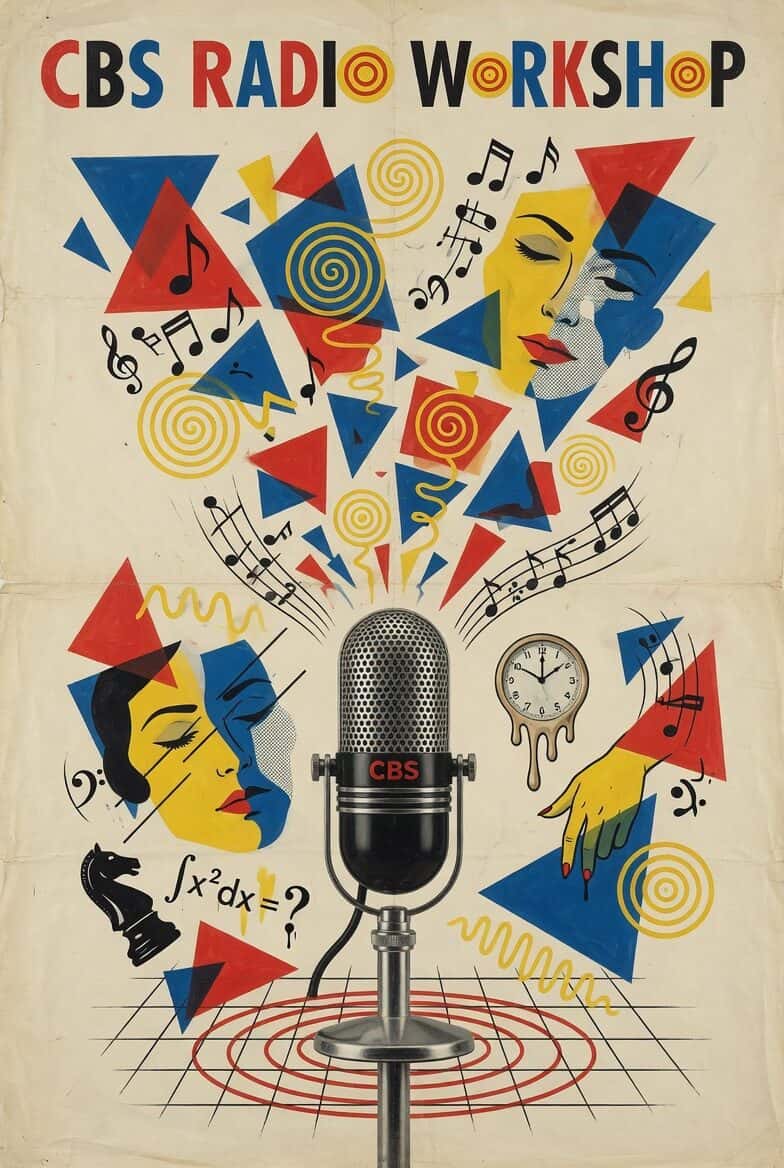
The CBS Radio Workshop, dedicated to man's imagination, the theater of the mind. Tonight, only Johnny knows. An appraisal of the three ages of child raising. Written by a mother named Johanna Johnston, and narrated by Joseph Julian.
There's quite a bit of advice being offered these days on how to raise Johnny. In fact, the racket is deafening. Tonight, we add to the racket with a calm, cool review of the three ages of child raising. The various ways Johnny has been raised in the past, and what that led to, together with an appraisal of what's being done now. But of course, where that may lead, only Johnny knows.
Actually, the story of Johnny down through the ages could be told in terms of Johnny crying, I want, and the varying responses of his parents to this cry. Sometimes he gets what he wants, sometimes he doesn't. And the trouble with children today is that they get too much of what they want.
I beg your pardon, who are you?
I'm a disgusted observer.
Oh, yes, of course. I've read many of your letters to the editor in various newspapers.
Children of today think all they have to do is want something, and it's theirs by divine right. No one of the younger generation is going to the dogs. You know, of course, that certain observers from the older generation have been saying that about the upcoming generation since time began.
I don't care if they have or not. Look at the facts today. Children are catered to from the moment they're born. Was it that way? Was it that way for our forefathers? Were the men who founded our country brought up that way?
Very nicely timed. We're just going to take a brief look at the situation as it was 200 years or so ago, when our forefathers were being raised. Let's take Johnny's prime desire down through the ages, the desire for food, which he made known in the customary way 200 years ago.
Mother was right at hand, baking, brewing, or making candles, because Johnny's cradle was right in the kitchen, the chief room in the farmhouse. Granny wasn't. She wasn't far away either, just over by the fire, spinning.
Sounds like the baby's hungry again, Mariah.
Oh, what a pig he is. Not half an hour ago I was feeding him, and now he's hungry again.
Never mind then, Johnny. If you're wanting to eat again, you shall have what you want, my lamb. Here we go. There we are. That's right.
There wasn't any hesitation back then about giving Johnny what he wanted when he set up that well-known hunger cry. And that's just as it should be, exactly.
Well, now, another voice, and this one belongs to...
A modern mother. And it's obvious your disgusted observer doesn't know that the modern way of feeding Johnny is no different at all from the old way. We just call it the self-demand system today.
I see. I'm glad there's something about the old ways that appeals to a modern mother. The pity it doesn't go farther. They may have spoiled Johnny a little back then when he was a baby, but it didn't go on and on as it does today.
It isn't a question of spoiling him.
All right, now, just a minute. Let's see what did happen back then. We're looking in on Johnny now as he was 200 years ago, during the early era of child raising in this country. Those were the days when life was centered mainly on the farm or a small shop in the village. Our Johnny, back in 1750, lives on a farm. He's two now, proud of his first steps. This morning, he's been out by the barn where Grandpa's mending harness and keeping an eye on him. Towards noon, he begins to be ready.
Hey, not right yet, Johnny. Suppose you had me. Hey, wait up there. You ain't going to the house yet a while. Stop it. You want a good cuffing? Now, wait a bit. There's a mite of rum left in the tankard, and here it is on the cross piece. Here. Have a swig of rum, Johnny.
Rum? Rum? Offering the child rum? I'd like a little explanation myself.
Well, everybody drank in colonial America. Rum, brandy, some kind of spirits. Even the...
Puritans.
As far as Johnny was concerned, after he'd had it a few times to quiet him, he often set up a real self-demand for it.
But that's outrageous, giving a child strong spirits.
Well, life was hard back in those days, and liquor helped. Nobody knew any reason Johnny shouldn't have its benefits, too. But let's get back to Johnny. There was a good reason why Johnny couldn't have Mama's attention that morning. Before too long, Granny came out with the news that the Lord had safely delivered Johnny's mother of a girl child. Johnny wasn't much impressed. Until later, when Granny carried him back into the big kitchen.
Hey, Johnny, it's Baby's sister's bed now.
No, my bed.
Oh, shush, you'll wake the baby, Johnny. You will be sleeping in the trundle bed now, big boy that you are. Come away from the cradle now.
No, no, no, no.
Shush, the baby. Oh, dear, the little one's waking. Stop it, Johnny.
Oh, Mother, do not be harsh. He doesn't realize.
It is time he was learning, then. It may be hard finding out he is Cock-a-doodle-do no longer, but it is the way of the world, and that's that. Leave him to me, daughter.
And that was how they apprised Johnny of the fact that he wasn't the hub of the universe back in those early days of child raising. I am, he cried, I want. You're not, they said, and you can't have, and that's that.
Fine. Perfect. If there was a little more of that today, Johnny would be better off.
Better off? Would you feel better off if you walked into your office one morning and found yourself fired? No explanation, no warning, nothing?
Well, no, but...
The thing is, they loved Johnny back then. They wanted to do what was best for him, just as we do now. Why didn't they cushion the blow for him?
The Lord has ordained that this world be a veil of trial and testing. Pain and hardship are part of his plan. Above all else, my soul, learn obedience to God's will.
A good many terrible things happened in those days. Plague, pestilence, and famine swept the world without anyone knowing why or what to do. Johnny had to learn to accept the things that happened as a result of God's will. They were training him to resignation.
Oh, dear, it's so sad.
Well, let's see if there weren't compensations for poor little pushed-aside Johnny in this early era of child raising.
So, Johnny, a big boy like you mustn't stand idle. While all else are busy, come help Danny grind the corn. Come, Johnny, fetch the basket to Mother, and then you can start untangling the flax for spinning. You can work the churn for a while now, Johnny, while Granny gets on with the candle-making.
Those were the days when a dog-eared almanac hung on a nail on a wall. Industry makes all things easy, poor Richard said. There are no gains without pains. And the used key is always bright. Well, there was plenty to keep Johnny bright. Soon he was old enough to go out in the field and play. He went to the fields with his father.
So, Johnny, like this. The corn down in the hole. So far, no father. And the earth back over it. That's right. Sure, you'll be taking over the planting for me in no time.
So Johnny got back a bit of importance once he resigned himself. He might not be the hub of the universe, but every day there was proof that he was a very solid, important little wheel.
Very good. Very good indeed. I like that. But I suppose our modern mother thinks it's awful and poor Johnny's being overworked.
No, indeed. My Johnny has his share of chores, believe me.
Like what?
Oh, I like taking bottles back to the store and, well, emptying waste paper baskets.
Just as I thought. Real back-breaking ladies.
All right, now, let's hang on to our perspective. The fact is the machine has done away with most of those vital household chores. It used to keep Johnny so busy. And could be some of that endless drudgery of life back then kept him too busy.
Voted not to have schooling this winter. Voted no money to be appropriated for schools on account of building the meeting house.
Schooling was one of the least important aspects of Johnny's life back then. When a schoolmaster was hired in the village near Johnny's home, Johnny would trudge off at dawn each morning to be at the schoolhouse by six. Once there, for three pence a week, he could learn to decipher the mysteries of one of early America's most famous textbooks, the New England Primer.
In Adam's fall, we sinned all. Heaven to find the Bible mind. Christ crucified, for sinners died.
For a few pence more, he could learn ciphering. The rule of three, the double rule of three. And that was about it.
You mean that was all the schooling he had?
That was it. Unless his parents had dreams of his growing up to be a minister.
No history? No geography?
Geography? That was a diversion for a winter's evening when Grandpa sat by the fire and told tales of his youthful journeyings. Or Granny remembered old legends.
And so Dick Whittington went to London, a great city in England, that is, and he heard the bow bells ringing. And clear as anything, he heard the bells say, Turn again, Whittington. Thrice Lord Mayor of London.
But always before the evening ended, there was Father.
All right, enough of this yarn spinning.
Oh, the young'uns will forget.
The Lord put us here not for vain indulgence, but to work for his glory. We will kneel now for prayers.
And that was how Johnny was raised back in the early age of child raising, all geared to one goal.
You know what we want for you, Johnny? That you grow up to be a good, God-fearing man like your father and his father before him. It's you, Johnny, who'll be farming this land someday. You want to do a good job as your father, don't you?
The goal was the status quo. It was the stay-put era of child raising. And it had worked with variations for thousands of years, from the dawn of time till the Industrial Revolution, punctuated, of course, by certain outcries.
What's this I hear about you spending all your time with those wild radicals in the village, Johnny? And this book I found under your mattress, Thomas Paine's Common Sense. Fine common sense he shows, inciting folks to violence. In my day, there wasn't all this reading. But nowadays, why, the younger generation is going to the dogs.
Going to the dogs. But that's ridiculous, utterly ridiculous. Why, that's the generation that went on to fight the revolution, write the Constitution, found the United States.
Yes, indeed. All very worthwhile projects from our point of view. But all Johnny's parents could see was the fact that Johnny wasn't staying put. It really upset the status quo.
It wasn't a bad upbringing, though, in lots of ways. Plenty of love and affection, when Johnny was little. A real place in the household. Yes, in lots of ways, it looks pleasant from this distance. But it ended, and pretty abruptly, too, here in America. It just wouldn't work anymore when that other revolution, known as the Industrial Revolution, began to sweep away all the old patterns of life. Work left the home for the factory. Young men left the farm for the city. Suddenly, it was a brand new world in which Johnny was being raised. Only Johnny himself sounded the same.
Now, let's look at the story of Johnny. We'll look in on him in the 1870s, when the new era of child raising was well underway. He's in a room of his own now, upstairs in a brownstone house in the city.
Yes, Johnny sounds the same. But the rules are different.
Oh, dear, oh, dear, what is it? What's wrong, Johnny? All right, now, Mary, he's been fed, hasn't he?
Oh, yes, John, just half an hour ago. So I really don't know. Maybe he didn't get enough.
Maybe... Maybe, maybe. If he got the usual amount, and there's nothing else wrong, no pins sticking him, then there's no doubt about what you do now. Leave him to cry it out.
Oh, but, John...
Didn't you study that book I brought home for you at all, Mary? Have you no memory of the passage dealing with just this sort of struggle for mastery?
I remember it, John, but he's so little now.
At such a juncture with the infant, in order to determine the master and firmly establish authority, it will be necessary to employ vigorous measures. Vigorous measures, Mary. It doesn't matter how little he is. He's simply trying to assert his will over ours, and it won't do. Now, leave him alone now, Mary, and let him learn who's master right now, once and for all.
And that's how they answered Johnny's need for love and attention in this new era?
Oh, I just can't bear it, that's all.
What's so wrong with it?
What's wrong? He cried. They went away and let him cry, let him feel small and helpless and alone in a huge, unfriendly world. Oh, how could they be so cruel?
Well, one thing's sure, they weren't trying to be cruel. The world did become very huge when the tight family unit was scattered from the farm. Crying about it, crying for the things he wanted from this new world never did Johnny's father any good. Now he was showing Johnny it wouldn't do him any good either.
I still say it's awful.
Well, it wasn't all frustration for Johnny. He was the son and heir. Life might have rules, but he was quite a little kingpin, and even so. Until, of course, after a couple of years, the inevitable happened.
My, such a beautiful little girl, my dear. Oh, how proud young John must be of such a lovely little sister. Come, Johnny, tell me, do you not find her utterly delightful?
No.
No? Johnny, think what you're saying.
All anybody does around here now is gush over her. Ain't she pretty? Ain't she sweet? Now, Johnny, somebody, the nose out of joint.
Oh, no, not really. Johnny knows he's our little man. He loves to protect his sister.
I do not. I like to smash her.
Johnny, where did you ever learn such wickedness? Your father will deal with you when he gets home. Now, you go to your room at once, you wicked, sinful...
Wicked, sinful? Oh, she shouldn't have said that. She shouldn't.
There speaks the modern mother, all right. And suppose he'd smashed his sister. That wouldn't seem wicked to you either, I suppose.
In the first place, he wouldn't have smashed her. He was just talking out his perfectly natural resentment. But did his parents accept it as natural? No. They told him it was sinful, filled him with guilt. Oh, why?
Well, once again, they didn't do it to be cruel. Back in the 1870s, they wanted to be sure Johnny had a very active, well-developed conscience. A conscience that would steer him away from wrong, wherever he might go. And Johnny had a long way to go back then.
All right, Johnny, let's hear you read today's lesson.
Was a little... A little boy whose name was Harry. His parents sent him to school. Now, Harry was not like...
Idle. And I'm afraid it's a word that applies to you. A great boy of eight, and he stumbles over a word like idle. Go on.
Idle John. He loved his book and was first in his class. One morning, his mother called...
And so on. And all through lesson 56... A guppy, second eclectic reader. And all to very grudging approval, indeed.
Oh, it's not too bad, Johnny. But you must work harder yet at your lessons if you're not to be like Idle John.
Only that night, talking to Johnny's mother, it was a different story.
He's smart as a whip, Mary. He's going to make his mark in the world. I have plans for that boy, Mary. Big plans. This nation is growing, and Johnny's going to grow with it. There's just no limit to where he can go.
Oh?
Or what he can be in the future.
No, not much doubt about what to call this era of child raising. It was the get-ahead era. All the brow-beating, all the discipline, all the loneliness had their purpose. Life was a fight to get to the top. Johnny was being trained.
What's this I hear about champagne suppers? Trips to New York where you've been seen with... Well, dare I call them young ladies? Is this how you throw away the hard-earned money I send you for an education? What is the world coming to? Why, the younger generation is going to the dogs. That's all. To the dogs.
Going to the dogs? But that's ridiculous. The boy was just having his fling. We all have our flings. Then we settle down and do what's expected.
Well, it's perfectly plain by now that this is the era of child raising that our observer really likes. Why not? It produced the men who made this country great. The men who built the railroads, the skyscrapers, the industries... The marvel of the world.
Yes, and it also produced a legion of lonely, bitter men who weren't able to be the big successes that would have justified everything. Men who took out the frustration of their failure on their children. Children who wound up in their turn in institutions or on a psychiatrist's couch.
Certainly there are always going to be a percentage who are too lazy or incompetent to succeed.
No, that isn't the answer. Everybody can't be president. There isn't room for everybody at the top.
No, that's true. There isn't. And that fact has caught up with us and brought us smack into the modern era and a whole new point of view about raising Johnny.
You can't spoil your baby by feeding him when he's hungry, comforting him when he's miserable. Enjoy and love your baby. He doesn't have to be sternly trained.
And that, of course, is Spock talking. Benjamin Spock, M.D., one of the chief voices of the modern era of child raising.
A mother will be all right if she is flexible and adjusts to the baby's needs. Study your child. He knows when he's hungry and needs cuddling.
Spock again. His book on baby and child care has sold over nine million copies in regular and pocketbook editions. And the same doctrine is being preached by hundreds of other experts. So far as Johnny's prime demands for food and attention are concerned, there isn't any doubt about the answer today.
Well, now let's take the second threat to Johnny's inborn conviction that he's the hub of the universe.
As a modern mother, I'll be only too glad to tell you this. I'll tell you just how my husband and I handled that. We started preparing Johnny for Susie's arrival long before she was born. We told him all about how the baby was growing inside me.
Good heavens, are there no sanctities left?
He could hardly wait for me to go to the hospital and come back with his baby.
His baby?
But even with all this preparation, there was bound to be a period of adjustment when the baby was actually there.
Now, Johnny, did you ever hear Daddy and me talk that way to you? You don't really want to smack... Amy.
Amy. I hate that name. I won't call her that.
Well, what would you like to call her, dear? Did you have a name all picked out? Oh, dear, Daddy and I, we should have asked you.
Susie. Call her Susie.
All right, we'll call her Susie. And now, let's pick up Susie and give her something to eat. She's hungry.
I'm hungry. Feed me.
All right, dear, I'll feed you, too.
I want to sit in your lap.
But, darling, I'm holding Amy. Susie.
I want to sit in your lap.
All right, all right. I guess I can hold both. There.
My name's Susie.
Yes, yes, dear. Please don't kick. I'm trying to get Susie's bottle.
I want to...
Yes, indeed. That's exactly how it is today. And if there was ever a more disgraceful performance...
Disgraceful? I was working as hard as I've ever worked in my life to show Johnny that nothing could change my love for him. He was and always will be as important as ever.
Oh, my, yes. Make sure Johnny keeps his sense of importance, whatever the cost. Make sure that when he yells, I want, he's never, never frustrated. Fine preparation for a world that's never been more full of things for him to want.
Yes, that's true. We live in quite a different world today than did Johnny of the 1870s. The industrial boom was just getting started then. But now...
Make sure your child has the latest. Johnny will love this miniature steam shovel. How about a model freight? A spaceship. A ship. Streamline bicycle. Jet-propelled beanie. A pup tent. A swimming pool. But wait, has he got a cowboy outfit? Give him the thrill of his life. Getting his own Superman costume. Robin Hood. Hopalong. Space cadet. Wow, have you tasted it, kids? Crispy. Crunchy. It's super delicious. Bubbling, sparkling, nutty. Yum! Taste today. A loaf. A bag. A box. A carload.
And that, of course, as every parent knows, is only a brief sampling of the thousands of voices calling their wares to Johnny today. Our country lives by full production. And the only way to keep up with the tide is by constant consumption. Johnny is a brand-new market.
A brand-new market. Already conditioned by his mother here to want every senseless, idiotic thing that's offered him, whether it bankrupts the family or not.
No, no, it doesn't work like that.
No? How could it work otherwise? Everywhere he turns, Johnny gets just one idea. Life is a carnival put on for his amusement.
Be sure to listen tomorrow, kids, for another action-packed adventure when Two-Gun Tompkins, Four-Gun Fosdick, Slow-Com... rides again.
Yes, sir. As a disgusted, objective observer, I say, Johnny thinks he has to be entertained all the time today. Fun, fun, fun! That's all children expect out of life these days. Is it any wonder we have juvenile delinquents?
Now, stop. Stop right there. Here's where you observers get everything twisted. Children get into trouble and become delinquents when they're not given the love and affection my Johnny gets. It's only when they feel deprived of love that they steal and grab and try to get even with a cruel world.
That, of course, is the crux of the whole modern theory of child-raising, a theory that's grown out of the economy of abundance. A happy, satisfied child doesn't grab at everything in sight. He doesn't need it.
That's it?
That's it, exactly. Because Johnny's earliest needs were satisfied, now he can resist some of the pressures.
I see. And does he?
Well, of course, he's... He's young still, and naturally...
And he doesn't. He yells, he wants this. He yells, he wants that. Oh, don't tell me. I've been observing this modern generation for quite a while now, and I know where it's going.
Do we know where Johnny is going? Let's see if we can sum up this era in the same terms we summed up the others. What is our modern mother's goal for Johnny?
I can tell you that. We want him to be happy.
Happy? Ha! What sort of a goal is that? Happy? How? Just doing nothing? What's he going to do? What's he going to be?
We hope he'll be happy, whatever he does or whatever he is.
And aside from that, you haven't an idea in the world of where he's heading, have you?
Well, I know. Do you really want to say it? After all, it's gone before...
I do. Oh, the younger Johnny. After all the times it was said before in other eras?
There weren't any of them like this one, where Johnny's the unchallenged hub of the universe and nobody has any goal for him at all. He's going to the dogs.
Two points of view, and only the future can end the stalemate. And who can predict that? Only one thing's sure about Johnny's future. One fine day, he'll be a father in his turn, and it will be his problem to cope with another little creature, with an inborn, brass-bound conviction that he's the hub of the universe. Figuring out what to do about his child, he may assess what was right and what was wrong about his own upbringing. He may even have some pet name for our present-day era. Certainly I haven't, because when it comes to what to call it, only Johnny knows.
You have been listening to the CBS Radio Workshop and Only Johnny Knows, written by Johanna Johnston, with music composed and conducted by Charles Paul, and produced and directed in New York by Paul Roberts. Joseph Julian was heard as the narrator, Catherine Anderson as the modern mother, and Jackson Beck as the observer.
Also included in the cast were Mary Patton, Ian Martin, Sarah Fussell, Joe Helgeson, Ed Prentiss, Lawson Zerbe, Nell Harrison, Ethel Owen, and Ruth Tobin.
This is Gaylord Avery inviting you to join us next week when, from Hollywood, the CBS Radio Workshop presents Dissertation on Love, a not-too-serious analysis on the universal subject of romance by distinguished French, English, and American authorities.
For fuller convention coverage, stay with this station on the CBS Radio Network.